Gỏi Cuốn: Vietnam’s Fresh Spring Rolls
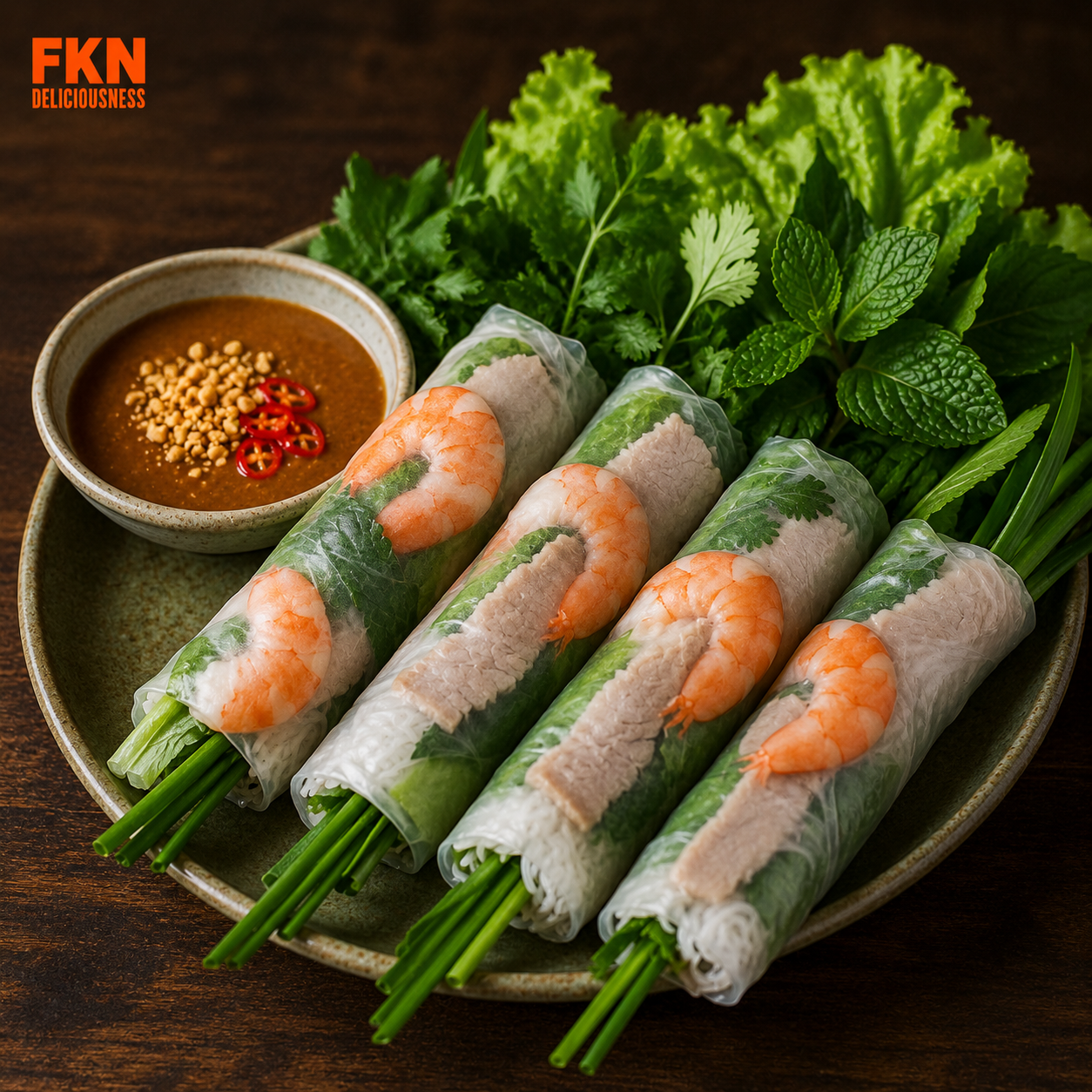
Gỏi cuốn is the kind of Vietnamese food that looks simple until you take the first bite. The rice paper is soft and slightly chewy, the herbs snap awake, the noodles keep everything light, and the dipping sauce pulls the whole roll into focus. It is fresh, clean, handheld, and quietly addictive.
Gỏi cuốn, often called Vietnamese fresh spring rolls, is made with thin rice paper wrapped around rice vermicelli, fresh herbs, lettuce, pork, shrimp, and sometimes other fillings depending on the cook or region. It is especially common in Southern Vietnam, where warm weather, fresh vegetables, and casual street eating make this dish feel completely natural. Unlike fried spring rolls, gỏi cuốn is served fresh, so the quality of the herbs, rice paper, and dipping sauce matters as much as the filling.
Vietnamese people usually eat gỏi cuốn as a snack, light meal, appetizer, or party food, often dipped into peanut sauce or a darker fermented bean sauce depending on the version. A good roll should feel balanced, not overstuffed, with tender rice paper that does not tear, bright herbs that smell alive, and shrimp or pork that tastes clean rather than heavy. First-time visitors should notice the contrast: soft rice paper, cool noodles, crisp lettuce, fragrant herbs, and that rich sauce waiting on the side.
Gỏi cuốn belongs on any what to eat in Vietnam list because it shows a different side of Vietnamese food. Not every great dish here is steaming, sizzling, grilled, fried, or soaked in broth. Sometimes the most memorable bite is the quiet one, wrapped by hand, dipped at the table, and built around freshness, balance, and restraint.