Quán Bà Nga: A Bún Bò Huế Bowl Worth Finding In Huế
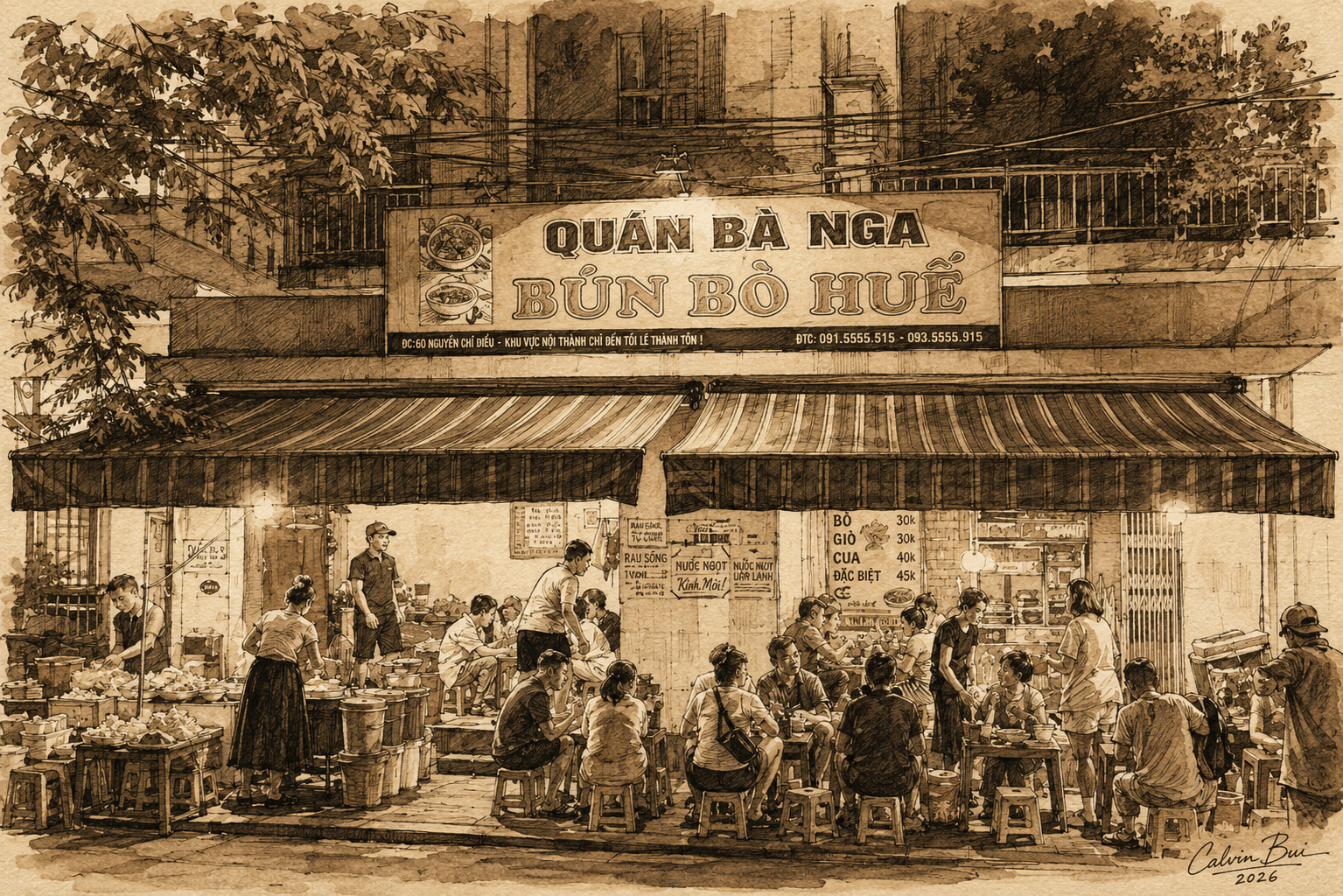
In Huế, bún bò is not a novelty. It is a daily argument, a neighborhood habit, and at Quán Bà Nga, it becomes the kind of evening bowl people point you toward when they want you to understand the city after dark.
An Evening Bowl Inside The Old City
Huế changes temperature in the evening. The light softens against old walls, motorbikes move with less urgency, and the city begins to feel like it is exhaling after a long, damp day. Somewhere in that rhythm sits Quán Bà Nga, a modest bún bò shop commonly listed around 62 Nguyễn Chí Diễu, near the old-city side of Huế.
This is not the kind of place that announces itself with design language. It belongs to the practical grammar of Vietnamese eating: plastic stools, metal tables, a working pot, a bowl placed down hot enough to fog your glasses if you lean in too quickly. The reason to come is not décor. The reason to come is the broth.
Bún bò in Huế carries a different weight than bún bò almost anywhere else. Outside the city, people often say the full name, bún bò Huế, as if the place needs to be attached to the dish. In Huế, the dish is already home. The bowl does not need to explain itself.
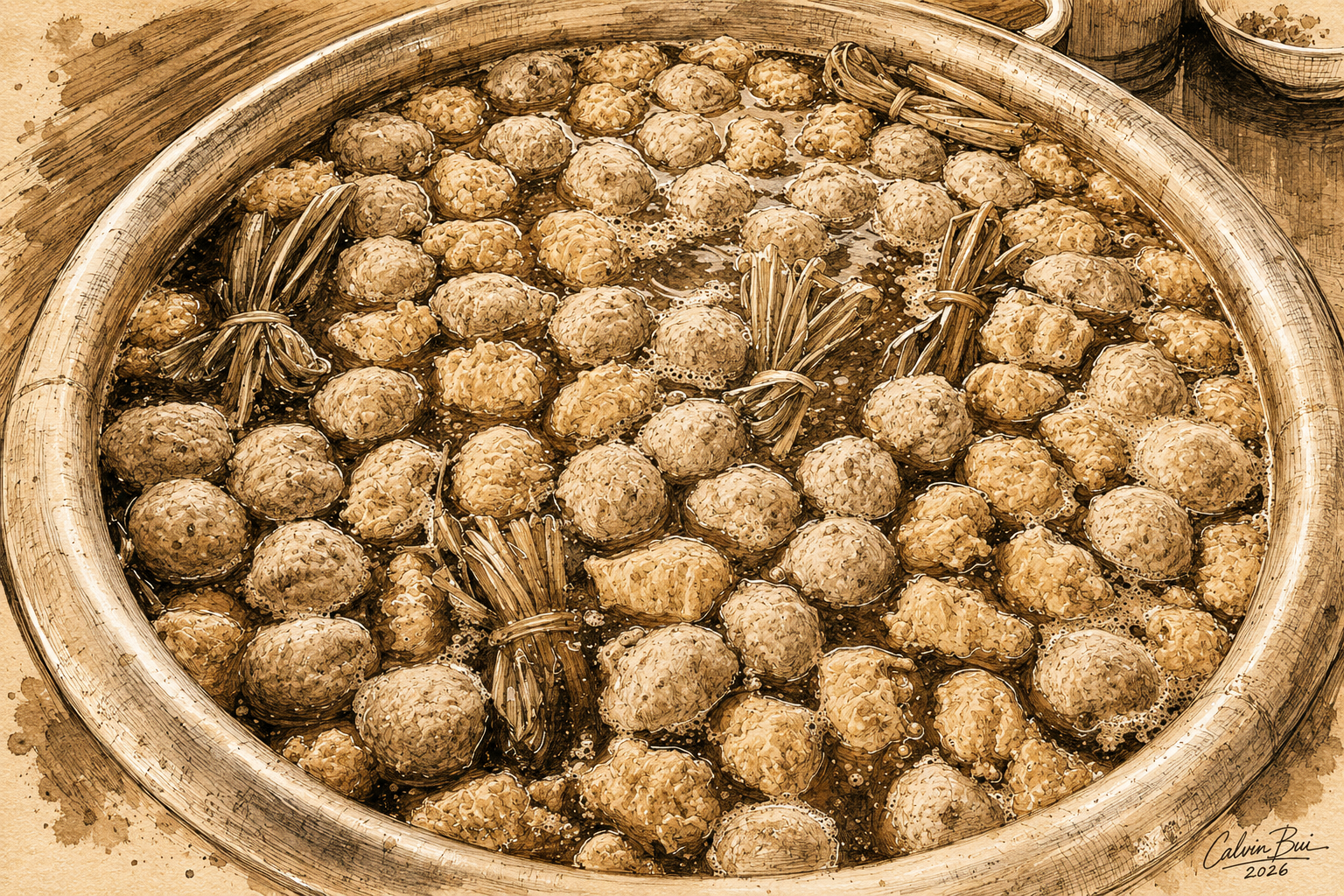
A Shop Built Around The Pot
Verified details on Quán Bà Nga’s origin story are limited, which is common with small, long-running noodle shops in Vietnam. What can be said with more confidence is that the shop is repeatedly listed by local food pages, travel guides, and diner references as a bún bò stop in Huế, especially for the evening hours.
That matters because Huế is a city with no shortage of famous bowls. Some are morning institutions. Some live around markets. Some feel like family recipes opened to the street for a few hours a day. Quán Bà Nga’s appeal is simpler and more specific: it is often recommended as a place to find a hot, strong bowl later in the day, when many better-known morning shops have already finished their service.
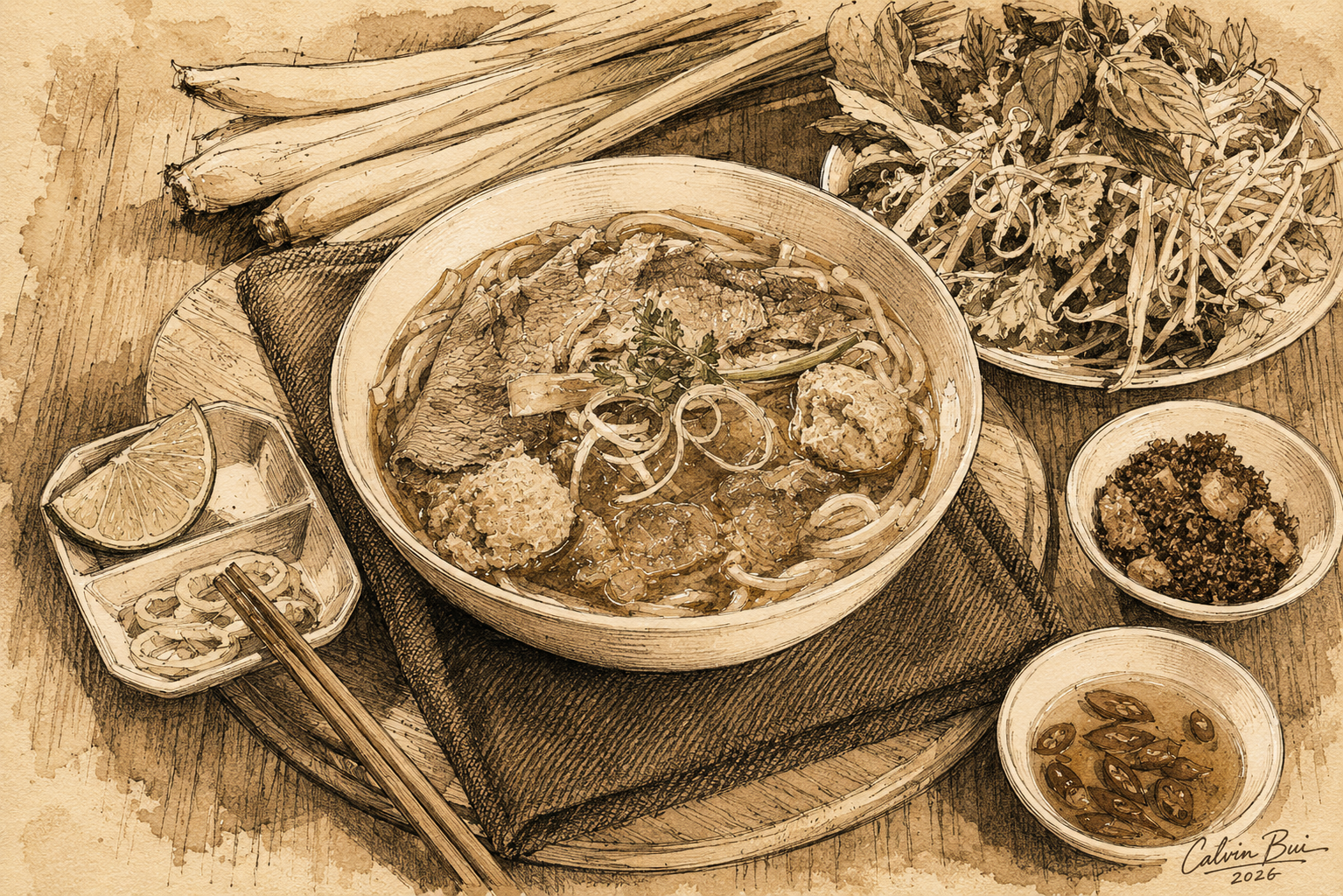
The bowl here is usually described in the language that makes Huế bún bò worth chasing: a savory broth with lemongrass, heat, depth, and the faint funk of mắm ruốc underneath. Not loud for the sake of being loud. Not sweetened into softness. The best versions of the dish do not flatten the spice. They let it rise slowly through the broth, clinging to the noodles and waking up the beef, pork, herbs, and chili oil along the way.
Finding It Near The Old Streets
Quán Bà Nga is commonly tied to Nguyễn Chí Diễu, with some listings placing it near Lê Thánh Tôn and the old-city side of Huế. That location gives the meal a different mood from the polished riverside or hotel-heavy parts of town.
This is a useful stop when you are already moving through the Thành Nội area, especially if your day has included the Imperial City, Đông Ba Market, or the older neighborhoods north of the Perfume River. Go expecting a local noodle shop, not a restaurant built around tourists. The pleasure is in the ordinary details: the bowl landing fast, the herbs on the side, the sound of scooters outside, the broth staying hot down to the last few spoonfuls.
Because listings vary slightly on hours and address details, this is the kind of place worth checking before you go, especially if you are crossing town specifically for it. In Vietnam, noodle shops can close early when they sell through the pot. The best bowl is rarely waiting around for your schedule.
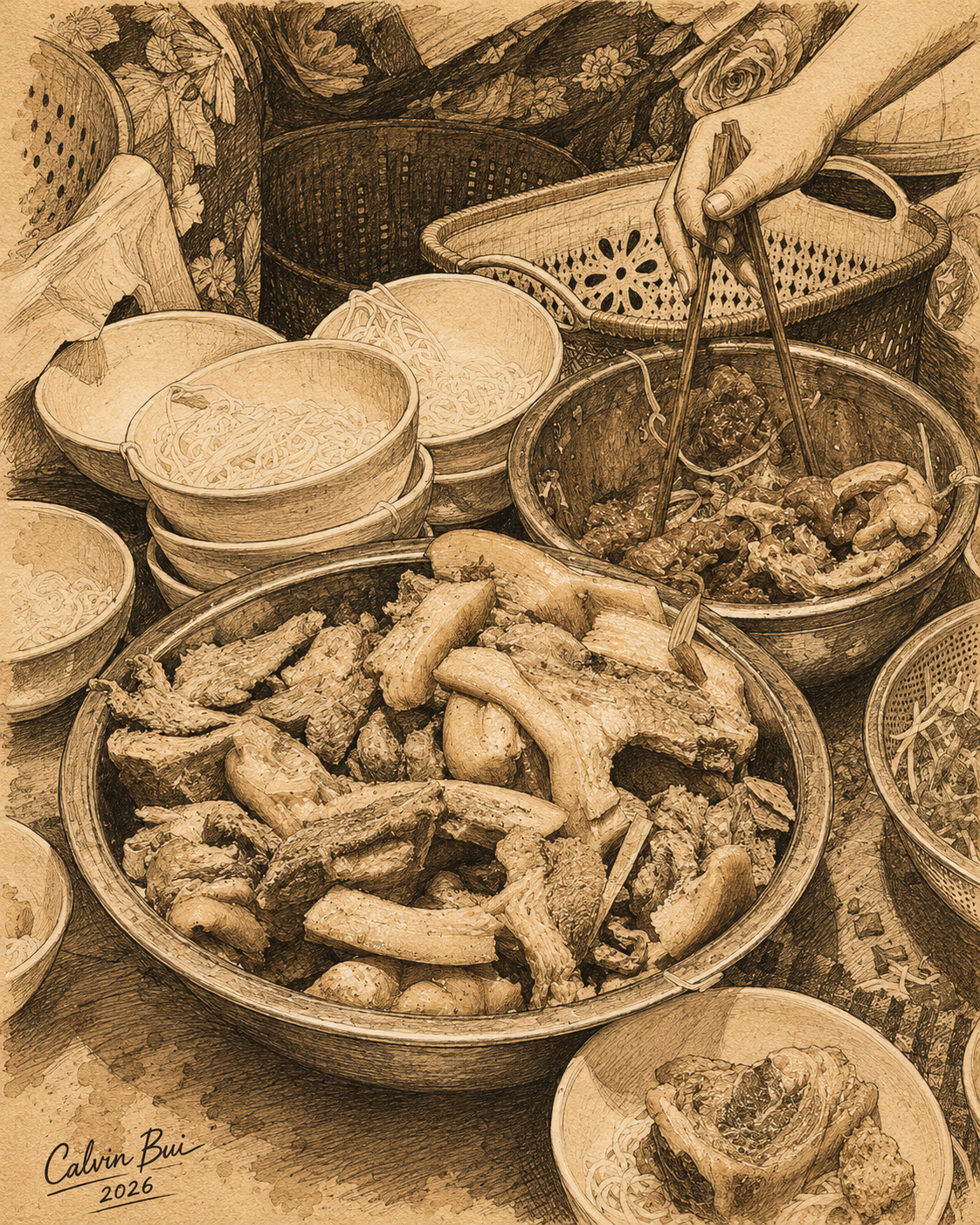
The Bowl To Order
The move is bún bò. Start there.
A proper Huế bowl should have tension. The broth should feel rounded but not heavy, spicy but not punishing, aromatic without turning perfume-like. The noodles should be thick enough to carry the soup. The meat should give the bowl substance, but the broth is the center of gravity.
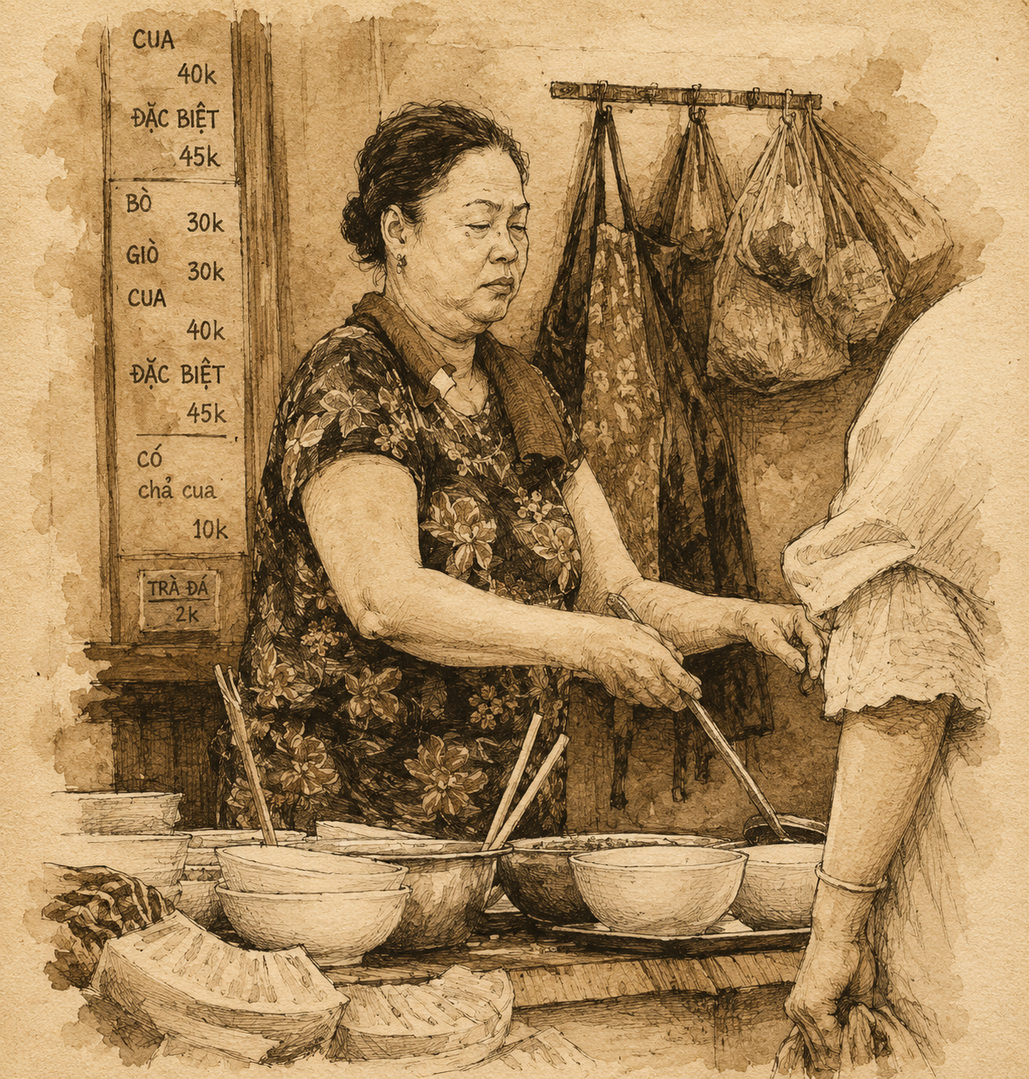
If available, order the fuller version with giò heo or chả cua. The pork knuckle adds gelatin, softness, and a kind of old-school richness that belongs to the dish. Chả cua brings bounce and sweetness, a contrast to the chili and lemongrass. Some local references also mention items like xáo or xôi, but for a first visit, the bún bò is the reason to be there.
Drink options are not the point here. Get a trà đá, bottled water, or whatever simple drink is available that day. This is not a pairing meal. It is a bowl meal. The best accompaniment is the herb plate, lime, chili, and the small decisions you make as the broth changes.
Add lime carefully. Add chili with respect. Huế food can look gentle until it starts talking back.
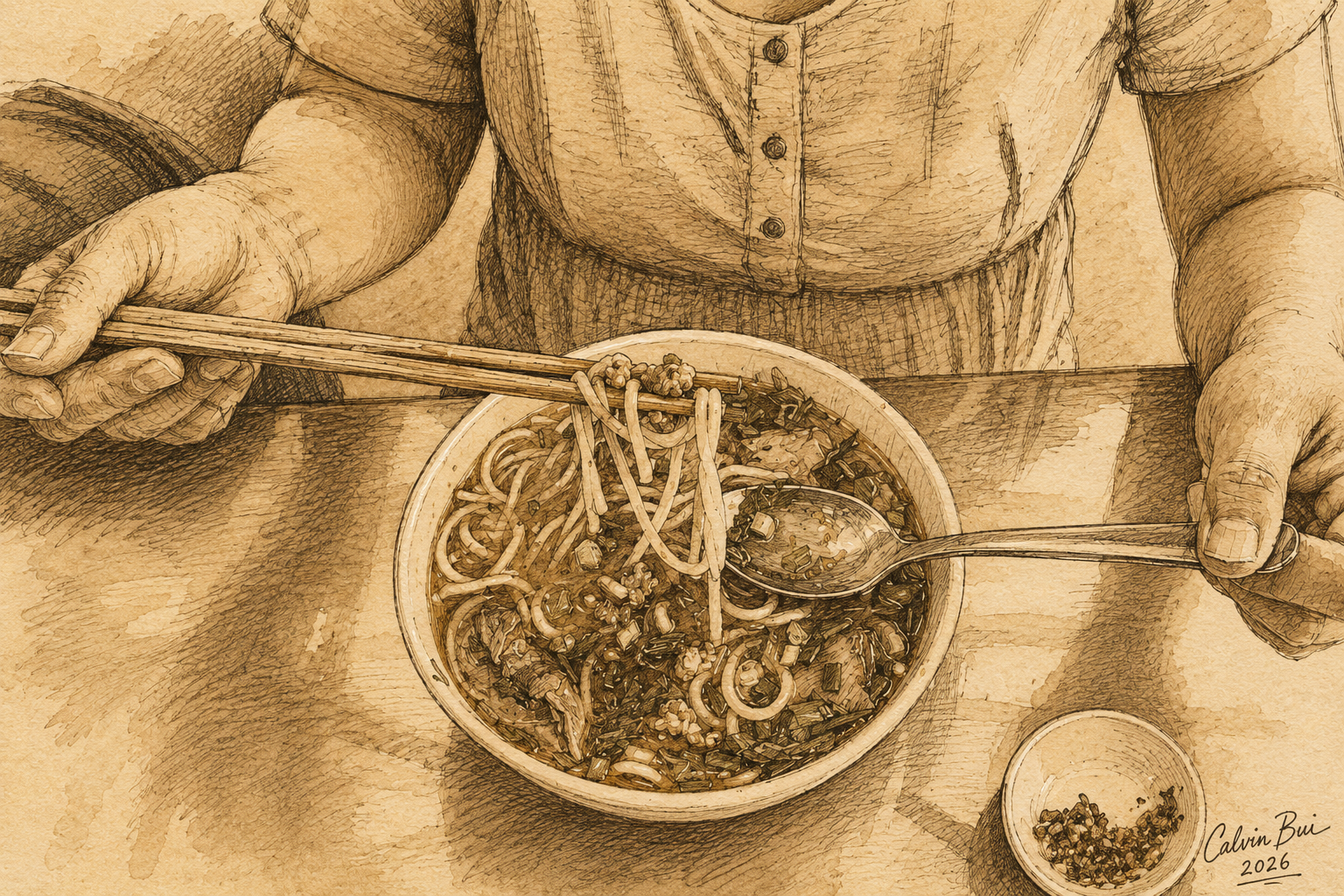
How To Eat It Well
Quán Bà Nga is best approached casually. Walk-ins are the natural mode. Reservations are not part of the experience, and there is no need to dress for anything beyond the heat, the street, and a bowl of soup.
Hours are commonly listed in the evening, often around 5:00 p.m. to 11:00 p.m., though some platforms list shorter windows and local shops can close earlier if they sell out. Go earlier in the evening if you want the best chance at a fuller bowl and a calmer table. Go later if you want the city’s night mood, but accept the risk that the pot may be running low.
This is also a bowl best eaten immediately. Bún bò does not improve in a delivery box. The noodles soften, the herbs collapse, and the broth loses the sharpness that makes the dish feel alive. If takeout is available, it may work in a practical sense, but the real experience is sitting down while the soup is still moving with heat.
Solo diners will be comfortable. Couples can make it a quick stop. Groups should keep expectations simple and flexible. This is not a long, slow dinner. It is a focused meal with one clear job.
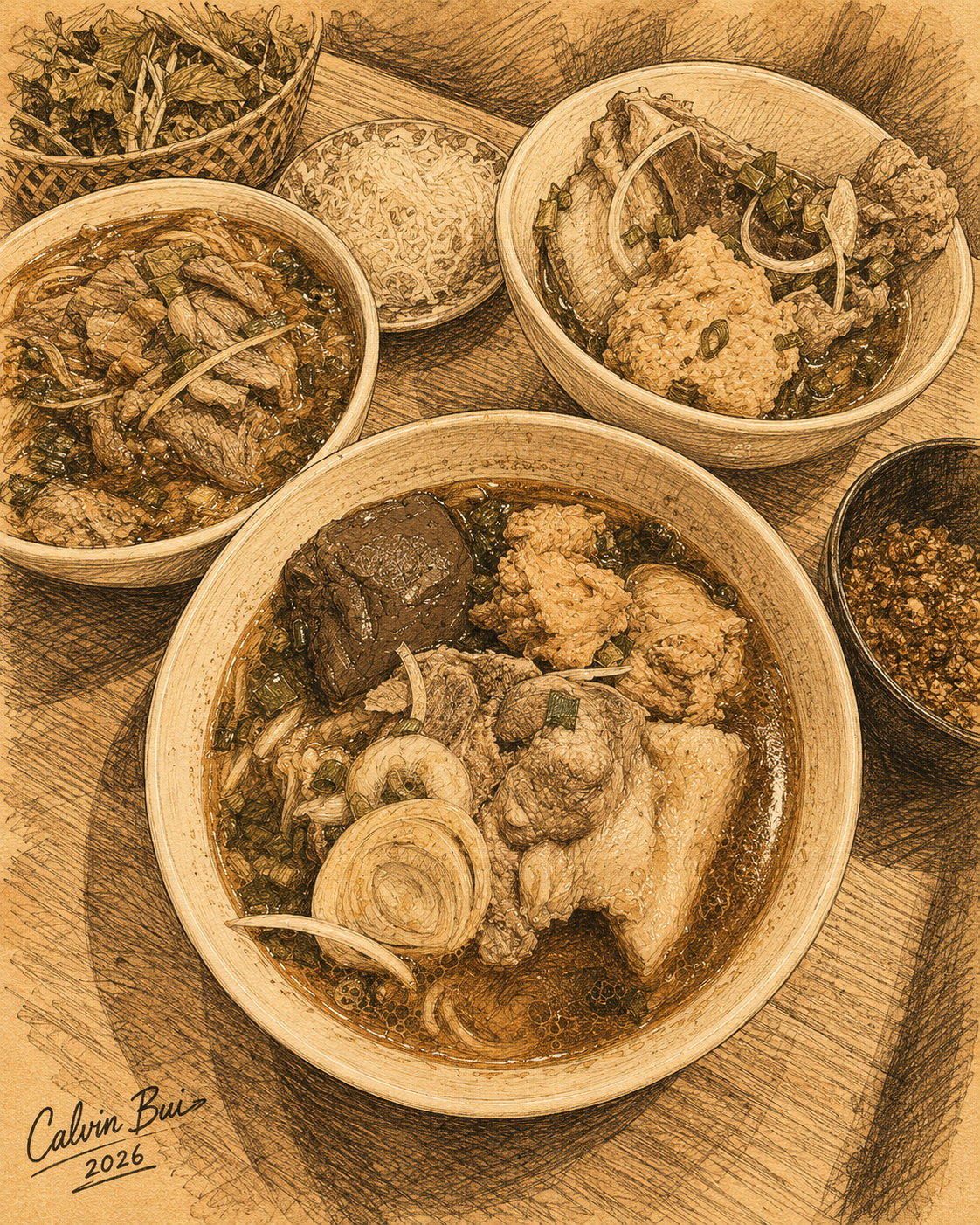
Why This Bowl Belongs In Huế
The value of Quán Bà Nga is not that it reinvents bún bò. Huế does not need that. The value is that it keeps the dish in its proper setting: direct, local, affordable, aromatic, and tied to the street.
In a city where food is often discussed through royal cuisine, delicate cakes, and market legends, bún bò remains the dish that keeps everything grounded. It is muscular food from a refined city. It can be graceful, but it should never feel weak.
Quán Bà Nga is worth finding because it gives travelers a different kind of Huế meal. Not a staged introduction. Not a hotel recommendation dressed up as discovery. Just a hot bowl in the evening, in the old part of town, doing what Huế food has always done best: making complexity feel like daily life.
Address
Commonly listed as 62 Nguyễn Chí Diễu, Huế
Neighborhood
Thành Nội / Old City Area, Huế
Cuisine
Huế noodle shop specializing in bún bò
Best For
Casual evening bowls, solo dining, quick dinners, visitors exploring the old city
What To Order
Bún bò, bún bò with giò heo if available, chả cua if available, trà đá or bottled water
Phone
Not clearly verified
Website
No official website found
Hours
Commonly listed as evening service, often around 5:00 p.m. to 11:00 p.m. Check before going, as hours may vary and the shop may sell out earlier.
Reservations
Walk-ins are the normal approach
Recognition
No Michelin recognition found
Good To Know
Go for the bún bò and eat it fresh at the shop. Listings vary slightly on address and hours, so confirm before making a special trip.