Chả Giò Recipe: Vietnam’s Crispy Fried Spring Rolls
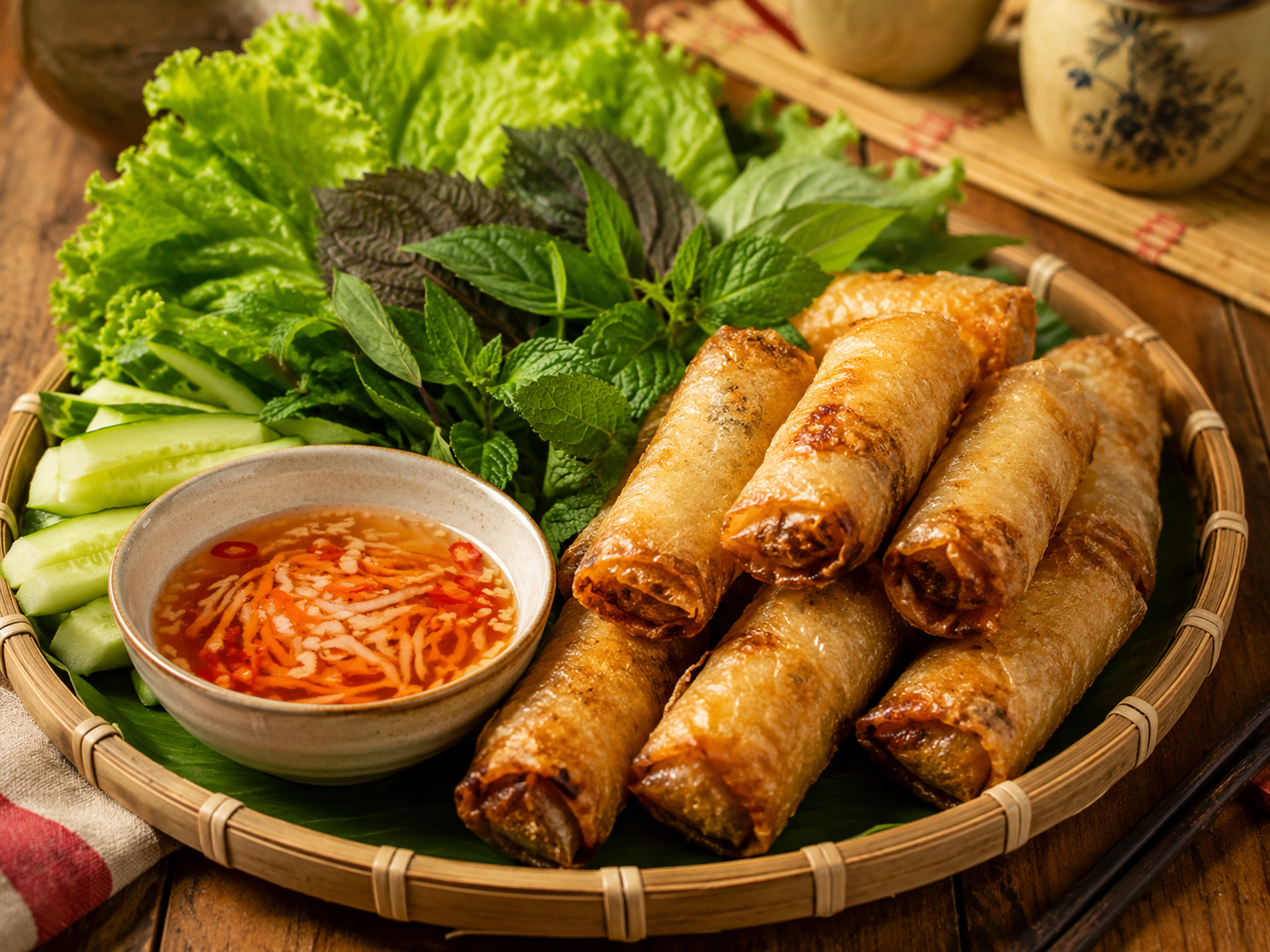
Chả giò announces itself before the first bite. The thin rice-paper shell crackles as it breaks, revealing a savory filling that should be juicy, aromatic, and textured rather than soft or heavy.
In southern Vietnam, chả giò appears at family meals, celebrations, street-food stalls, and alongside bowls of bún. The filling changes from one kitchen to another, but pork, shrimp, taro, wood ear mushrooms, and glass noodles make a deeply recognizable combination.
The best chả giò is not overloaded. The vegetables should remain distinct, the shrimp should retain some texture, and the wrapper should fry into a thin, blistered shell without becoming greasy.
The real technique is controlling moisture, rolling evenly, and frying slowly enough for the filling to cook before the wrapper becomes too dark. A quick second fry gives the rolls their final golden color and lasting crunch.
Ingredients
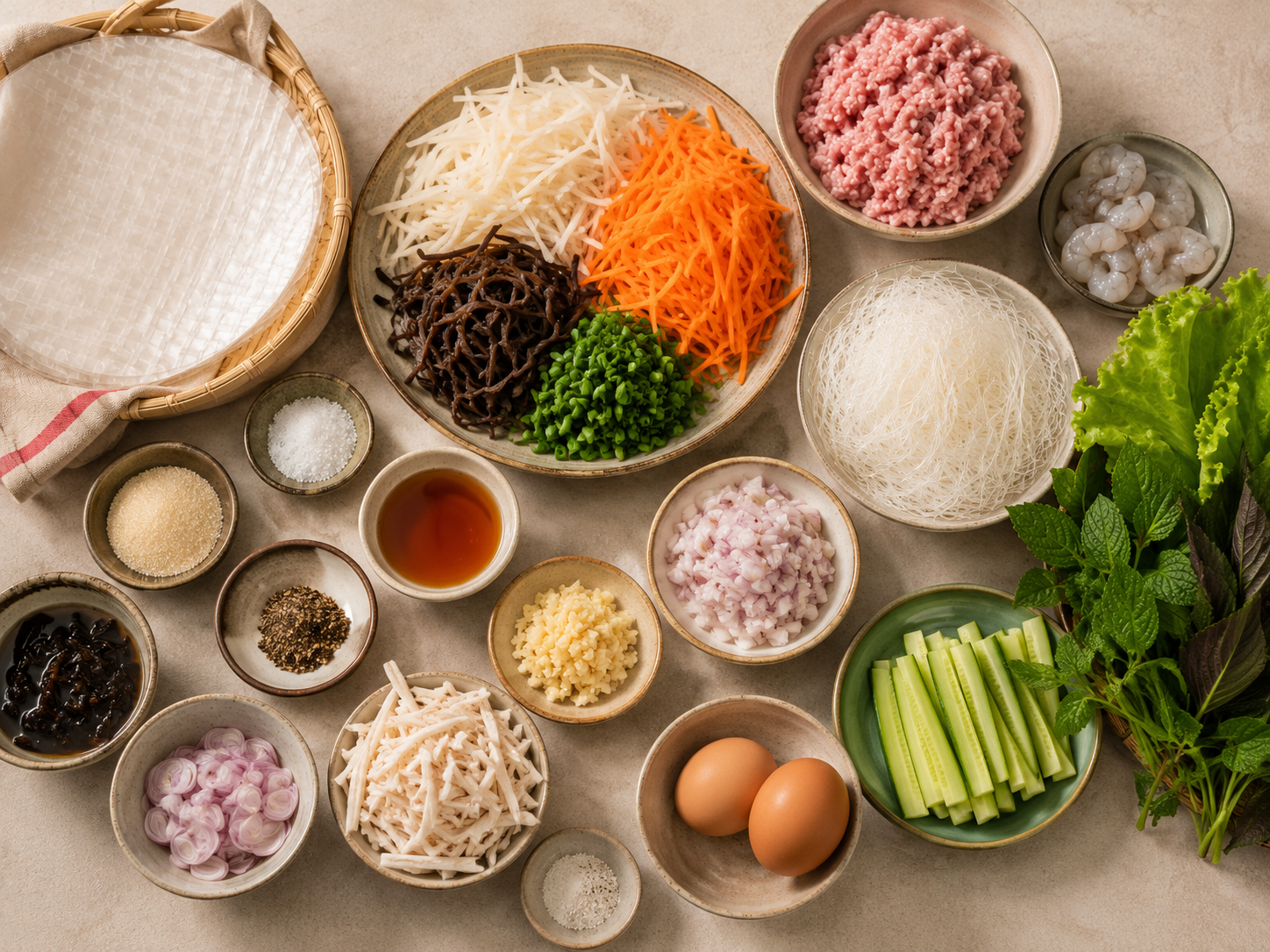
For The Chả Giò Filling
12 ounces ground pork (340 grams)
6 ounces raw shrimp (170 grams), peeled, deveined, and finely chopped
6 ounces taro (170 grams), peeled and cut into very thin matchsticks
3 ounces carrot (85 grams), peeled and cut into very thin matchsticks
½ ounce dried wood ear mushrooms (14 grams)
1 ounce dried mung bean glass noodles (28 grams)
2 medium shallots, finely minced
2 garlic cloves, finely minced
1 tablespoon fish sauce
1 teaspoon sugar
¾ teaspoon freshly ground black pepper
½ teaspoon fine salt
1 teaspoon Vietnamese-style chicken bouillon powder, optional
For Wrapping And Frying
20 to 22 thin Vietnamese rice-paper wrappers, about 8 inches wide
1 cup warm water
1 tablespoon rice vinegar
1 teaspoon sugar
4 to 6 cups neutral frying oil, such as rice bran, canola, or vegetable oil
For The Nước Chấm
½ cup warm water
3 tablespoons sugar
3 tablespoons fish sauce
3 tablespoons fresh lime juice
1 garlic clove, finely minced
1 Thai chili, thinly sliced
For Serving
1 small head green leaf lettuce, leaves separated
2 cups mixed fresh herbs, such as mint, Vietnamese coriander, and perilla
1 English cucumber, cut into thin batons
How To Make Chả Giò
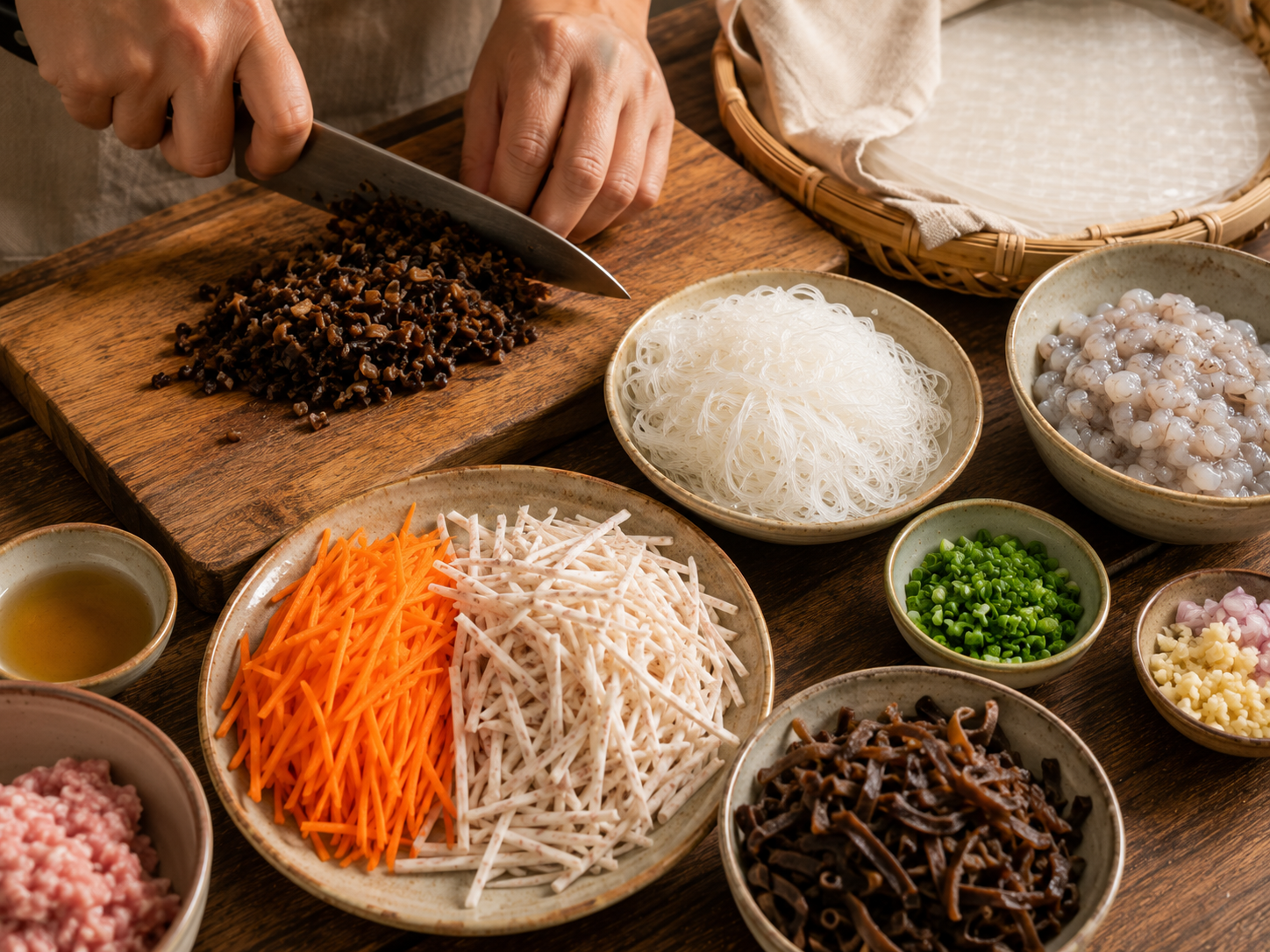
Step 1: Prepare The Filling Ingredients
Soak the wood ear mushrooms in warm water for 15 to 20 minutes, until fully expanded and tender. Trim away any firm centers, rinse well, squeeze out the excess water, and chop finely.
Soak the glass noodles in room-temperature water for 10 to 15 minutes, just until flexible. Drain thoroughly and cut them into pieces about 1 inch long. Do not soak them until completely soft because they will continue cooking inside the rolls.
Cut the taro and carrot into very thin, short matchsticks. Finely chop the shrimp by hand, leaving small pieces visible instead of turning it into a paste.
Pat the shrimp, taro, carrot, mushrooms, and noodles dry before mixing. Excess moisture creates steam during frying and can cause the wrappers to soften or split.
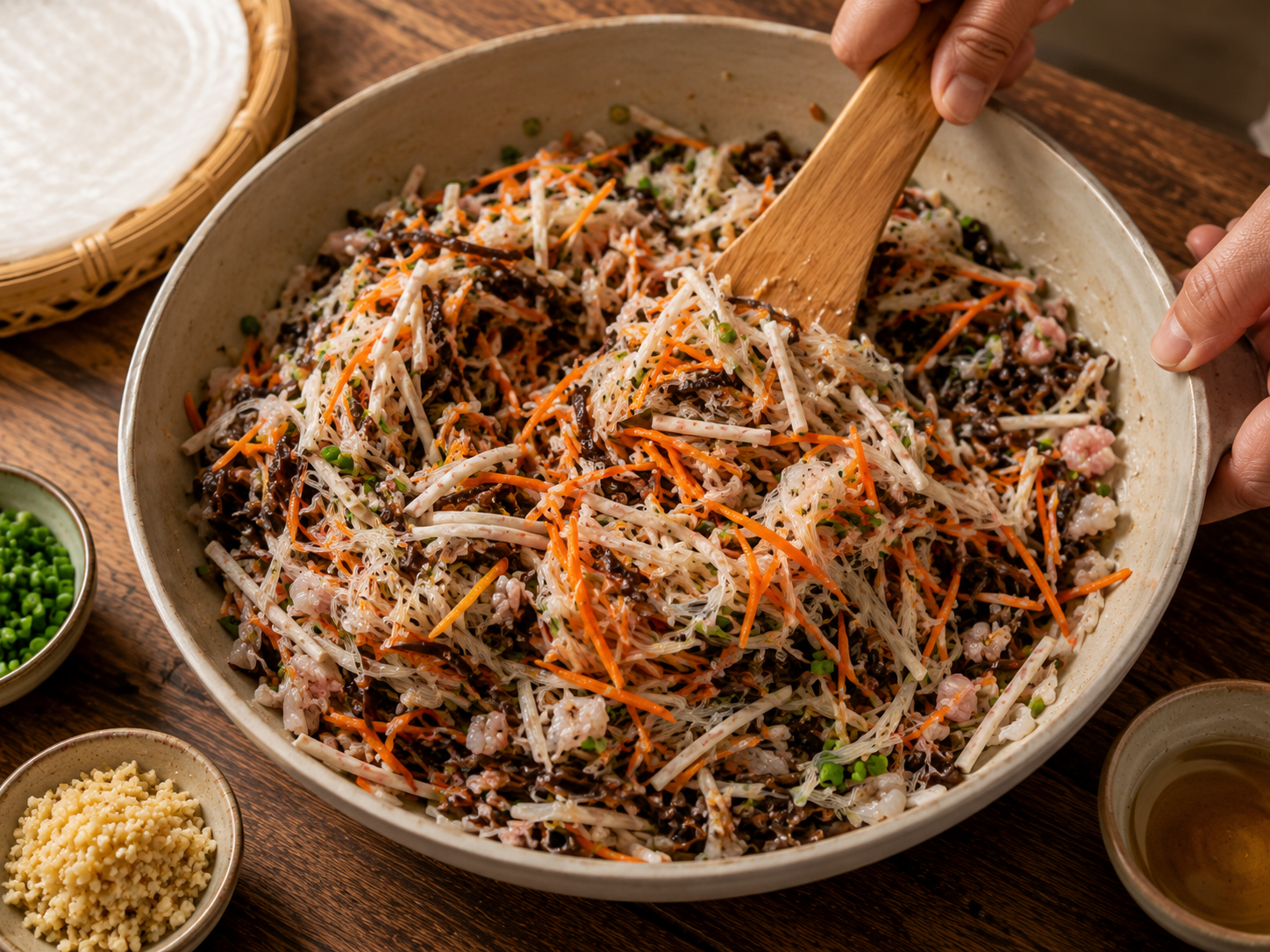
Step 2: Mix And Check The Filling
Add the ground pork, chopped shrimp, taro, carrot, wood ear mushrooms, glass noodles, shallots, garlic, fish sauce, sugar, black pepper, salt, and chicken bouillon powder to a large bowl.
Mix gently by hand for about 2 minutes, until the seasoning is evenly distributed and the pork begins to hold the filling together. Do not mash the mixture into a paste. The strands of taro and carrot should remain visible.
Cook a teaspoon of the filling in a small pan until fully done, then taste it. The filling should be savory and well seasoned without being too salty because the finished rolls will be served with nước chấm.
Cover the bowl and refrigerate the filling for 20 minutes. Chilling makes it firmer and easier to portion and roll.
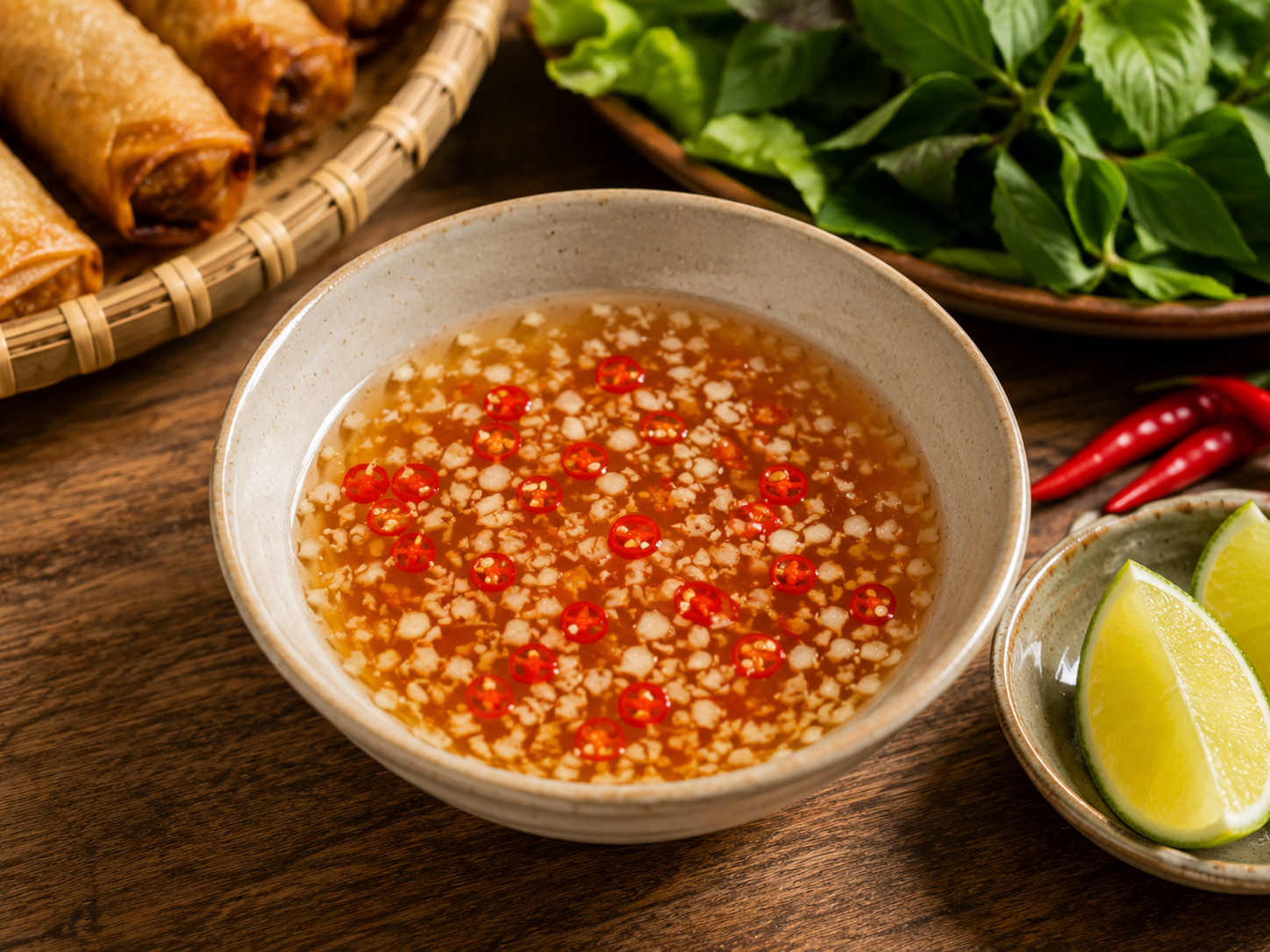
Step 3: Make The Nước Chấm
Stir the warm water and sugar together until the sugar completely dissolves.
Add the fish sauce and lime juice, then mix well. The sauce should taste lightly sweet, salty, and bright, with enough acidity to cut through the fried rolls.
Stir in the minced garlic and sliced Thai chili. Let the nước chấm rest for at least 10 minutes before serving so the flavors can settle.
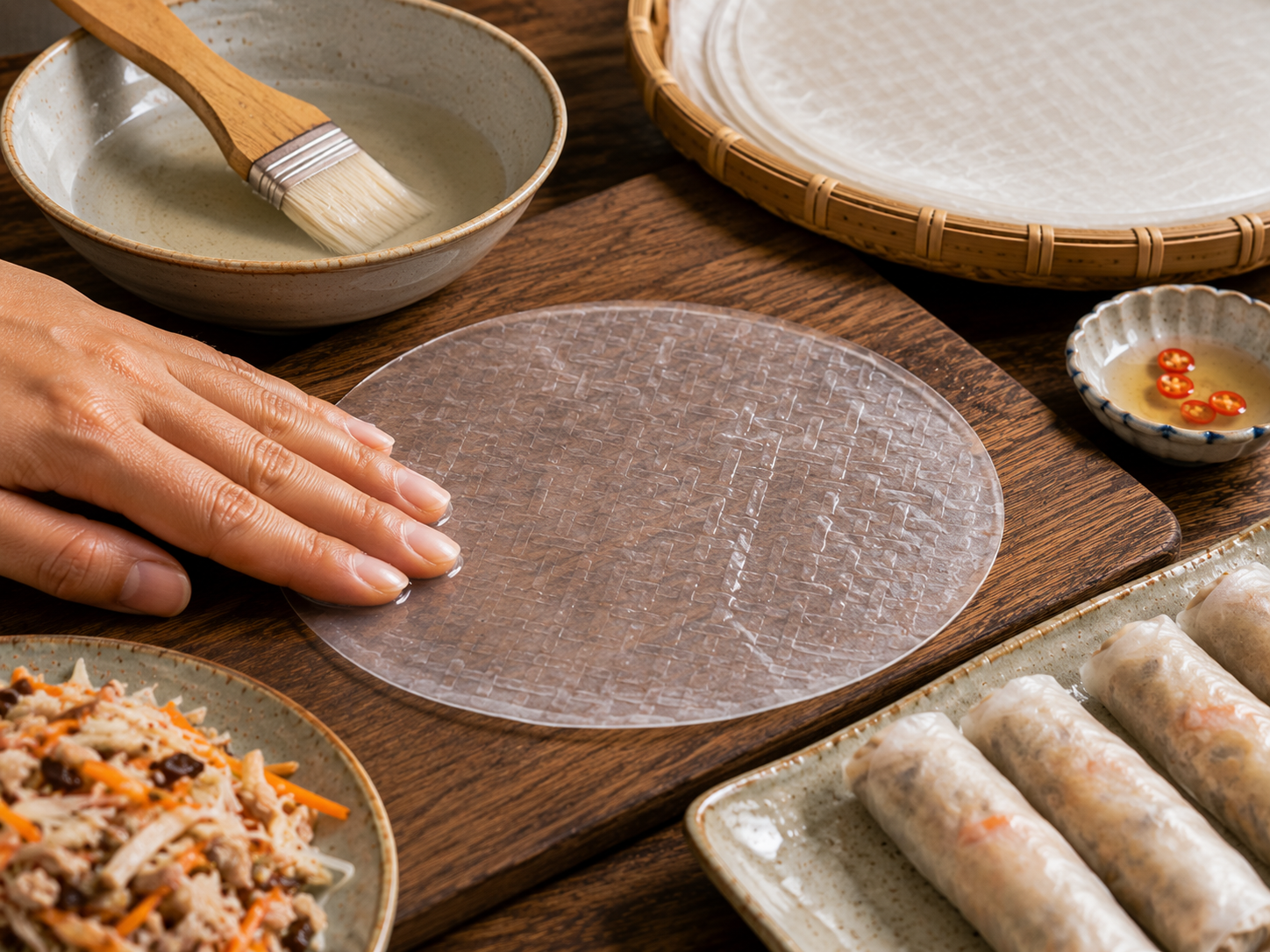
Step 4: Soften The Rice Paper
Stir the warm water, rice vinegar, and sugar together in a shallow bowl until the sugar dissolves.
Place one rice-paper wrapper on a clean work surface. Lightly brush or wipe both sides with the water mixture. Use only enough liquid to dampen the wrapper. Do not soak it.
Let the wrapper rest for 20 to 30 seconds. It should become flexible enough to fold while still feeling slightly firm. It will continue softening as you roll.
Work with one wrapper at a time. Rice paper that becomes too wet will stick to the work surface, tear during rolling, and fry unevenly.
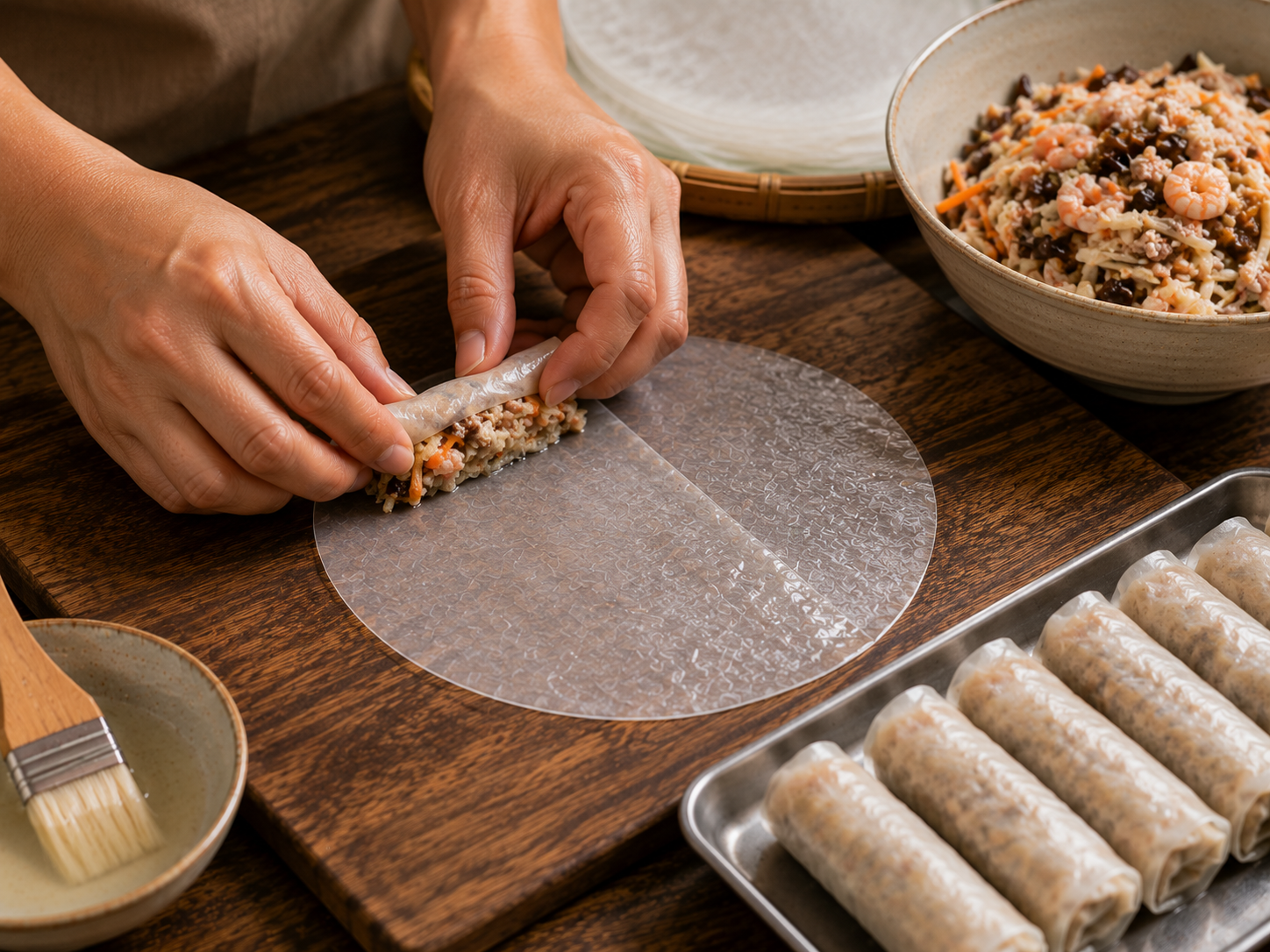
Step 5: Roll The Chả Giò
Place about 1½ tablespoons of filling near the lower third of the wrapper. Shape it into a compact log about 4 inches long, leaving space on both sides.
Fold the bottom edge over the filling and roll forward once. Fold the left and right sides inward, then continue rolling until the filling is completely enclosed.
Roll firmly enough to remove large air pockets, but do not squeeze too tightly. The filling will expand slightly as it cooks, and an overly tight wrapper may split in the oil.
Place each finished chả giò seam-side down on a tray. Keep the rolls separated and cover them loosely with a clean kitchen towel while you finish rolling the rest.
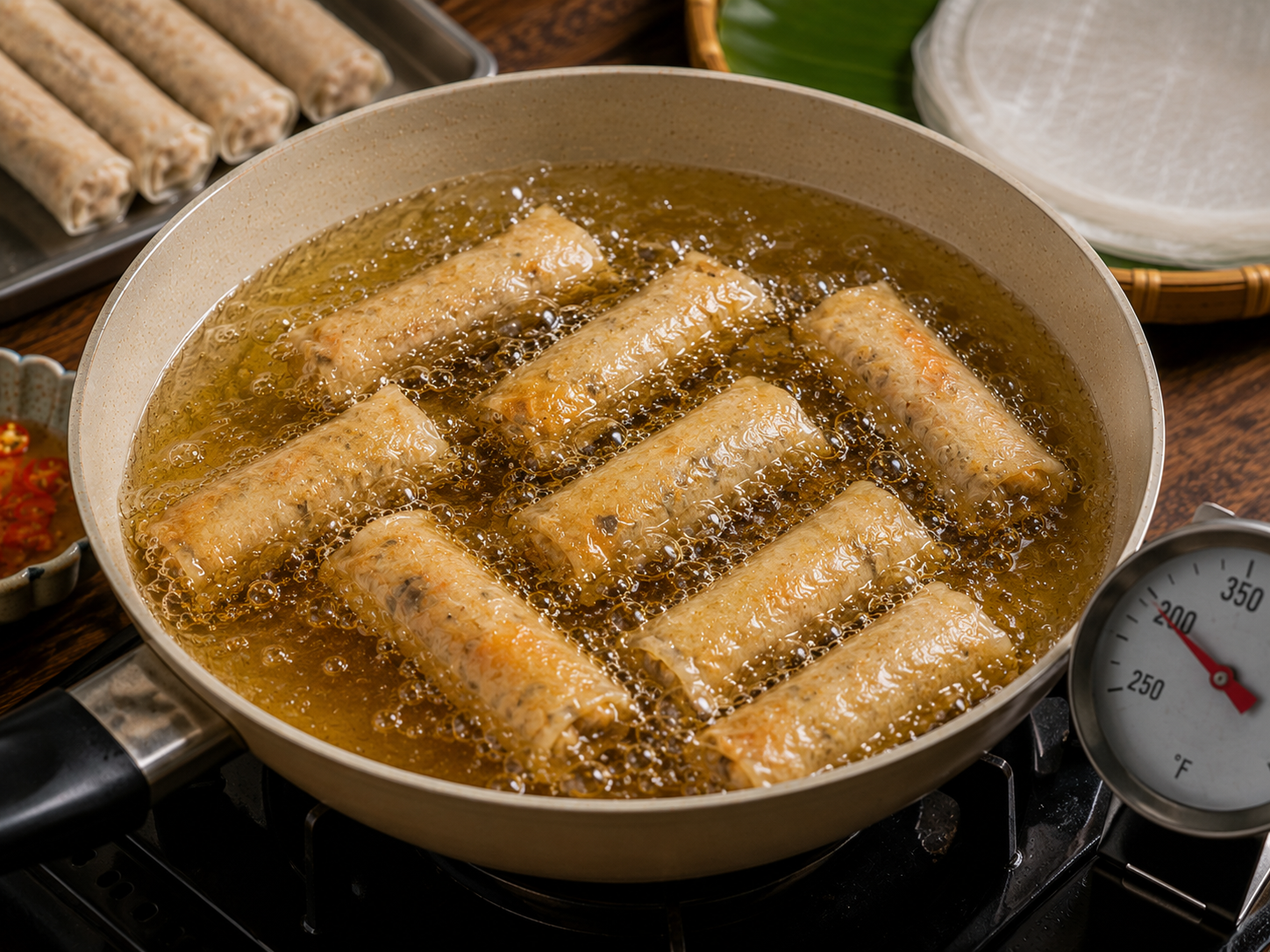
Step 6: Fry The Chả Giò Slowly
Pour 2 to 3 inches of neutral oil into a heavy pot and heat it to 300°F to 310°F (150°C to 155°C).
Lower the chả giò into the oil seam-side down, working in small batches. Do not crowd the pot. The oil should bubble steadily around the rolls without becoming aggressive.
Fry for 8 to 10 minutes, turning occasionally, until the wrappers feel firm, the filling is cooked through, and the rolls are pale golden.
Transfer the chả giò to a wire rack and let them rest for 10 to 15 minutes. This first fry cooks the filling and sets the rice-paper shell without making the outside too dark.
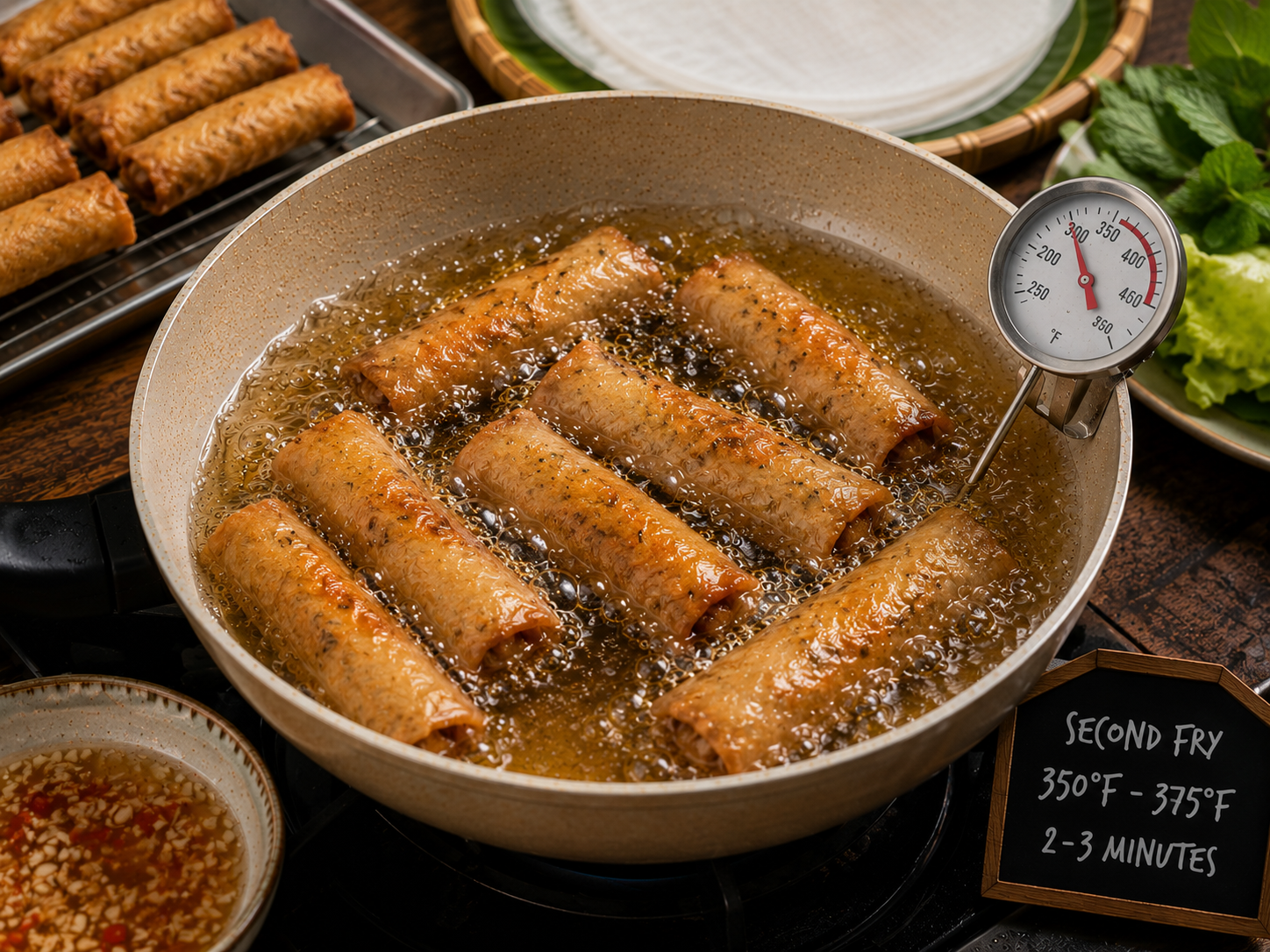
Step 7: Fry A Second Time Until Crisp
Increase the oil temperature to 350°F (175°C).
Return the rested chả giò to the oil in small batches. Fry for 1 to 2 minutes, turning as needed, until deeply golden, blistered, and crisp on all sides.
Transfer the rolls to a wire rack instead of paper towels. Air circulating underneath helps the wrappers stay crisp.
Let the chả giò rest for 3 to 5 minutes before serving. The filling will be very hot straight from the oil.
Final Thoughts
Chả giò teaches you that crispness begins long before the rolls reach the oil. Dry ingredients, lightly softened rice paper, careful rolling, and controlled frying all shape the final texture.
The filling should stay balanced rather than overloaded. Pork brings richness, shrimp adds sweetness, taro gives structure, and the mushrooms and glass noodles keep each bite varied.
Serve the chả giò hot with lettuce, fresh herbs, cucumber, and nước chấm. That contrast between the crisp shell, savory filling, cool greens, and bright dipping sauce is what makes the dish feel complete.