Bún Mắm Recipe: Vietnam’s Fermented Fish Noodle Soup From The Mekong Delta
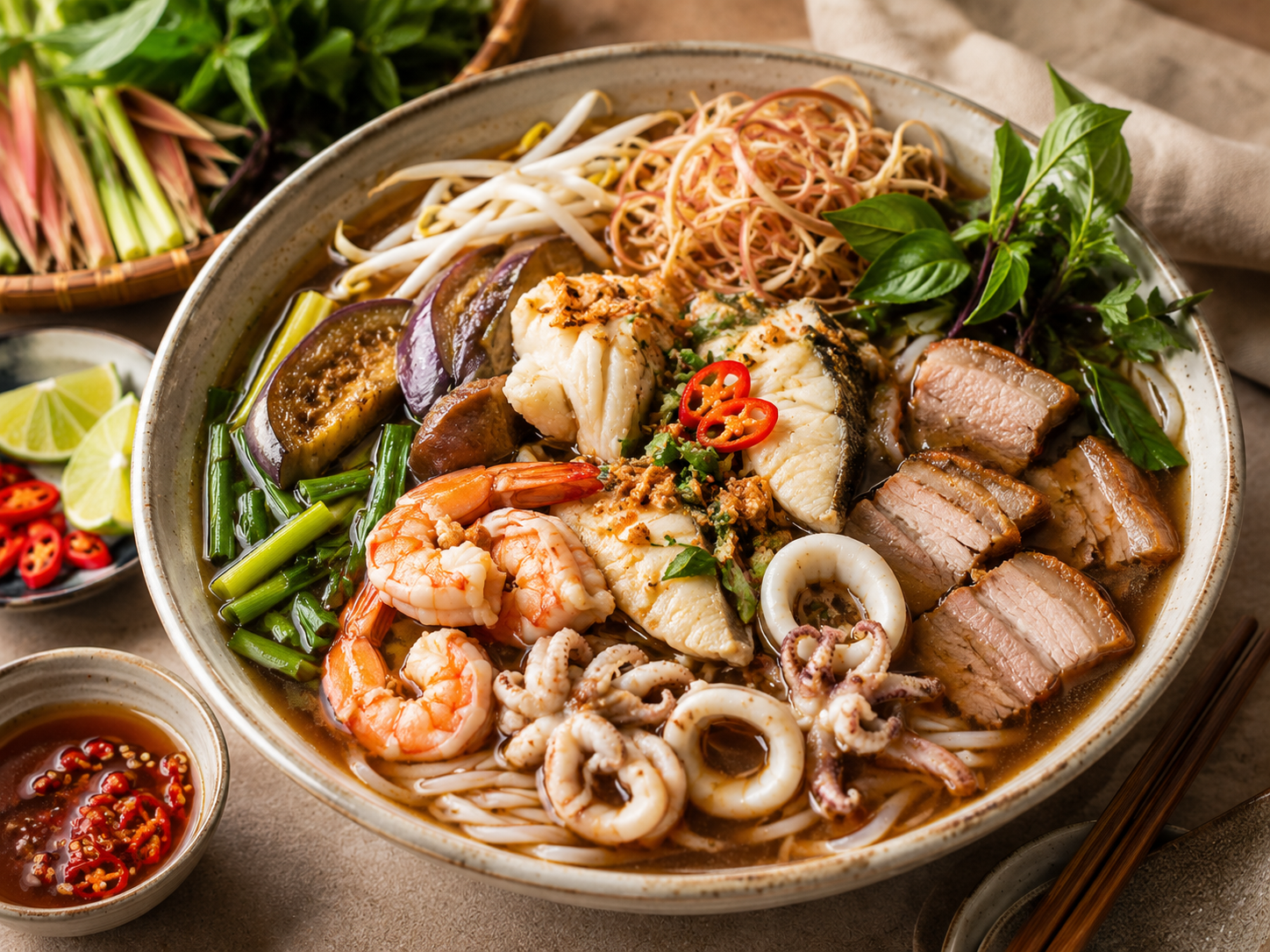
Bún mắm is one of those Vietnamese noodle soups that does not try to be gentle. It comes from the deep, funky, generous side of southern Vietnam, especially the Mekong Delta, where fermented fish is not a background note. It is the foundation.
The broth is dark, savory, salty, slightly sweet, and full of umami from mắm cá linh or mắm cá sặc, the fermented fish that gives the soup its identity. A proper bowl is loaded with rice vermicelli, seafood, eggplant, herbs, bitter greens, and often slices of roast pork or pork belly. It is big food, built from river culture, market cooking, and the kind of Vietnamese pantry that does not apologize for flavor.
What makes bún mắm special is the balance. The fermented fish gives the broth depth, but lemongrass, shallots, fresh herbs, lime, chilies, and vegetables keep it from feeling heavy. The eggplant soaks up the broth. The seafood adds sweetness. The herbs cut through the richness. Every bite lands a little differently.
This home version keeps the soul of miền Tây bún mắm, but makes it realistic for a U.S. kitchen. The goal is not to flatten the dish or make it less Vietnamese. The goal is to help you build that deep fermented fish broth clearly, control the saltiness, and assemble a bowl that tastes like it belongs to Vietnam.
Ingredients
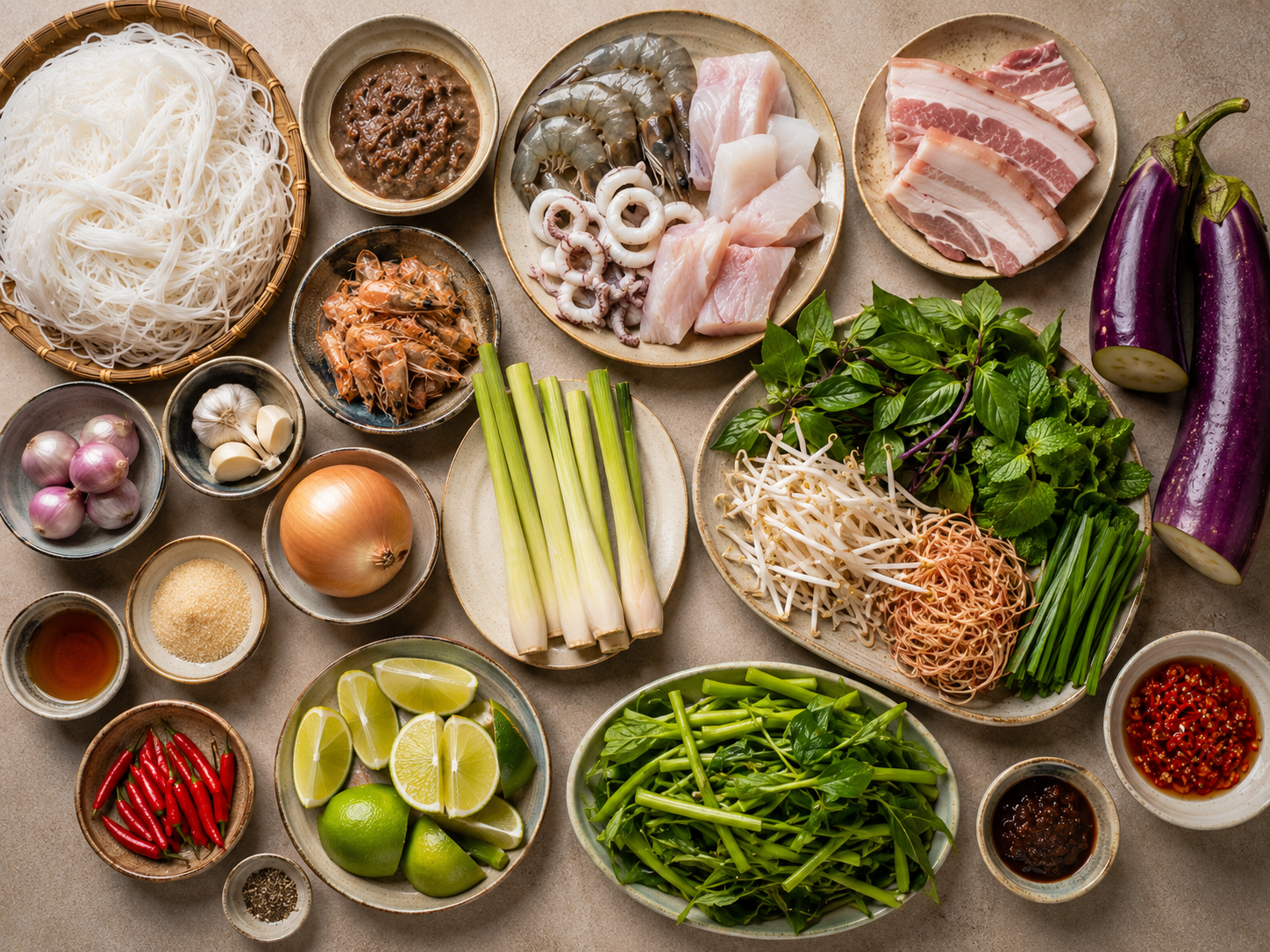
For The Fermented Fish Broth
8 ounces mắm cá linh or mắm cá sặc, or a mix of both
10 cups water, divided
1 pound pork neck bones or pork ribs
1 pound shrimp, shells reserved for the broth
3 stalks lemongrass, bruised and cut into 3-inch pieces
4 shallots, peeled and halved
1 small yellow onion, peeled and halved
3 cloves garlic, smashed
1 tablespoon neutral oil
1 tablespoon sugar
1 tablespoon fish sauce, plus more only if needed
½ teaspoon salt, only if needed
½ teaspoon ground black pepper
1 tablespoon tamarind concentrate or 2 tablespoons tamarind pulp mixed with warm water and strained, optional
For The Soup
8 ounces pork belly, cut into ½-inch thick pieces
12 ounces firm white fish fillets, such as catfish, cod, snapper, or basa, cut into large pieces
1 pound shrimp, peeled after using the shells for broth
10 ounces squid, cleaned and cut into rings
2 Asian eggplants, cut into thick wedges and soaked in salted water
1 tablespoon neutral oil
2 stalks lemongrass, finely minced from the tender lower part only
2 cloves garlic, minced
2 shallots, thinly sliced
For The Noodles
14 to 16 ounces dried rice vermicelli noodles
Water for boiling
For Serving
3 cups bean sprouts
2 cups shredded banana blossom or thinly sliced cabbage
2 cups water spinach stems or rau muống, split if available
1 cup rau đắng, optional but traditional
1 cup Vietnamese mint, perilla, Thai basil, or mixed Vietnamese herbs
½ cup garlic chives, cut into 2-inch pieces
2 limes, cut into wedges
Fresh red chilies, sliced
Fish sauce, for adjusting at the table if needed
How To Make Bún Mắm
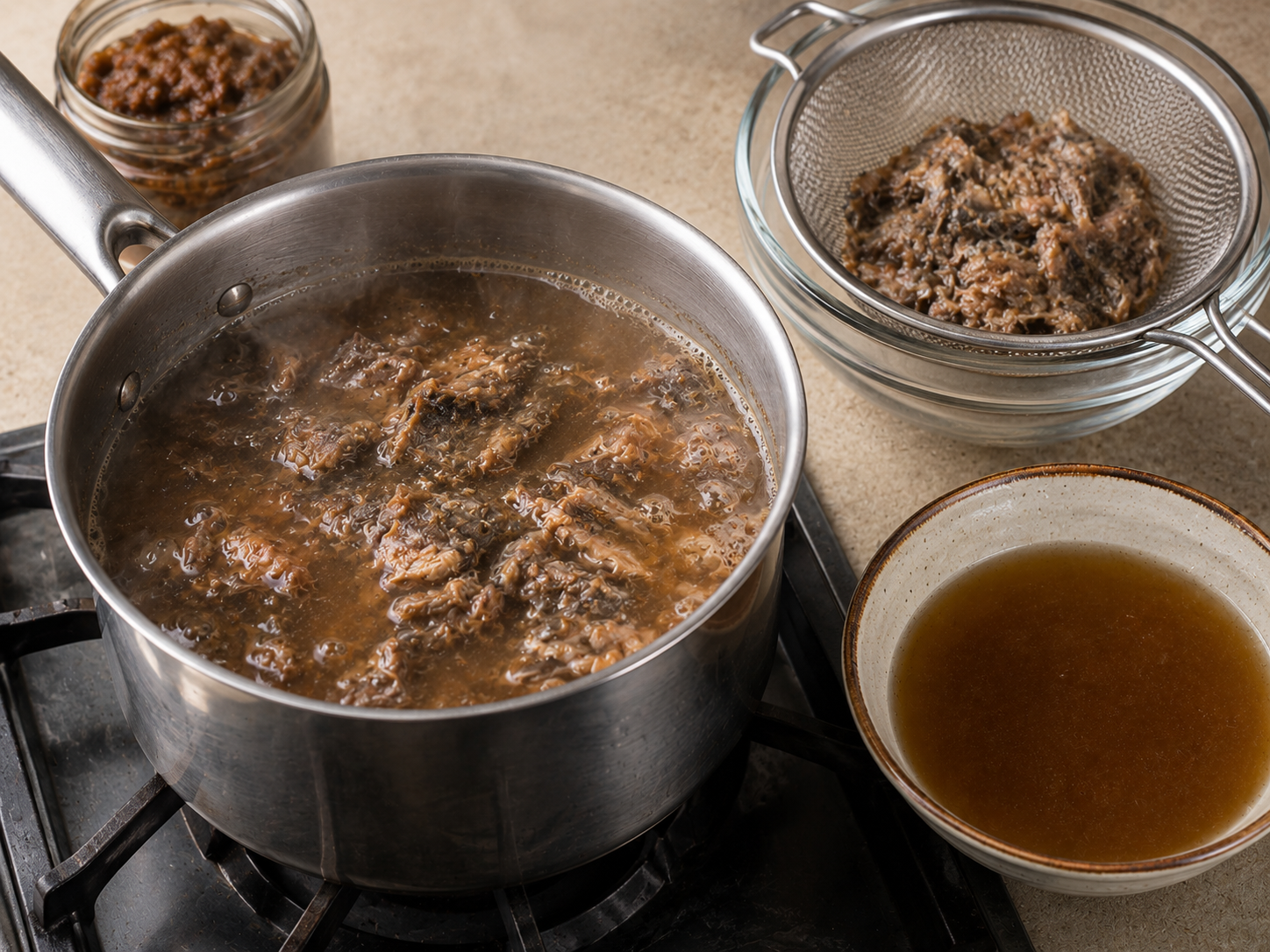
Step 1: Simmer And Strain The Fermented Fish
Place the mắm cá linh or mắm cá sặc in a small pot with 4 cups of water. Bring it to a gentle simmer over medium heat and cook for 15 to 20 minutes, stirring occasionally, until the fermented fish breaks down into the liquid.
Do not boil it aggressively. A hard boil can make the aroma sharper than it needs to be. You want the mắm to dissolve slowly and season the water deeply.
Strain the liquid through a fine mesh strainer into a bowl. Press lightly to extract the flavor, then discard the solids. This strained liquid is the base of the broth.
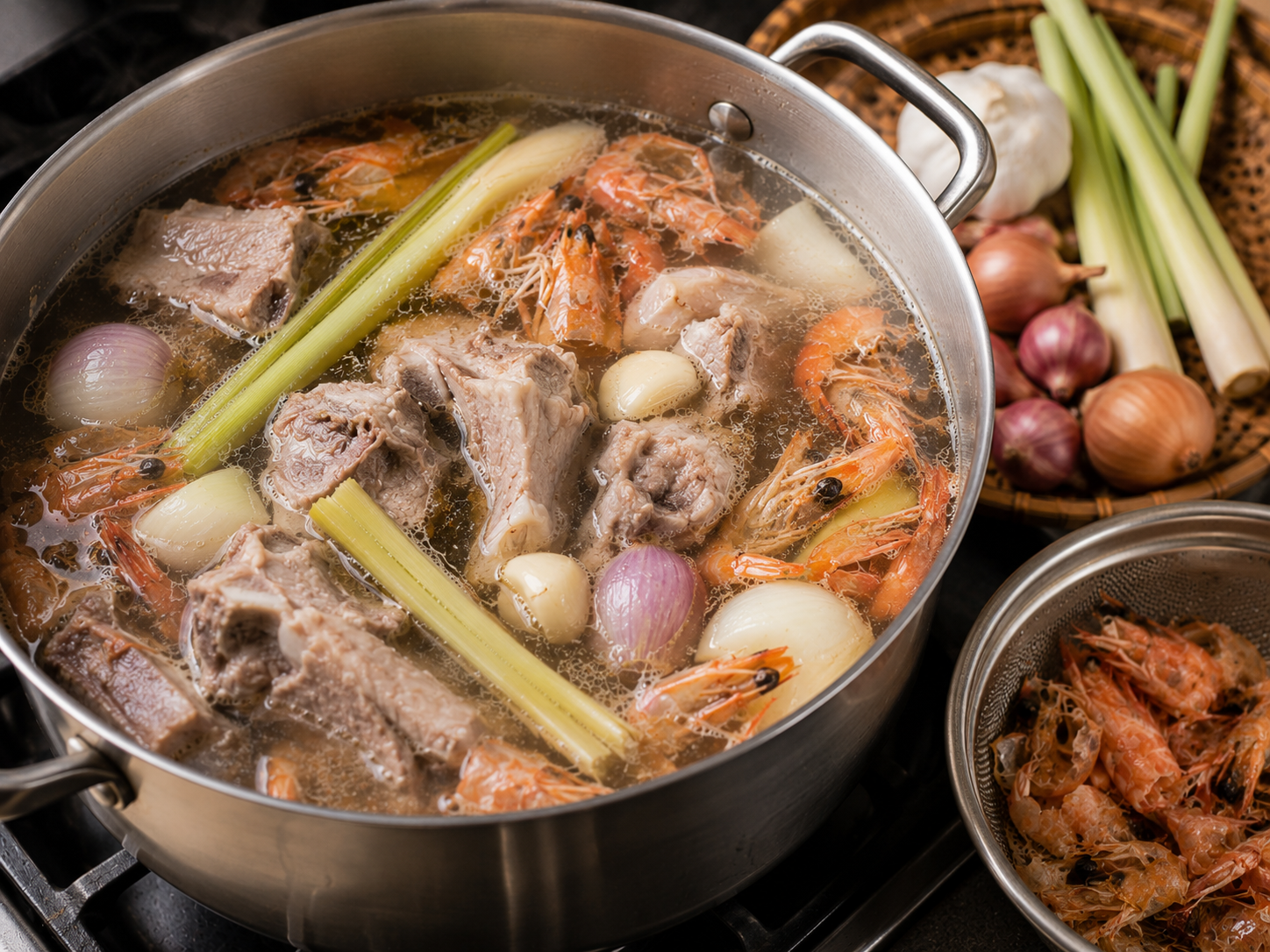
Step 2: Build The Broth
Rinse the pork bones or ribs under cold water. Add them to a large pot with the remaining 6 cups of water. Bring to a boil, then reduce to a steady simmer. Skim any foam from the surface during the first 10 minutes.
Add the shrimp shells, bruised lemongrass, halved shallots, onion, and smashed garlic. Simmer gently for 45 minutes to 1 hour, until the broth smells sweet, savory, and aromatic.
Strain the broth into a clean pot. Discard the bones, shells, and aromatics. Add the strained fermented fish liquid to the pot and bring everything back to a gentle simmer.
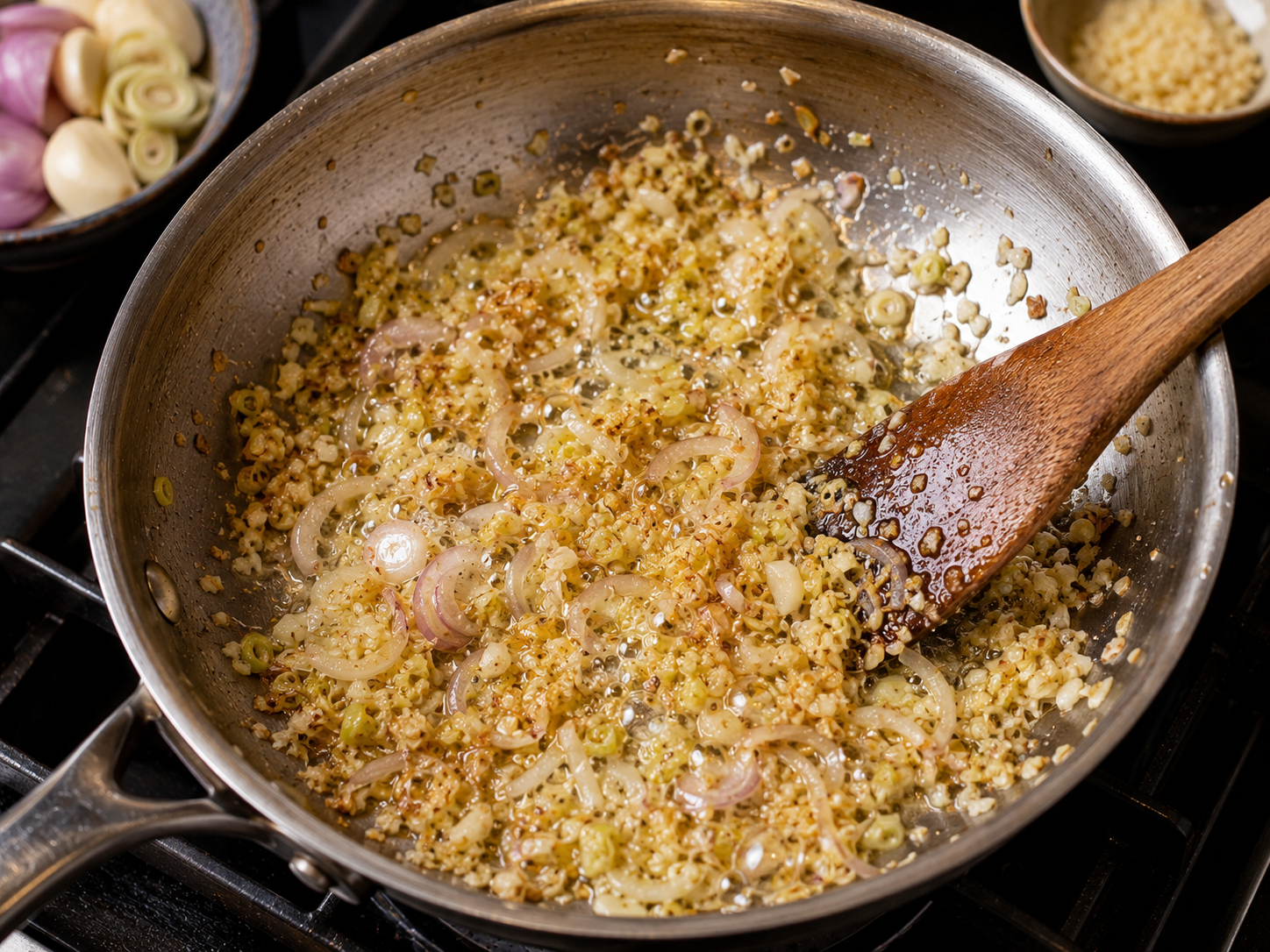
Step 3: Fry The Lemongrass Aromatics
In a small pan, heat 1 tablespoon neutral oil over medium heat. Add the minced lemongrass, minced garlic, and sliced shallots. Cook for 3 to 5 minutes, stirring often, until fragrant and lightly golden.
Add this aromatic mixture to the broth. This step helps round out the fermented fish and gives the soup that southern Vietnamese smell of lemongrass, shallot, and garlic.
Season the broth with sugar, black pepper, and 1 tablespoon fish sauce. Taste before adding salt. Depending on the mắm, you may not need much salt at all. If the broth feels too sharp, add a small amount of sugar. If it feels flat, add a little more fish sauce. If you want a slight sour edge, add tamarind at the end.
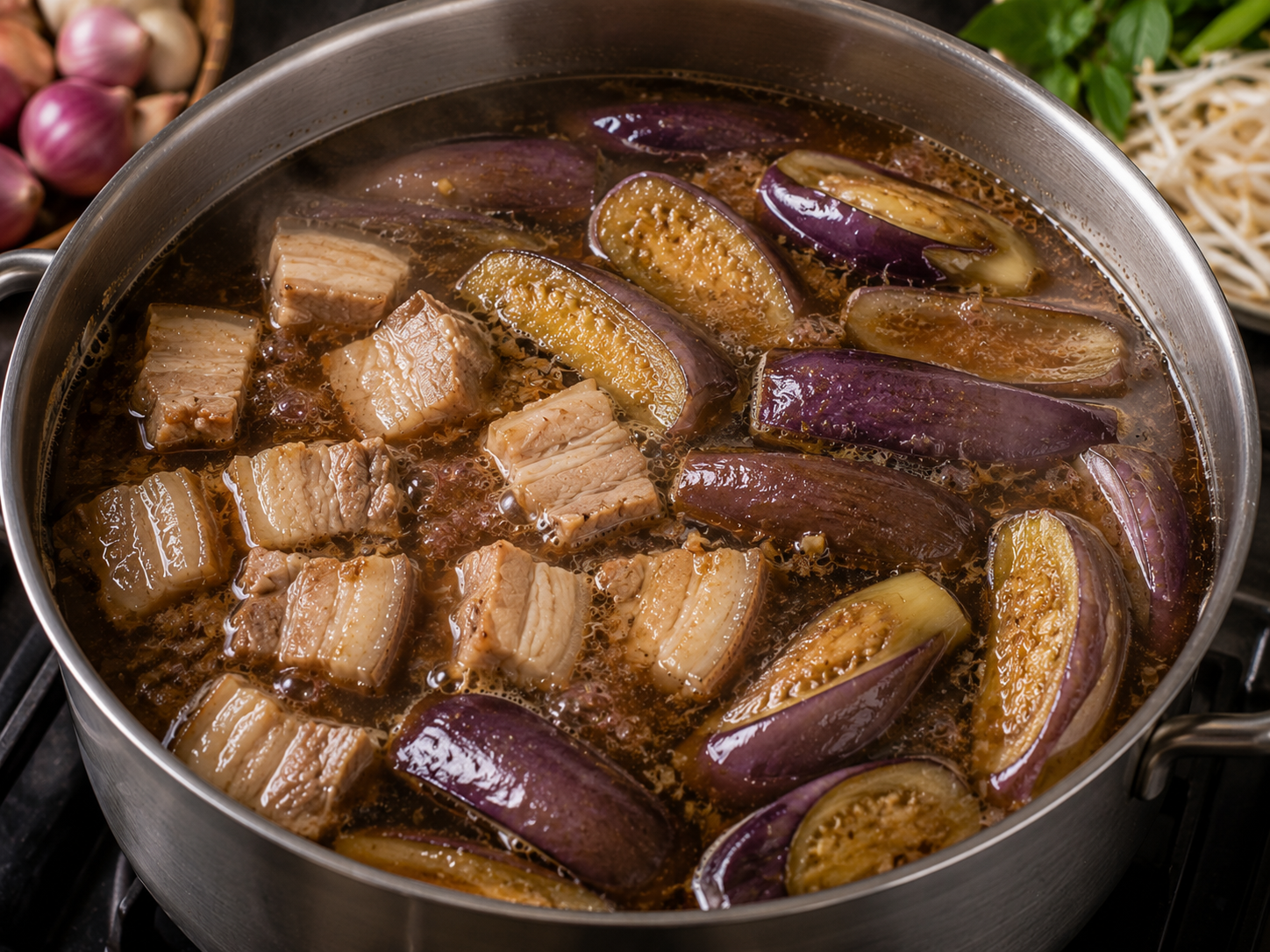
Step 4: Cook The Pork Belly And Eggplant
Add the pork belly pieces to the simmering broth and cook for 20 to 25 minutes, until tender but not falling apart.
Drain the eggplant wedges from the salted water. Add them to the broth and simmer for 8 to 10 minutes, until tender and silky. The eggplant should hold its shape but soak up the broth. Do not overcook it into mush.
This is one of the best parts of bún mắm. The eggplant carries the fermented fish flavor in a way that feels rich, soft, and completely connected to the soup.
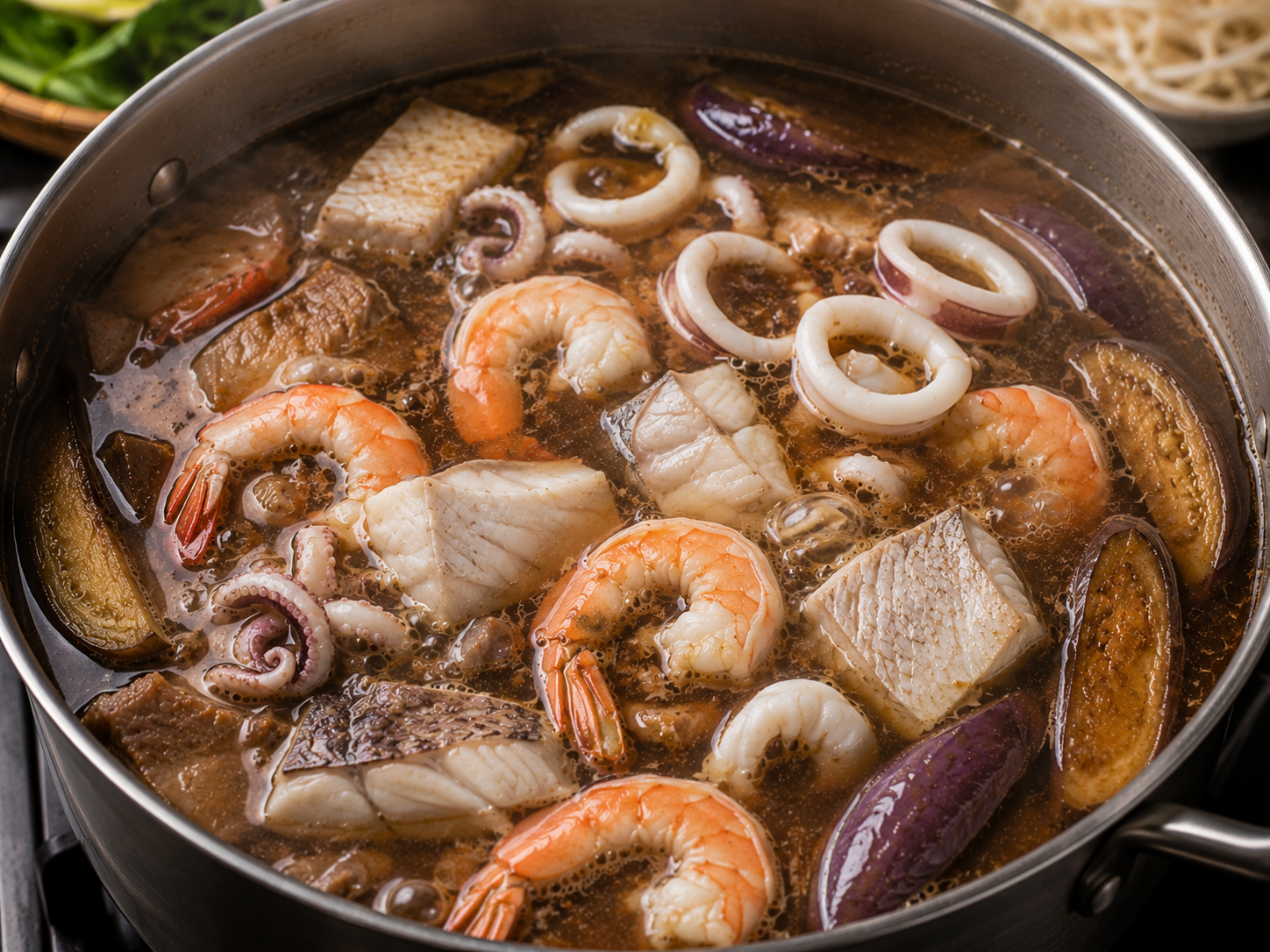
Step 5: Poach The Seafood
Keep the broth at a gentle simmer. Add the fish pieces and cook for 3 to 4 minutes, depending on thickness, until just cooked through.
Add the shrimp and squid last. Cook for 1 to 2 minutes, just until the shrimp turns pink and the squid firms up. Do not leave the seafood boiling in the pot for too long or it will turn tough.
Taste the broth one final time. It should be savory, aromatic, lightly sweet, and clearly flavored by fermented fish without tasting muddy or overly salty.
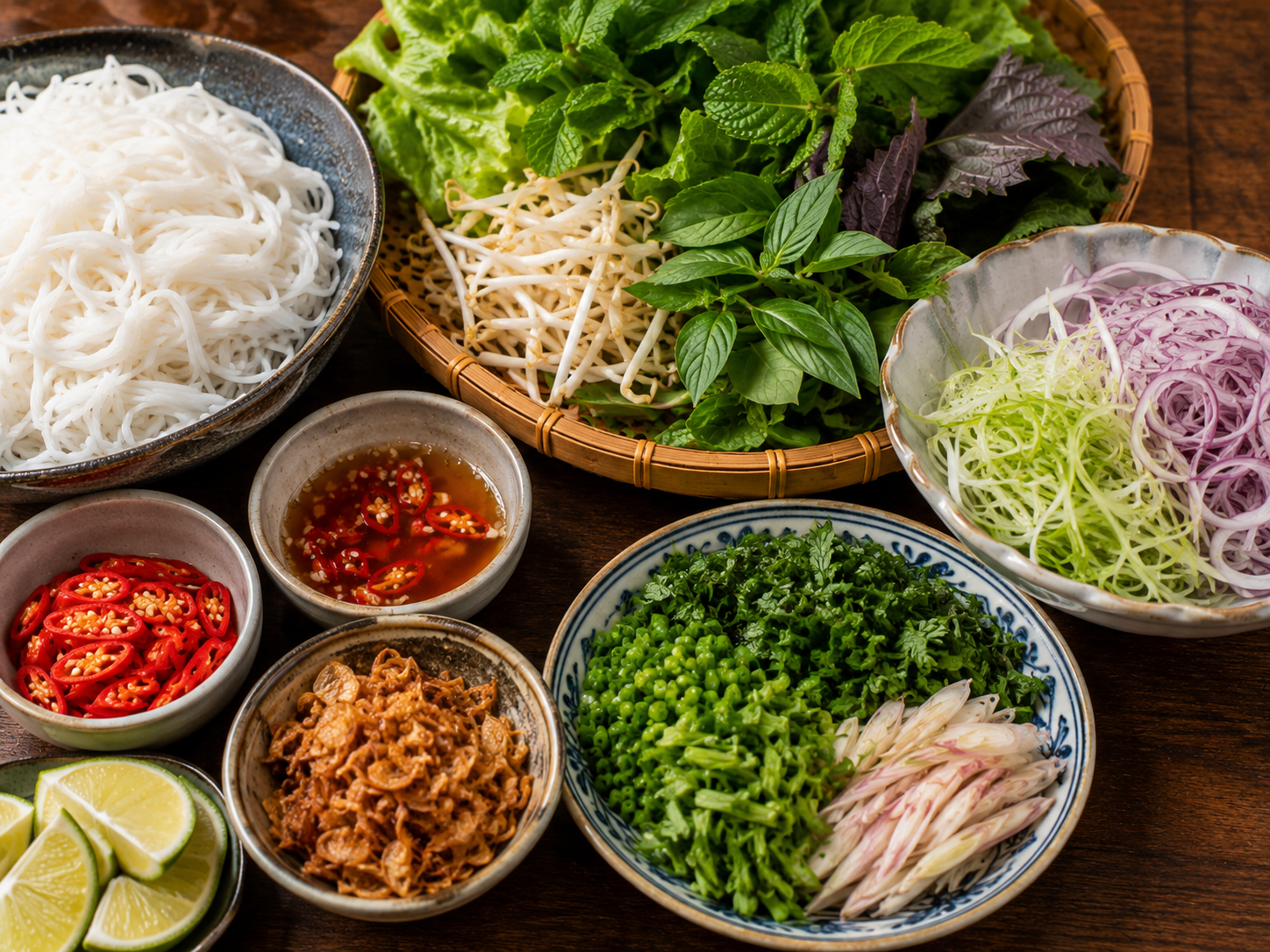
Step 6: Cook The Noodles And Prepare The Vegetables
Cook the rice vermicelli noodles according to the package directions. Rinse under warm water to remove excess starch, then drain well.
Prepare the serving vegetables and herbs. Set out the bean sprouts, banana blossom or cabbage, water spinach stems, rau đắng if using, mixed herbs, garlic chives, lime wedges, and sliced chilies.
The fresh vegetables are not decoration. They are part of how the bowl works. They bring crunch, bitterness, freshness, and acidity against the deep fermented broth.
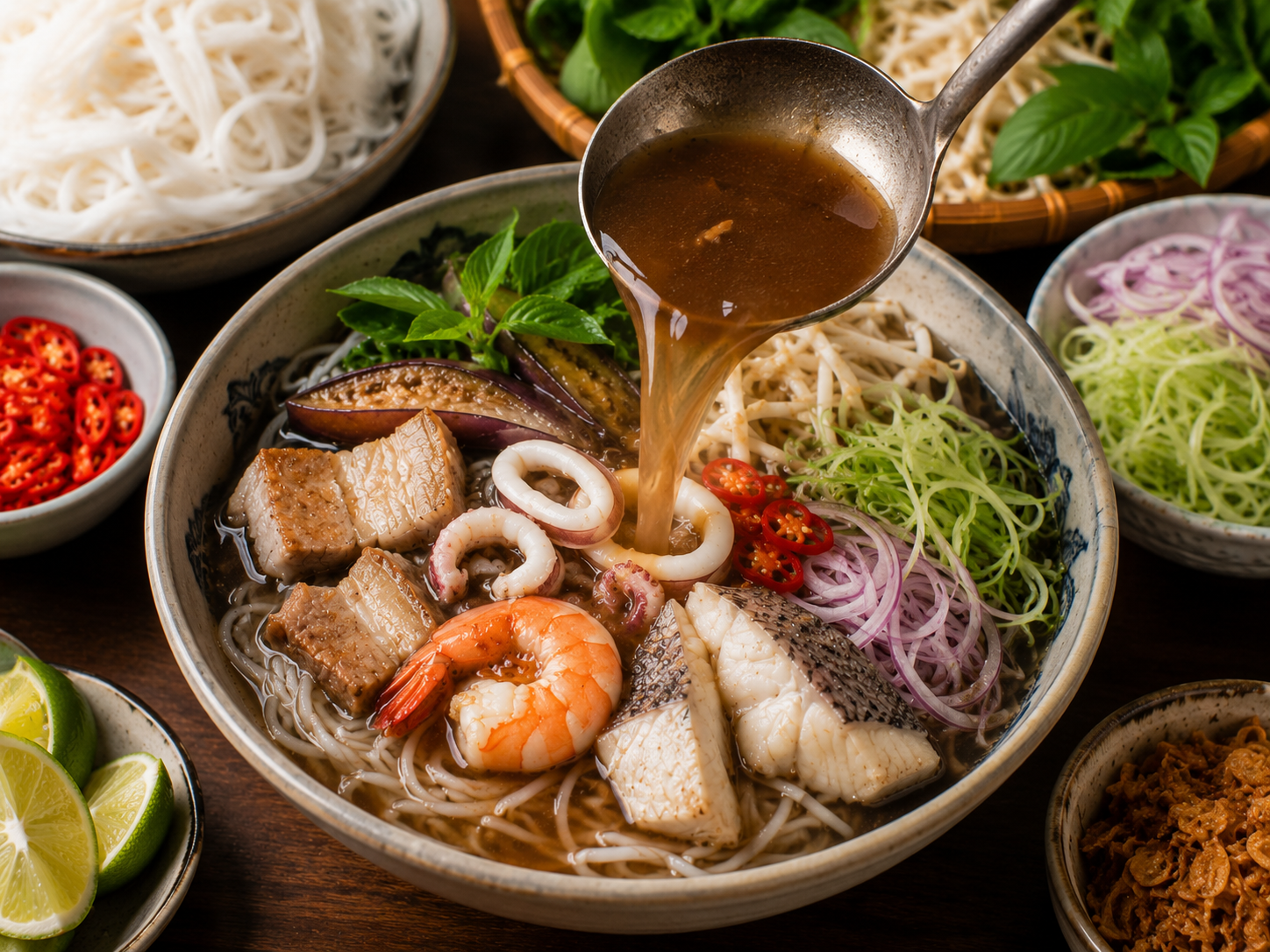
Step 7: Assemble The Bún Mắm
Divide the cooked rice vermicelli noodles among serving bowls.
Add pieces of pork belly, fish, shrimp, squid, and eggplant over the noodles. Ladle the hot broth over the top.
Serve immediately with the herb and vegetable platter on the side. Add bean sprouts, herbs, banana blossom, rau đắng, lime, and chilies as you eat.
Final Thoughts
Bún mắm is not a quiet bowl of noodles. It is strong, layered, and deeply Vietnamese in the way it uses fermented fish as a source of comfort instead of shock.
The dish teaches you something important about southern Vietnamese cooking. Big flavor does not mean heavy food. The broth can be intense, but the herbs, vegetables, lime, chilies, seafood, and eggplant keep the bowl alive.
For a home cook outside Vietnam, the most important thing is not making it smell mild. The most important thing is learning how to control the mắm. Simmer it, strain it, balance it, and let it do what it is supposed to do.
That is where bún mắm becomes more than a fermented fish noodle soup. It becomes a bowl that tastes like the Mekong Delta.