Bún Riêu Recipe: Vietnamese Crab And Tomato Noodle Soup
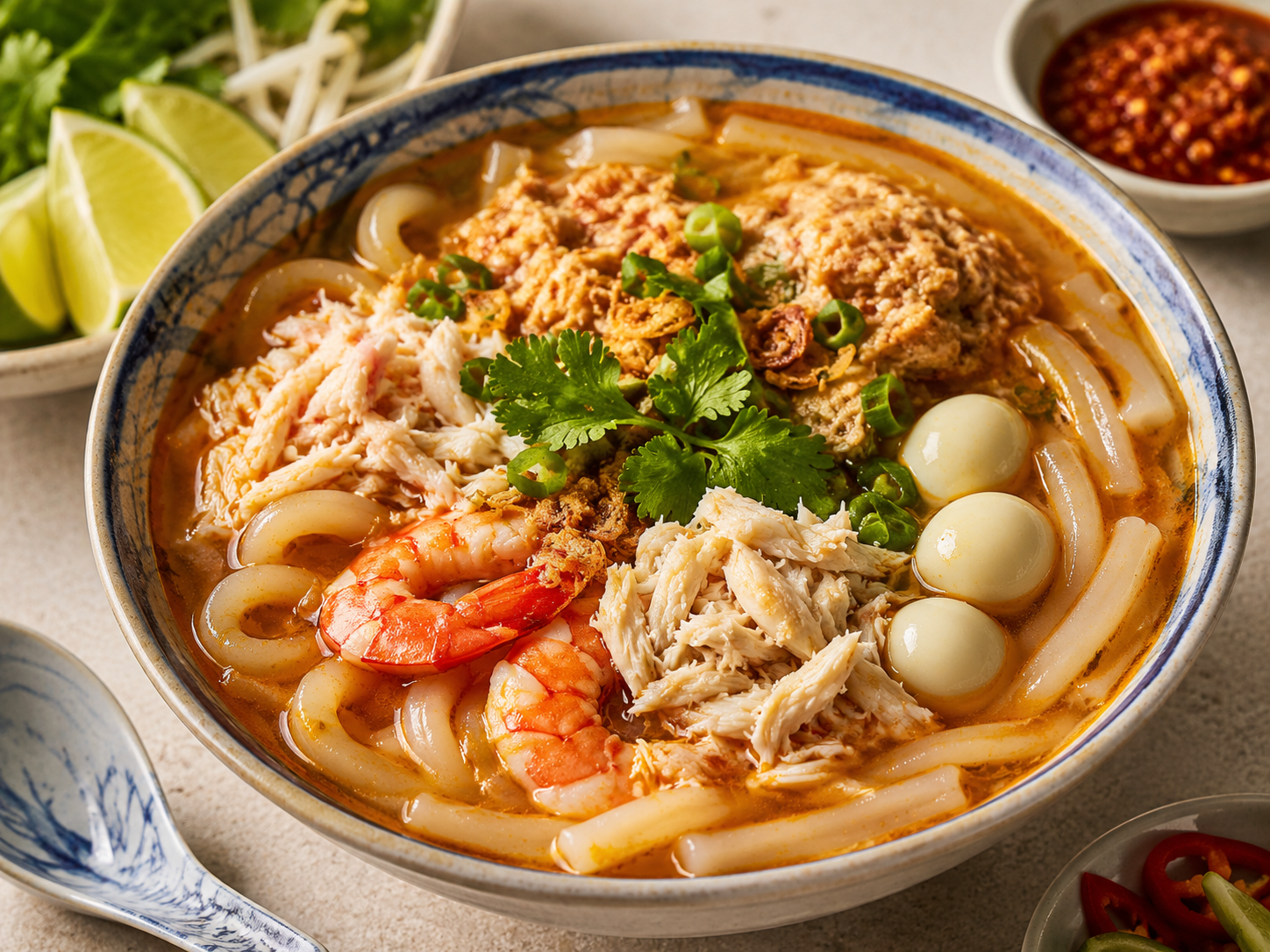
Bún riêu is one of those Vietnamese noodle soups that does not whisper. It comes to the table red from tomato, fragrant with crab, sharp with fermented shrimp paste if you want it, and crowded with the kind of toppings that make every bite different.
The broth is lighter than phở, brighter than bún bò Huế, and more rustic than a polished restaurant soup. It tastes like market mornings, plastic stools, herb baskets, and a pot that has been simmering long before you sat down.
At its heart, bún riêu is built on crab, tomato, rice vermicelli, fried tofu, and herbs. In Vietnam, you will find bowls with pork, snails, blood cake, beef, shrimp, or extra crab depending on the region, the vendor, and the family recipe. The version here keeps the bowl focused and practical: crab, tomato, pork broth, tofu, noodles, herbs, and a riêu mixture that floats in soft, savory curds.
This is not a shortcut tomato soup with noodles. The soul of bún riêu is in the balance. The broth should be savory and lightly sweet from pork bones and dried shrimp, tangy from tomato, funky at the edges from shrimp paste, and rich with crab without becoming heavy.
Ingredients
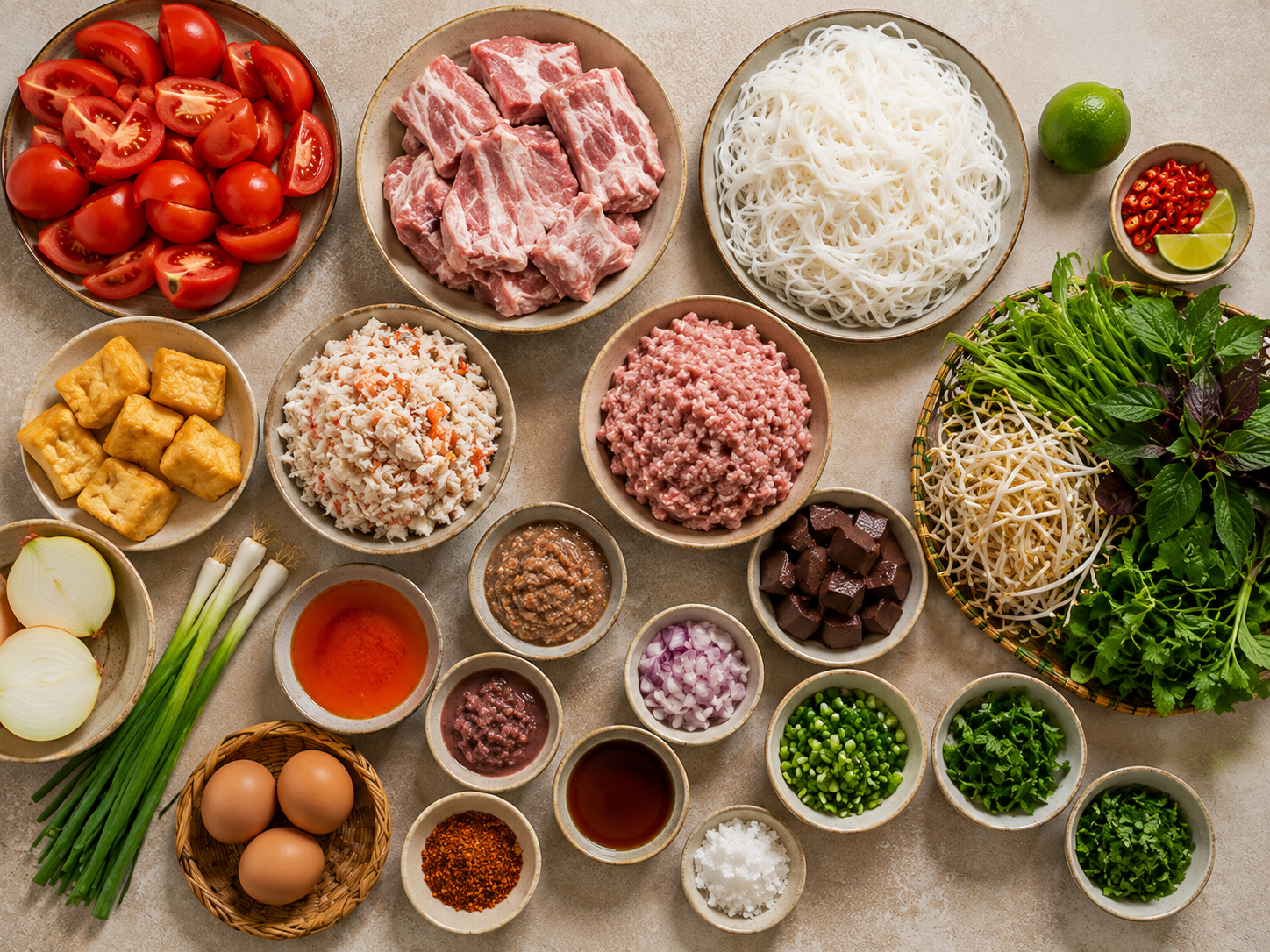
For The Broth
3 pounds pork neck bones or pork spare ribs, rinsed
12 cups water
1 medium yellow onion, peeled and halved
1 tablespoon kosher salt, plus more as needed
1 tablespoon rock sugar or granulated sugar
2 tablespoons dried shrimp, rinsed
1 tablespoon fish sauce
1 teaspoon chicken bouillon powder, optional but common in Vietnamese home cooking
6 medium tomatoes, cut into wedges
2 tablespoons neutral oil
1 tablespoon annatto seeds, or 1 tablespoon annatto oil
For The Crab Riêu
8 ounces crab meat, drained if canned
1 jar Vietnamese minced crab in spices, about 7 ounces
8 ounces ground pork
3 large eggs
2 tablespoons dried shrimp, soaked in warm water for 10 minutes, drained, and finely chopped
2 tablespoons minced shallot
1 tablespoon fish sauce
1 teaspoon sugar
½ teaspoon ground black pepper
½ teaspoon fermented shrimp paste, optional but recommended
For The Noodles And Toppings
1½ pounds fresh round rice vermicelli noodles, or 14 ounces dried rice vermicelli noodles
12 ounces fried tofu puffs or fried tofu triangles
8 ounces Vietnamese pork blood cake, sliced, optional
4 scallions, thinly sliced
½ cup chopped cilantro
For Serving
Shredded water spinach, banana blossom, or both
Bean sprouts
Vietnamese perilla, mint, kinh giới, or Thai basil
Lime wedges
Sliced red chilies
Fermented shrimp paste, for the table
Fish sauce, for adjusting
Chili oil or sate, optional
How To Make Bún Riêu
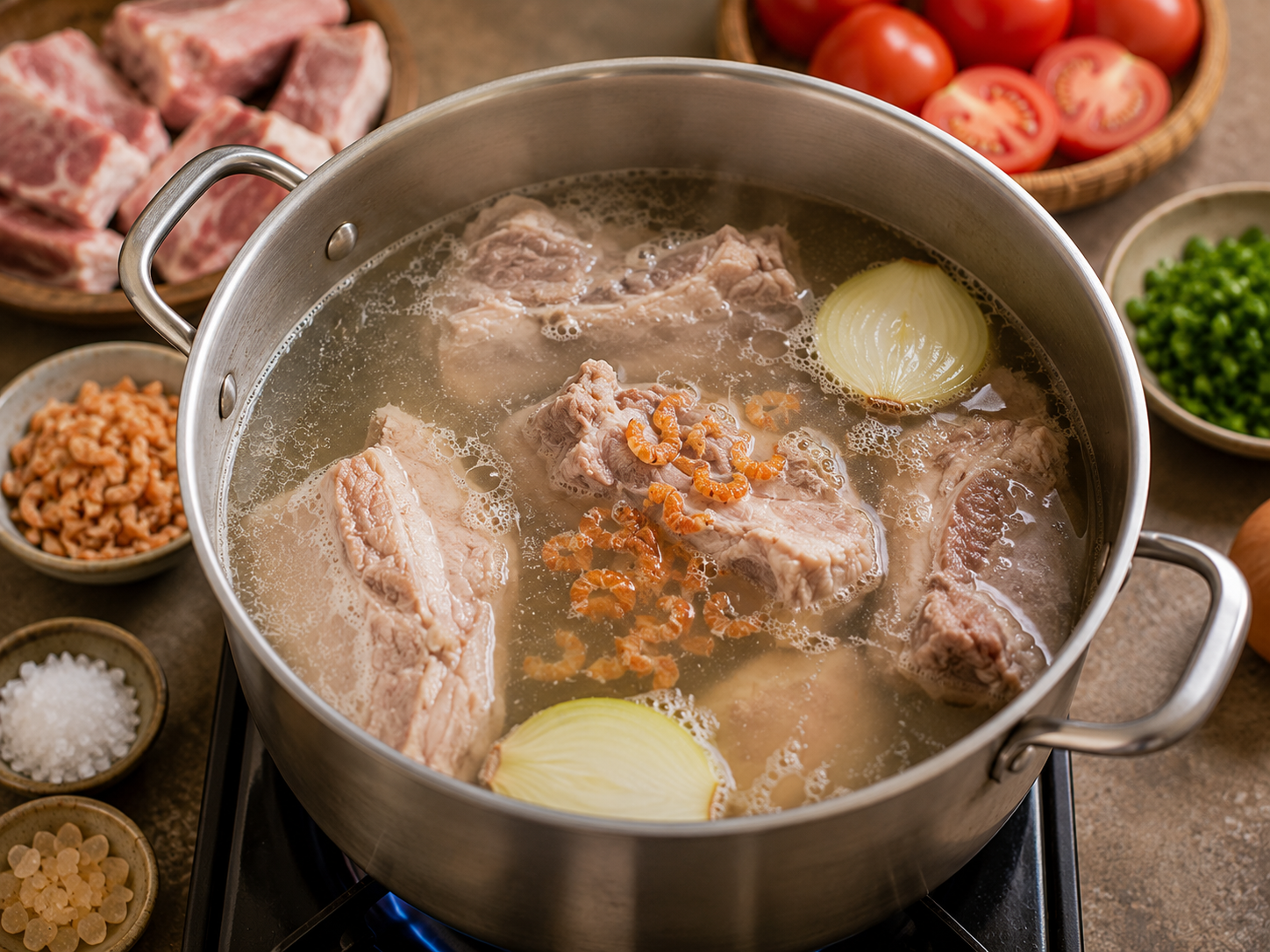
Step 1: Build The Pork Broth
Add the pork bones to a large pot and cover with cold water. Bring to a hard boil for 5 minutes, then drain and rinse the bones well. Wash the pot before continuing.
Return the cleaned bones to the pot with 12 cups water, the onion, salt, sugar, and dried shrimp. Bring to a boil, then lower to a gentle simmer.
Simmer for 1½ to 2 hours, skimming the surface when needed. The broth should become savory and lightly sweet, not cloudy and greasy. Keep the heat gentle. A rolling boil will make the broth muddy.
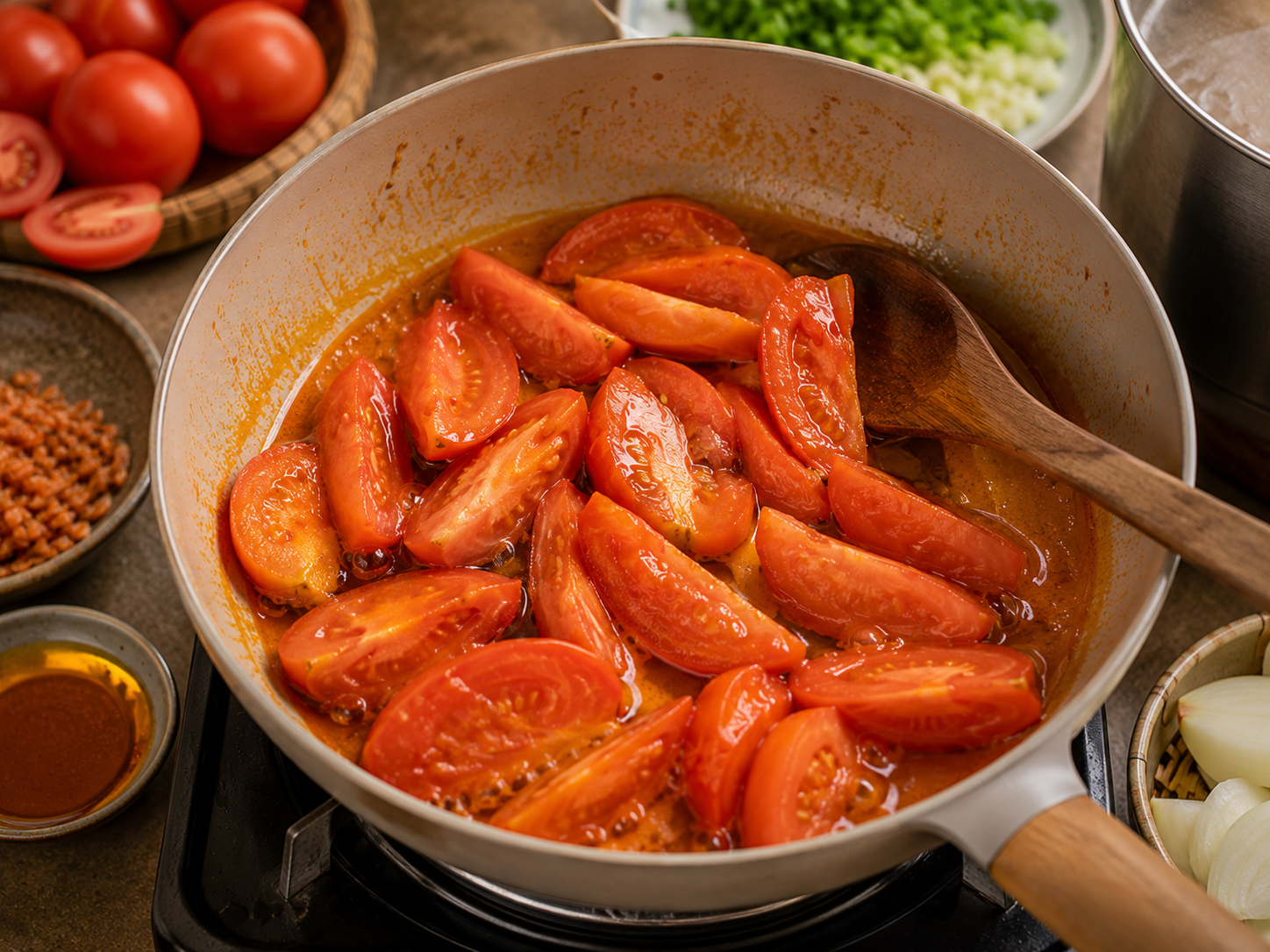
Step 2: Make The Annatto Tomato Base
Heat the oil in a small pan over medium-low heat. Add the annatto seeds and cook for 1 to 2 minutes, just until the oil turns deep orange-red. Do not burn the seeds. Strain and discard the seeds.
If using prepared annatto oil, warm it directly in the pan.
Add the tomato wedges and cook for 5 to 7 minutes, stirring gently, until the tomatoes soften but still hold some shape. They should release color and sweetness without turning into a paste.
Add the tomatoes to the simmering broth.
Step 3: Mix The Crab Riêu
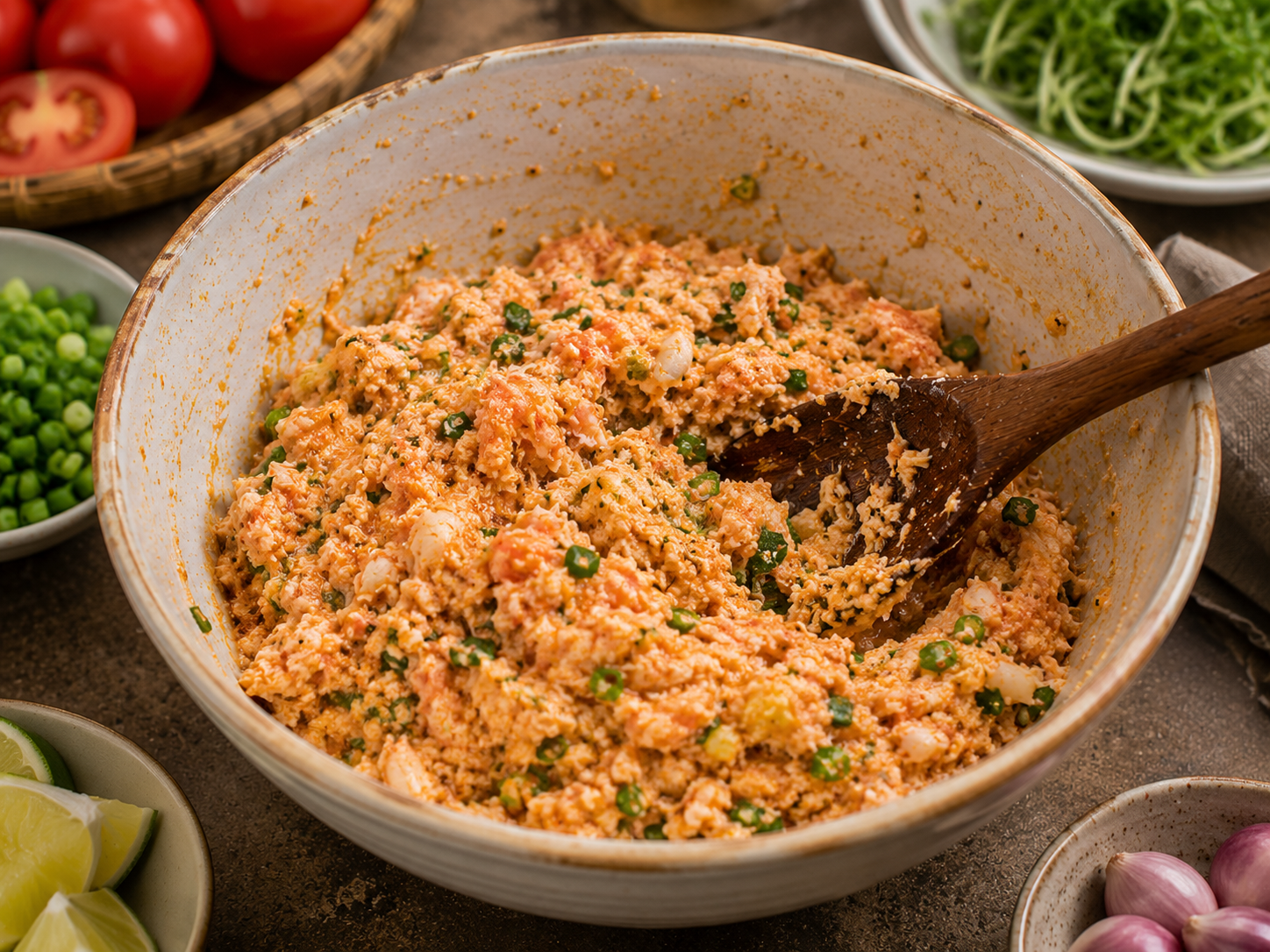
In a bowl, combine the crab meat, minced crab in spices, ground pork, eggs, chopped dried shrimp, shallot, fish sauce, sugar, black pepper, and fermented shrimp paste if using.
Mix until the mixture is evenly combined but not whipped. It should look loose and spoonable, not stiff like meatball mix.
The egg helps the riêu set. The pork gives the crab mixture body. The jarred crab paste brings the deep crab flavor that most home cooks outside Vietnam need for this dish.
Step 4: Cook The Riêu In The Broth
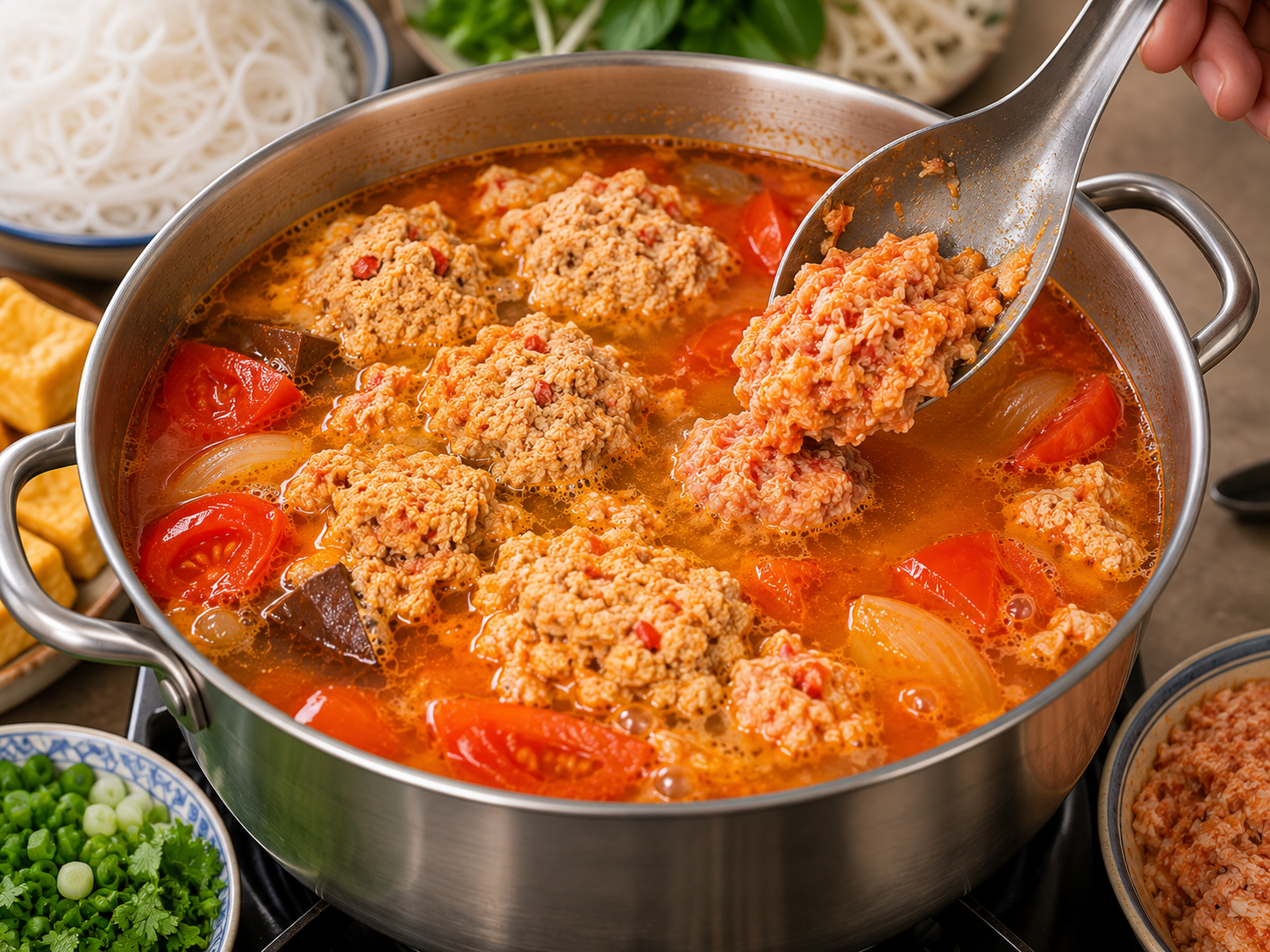
Bring the broth to a gentle simmer. Use a large spoon to drop the crab mixture onto the surface of the broth in loose scoops.
Do not stir right away. Let the riêu sit and cook for 5 to 7 minutes so it can set into soft curds. The pieces should float and hold together, but they should still feel tender.
Once the riêu is set, gently move the pieces aside with a ladle. Avoid breaking them up too much. Bún riêu should have visible crab curds in the bowl.
Step 5: Add Tofu And Optional Blood Cake
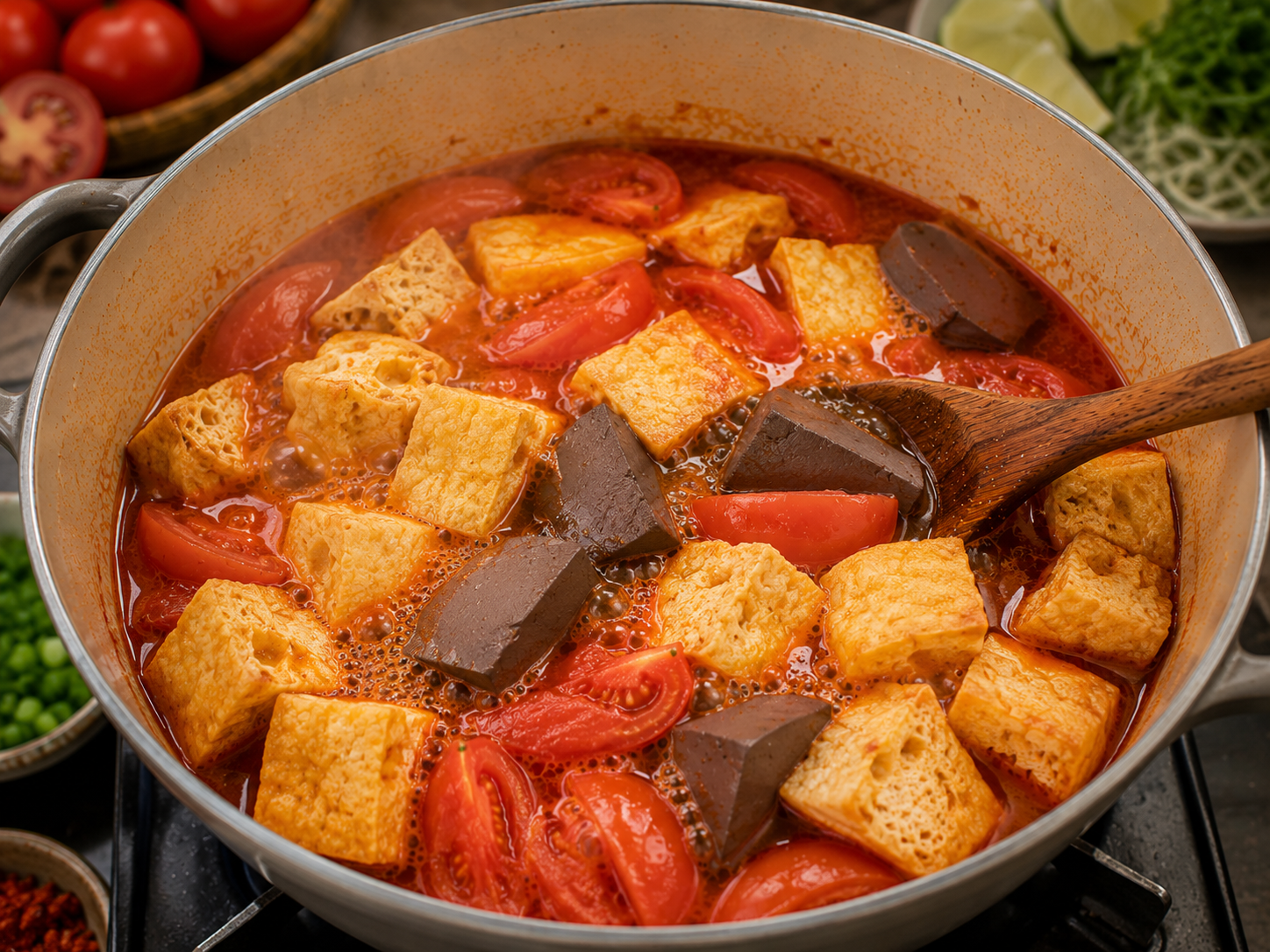
Add the fried tofu to the broth and simmer for 10 minutes. The tofu should soften slightly and absorb the tomato-crab broth while still keeping its shape.
If using pork blood cake, add it during the last 5 minutes of simmering. It only needs to warm through. Do not boil it aggressively or it can become grainy.
Taste the broth. Adjust with fish sauce for salt, a small pinch of sugar if the tomatoes are too sharp, or a little fermented shrimp paste if you want a deeper Vietnamese street food flavor.
The finished broth should be savory, lightly tangy, crabby, tomato-red, and aromatic. It should not taste like plain tomato water.
Step 6: Prepare The Noodles
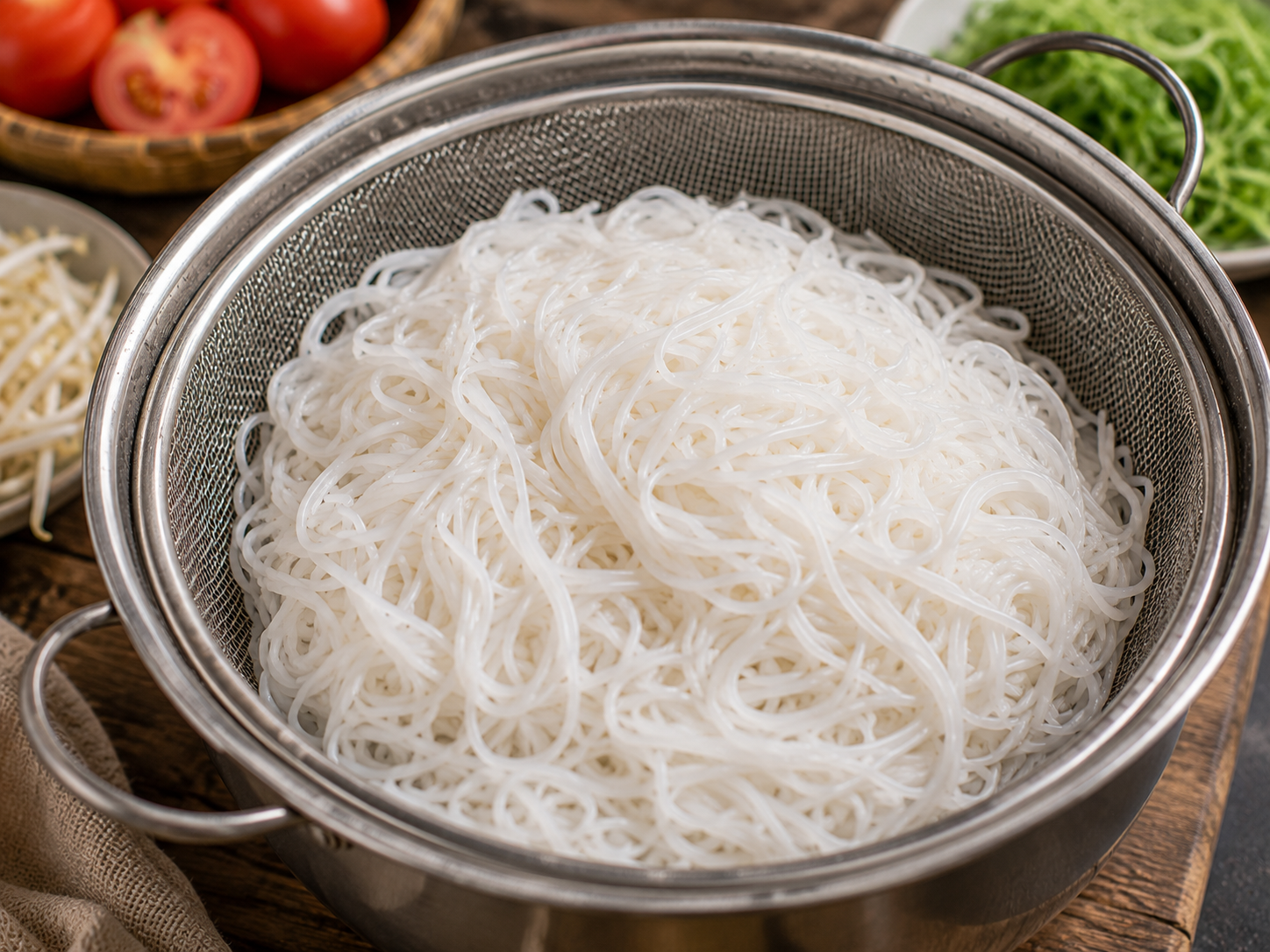
If using fresh rice vermicelli, rinse quickly with hot water or blanch for a few seconds to loosen.
If using dried noodles, cook according to the package directions until tender but not mushy. Rinse under warm water and drain well.
Divide the noodles among serving bowls. Bún riêu is usually generous with broth, but the noodles should still have enough structure to carry the toppings.
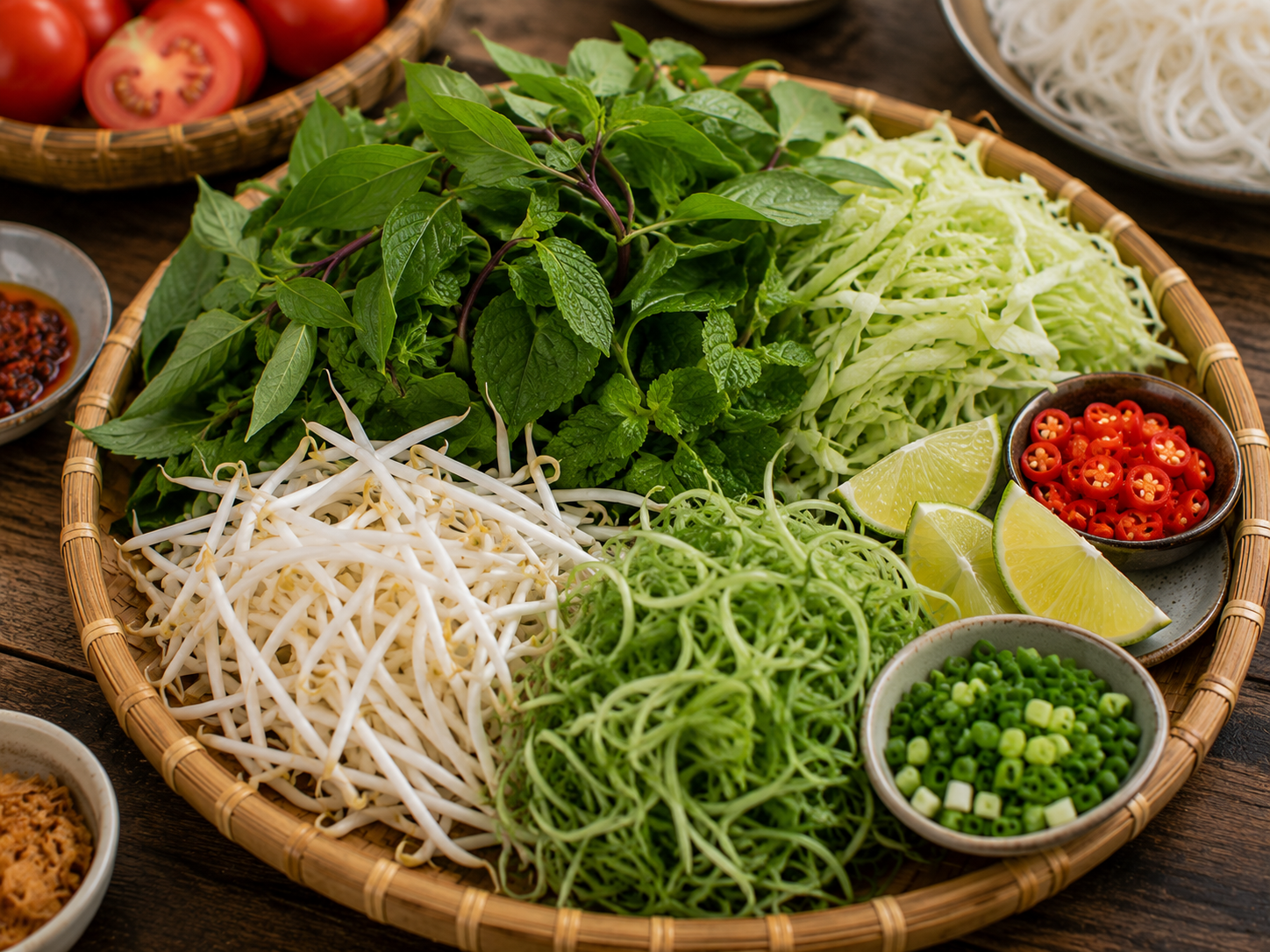
Step 7: Prepare The Herbs And Vegetables
Wash and drain the herbs, bean sprouts, shredded water spinach, and banana blossom.
If using banana blossom, soak the shredded pieces in cold water with a little lime juice or vinegar to prevent browning, then drain well before serving.
This herb plate matters. Bún riêu needs fresh vegetables to cut through the crab, tofu, and tomato broth. Without them, the bowl feels heavy and unfinished.
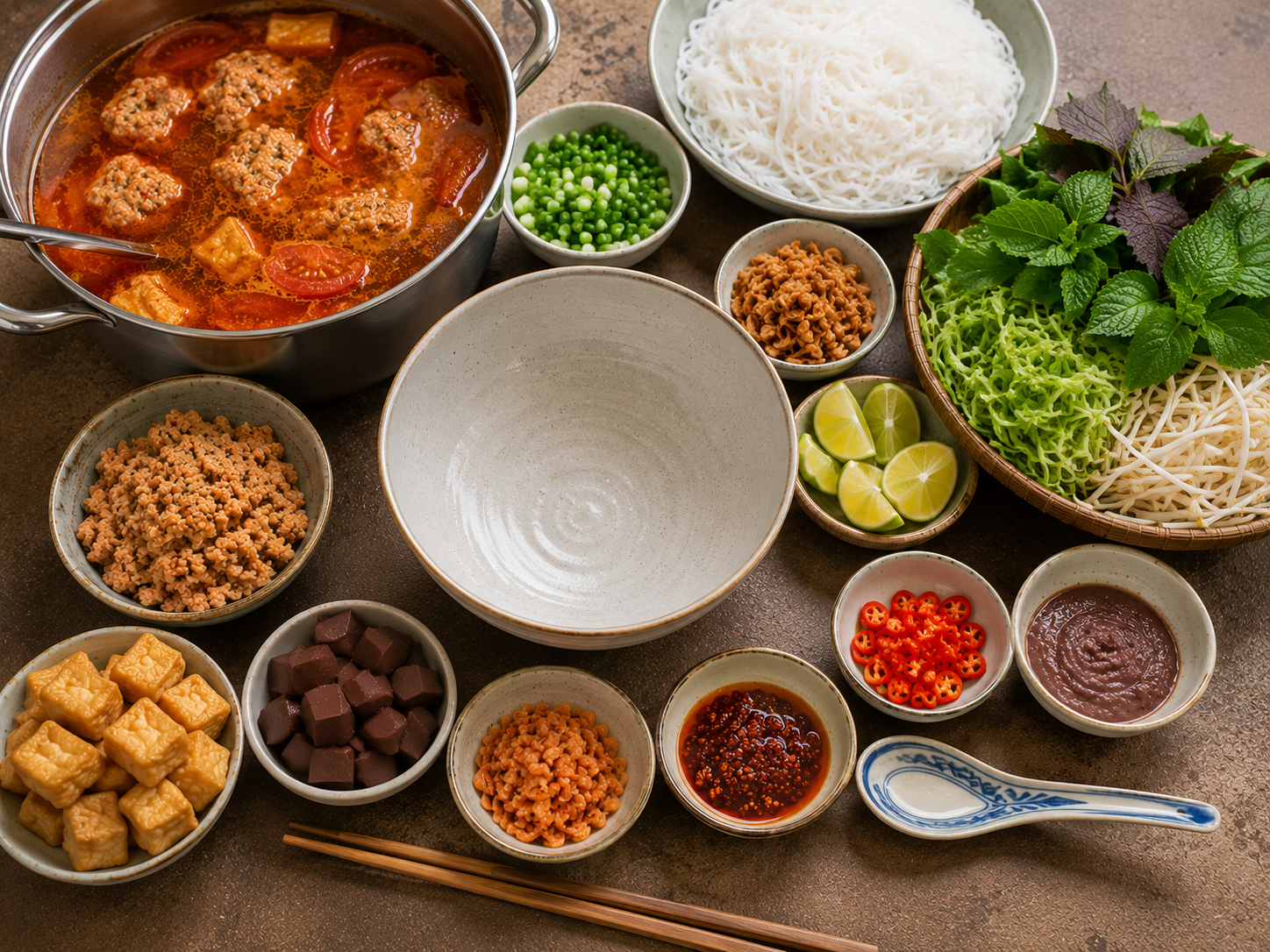
Step 8: Assemble The Bowls
Place noodles in each bowl. Ladle hot broth over the noodles, making sure each bowl gets tomato, tofu, and pieces of crab riêu.
Add sliced scallions and cilantro over the top.
Serve with the herb plate, lime wedges, sliced chilies, fermented shrimp paste, and chili oil on the side.
Each person should adjust their own bowl. A little lime brightens the tomato. A small spoon of shrimp paste deepens the broth. Herbs bring the whole thing back to life.
Final Thoughts
Bún riêu teaches you that Vietnamese noodle soup is not one thing. It does not always have to be clear, quiet, or delicate. Sometimes it is tangy, funky, red, crowded, and full of edges.
That is what makes this bowl worth cooking. The crab gives it depth. The tomato gives it brightness. The tofu soaks up the broth. The herbs keep it fresh. The shrimp paste, if you use it, brings the flavor closer to the street.
It is not the fastest Vietnamese noodle soup to make, but it rewards attention. Build the broth properly, let the crab curds set gently, and do not skip the herbs.
That is where bún riêu becomes what it is supposed to be: a Vietnamese bowl with comfort, character, and just enough funk to make you remember it.