Bánh Canh Cua Recipe: Vietnamese Crab Tapioca Noodle Soup
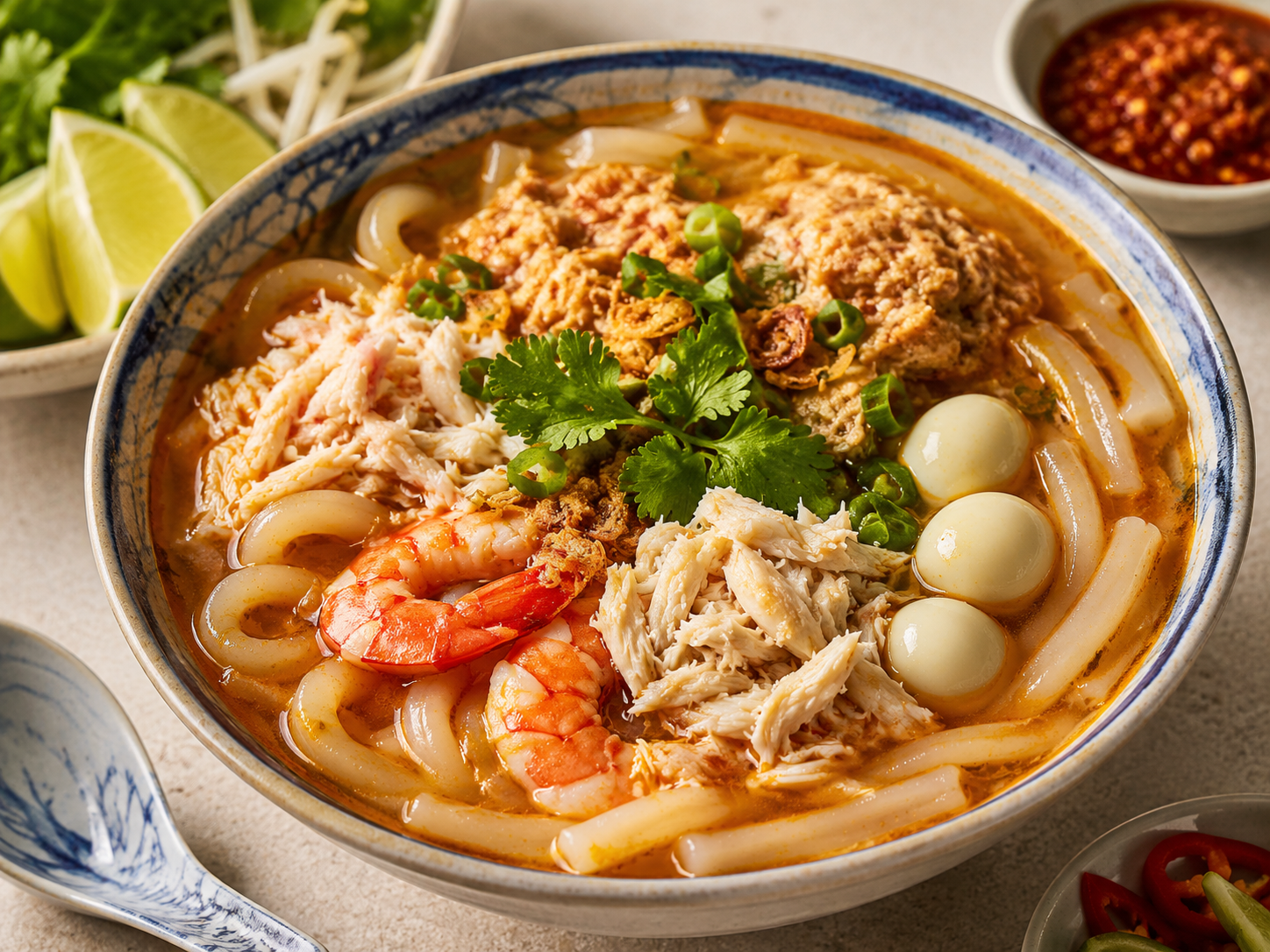
Bánh canh cua is not a delicate noodle soup. It is thick, glossy, seafood-rich, and built for people who like their bowls with weight. The noodles have chew. The broth clings. The crab gives it sweetness, the pork bones give it body, and the annatto oil gives it that deep orange glow you see at Vietnamese street stalls.
In Vietnam, especially around Saigon and the South, bánh canh cua sits somewhere between comfort food and street food. You can find it in market stalls, sidewalk shops, family kitchens, and old-school noodle houses where the pot is always hotter than the room.
The version that matters is not thin or timid. The broth should be savory, slightly thick, lightly sweet from crab and shrimp, and rounded with fish sauce. The noodles should feel slippery and bouncy, somewhere between tapioca noodle and Vietnamese udon, but with its own identity.
This home version keeps that spirit intact. It uses ingredients a U.S. home cook can actually find, but the goal is still Vietnam first: a proper crab noodle soup with body, seafood aroma, pork-bone depth, fresh herbs, and enough texture to make the bowl feel alive.
Ingredients
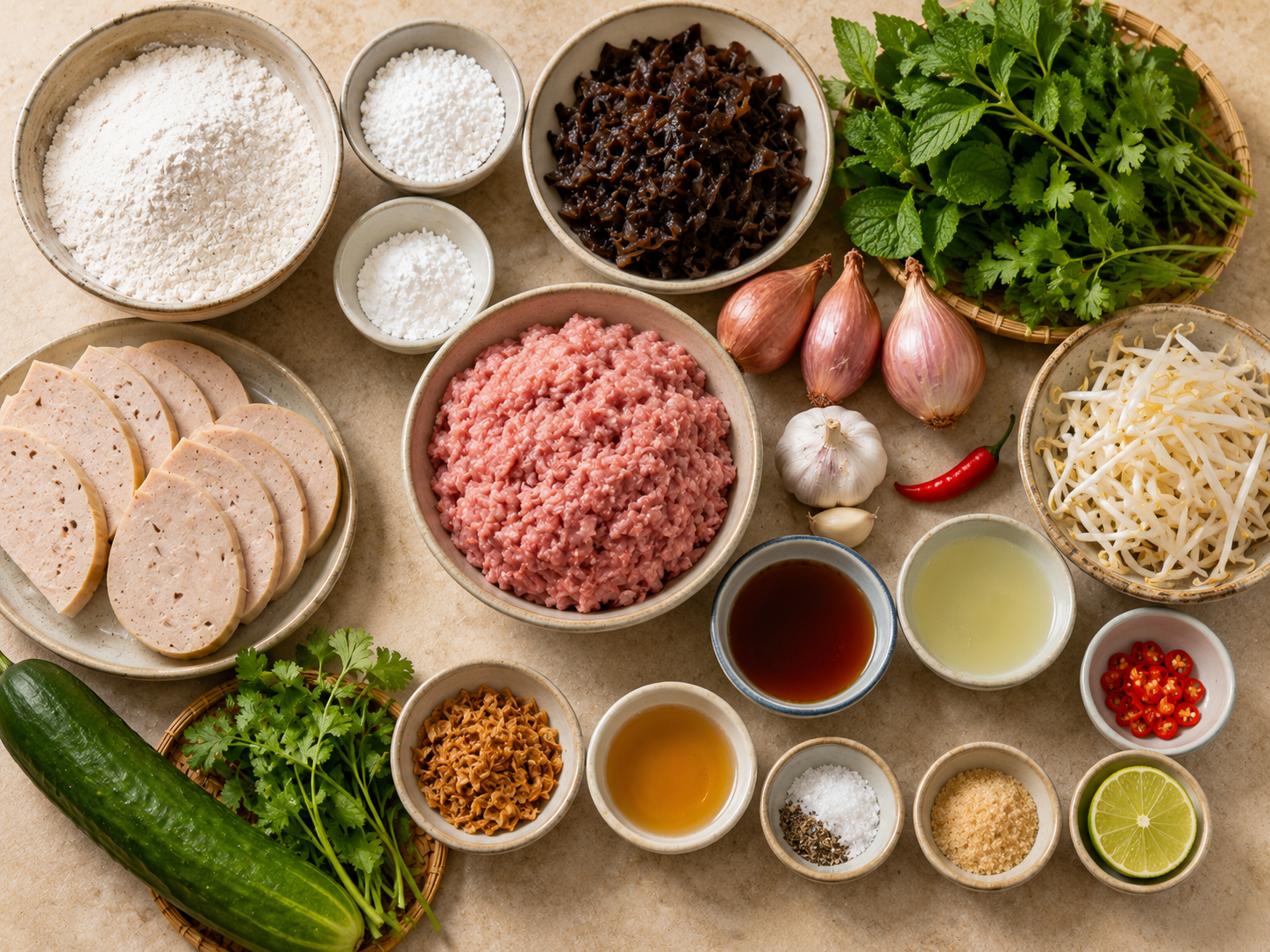
For The Broth
3 pounds pork neck bones or pork spare ribs, rinsed well
12 cups water
1 yellow onion, peeled and halved
1 small daikon radish, peeled and cut into large chunks
½ cup dried shrimp, rinsed
1 tablespoon salt, divided
1 tablespoon sugar or rock sugar
3 tablespoons fish sauce, plus more to adjust
½ teaspoon ground white pepper
1 tablespoon chicken bouillon powder, optional but common in Vietnamese home cooking
For The Crab And Seafood
12 ounces cooked crab meat, picked over for shells
1 pound large shrimp, peeled and deveined, shells reserved for the broth if available
1 tablespoon neutral oil
2 tablespoons annatto oil
3 shallots, thinly sliced
4 garlic cloves, minced
1 tablespoon fish sauce
½ teaspoon sugar
½ teaspoon ground black pepper
For The Noodles
2 pounds fresh bánh canh noodles or thick tapioca-rice noodles
Water, for rinsing or blanching the noodles
For Thickening The Broth
3 tablespoons tapioca starch
¼ cup cold water
For Serving
12 quail eggs, boiled and peeled, optional
3 scallions, thinly sliced
½ cup cilantro, chopped
¼ cup fried shallots
1 to 2 red chilies, thinly sliced
Lime wedges
Ground black pepper
Fish sauce, for adjusting at the table
How To Make Bánh Canh Cua
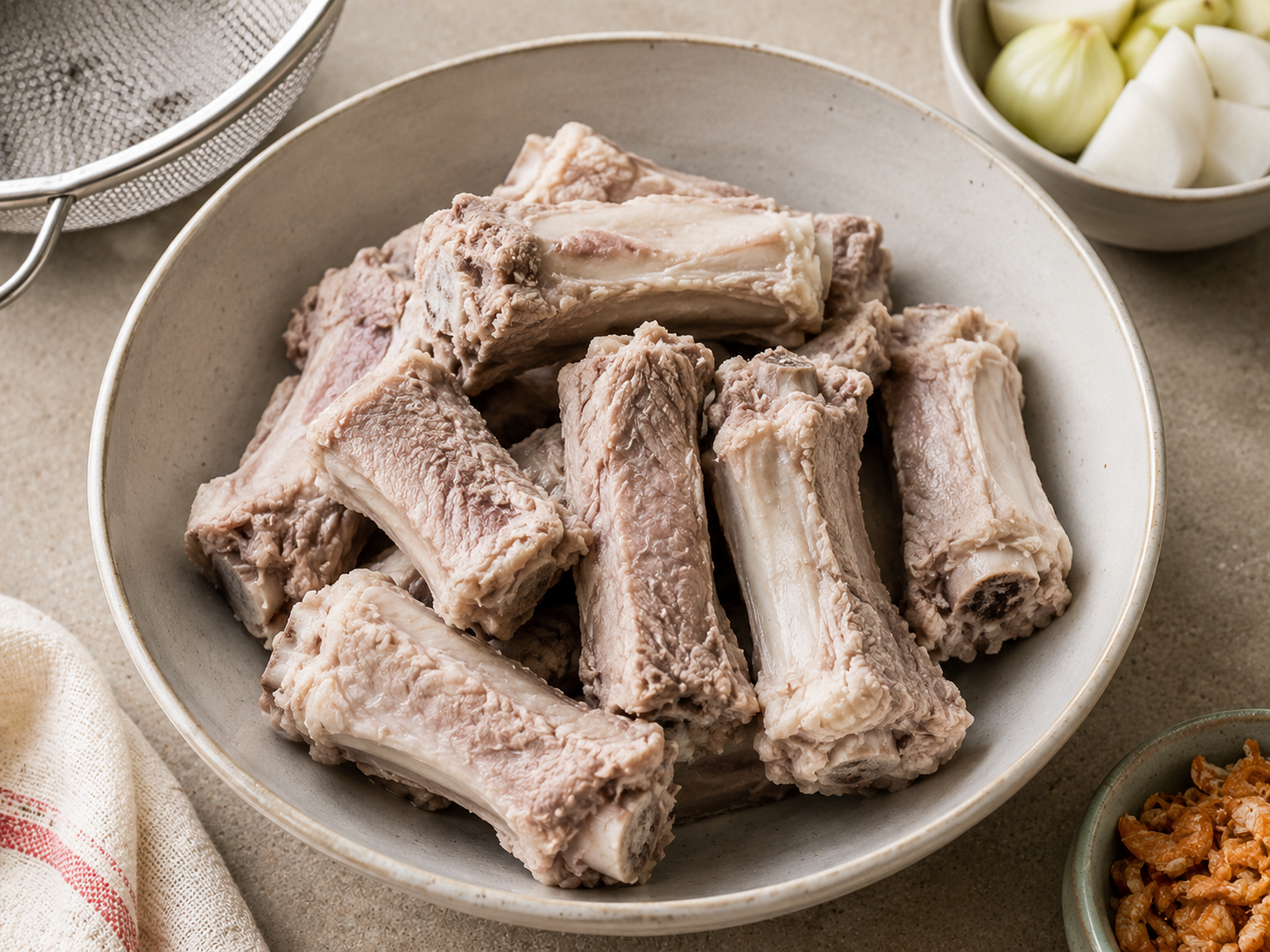
Step 1: Clean The Pork Bones
Place the pork bones or ribs in a large pot and cover with water. Bring to a hard boil for 5 minutes, then drain and rinse the bones under running water. Wash the pot before using it again.
This step keeps the broth cleaner and less muddy. You are not trying to cook the bones yet. You are removing blood, foam, and impurities so the final broth tastes round instead of heavy.
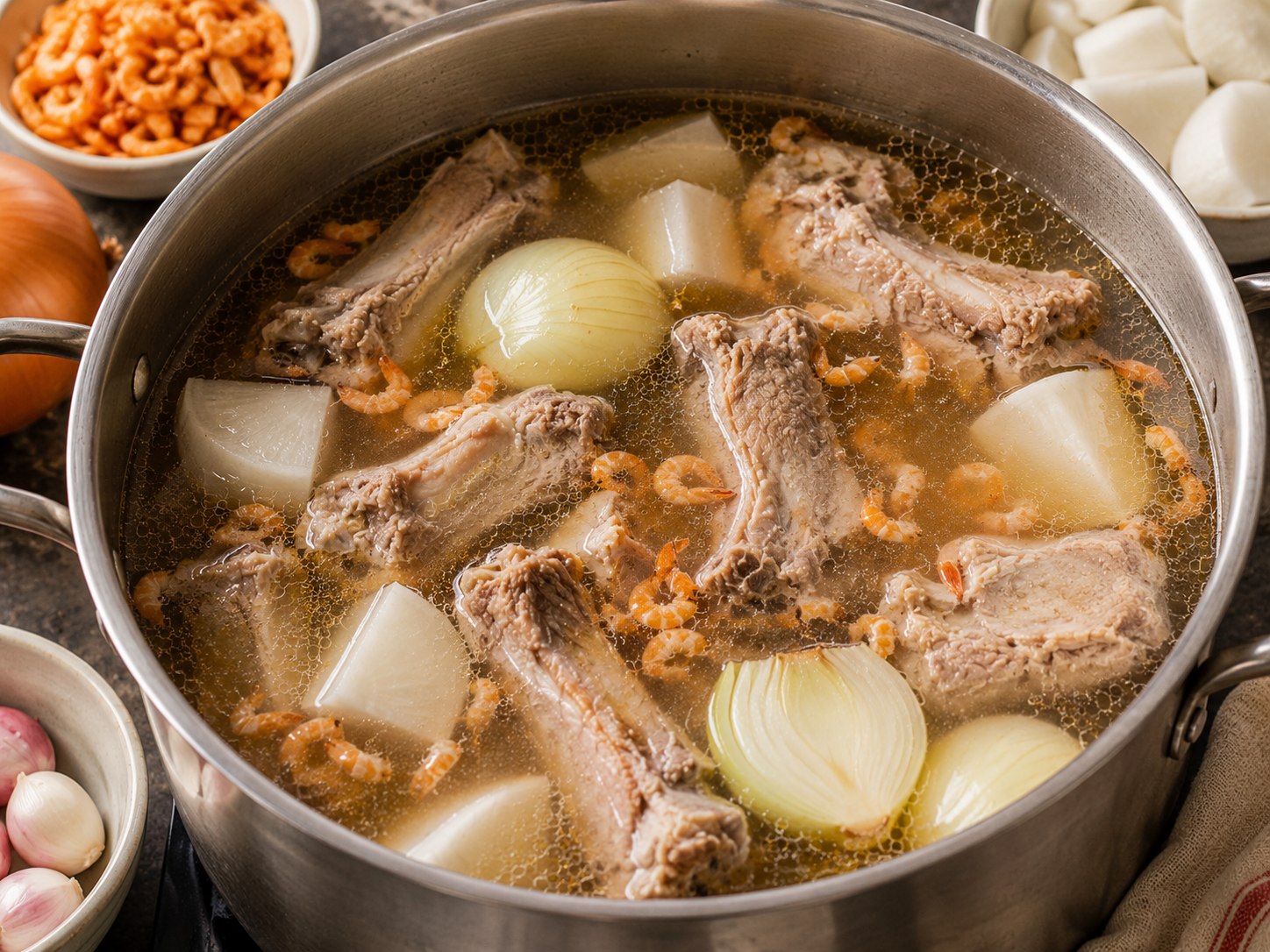
Step 2: Build The Broth
Return the cleaned bones to the pot. Add 12 cups water, onion, daikon, dried shrimp, 2 teaspoons salt, sugar, fish sauce, white pepper, and chicken bouillon powder if using.
Bring to a boil, then lower to a gentle simmer. Skim off any foam that rises to the surface. Simmer uncovered for 1½ to 2 hours, until the broth tastes sweet from the bones and dried shrimp.
The broth should smell savory and clean, not harsh. Keep the simmer gentle. A violent boil makes the broth cloudy and can pull out a rougher flavor from the bones.
Step 3: Cook The Shrimp
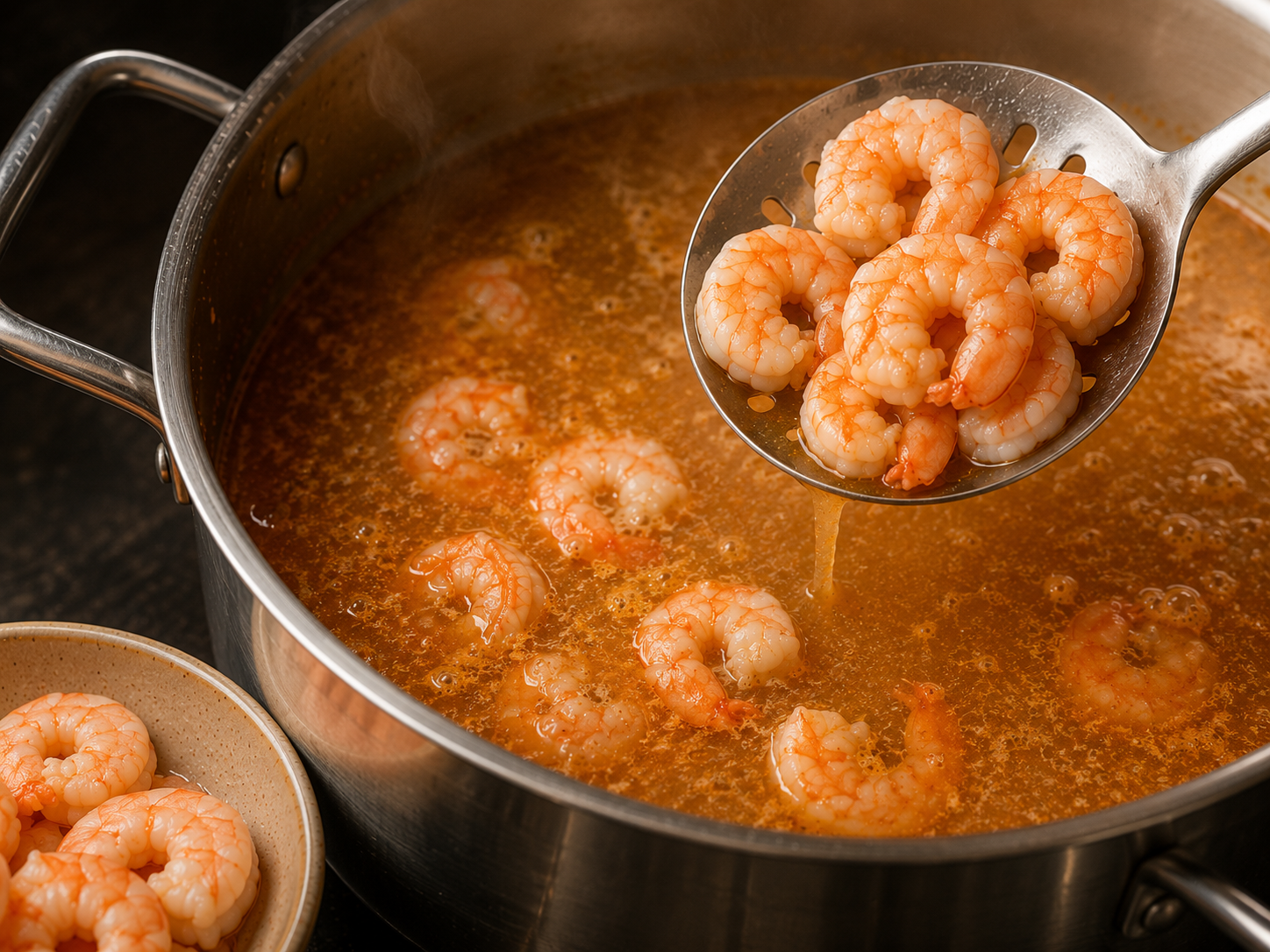
After the broth has simmered, add the peeled shrimp directly to the pot for 2 to 3 minutes, just until they turn pink and curl. Remove them with a slotted spoon and set aside.
Do not leave the shrimp in the broth for too long. Shrimp turns rubbery fast, and bánh canh cua is better when the toppings still have their own texture.
Step 4: Season The Crab
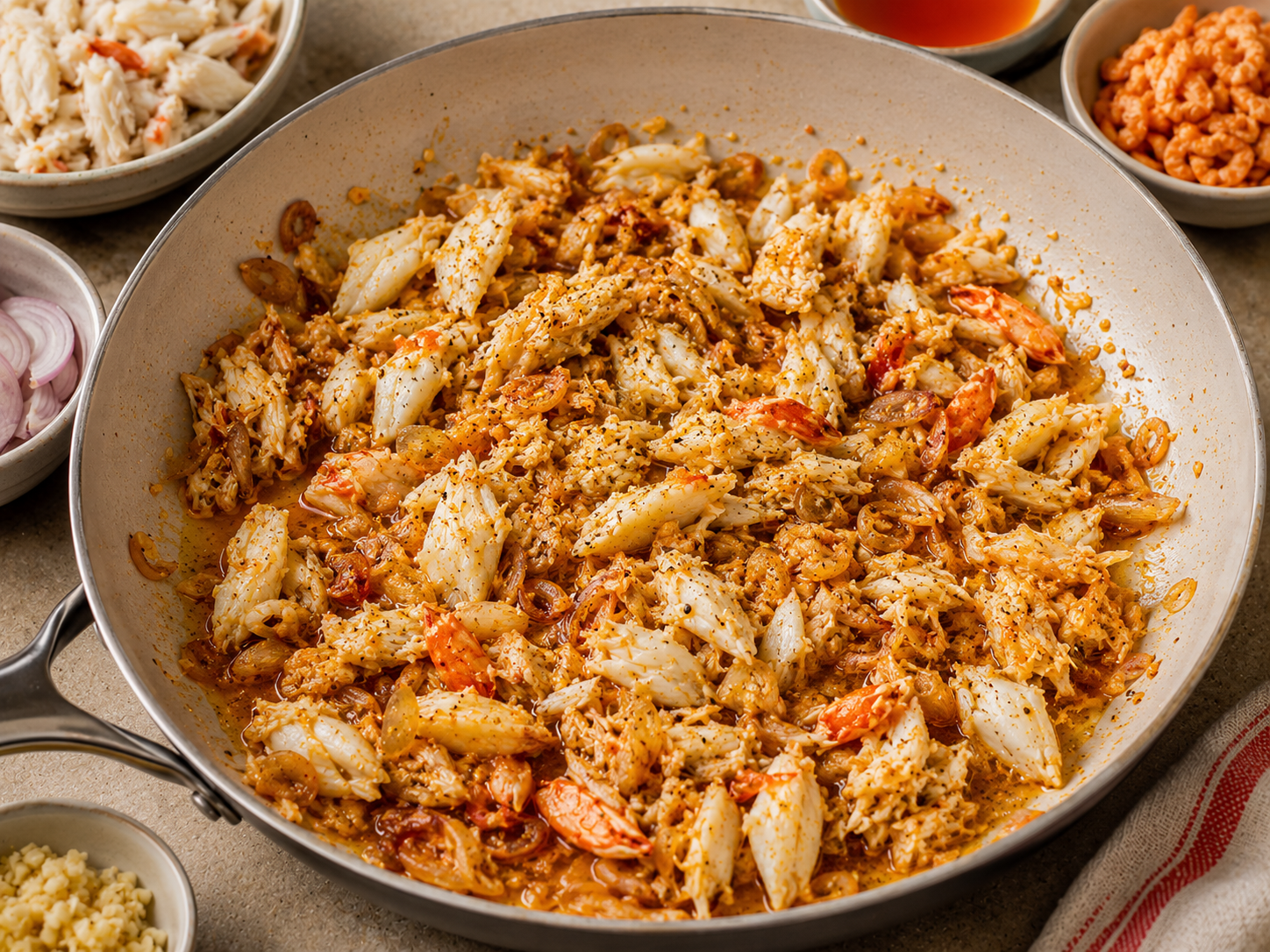
Heat neutral oil and annatto oil in a skillet over medium heat. Add the shallots and cook for 2 to 3 minutes, until fragrant and lightly softened. Add the garlic and cook for 30 seconds.
Add the crab meat, fish sauce, sugar, and black pepper. Stir gently for 2 to 3 minutes, just until the crab is warmed through and coated in the shallot-garlic oil.
This is where the crab becomes part of the soup instead of just a topping. The annatto oil gives color, the shallots give sweetness, and the fish sauce sharpens the seafood flavor.
Step 5: Strain And Finish The Broth
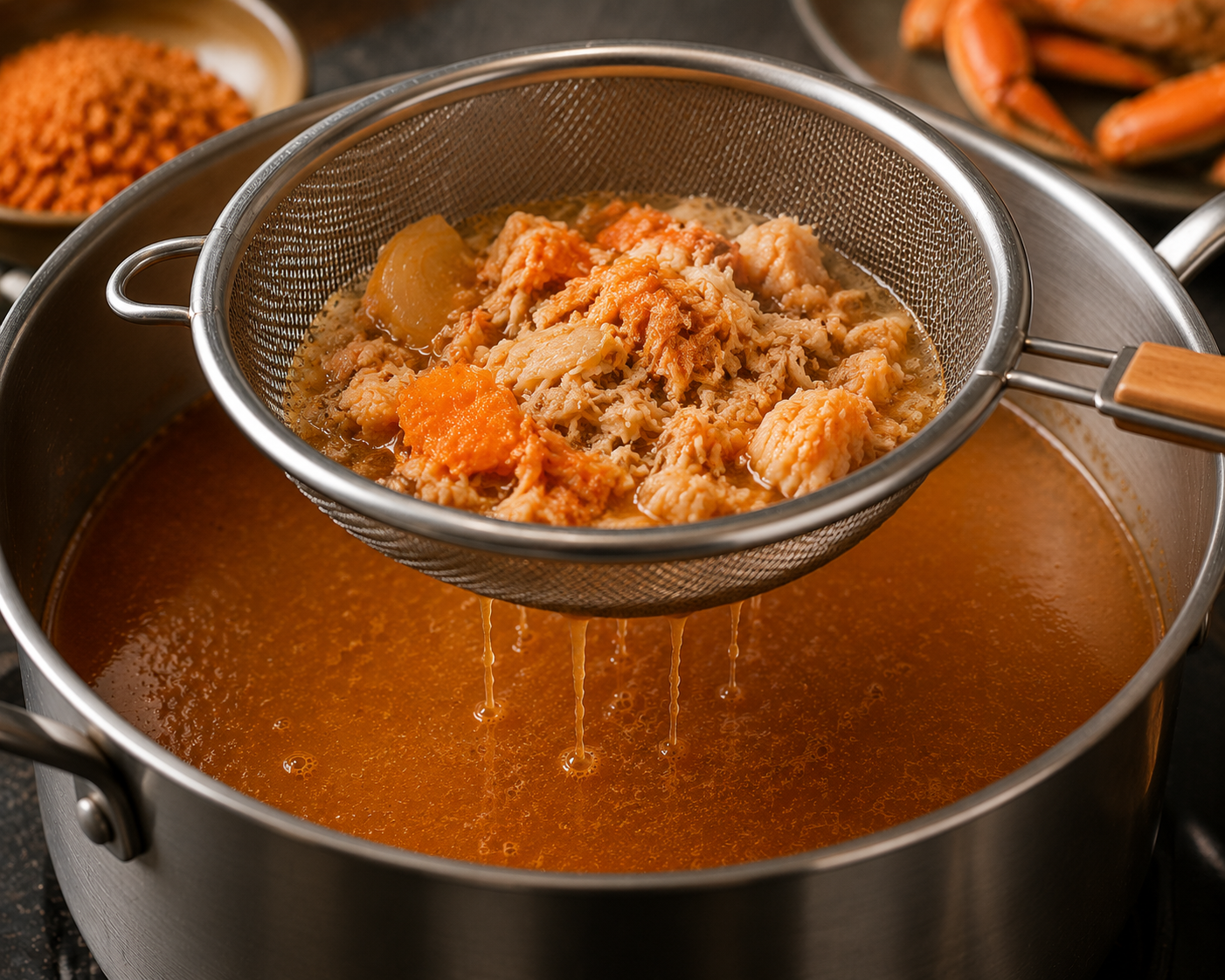
Remove the onion, daikon, dried shrimp, and bones from the broth. If there is meat on the bones, pull off any tender pieces and save them for the bowls.
Taste the broth. It should be savory, lightly sweet, and seafood-forward. Add more fish sauce if it tastes flat. Add a small pinch of salt if it needs more structure. Add a little sugar only if the broth tastes too sharp.
Step 6: Thicken The Broth
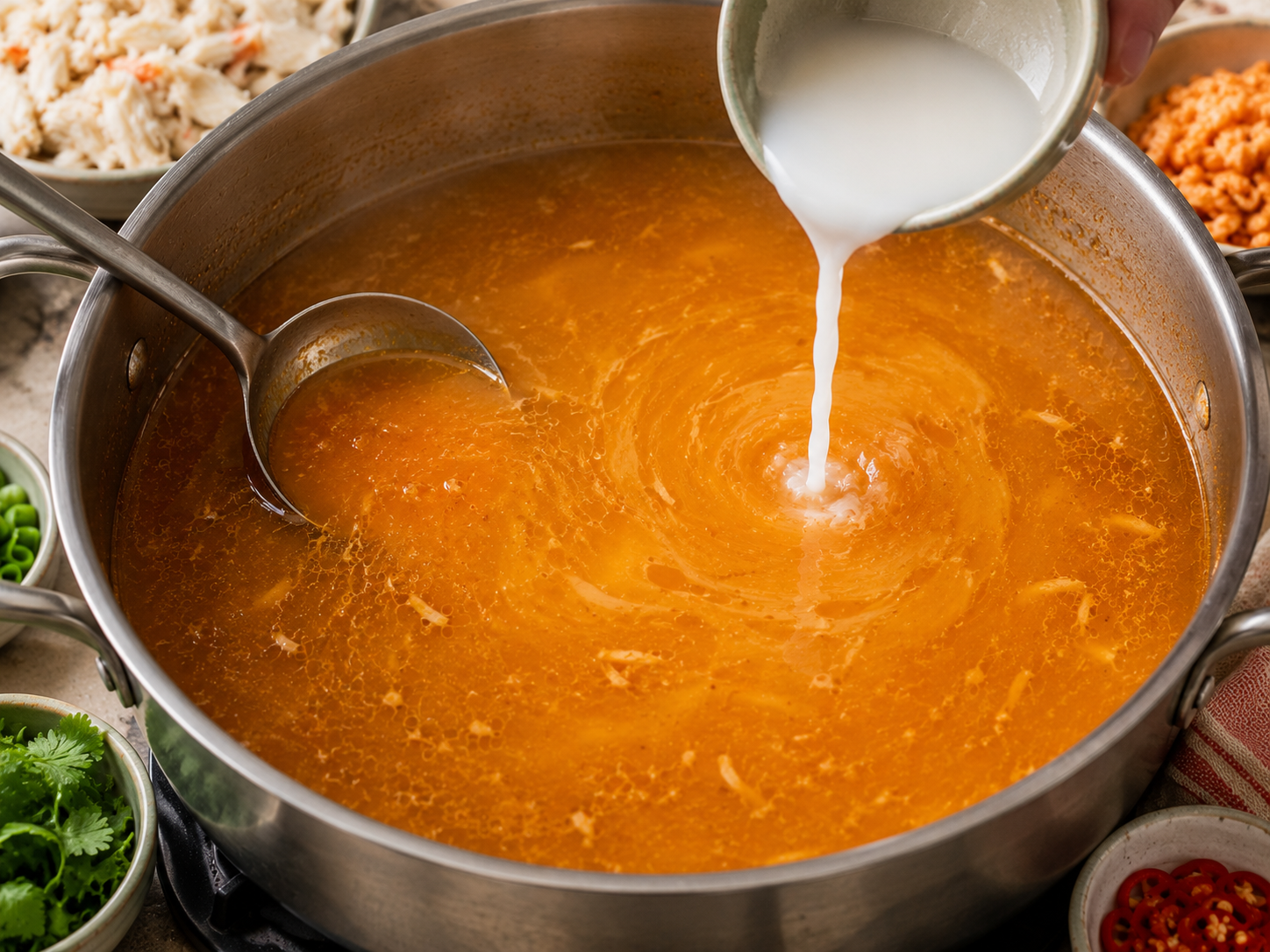
Mix the tapioca starch with ¼ cup cold water until smooth. Bring the broth back to a steady simmer, then slowly stir in the slurry.
Simmer for 2 to 3 minutes, stirring often, until the broth turns glossy and lightly thickened. It should coat a spoon but still move like soup. Do not make it gluey. Bánh canh cua should have body, not paste.
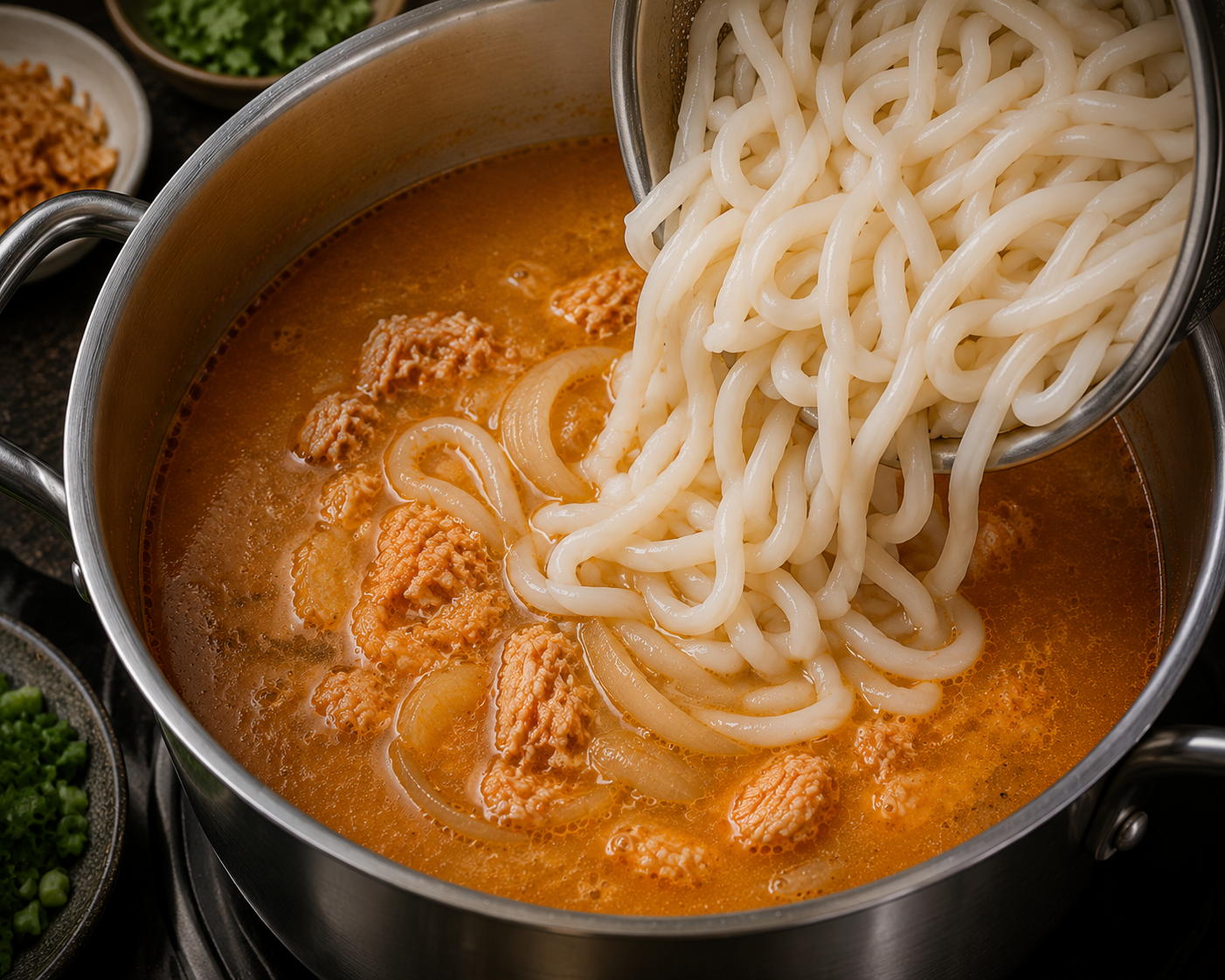
Step 7: Add The Noodles
If using fresh bánh canh noodles, rinse them briefly under warm water to loosen them. If they are very starchy, blanch them in boiling water for 30 to 60 seconds, then drain.
Add the noodles to the hot broth and cook for 2 to 4 minutes, depending on the noodles. They should be hot, slippery, and chewy. The broth may thicken slightly more once the noodles go in.
If using dried tapioca noodles, cook them separately according to the package directions, rinse briefly, then add them to the broth at the end.
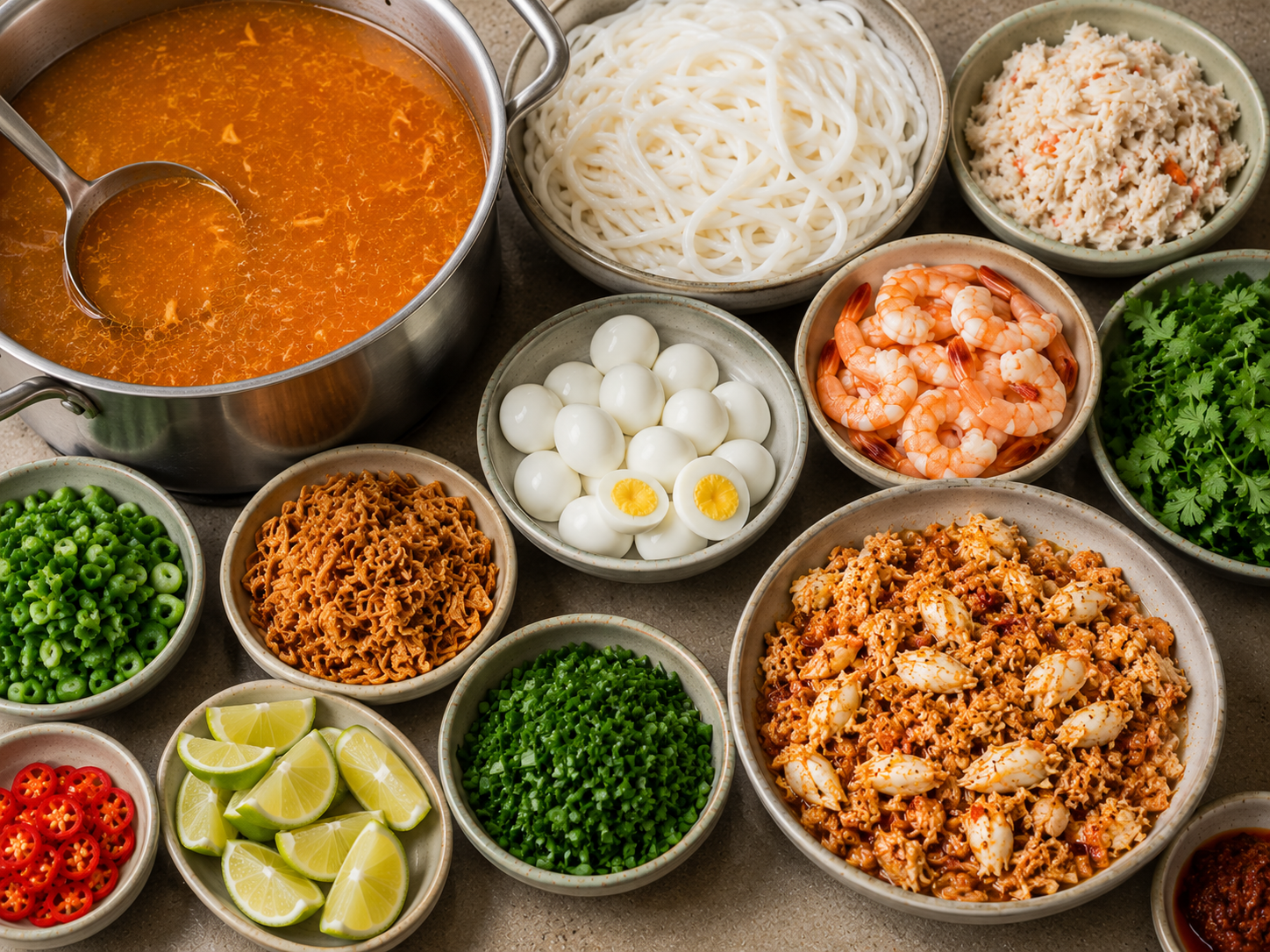
Step 8: Add The Crab, Shrimp, And Quail Eggs
Add the seasoned crab, cooked shrimp, and quail eggs if using. Simmer gently for 1 to 2 minutes, just long enough to bring everything together.
Do not boil hard after adding the crab. Crab meat is delicate, and the goal is to keep it sweet, soft, and visible in the bowl.
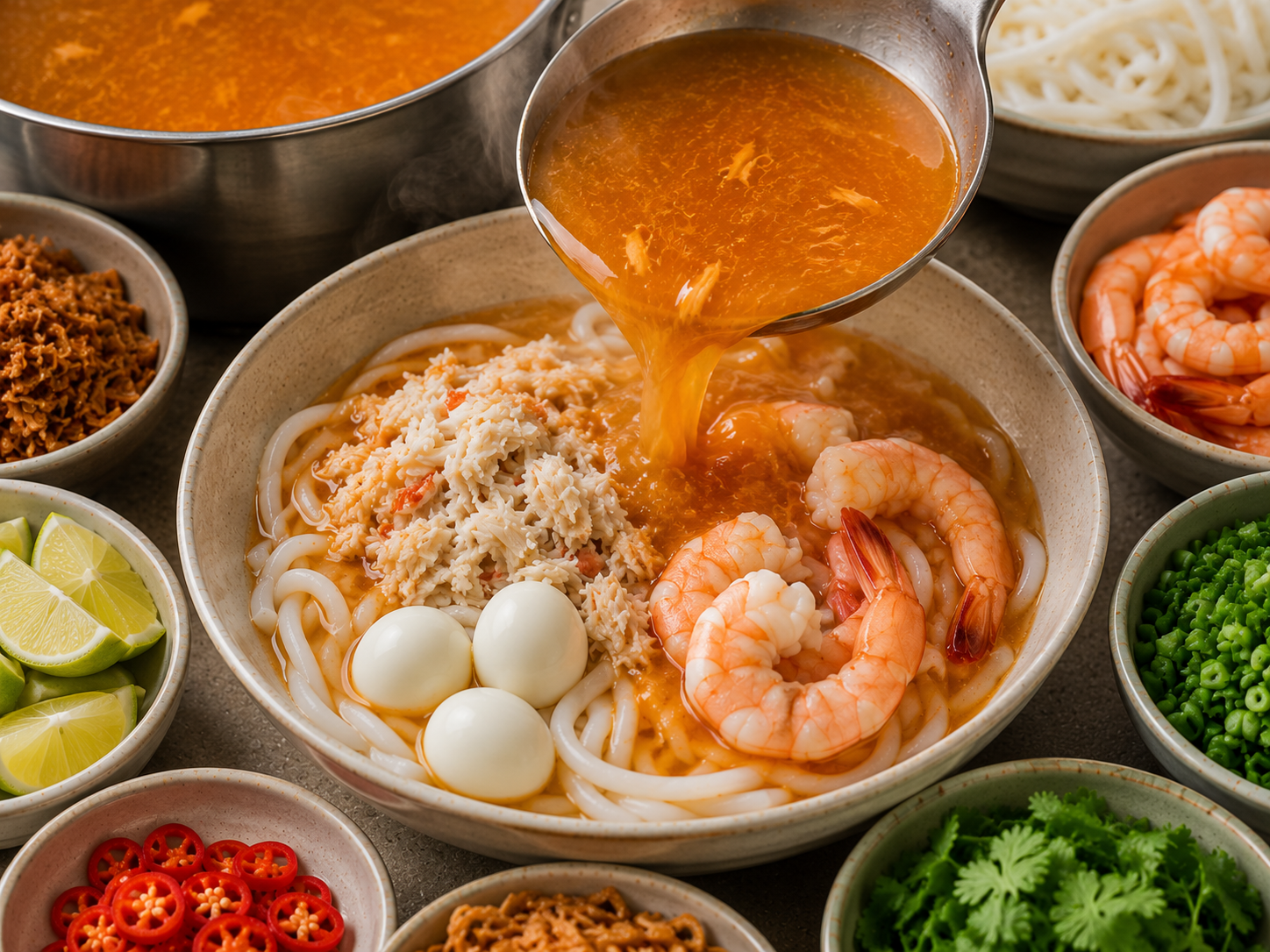
Step 9: Assemble The Bowls
Ladle the thick noodles and broth into warm bowls. Make sure each bowl gets crab, shrimp, and some of the glossy orange broth.
Top with scallions, cilantro, fried shallots, black pepper, sliced chili, and a squeeze of lime. Serve hot, with extra fish sauce and chili on the side for adjusting.
The final bowl should be rich but not dull. You want pork-bone depth, crab sweetness, shrimp aroma, chewy noodles, fresh herbs, and that little hit of pepper and lime that wakes everything up.
Final Thoughts
Bánh canh cua teaches you that Vietnamese noodle soup is not one thing. It does not always have to be clear, light, and delicate. Sometimes it is thick. Sometimes it is messy. Sometimes the broth clings to the spoon and the noodles fight back a little when you bite them.
That is the beauty of this bowl. It feels generous without being complicated. Pork bones, crab, shrimp, tapioca noodles, herbs, fish sauce, and time. Nothing fancy, but everything has a job.
Cook it slowly, season it honestly, and do not thin it out too much. Bánh canh cua is supposed to have body. That is where the comfort lives.