Thịt Kho Trứng Recipe: Vietnamese Caramelized Pork And Eggs
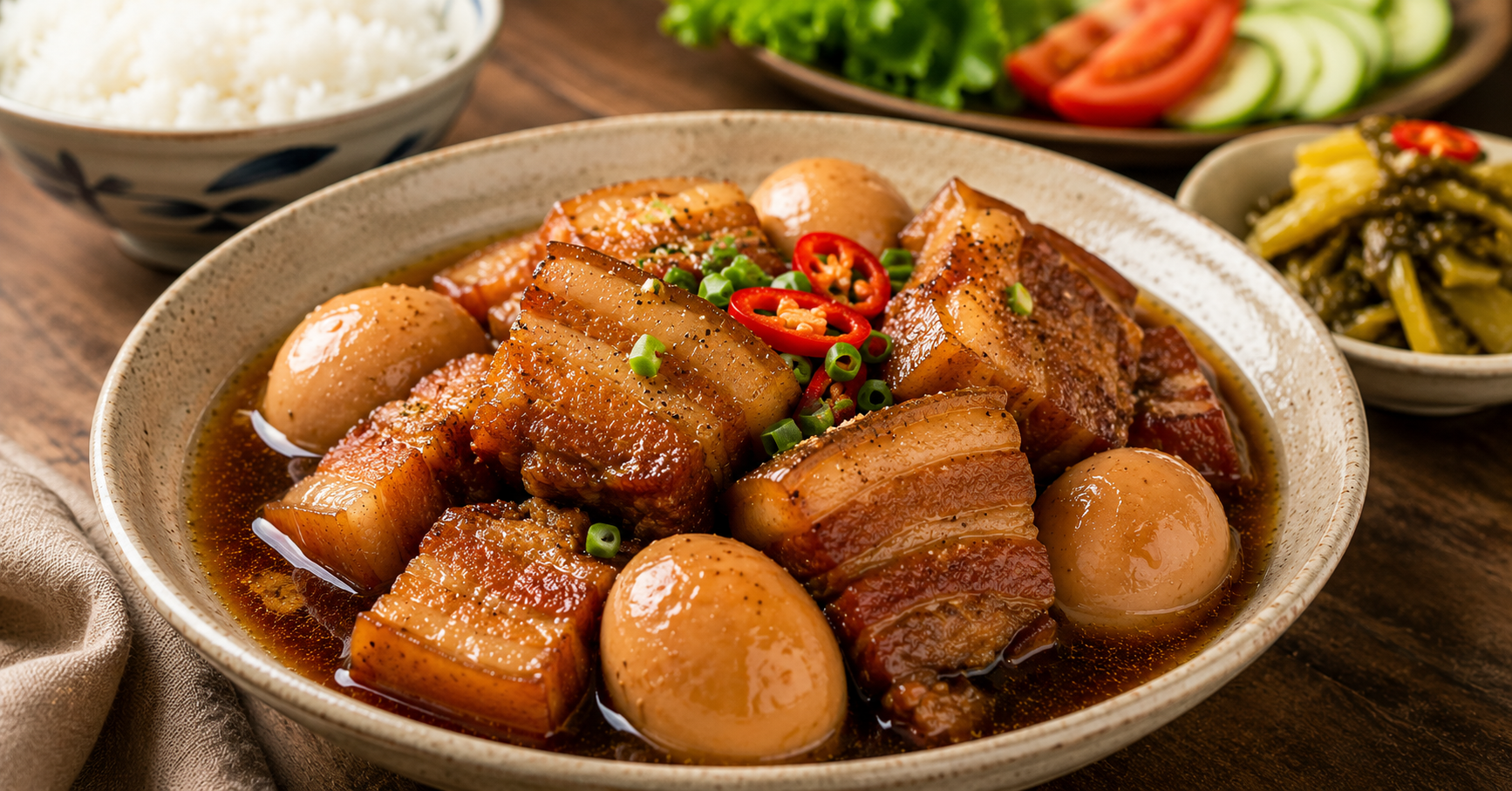
Thịt kho trứng is the kind of dish that rewards patience. Large pieces of pork slowly soften in coconut water, fish sauce, and caramel until the meat becomes tender, the fat turns silky, and the broth develops a clear amber color.
The eggs are more than an extra ingredient. As they simmer, their surfaces absorb the savory sweetness of the braising liquid while the yolks remain rich enough to balance the pork and broth.
Across southern Vietnam, a generous pot of thịt kho trứng is closely associated with family meals and Tết. It is often prepared in a large batch, rested between meals, and gently reheated as the flavors deepen.
This version keeps the seasoning balanced rather than aggressively sweet or salty. The goal is tender pork that still holds its shape, eggs seasoned beneath the surface, and enough fragrant broth to spoon over hot rice.
Ingredients
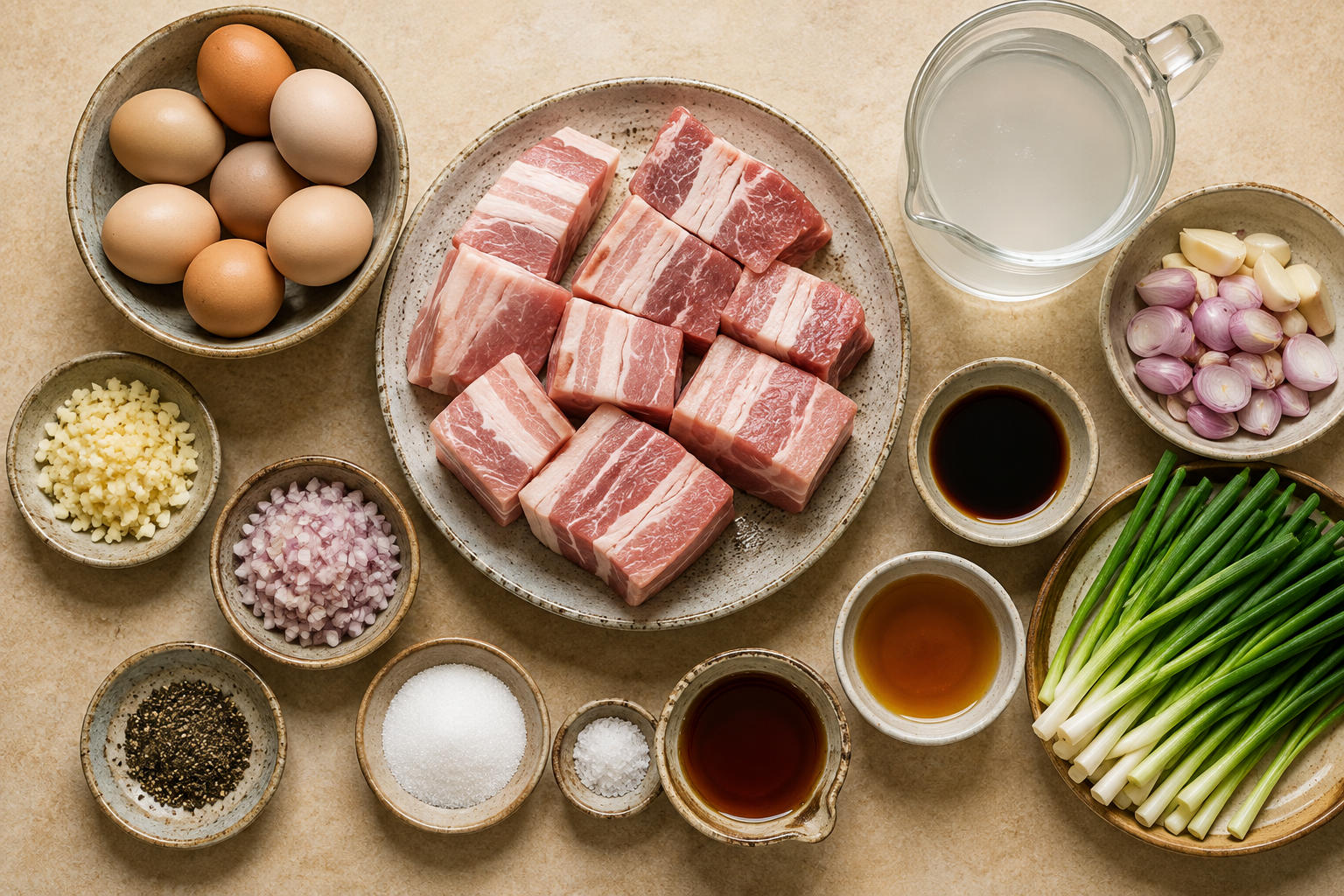
For The Pork
3 pounds pork belly, or a combination of pork belly and pork shoulder (1.36 kilograms)
¼ cup fish sauce
2 tablespoons sugar
2 tablespoons finely minced shallot
1 tablespoon finely minced garlic
1 teaspoon coarsely ground black pepper
For The Eggs
8 large chicken eggs or duck eggs
Cold water, as needed
For The Caramel And Braising Liquid
3 tablespoons sugar
2 tablespoons water
6 cups unsweetened coconut water
2 cups water, plus more as needed
2 tablespoons fish sauce
½ teaspoon kosher salt, optional
How To Make Thịt Kho Trứng
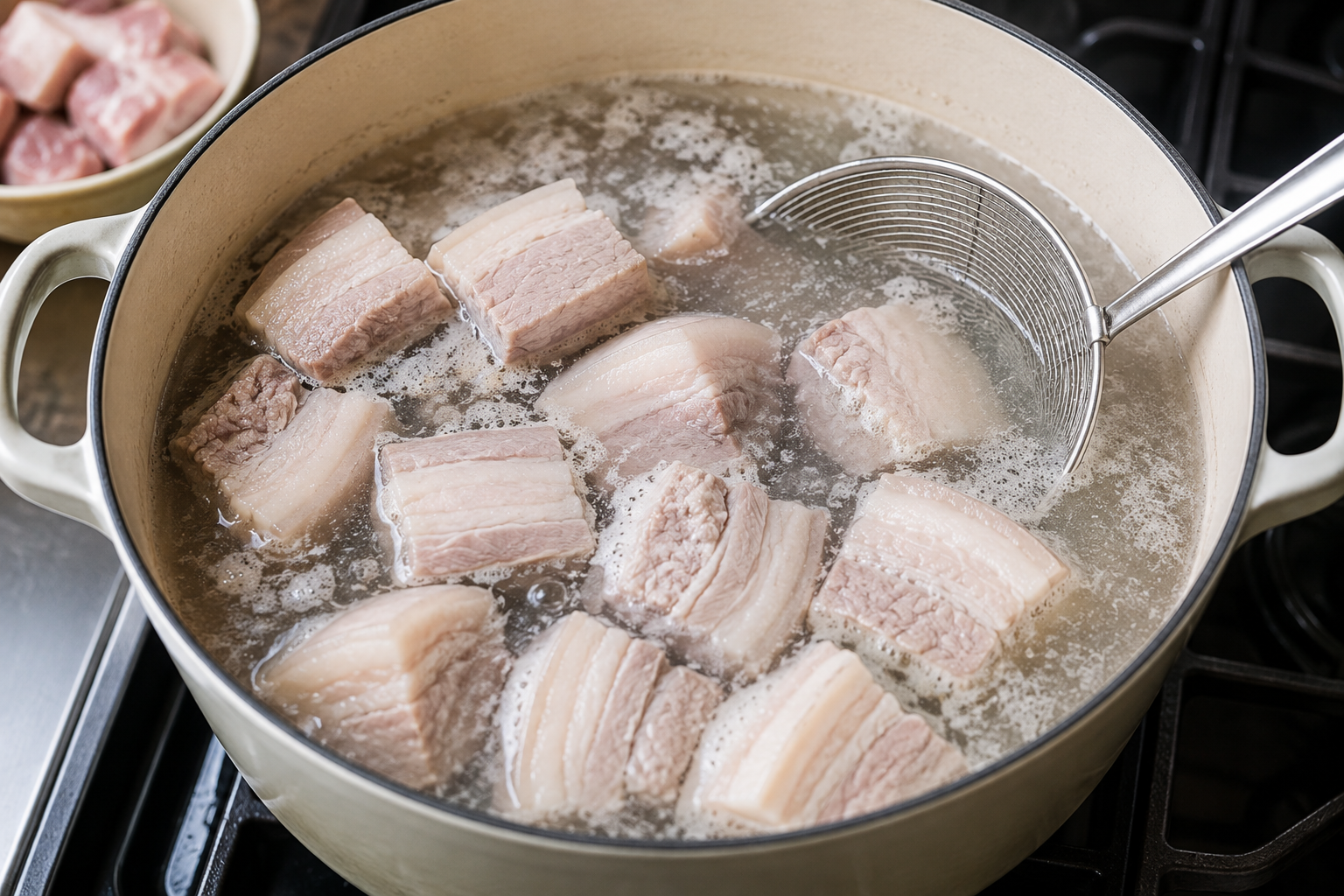
Step 1: Cut And Blanch The Pork
Cut the pork into pieces about 2 inches wide. Keep them substantial because they will shrink as they cook and should remain intact throughout the long braise.
Bring a large pot of water to a boil. Add the pork and blanch it for 3 minutes. Foam and impurities will rise to the surface.
Drain the pork and rinse it briefly under cool running water. Rinse the pot as well.
Blanching removes excess blood and protein from the surface of the meat, helping the finished braising broth remain cleaner and clearer.
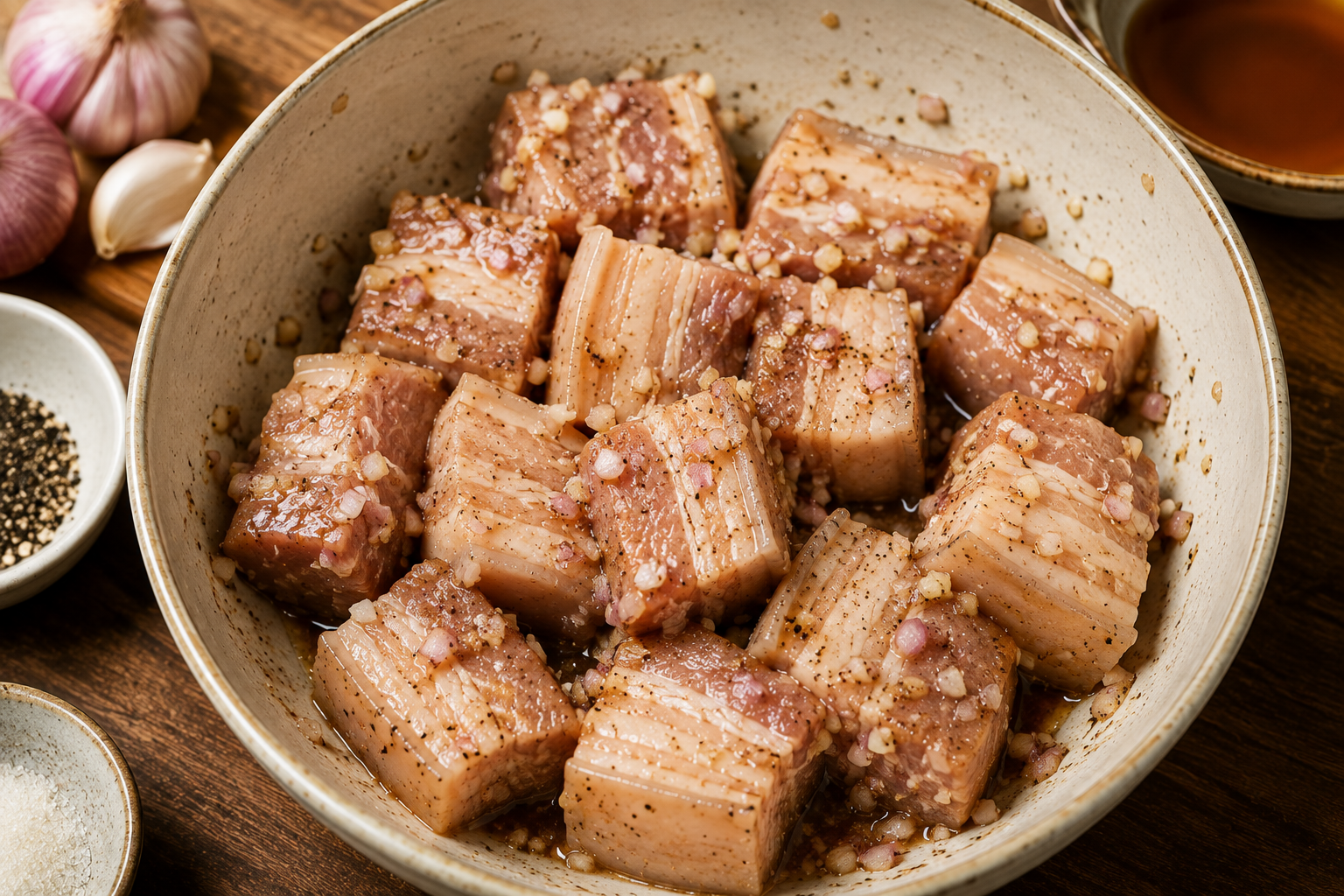
Step 2: Marinate The Pork
Place the blanched pork in a large bowl.
Add the fish sauce, sugar, shallot, garlic, and black pepper. Toss thoroughly until every piece is evenly coated.
Cover and marinate at room temperature for 30 minutes, or refrigerate for up to 2 hours. Allow refrigerated pork to sit at room temperature for about 20 minutes before cooking.
Avoid marinating the pork overnight. The concentrated fish sauce can make the exterior of the meat overly salty.
Step 3: Cook And Peel The Eggs
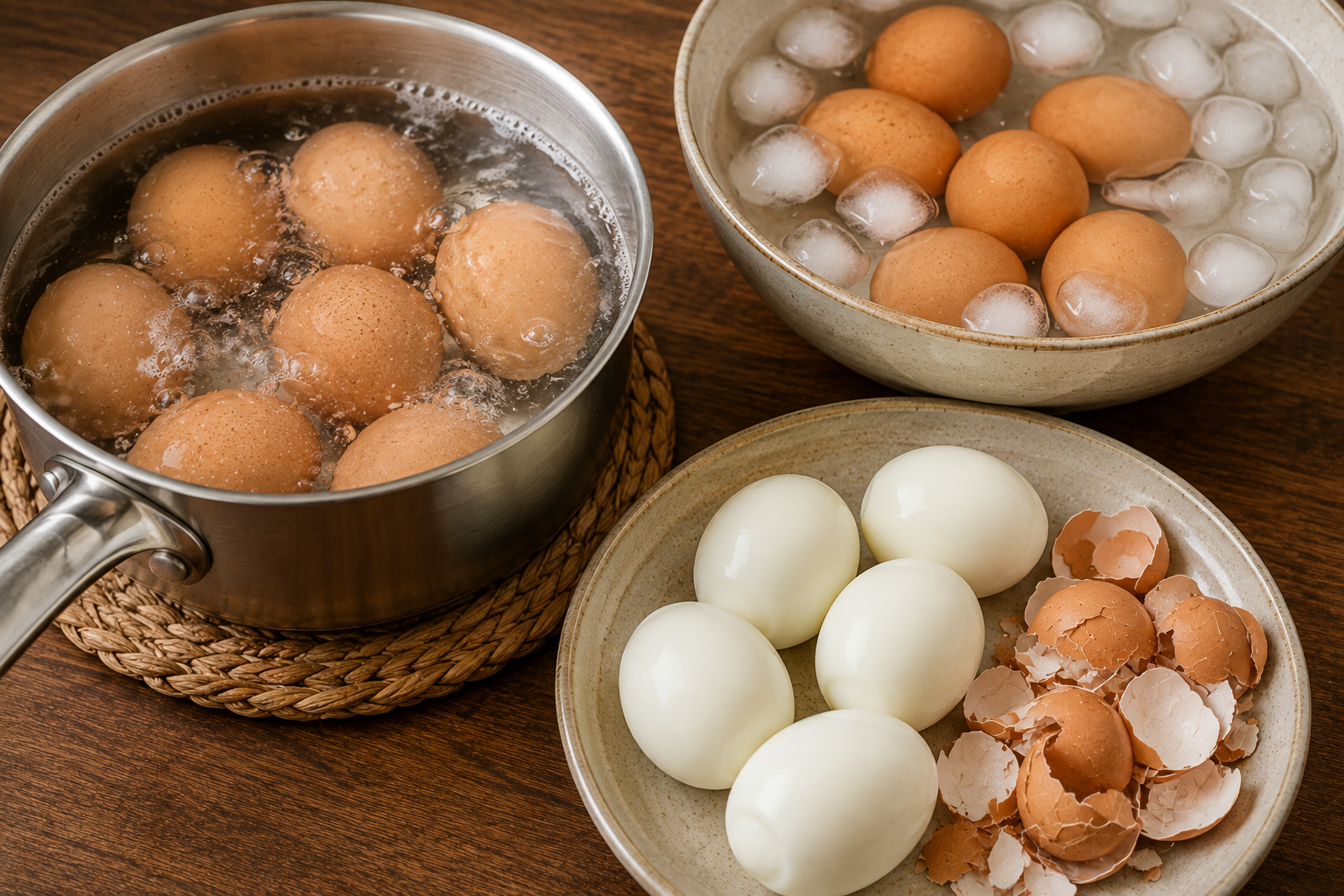
Place the eggs in a saucepan and cover them with cold water by about 1 inch.
Bring the water to a boil over medium-high heat. Once boiling, reduce the heat slightly and cook the eggs for 9 minutes.
Transfer the eggs immediately to a bowl of ice water and let them cool for at least 5 minutes.
Peel the eggs carefully, keeping the whites intact. Pat them dry and set them aside.
Step 4: Make The Caramel
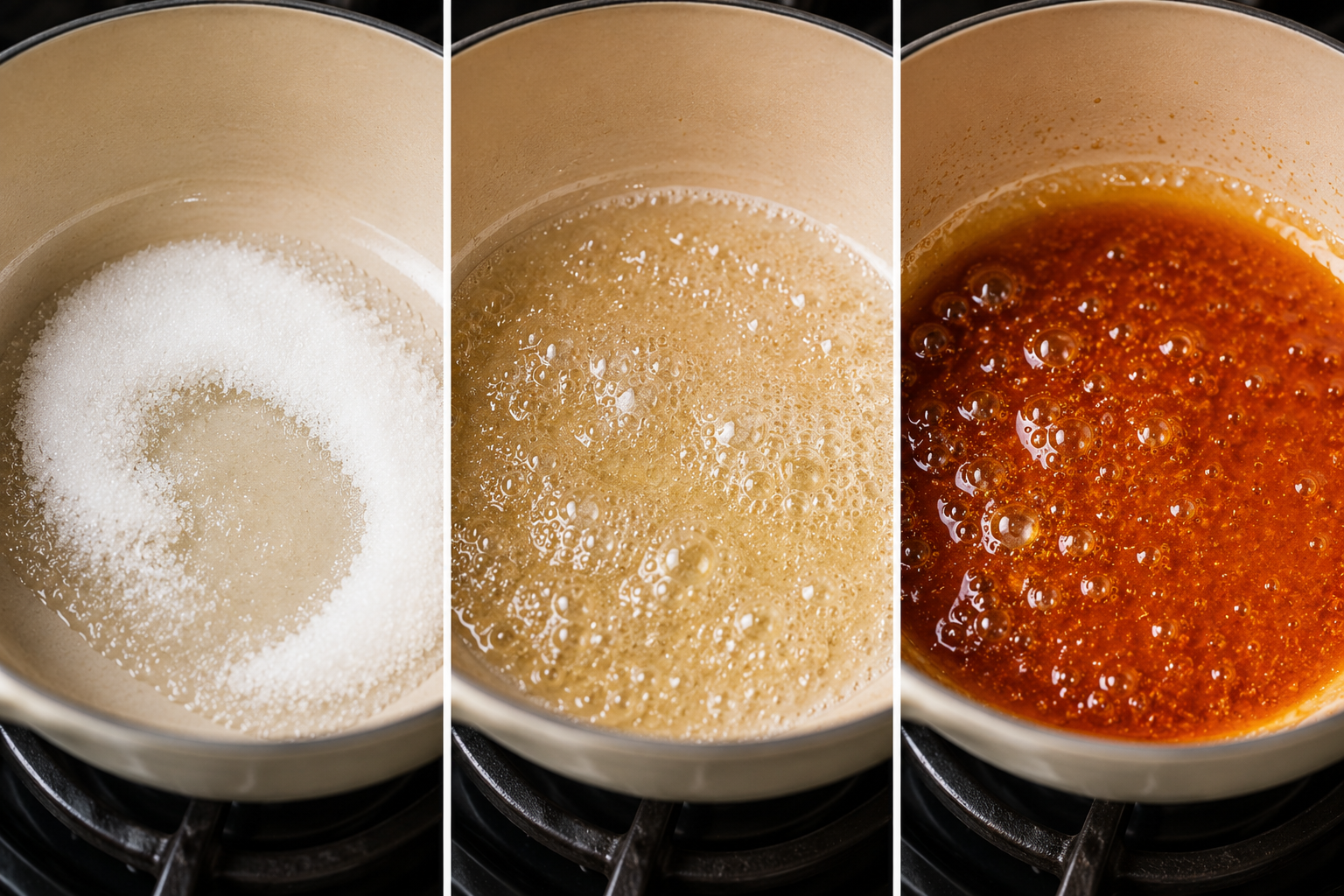
Combine the sugar and water in a large, heavy-bottomed pot.
Cook over medium heat without stirring once the mixture begins to bubble. Swirl the pot gently when necessary so the sugar colors evenly.
Watch the caramel closely. It will move quickly from pale gold to deep amber. Remove the pot from the heat when it reaches the color of dark honey.
Carefully pour in 1 cup of the coconut water. The mixture will bubble aggressively, so keep your hands and face away from the rising steam.
Return the pot to low heat and stir until any hardened caramel dissolves into the liquid. Do not let the sugar turn black or smell burnt, or the finished broth will taste bitter.
Step 5: Begin Braising The Pork
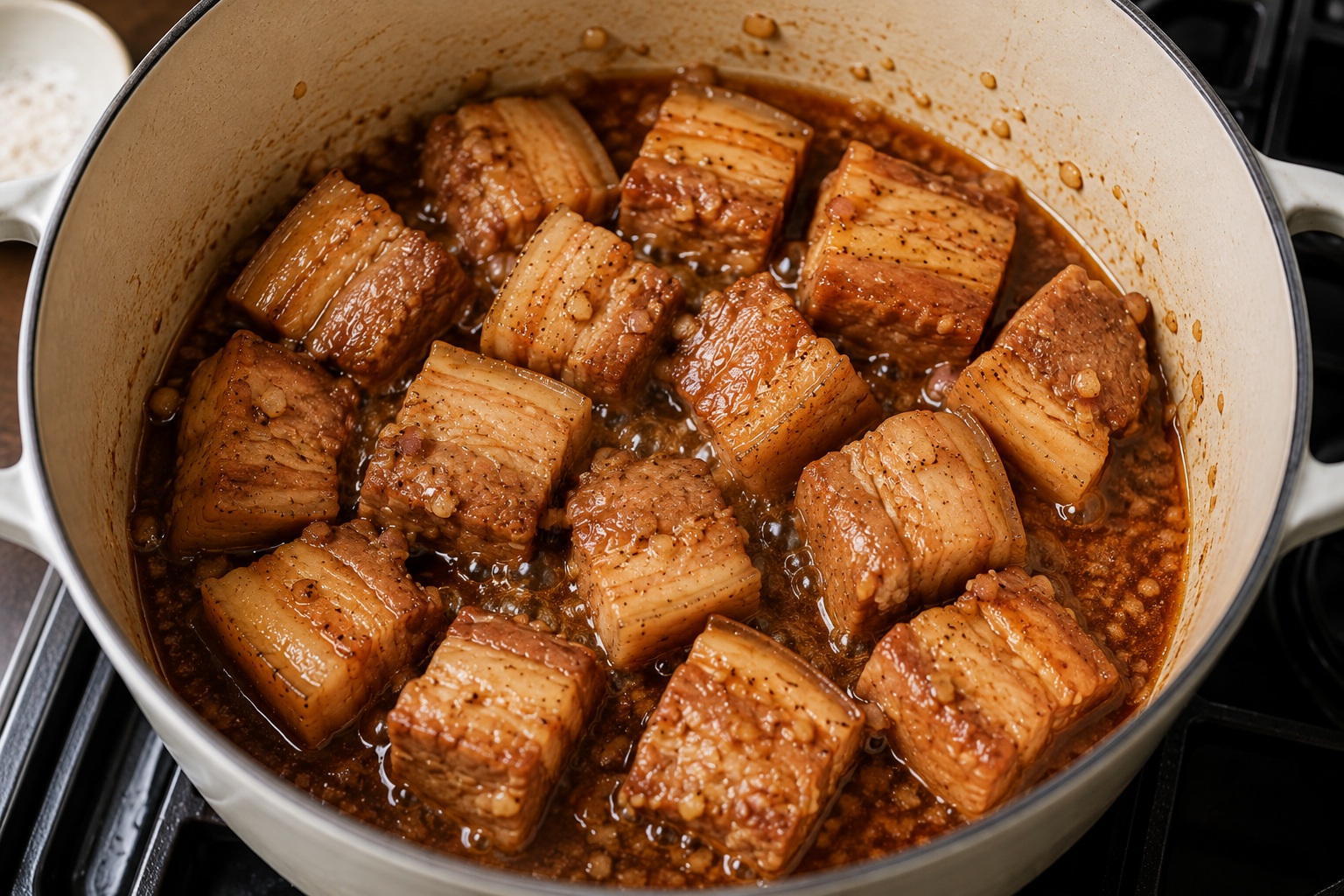
Add the marinated pork and all the marinade to the caramel mixture.
Cook over medium heat for 3 to 4 minutes, turning the pieces so their surfaces absorb the caramel and begin releasing some of their fat.
Pour in the remaining coconut water, 2 cups of water, and the additional fish sauce. The liquid should nearly cover the pork. Add a little more water when necessary.
Bring the pot to a gentle boil, then immediately reduce the heat.
During the first 15 to 20 minutes, skim away any foam or cloudy impurities that rise to the surface. Do not remove all the rendered fat because a small amount gives the broth flavor and body.
Step 6: Slowly Braise The Pork
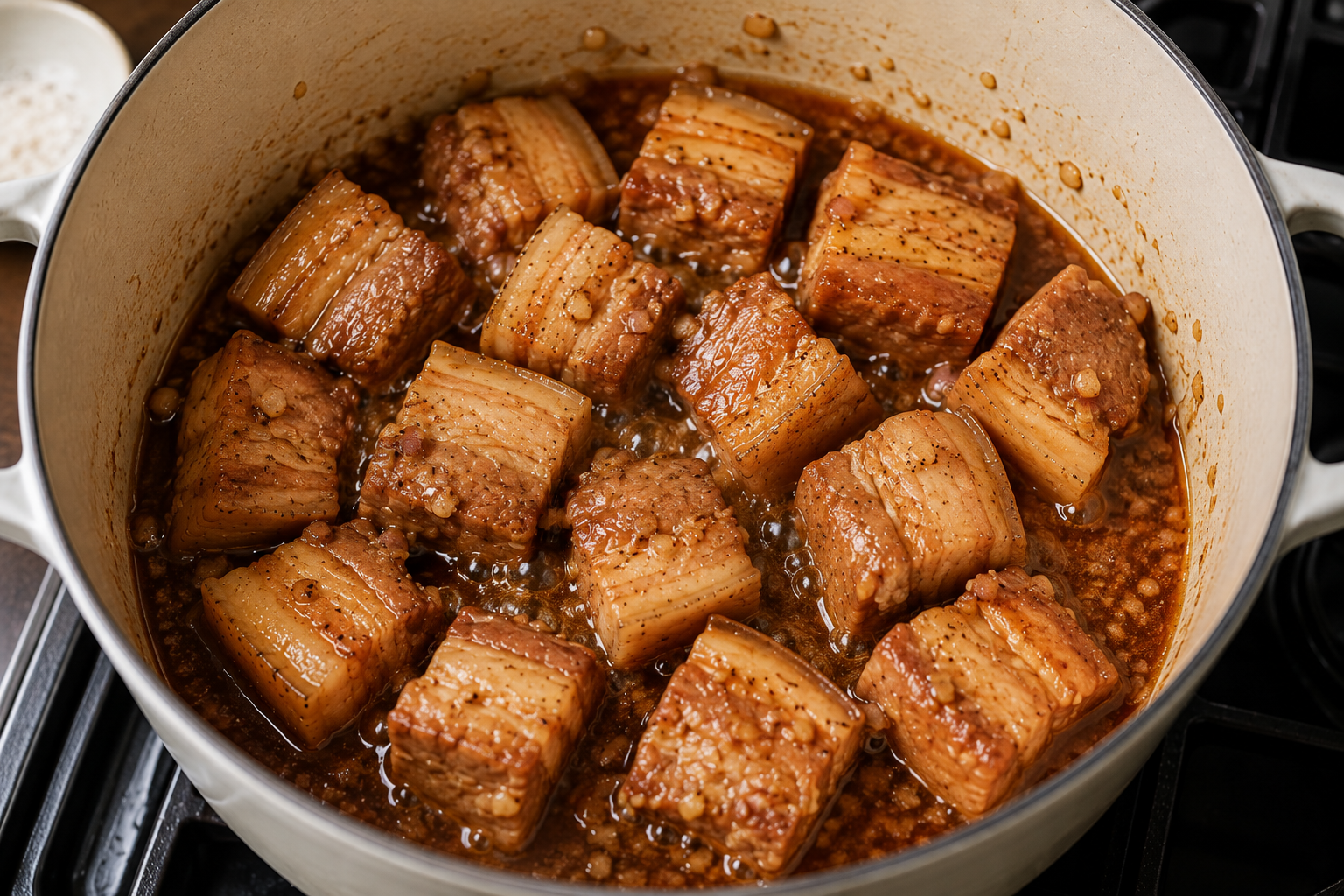
Adjust the heat so the liquid maintains a very gentle simmer. You should see occasional bubbles rising around the edges rather than constant rolling movement.
Leave the pot partially uncovered and simmer for 1½ hours.
Turn the pork every 25 to 30 minutes so the pieces cook and color evenly. Handle them gently as they become tender.
Add a small amount of hot water if the liquid drops below halfway up the pork. Thịt kho trứng should finish with a generous amount of broth rather than reducing into a thick sauce.
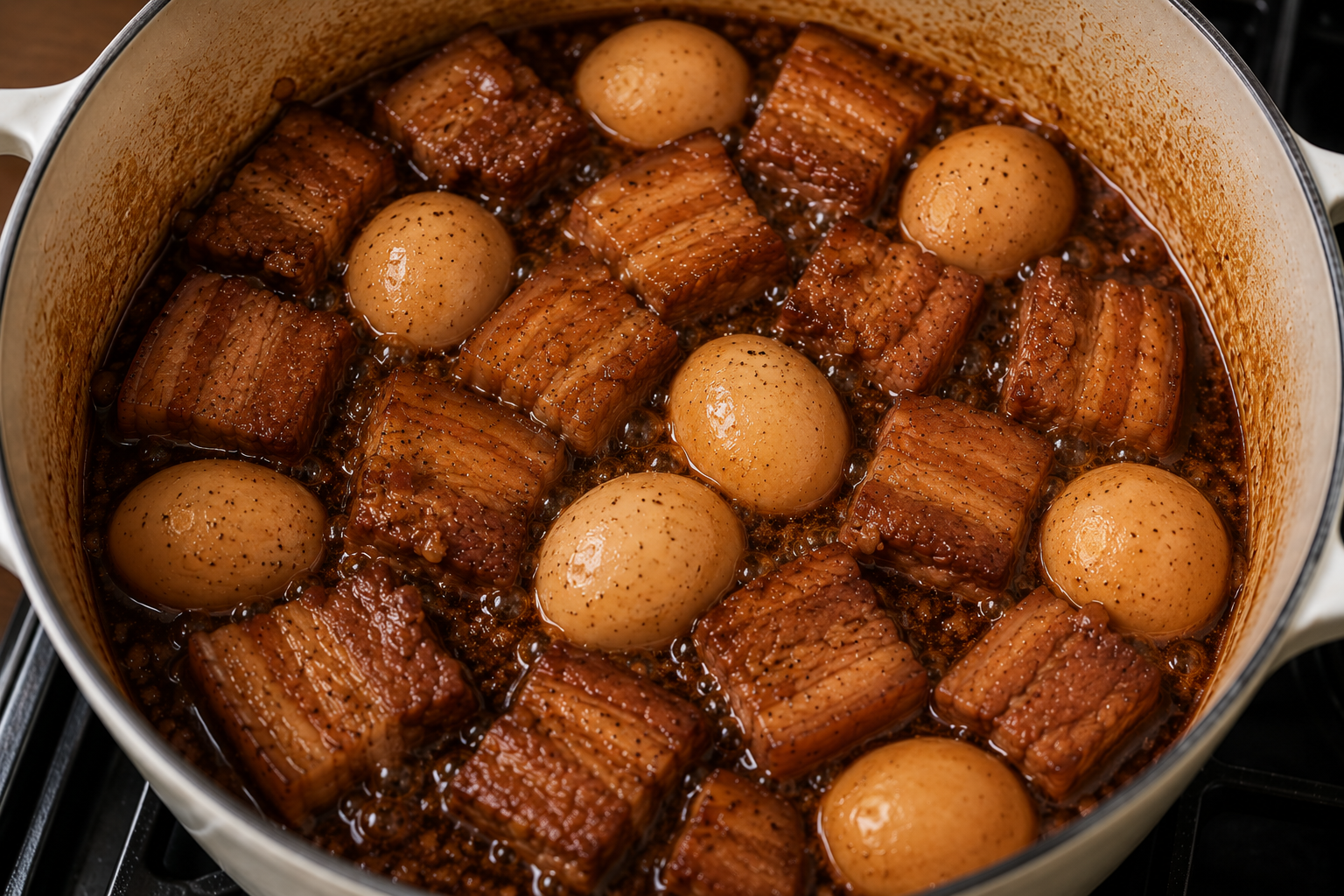
Step 7: Add The Eggs
After the pork has braised for about 1½ hours, gently lower the peeled eggs into the broth.
Continue simmering for 30 to 45 minutes, turning the eggs occasionally so their surfaces color evenly.
Do not let the pot boil aggressively after adding the eggs. Strong boiling can toughen the egg whites, break the pork apart, and make the broth cloudy.
The pork is ready when a chopstick or thin knife slides easily into the lean portion while the pieces still hold their shape.
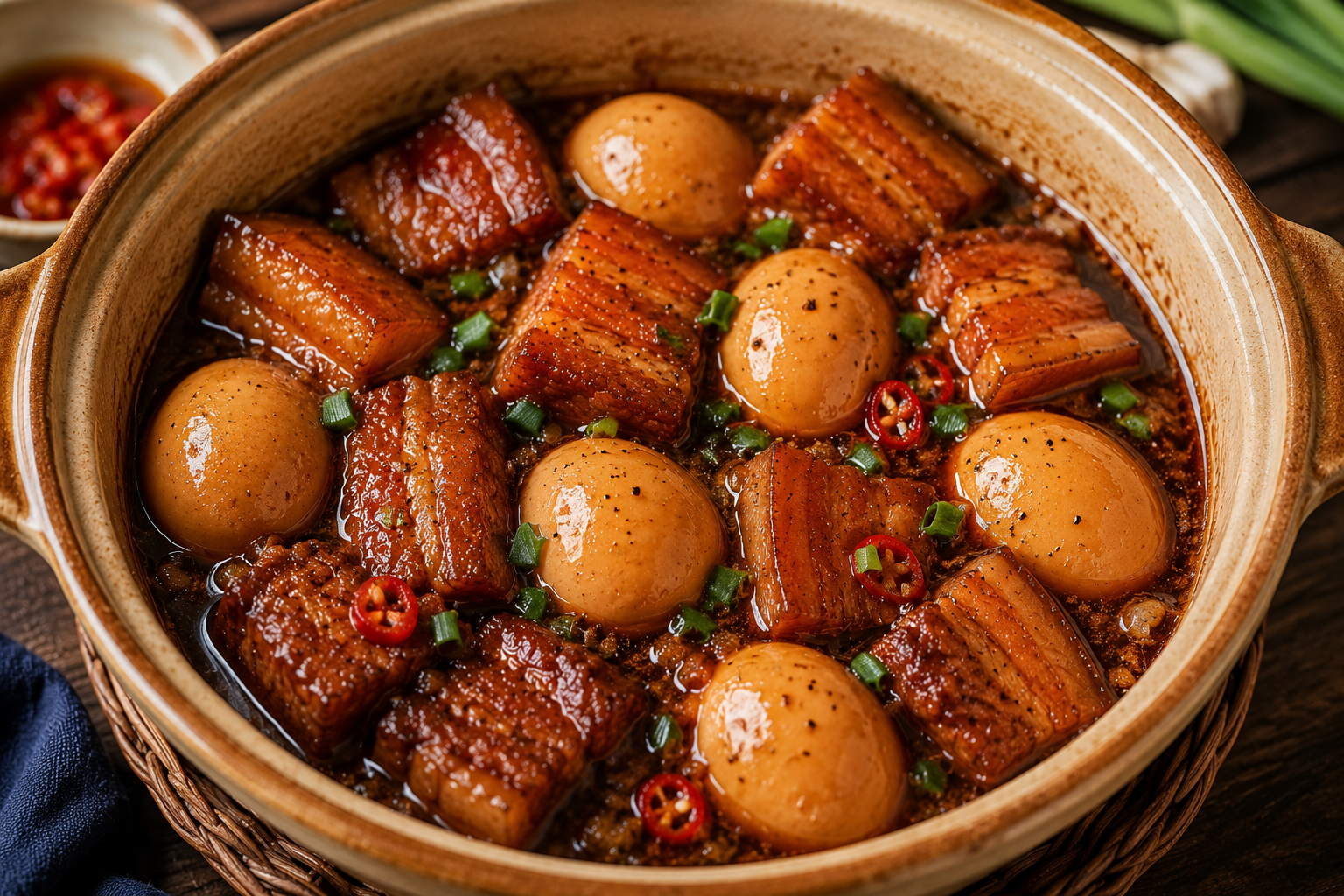
Step 8: Rest And Adjust The Broth
Turn off the heat and let the thịt kho trứng rest uncovered for 20 minutes.
As it rests, excess fat will rise to the surface. Skim off as much or as little as you prefer, leaving some behind for flavor.
Taste the broth only after the pork and eggs have finished cooking. It should be savory, lightly sweet, and fragrant with coconut water without tasting like dessert.
Add a small splash of fish sauce if the flavor is too mild. Add a teaspoon of sugar if it tastes overly sharp, or a little hot water if it has become too concentrated.
Serve the pork and eggs with plenty of the amber broth spooned over hot jasmine rice.
Final Thoughts
Thịt kho trứng is not difficult because it requires complicated technique. It asks for attention, gentle heat, and enough time for a few familiar ingredients to become something deeper.
The caramel must be dark enough to give the broth character without becoming bitter. The pork must simmer slowly enough for its fat and connective tissue to soften, and the eggs must be added late enough to absorb the broth without becoming excessively firm.
When those details are handled properly, the result is unmistakable: tender pork, deeply seasoned eggs, and a clear coconut water broth that tastes even better after the pot has had time to rest.