Canh Chua Cá Recipe: Southern Vietnamese Sour Fish Soup
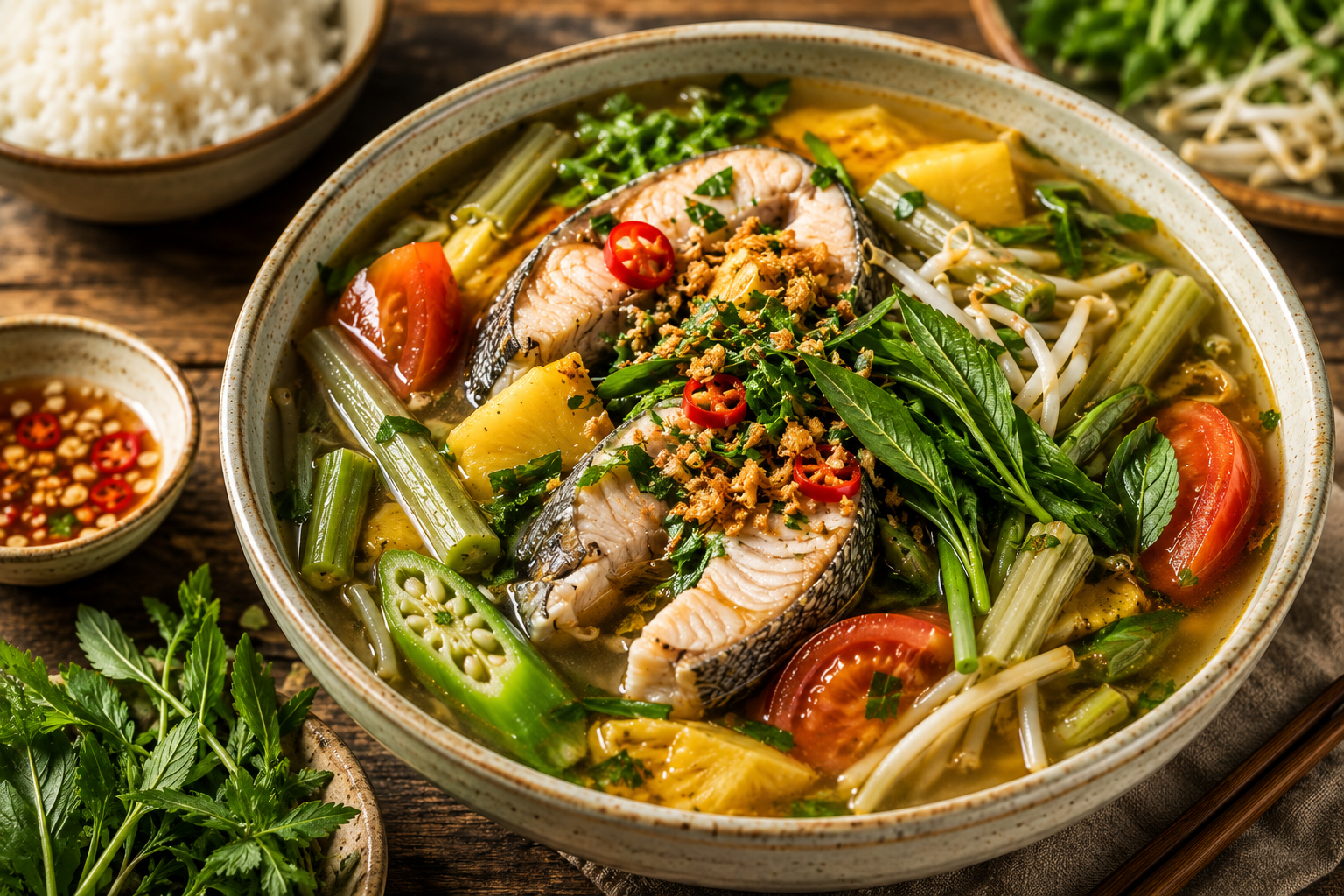
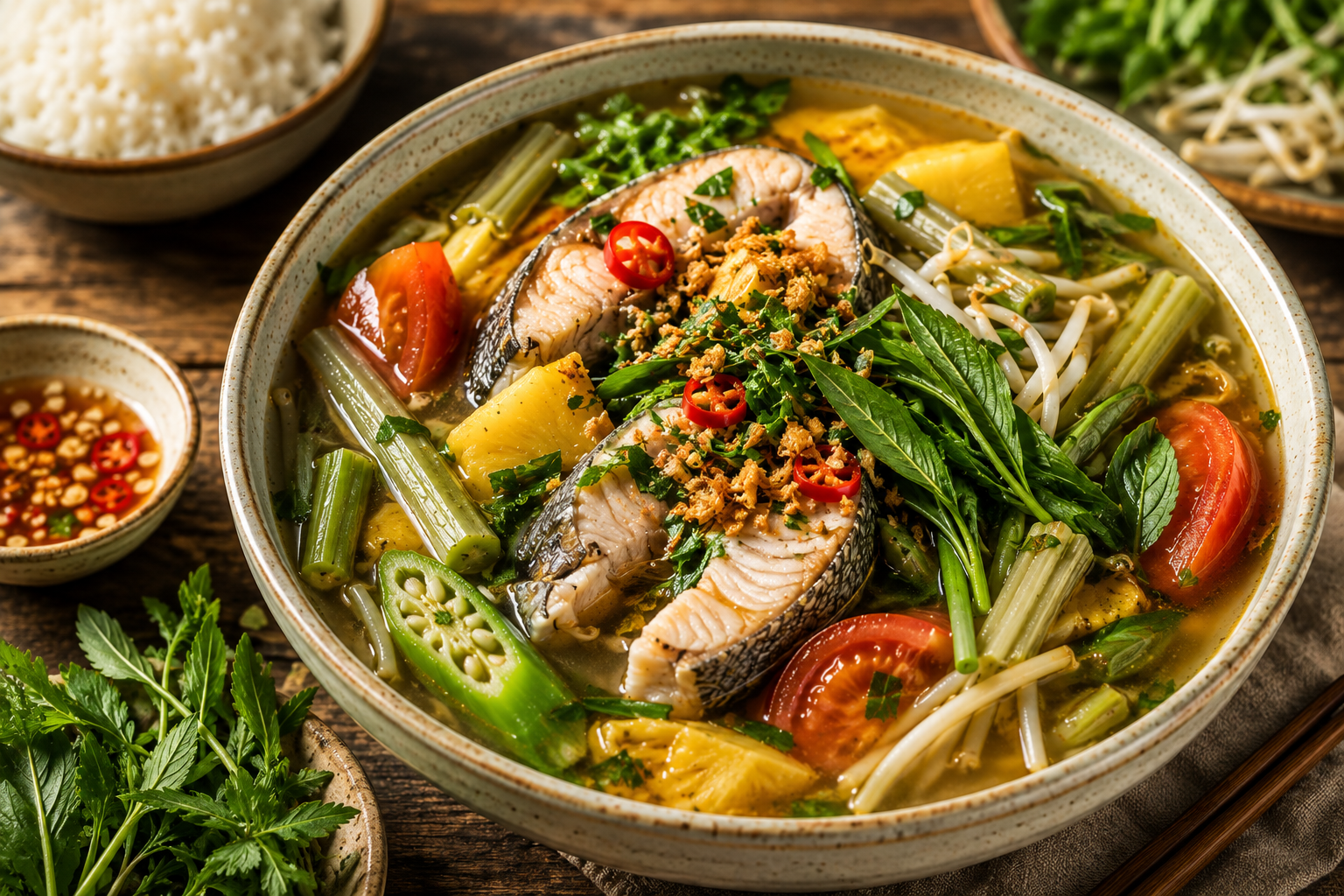
Canh chua cá does not ease quietly into a meal. The first spoonful is bright with tamarind, rounded by pineapple and sugar, sharpened with fish sauce, and fragrant with fresh herbs scattered across the surface.
The broth carries plenty of flavor, but it should never feel thick or heavy. Tender fish, juicy tomatoes, crisp okra, spongy elephant ear stems, and fresh bean sprouts create a soup full of contrasting textures while keeping it light enough to spoon over steamed rice.
Across southern Vietnam and the Mekong Delta, the fish changes according to what is available. Cá lóc, catfish, basa, and other freshwater fish may all find their way into the pot. What remains constant is the careful balance between sour, sweet, salty, and savory flavors.
This version keeps the structure of a traditional southern Vietnamese canh chua while making the ingredients and technique practical for a U.S. kitchen. The fish stays intact, the vegetables retain their character, and the tamarind broth tastes lively rather than aggressively sour or sugary.
Ingredients
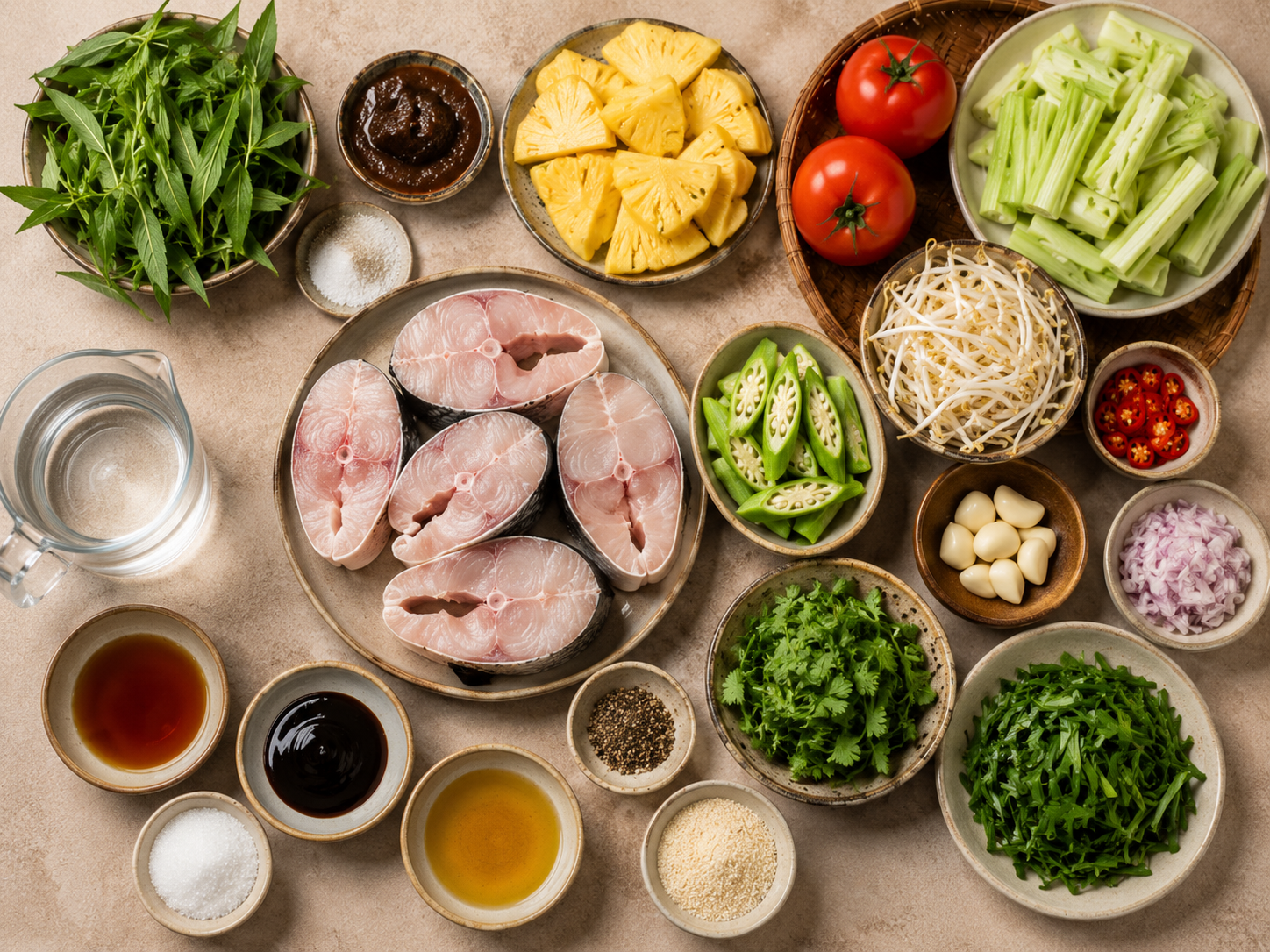
For The Fish
1½ pounds snakehead or catfish steaks (680 grams), cleaned
1 tablespoon fish sauce
1 teaspoon finely minced shallot
½ teaspoon sugar
¼ teaspoon freshly ground black pepper
For The Tamarind Broth
2 ounces seedless tamarind pulp (55 grams)
1 cup boiling water
7 cups water
3 tablespoons sugar
2 tablespoons fish sauce, plus more as needed
1 teaspoon kosher salt
½ teaspoon MSG, optional
For The Vegetables
8 ounces fresh pineapple (225 grams), cut into bite-size pieces
2 medium tomatoes, cut into wedges and divided
6 ounces okra (170 grams), trimmed and sliced diagonally
8 ounces edible elephant ear stems, bạc hà or dọc mùng (225 grams)
1 teaspoon kosher salt, for preparing the elephant ear stems
4 ounces bean sprouts (115 grams)
For The Aromatics And Herbs
1 tablespoon neutral cooking oil
4 garlic cloves, finely chopped
1 red bird’s eye chili, thinly sliced, optional
½ cup loosely packed rice paddy herb, ngò om or rau om, cut into short pieces
¼ cup loosely packed culantro, ngò gai, thinly sliced
How To Make Canh Chua Cá
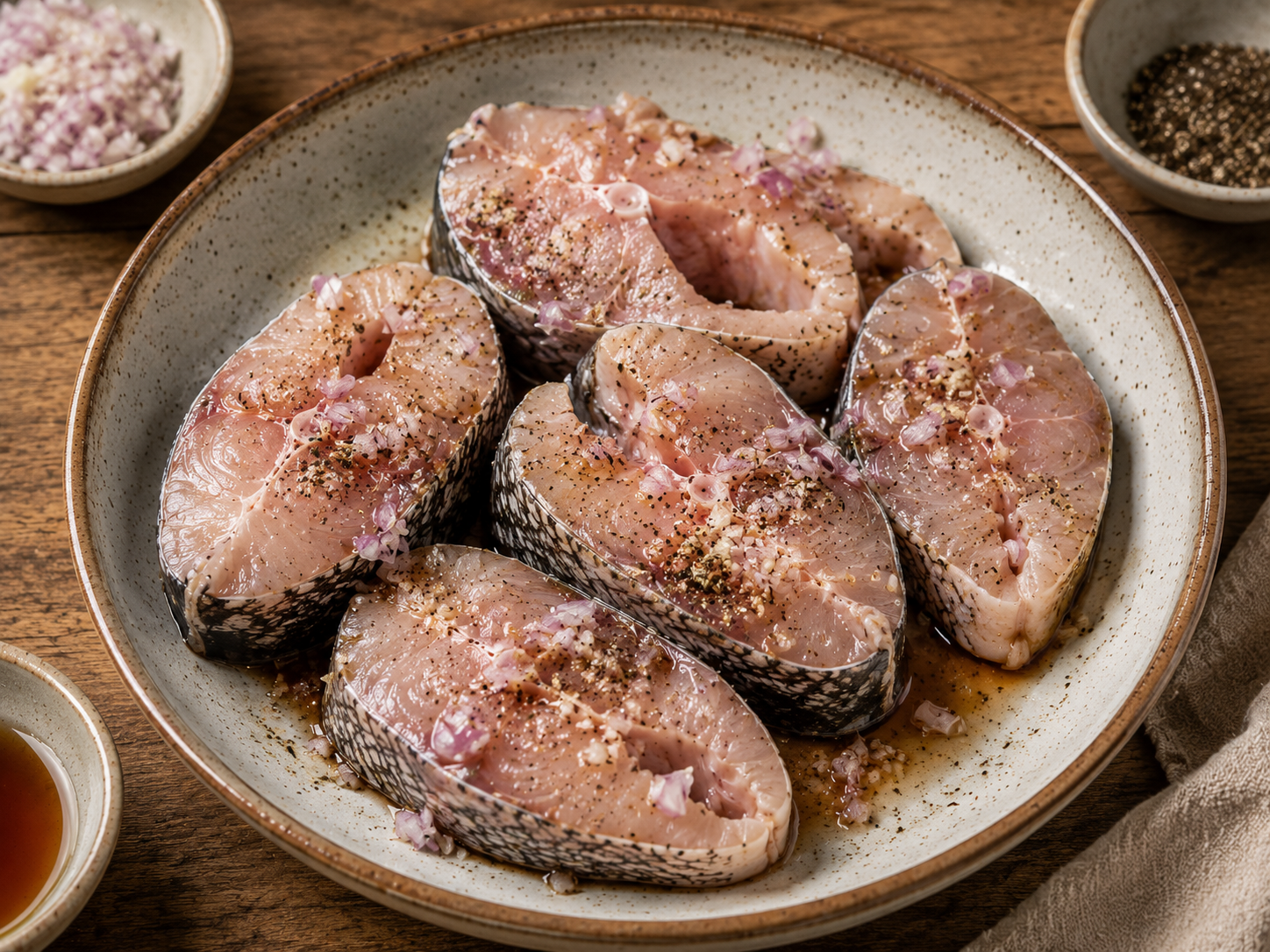
Step 1: Season The Fish
Check the fish steaks for any remaining scales, bone fragments, or dark blood along the backbone. Rinse briefly under cold water when necessary, then pat them completely dry.
Place the fish in a shallow bowl. Add the fish sauce, shallot, sugar, and black pepper. Turn the pieces gently until they are evenly coated.
Let the fish marinate for 15 to 20 minutes while you prepare the remaining ingredients. Avoid marinating it for several hours, which can make the surface too salty and draw moisture from the flesh.
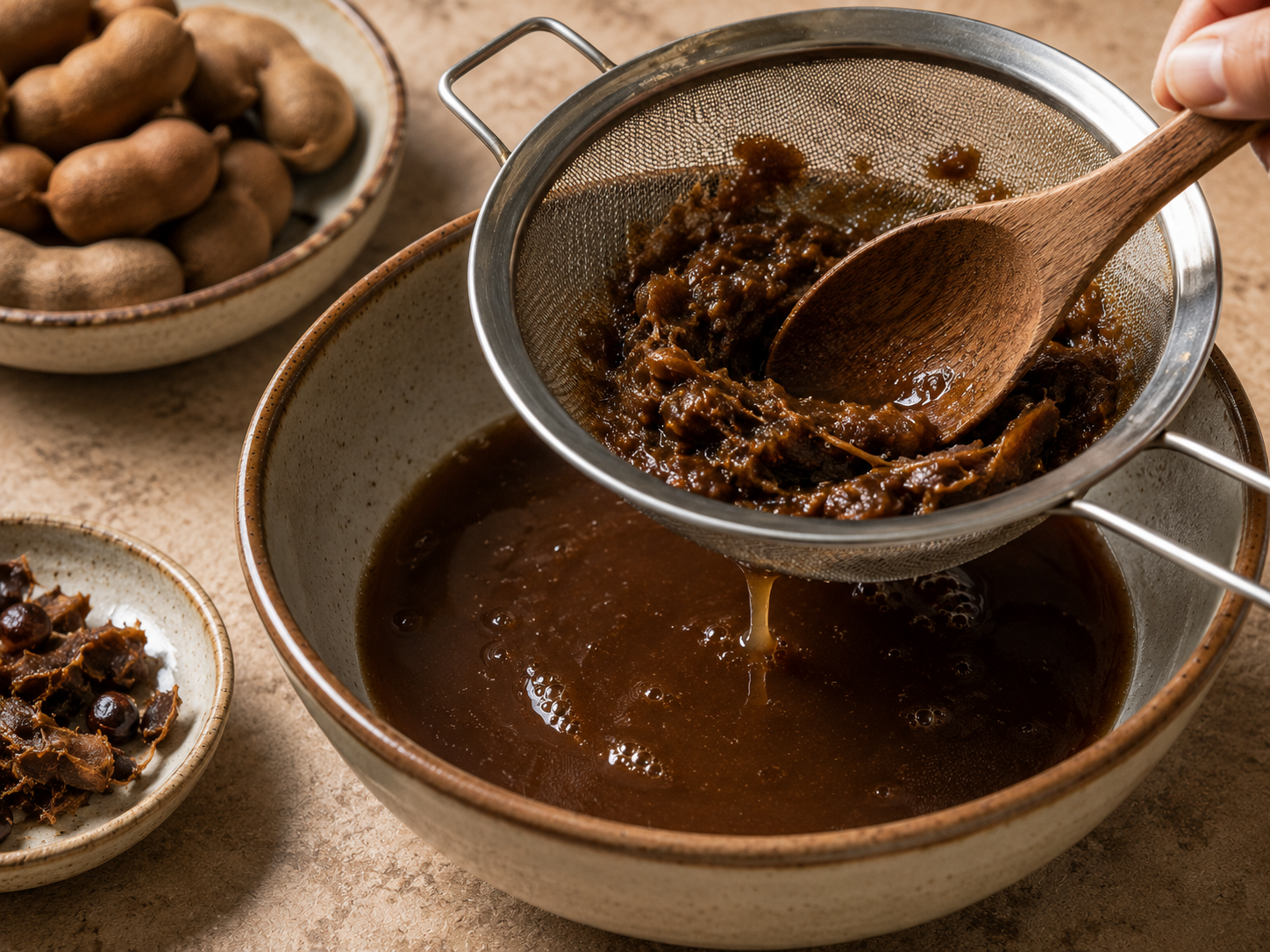
Step 2: Extract The Tamarind
Place the tamarind pulp in a heatproof bowl and pour the boiling water over it.
Let it soften for 10 minutes. Break the pulp apart with a spoon, working it into the water until the liquid becomes thick and brown.
Pour the mixture through a fine-mesh strainer into a clean bowl. Press firmly to extract as much tamarind liquid as possible, then discard the seeds and fibrous solids.
The liquid should taste strongly sour at this stage. Its intensity will soften when diluted in the soup.
Step 3: Prepare The Elephant Ear Stems
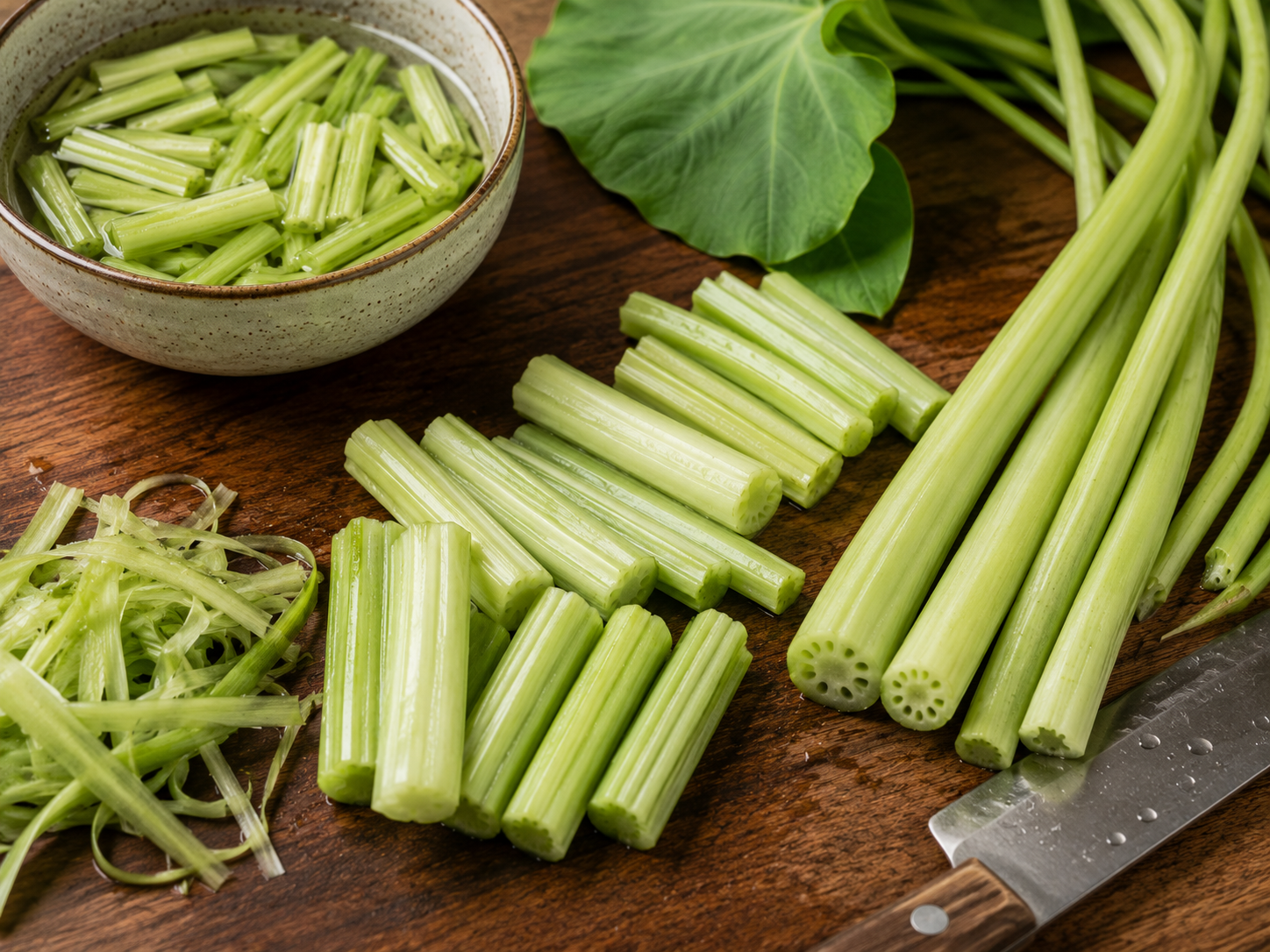
Use only edible elephant ear stems sold specifically for cooking. Peel away the fibrous outer layer, then slice the stems diagonally into pieces about ½ inch thick.
Place them in a bowl and toss with the kosher salt. Let them stand for 10 minutes.
Gently squeeze the stems to release excess liquid, then rinse thoroughly under cold water. Drain and squeeze them again without crushing their airy structure.
This preparation softens their raw texture and helps them absorb the seasoned broth.
Step 4: Build The Broth
Add the pineapple and half of the tomato wedges to the pot.
Cook over medium-high heat for 2 minutes, stirring gently. The tomatoes should begin releasing their juices without completely breaking apart.
Pour in the 7 cups water and the strained tamarind liquid. Add the sugar, fish sauce, salt, and MSG, if using.
Bring the broth to a boil, then reduce the heat and simmer for 5 minutes.
Taste the broth. It should be clearly sour, gently sweet, and savory without tasting heavily salted. The seasoning should be slightly stronger than the desired final result because the fish and vegetables will soften it.
Step 5: Cook The Fish Gently
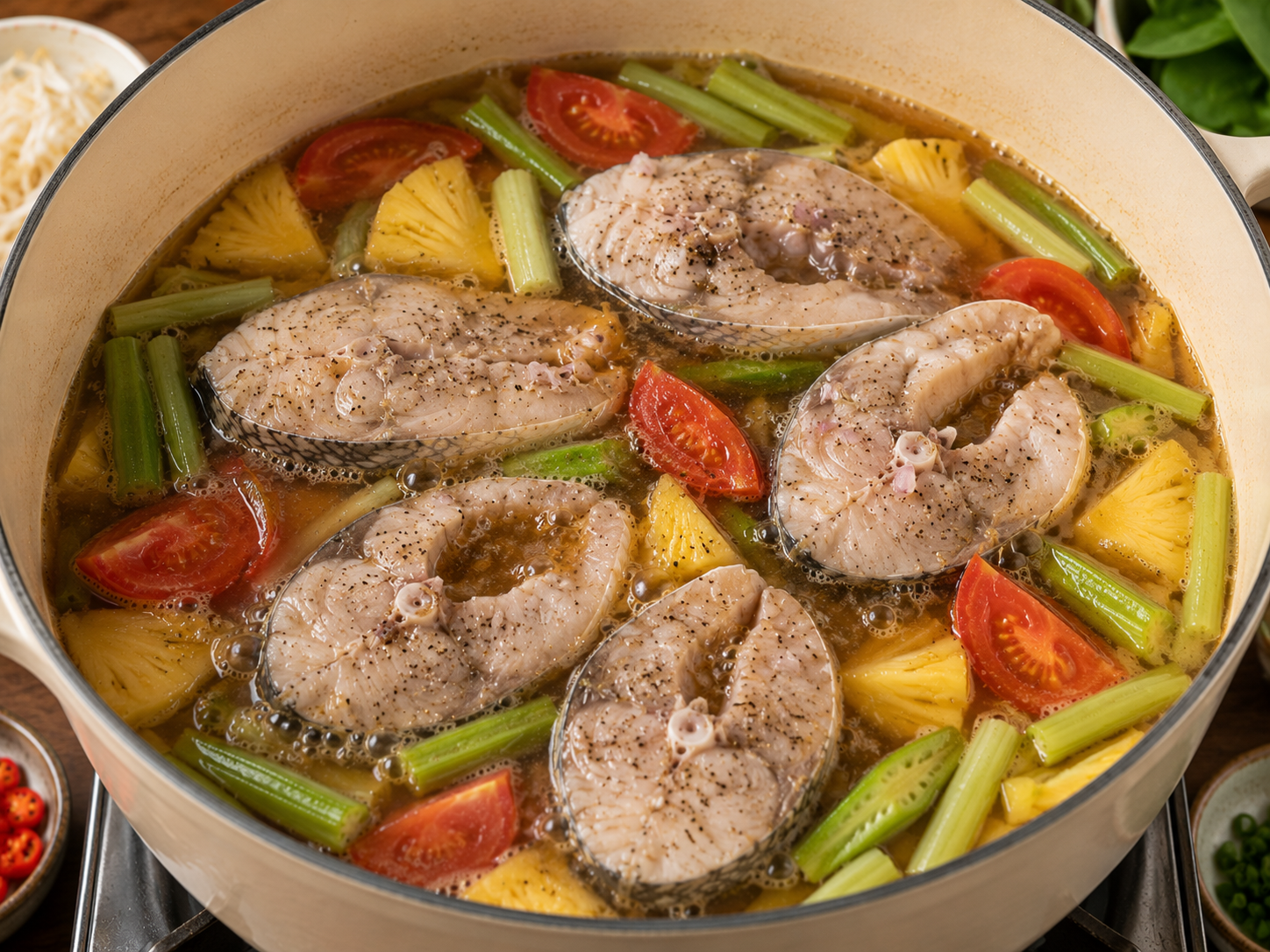
Bring the broth back to a gentle boil.
Lower the fish steaks into the pot one at a time. Do not add the remaining marinade.
Let the broth return to a light simmer, then reduce the heat. Skim away any foam that rises to the surface.
Cook gently for 7 to 10 minutes, depending on the thickness of the fish. Avoid stirring with a spoon, which can break the steaks. Gently shake the pot by its handles when necessary.
The fish is ready when the flesh is opaque and separates easily near the bone. Its internal temperature should reach 145°F (63°C).
Carefully transfer the fish to a plate while the vegetables finish cooking.
Step 6: Add The Vegetables In Stages
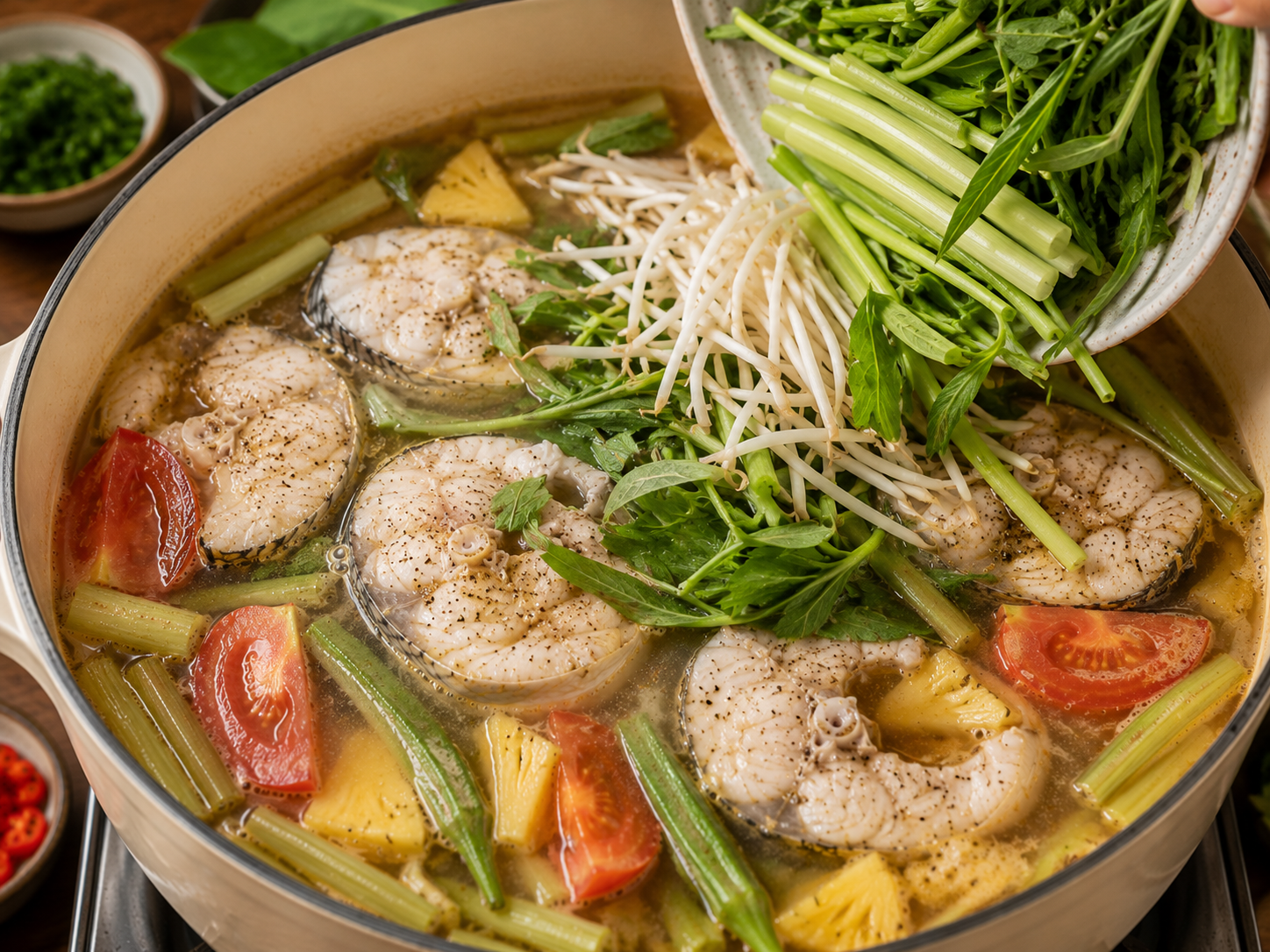
Bring the broth back to a steady simmer.
Add the okra and prepared elephant ear stems. Cook for 2 minutes.
Add the remaining tomato wedges and cook for another 1 to 2 minutes. The okra should be tender but not soft, while the tomatoes should retain their shape.
Add the bean sprouts and cook for 30 seconds. They should soften slightly while keeping some fresh crunch.
Avoid boiling the vegetables for too long. Each one should remain recognizable and contribute a different texture to the soup.
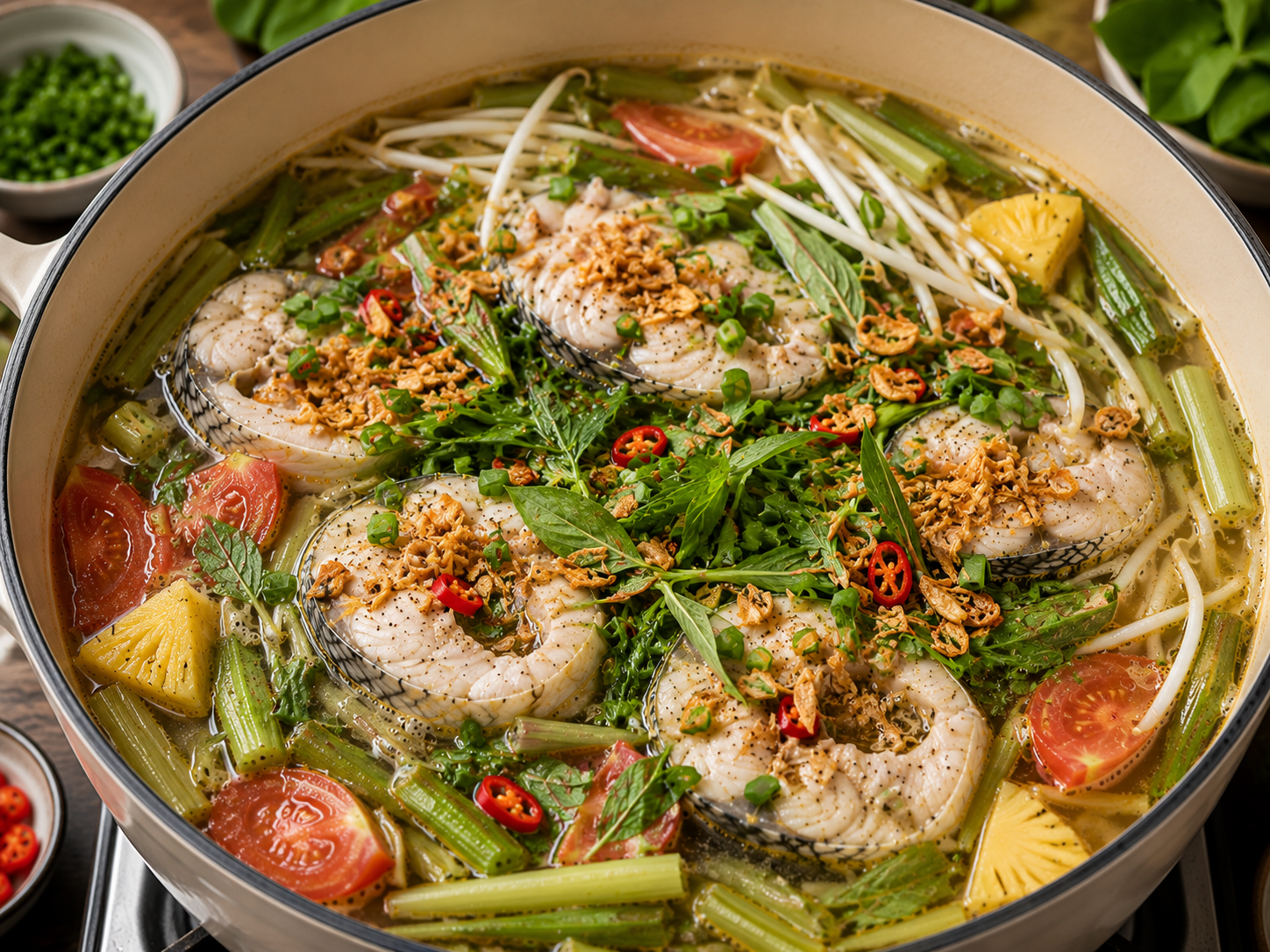
Step 7: Finish With Fresh Herbs
Turn off the heat.
Add the rice paddy herb, culantro, and sliced chili. Gently move the herbs through the broth without breaking the fish.
Scatter the reserved fried garlic over the surface.
Let the soup stand for 1 minute. The residual heat will release the herbs’ aroma without cooking away their freshness.
Transfer the canh chua cá to a wide serving bowl. Serve it hot with steamed jasmine rice and a small dish of fish sauce with sliced chili for seasoning the fish.
Final Thoughts
Canh chua cá shows how southern Vietnamese cooking builds complexity through balance rather than heaviness. Tamarind provides the sour foundation, but pineapple, tomatoes, fish sauce, herbs, and the natural sweetness of the fish all help shape the broth.
The cooking itself should remain gentle. The fish simmers rather than boils, the vegetables enter the pot in stages, and the herbs are added only after the heat is turned off.
When those details are handled properly, every spoonful feels complete. The broth is bright without becoming harsh, the fish remains tender, and each vegetable contributes a distinct texture to one of southern Vietnam’s most recognizable home-cooked soups.