Bánh Khọt Recipe: Vũng Tàu’s Crispy Shrimp Pancakes
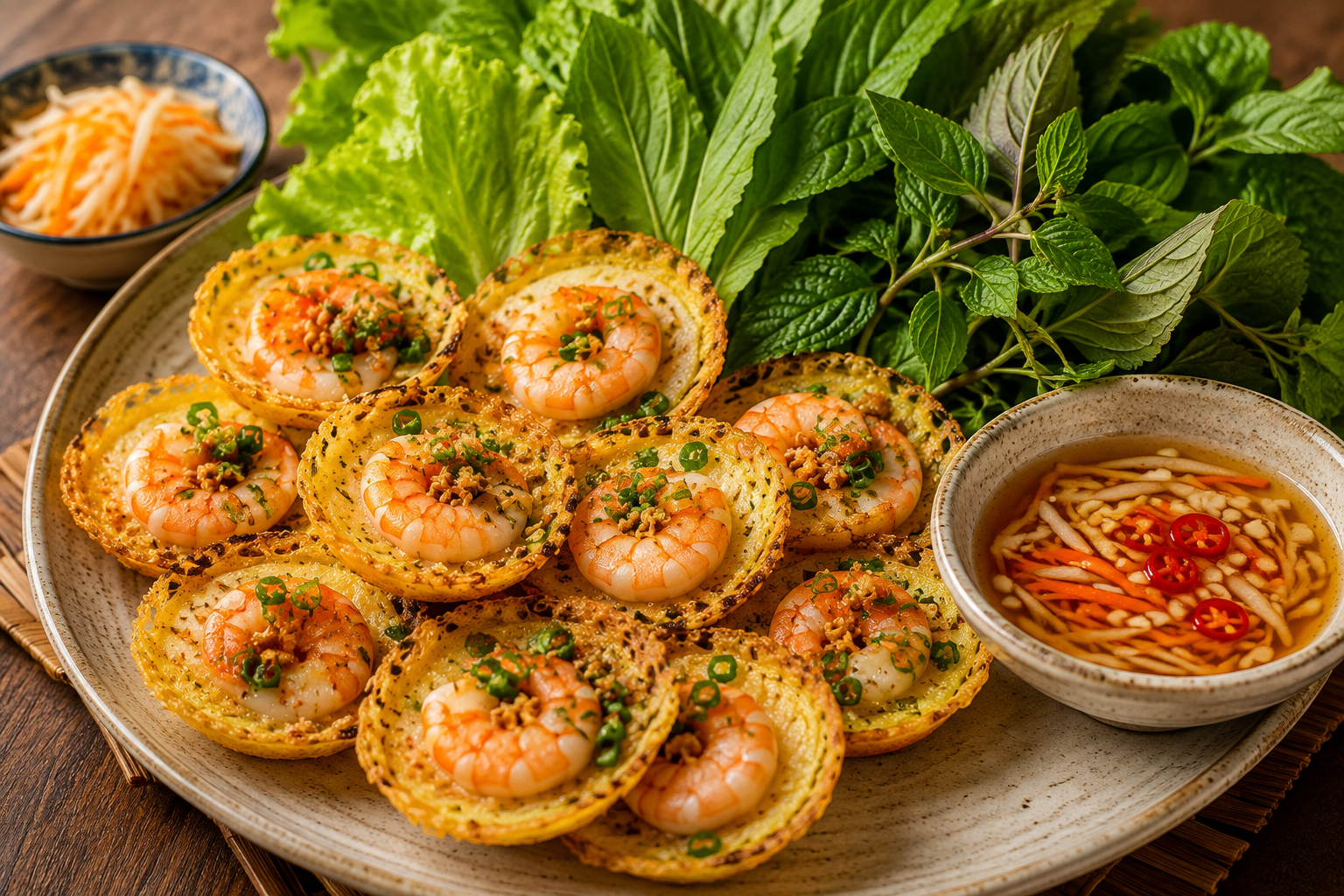
Bánh khọt arrives at the table still sizzling, each small rice pancake holding a shrimp at its center. The edges should be deeply crisp, while the middle stays light and tender enough to absorb a little nước chấm without falling apart.
The best way to eat one is wrapped in a mustard green or lettuce leaf with fresh herbs, then dipped into fish sauce brightened with garlic, chili, and pickled vegetables. The cool greens, sweet shrimp, crisp batter, and sharp dipping sauce all meet in a single bite.
Bánh khọt is made across southern Vietnam, but the version most closely associated with Vũng Tàu is thinner, flatter, and especially crisp. Fresh shrimp sits against a pale rice-flour batter, usually finished with scallion oil and a fine topping of dried shrimp.
This recipe keeps that coastal Vũng Tàu character at the center. The goal is not a thick or doughy pancake. Each bánh khọt should have browned edges, a lightly tender center, and enough structure to stay crisp while it is wrapped with herbs and dipped into nước chấm.
Ingredients
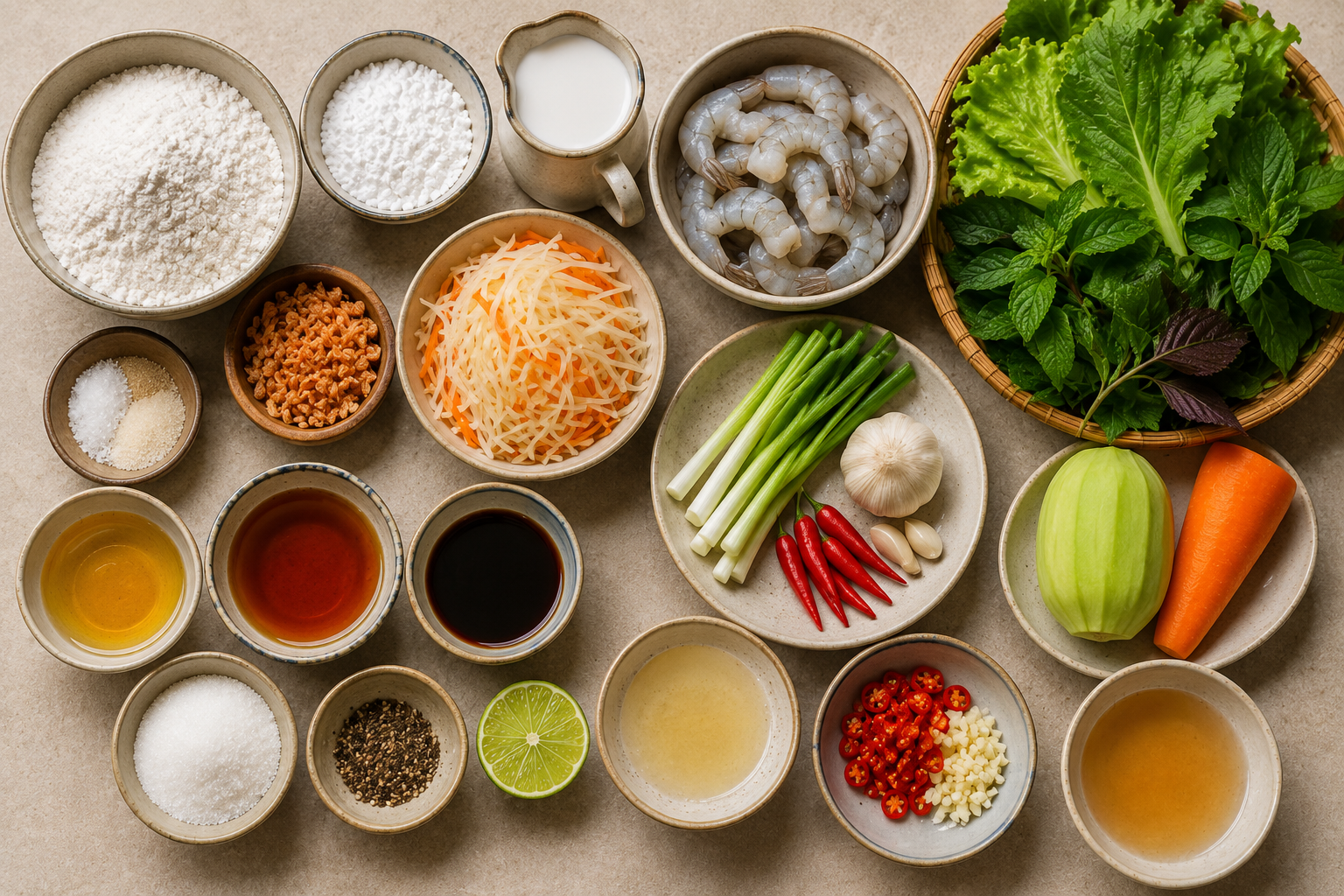
For The Batter
2 cups rice flour (260 grams)
¼ cup tapioca starch (30 grams)
¾ teaspoon kosher salt
½ teaspoon sugar
¼ teaspoon MSG, optional
1¾ cups cold water (415 milliliters)
½ cup unsweetened full-fat coconut milk (120 milliliters)
2 tablespoons neutral cooking oil
For The Shrimp
12 ounces medium shrimp (340 grams), peeled, deveined, and tails removed
½ teaspoon fish sauce
¼ teaspoon sugar
¼ teaspoon freshly ground black pepper
1 small garlic clove, finely minced
For The Scallion Oil
4 scallions, thinly sliced
¼ teaspoon kosher salt
⅓ cup neutral cooking oil
For The Pickled Papaya And Carrot
6 ounces green papaya (170 grams), peeled and cut into fine matchsticks
2 ounces carrot (55 grams), peeled and cut into fine matchsticks
½ teaspoon kosher salt
2 tablespoons sugar
¼ cup rice vinegar
¼ cup warm water
For The Nước Chấm
¾ cup warm water
¼ cup sugar
¼ cup fish sauce
3 tablespoons freshly squeezed lime juice
1 garlic clove, finely minced
1 to 2 bird’s eye chilies, thinly sliced
For Cooking And Serving
¾ to 1 cup neutral cooking oil, as needed
⅓ cup tôm chấy or finely shredded dried shrimp, optional
1 small head leaf lettuce, leaves separated
8 to 10 young mustard green leaves
2 packed cups mixed Vietnamese herbs, such as mint, Thai basil, perilla, and fish mint
How To Make Bánh Khọt
Step 1: Mix And Rest The Batter
Combine the rice flour, tapioca starch, salt, sugar, and MSG in a large mixing bowl.
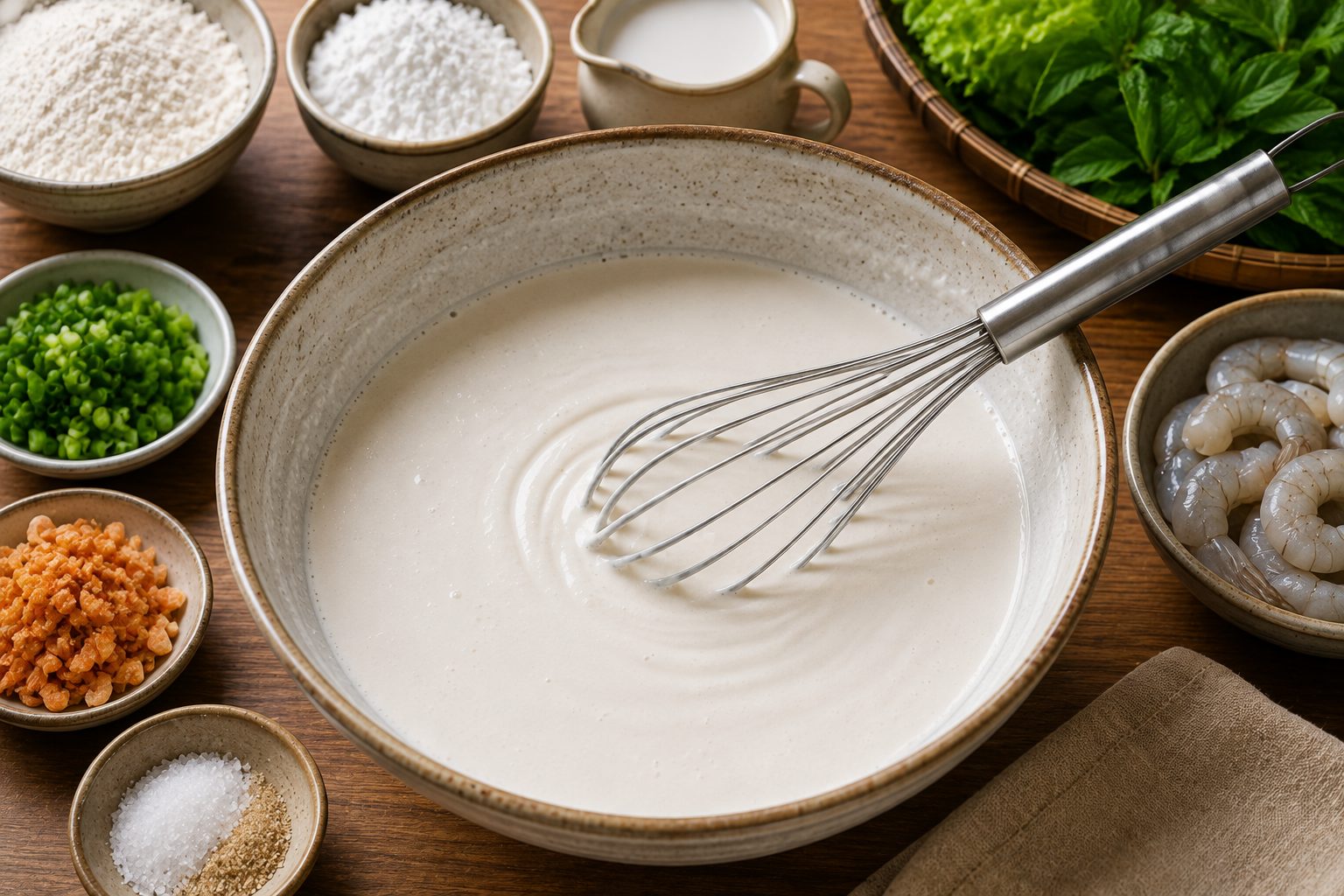
Add the cold water gradually while whisking. Pour in the coconut milk and cooking oil, then continue whisking until the batter is smooth.
Strain the batter through a fine-mesh strainer to remove any remaining lumps.
The batter should pour easily and resemble light cream. It should be considerably thinner than American pancake batter. Add another tablespoon or two of water if it looks thick enough to mound in the bowl.
Cover the bowl and let the batter rest at room temperature for 30 minutes. This gives the rice flour time to hydrate and helps the pancakes cook more evenly.
The flour will settle as the batter rests. Stir it thoroughly before cooking and again before pouring every batch.
Step 2: Pickle The Papaya And Carrot
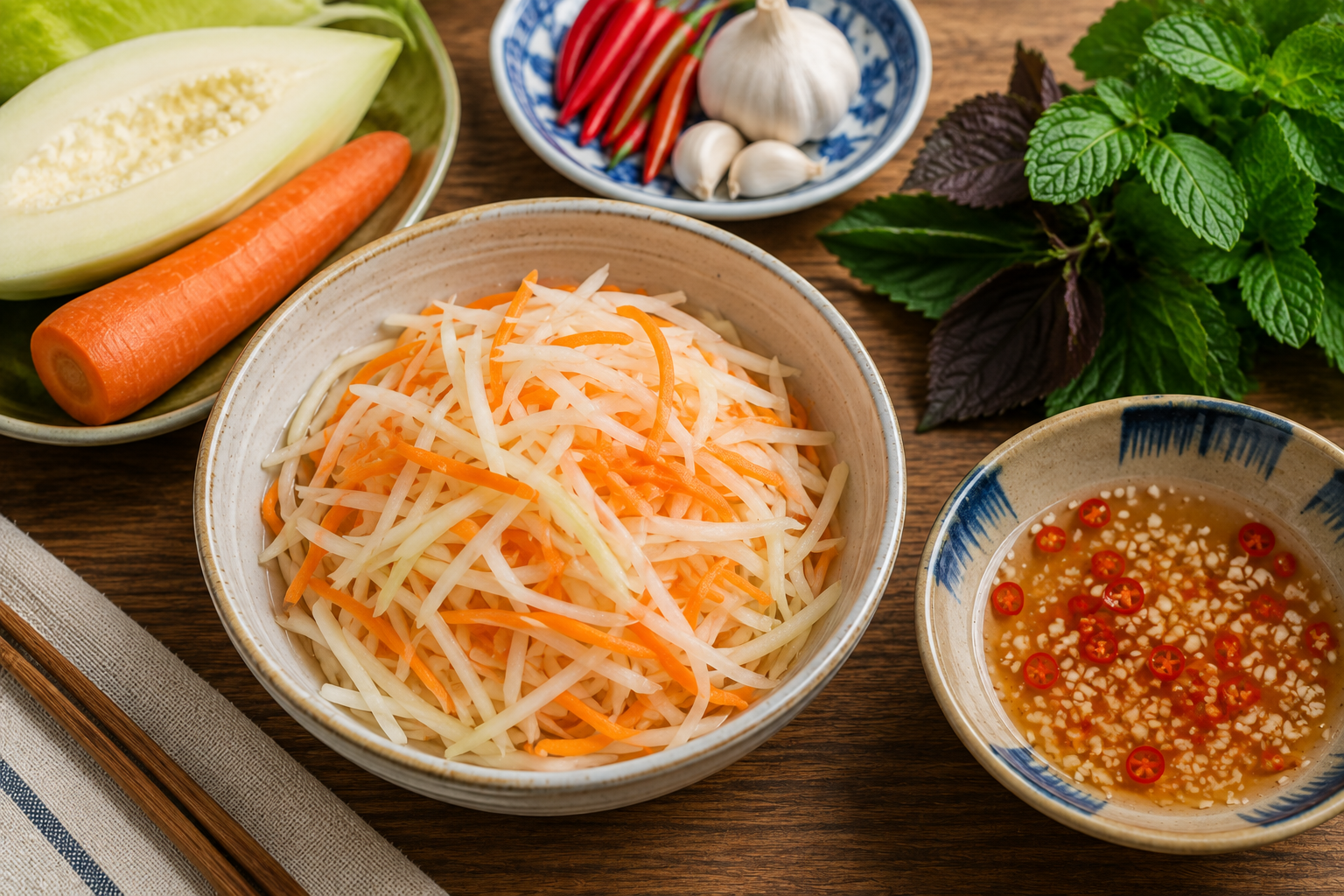
Place the green papaya and carrot in a medium bowl. Add the salt and toss well.
Let the vegetables stand for 10 minutes, then gently squeeze out the moisture they have released. Rinse briefly under cold water and drain thoroughly.
Combine the sugar, rice vinegar, and warm water in a clean bowl. Stir until the sugar dissolves.
Add the papaya and carrot and let them pickle for at least 20 minutes.
The vegetables should remain crisp and lightly sour. They are meant to provide freshness against the fried pancakes, not become soft like a long-fermented pickle.
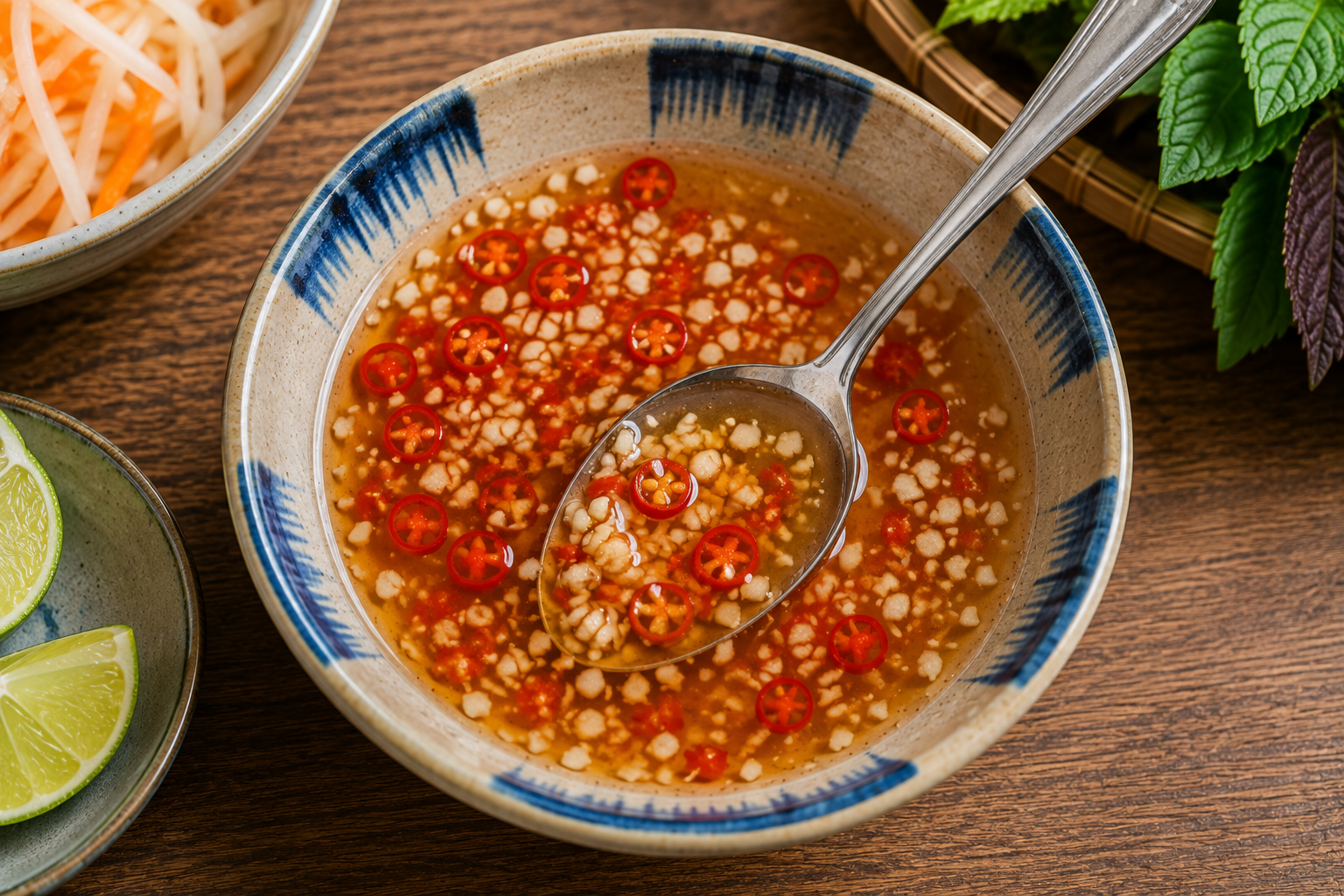
Step 3: Make The Nước Chấm
Combine the warm water and sugar in a medium bowl. Stir until the sugar has completely dissolved.
Add the fish sauce and lime juice. Stir in the garlic and sliced chilies.
Let the sauce stand for 5 minutes, then taste it. It should be lighter and slightly sweeter than a concentrated dipping sauce for grilled meat, with enough acidity to cut through the fried batter.
Add a little more lime juice if it tastes flat. Add 1 tablespoon of water if the fish sauce feels too strong.
Set the nước chấm aside while you prepare the pancakes. Add some of the pickled papaya and carrot to each dipping bowl shortly before serving.
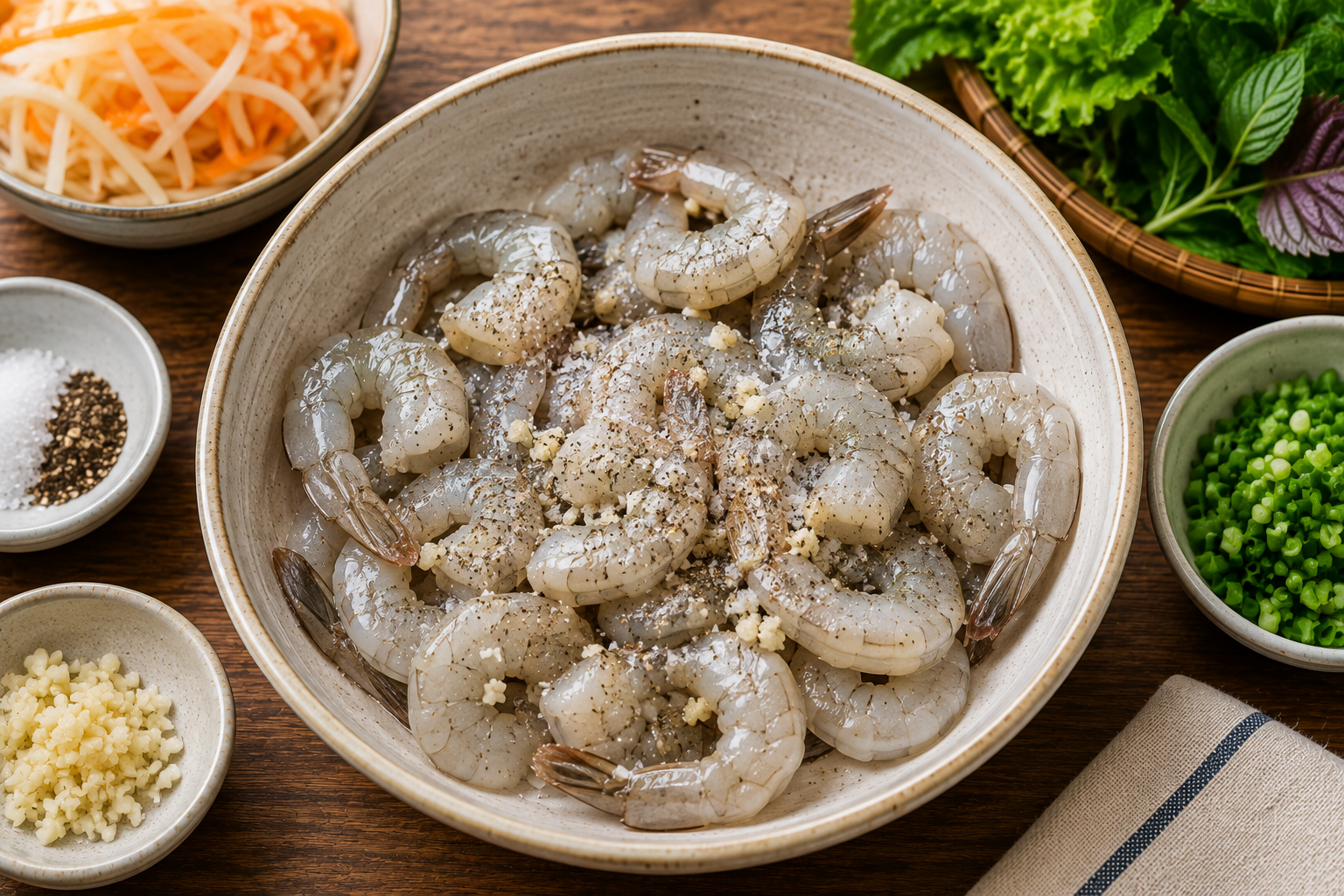
Step 4: Season The Shrimp
Pat the shrimp completely dry with paper towels.
If the shrimp are too large to fit inside the wells of your bánh khọt pan, cut them in half lengthwise. Each piece should sit comfortably in the center without covering the entire pancake.
Combine the shrimp with the fish sauce, sugar, black pepper, and garlic.
Mix well and let the shrimp marinate for 10 to 15 minutes. Do not marinate them much longer because the fish sauce can make the shrimp overly salty.
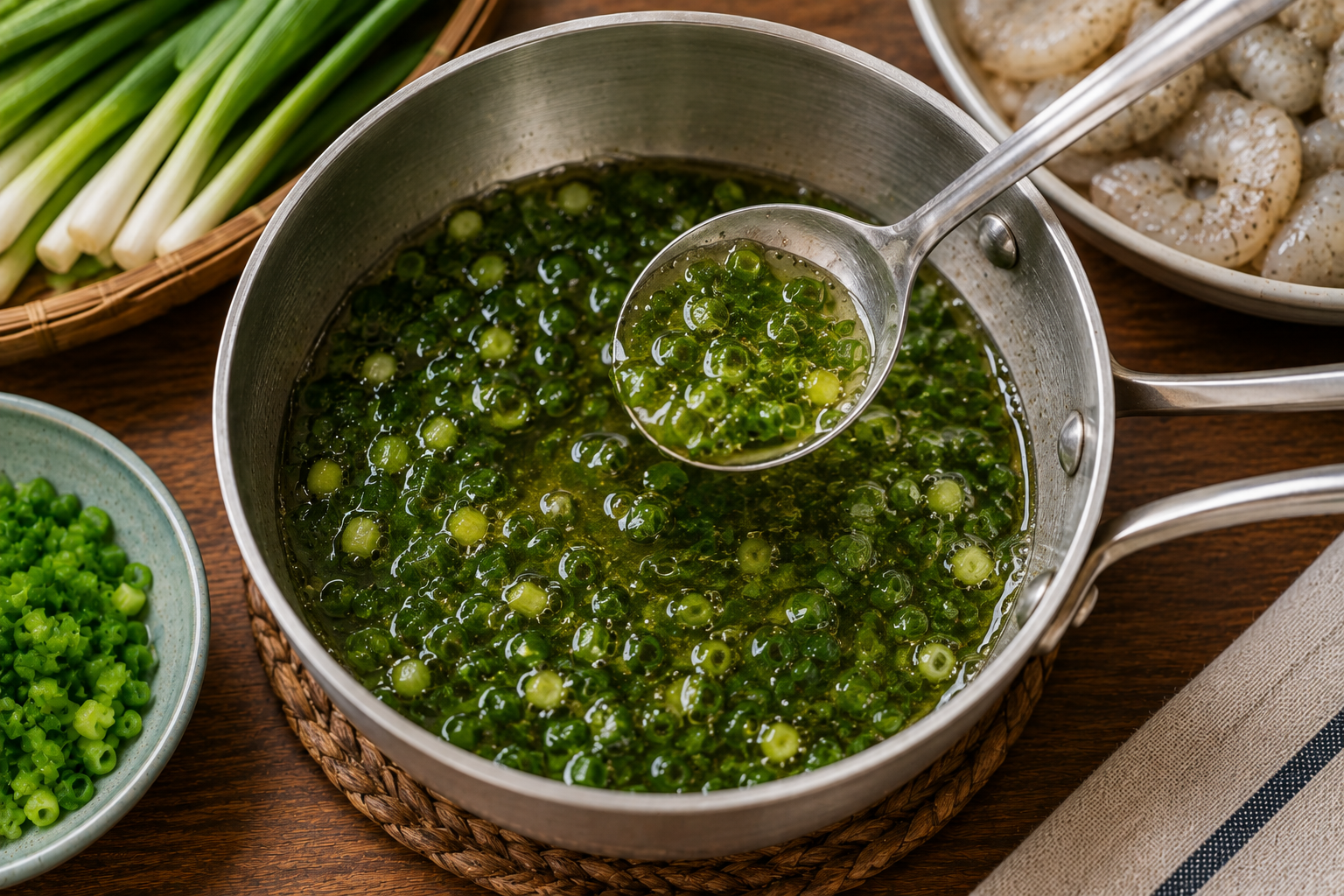
Step 5: Make The Scallion Oil
Place the sliced scallions and salt in a heatproof bowl.
Heat the oil in a small saucepan over medium heat until it begins to shimmer. Do not let it smoke.
Carefully pour the hot oil over the scallions. The mixture should sizzle immediately.
Stir and let the scallion oil cool slightly. The scallions should soften and release their aroma while retaining their bright green color.
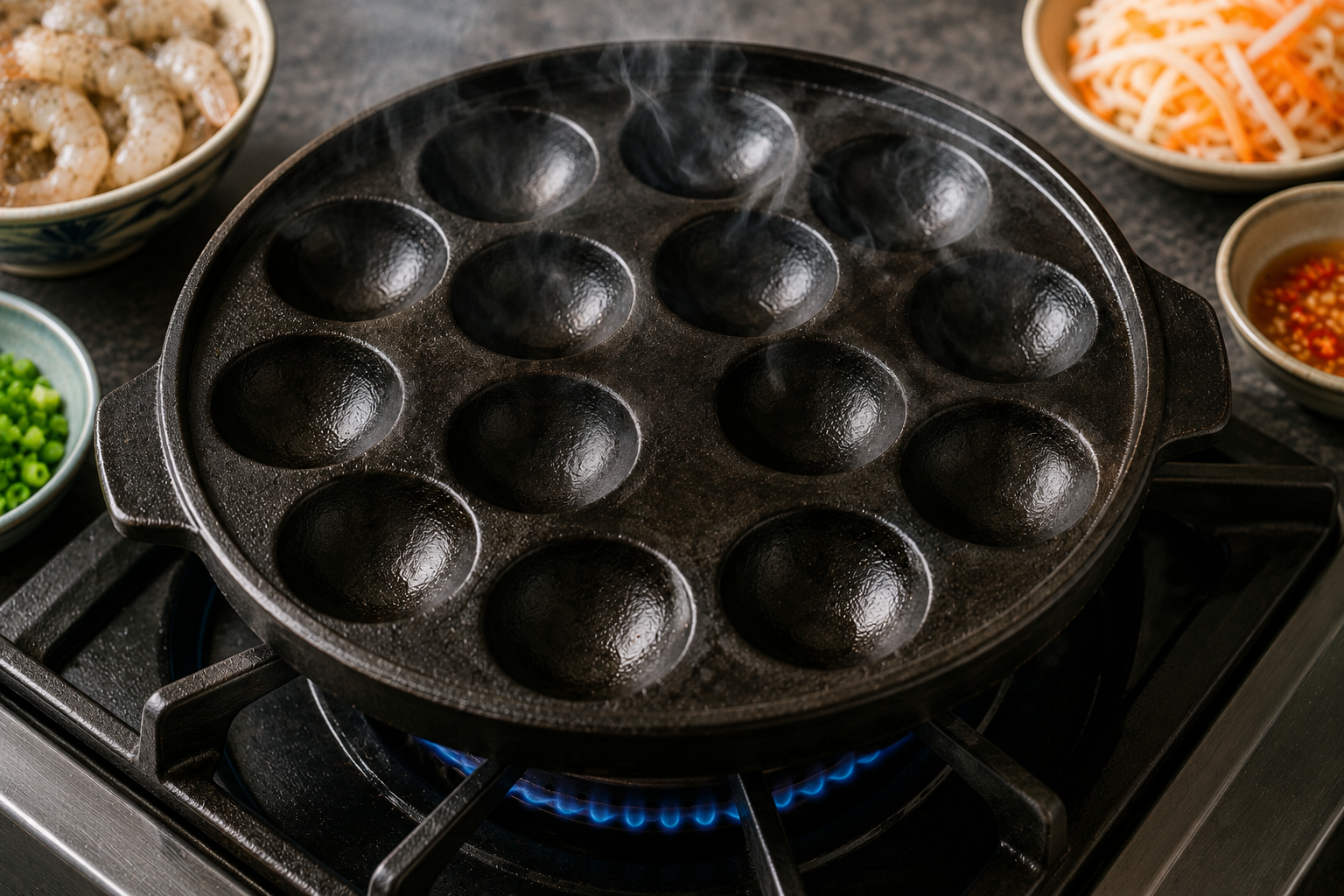
Step 6: Heat The Bánh Khọt Pan
Place a bánh khọt pan over medium heat and let it preheat for 3 to 4 minutes.
Add about 1 teaspoon of oil to each well. Use a small pastry brush or a folded paper towel held with tongs to coat the bottom and sides.
Let the oil heat for another minute. A small drop of batter should sizzle immediately when it touches the pan.
The mold must be thoroughly heated before the batter is added. A cool pan causes the rice batter to absorb oil, stick to the surface, and cook without developing a crisp shell.
A dedicated bánh khọt pan produces the most recognizable shape. A shallow cast-iron aebleskiver or mini-pancake pan can also work, but the wells should only be partially filled so the pancakes remain relatively flat.
Step 7: Pour The Batter And Add The Shrimp
Stir the batter thoroughly, scraping across the bottom of the bowl to reincorporate the settled flour.
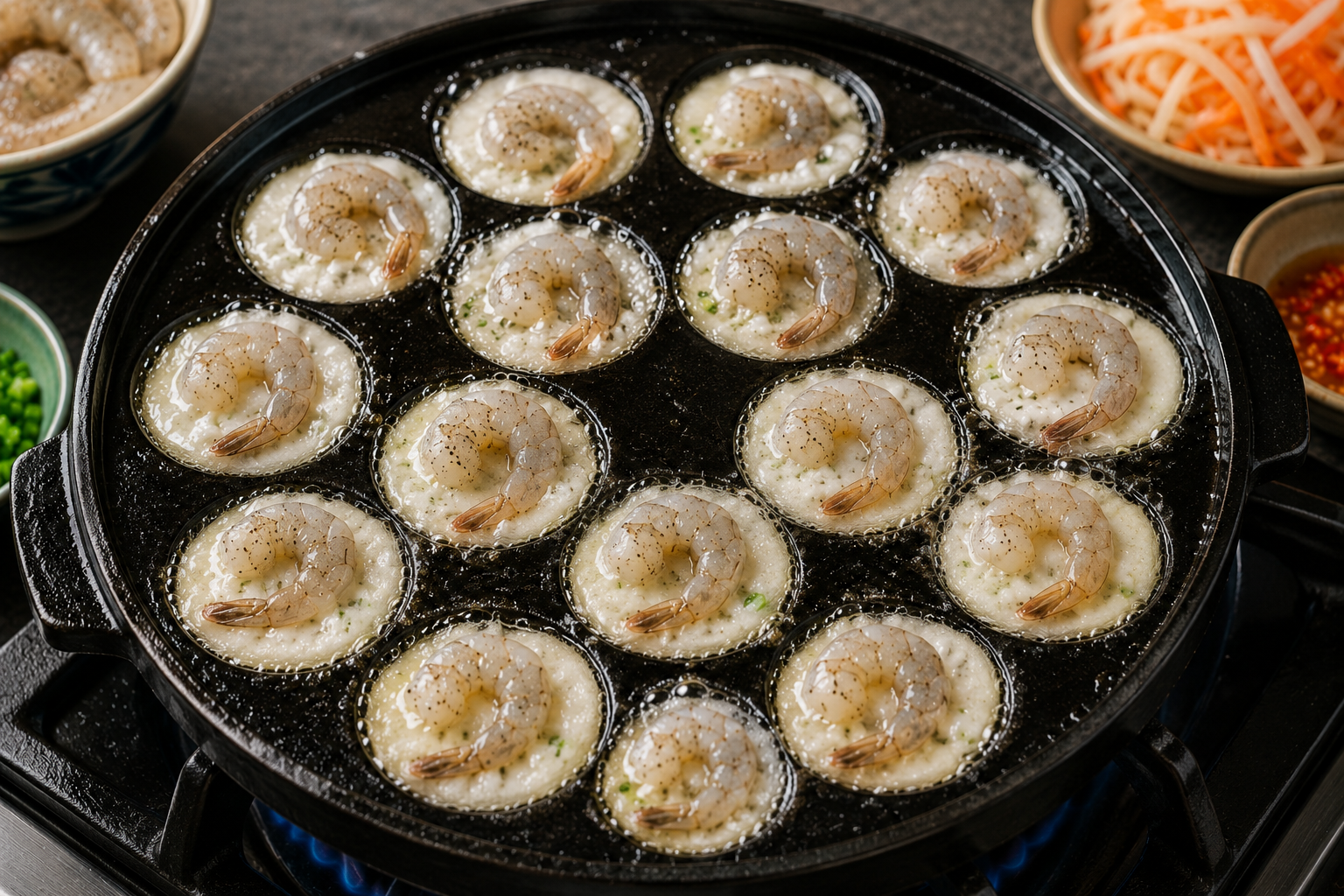
Pour enough batter into each hot well to fill it about two-thirds full. The batter should immediately begin sizzling and bubbling around the edges.
Place one shrimp or shrimp half in the center of each pancake.
Cover the pan and cook for 1½ to 2 minutes. The trapped heat will begin cooking the surface and the shrimp while the oil crisps the bottom.
Keep the heat at medium or medium-high. Lower it slightly if the oil begins smoking or the edges darken before the center starts setting.
Step 8: Crisp The Edges
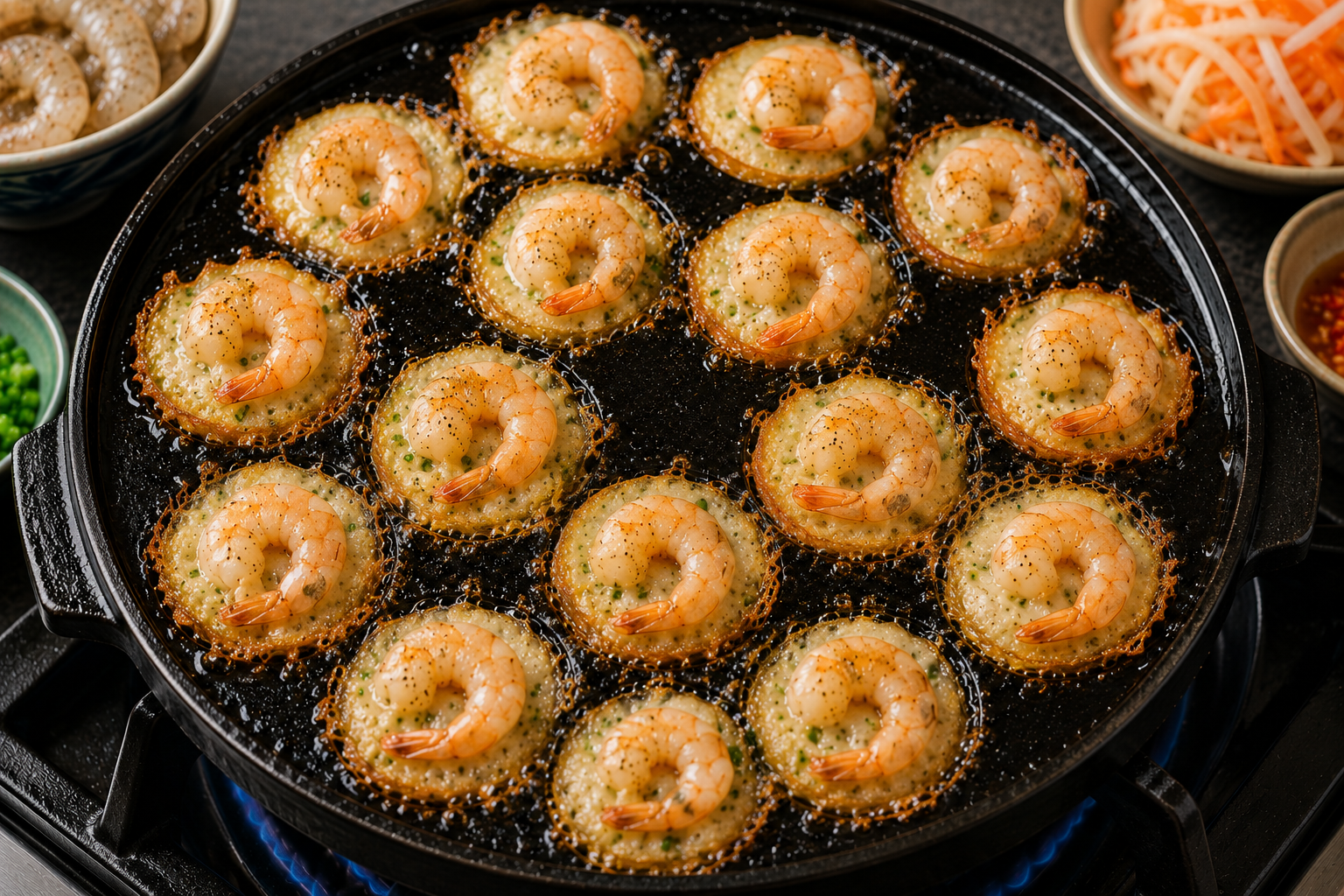
Remove the lid. The surface of each pancake should look mostly set, with only a small amount of moist batter around the shrimp.
Drizzle another ½ teaspoon of oil around the edge of each pancake.
Use a narrow spoon or thin metal spatula to gently loosen the edges from the mold, allowing some of the oil to run underneath.
Continue cooking uncovered for 2 to 4 minutes.
The outer edge should become firm and crisp, while the underside develops an even golden-brown crust. The center may remain slightly tender, but it should not look wet or raw.
Do not remove the bánh khọt while their edges are still pale and flexible. Properly cooked pancakes should release from the mold with very little resistance.
Step 9: Finish And Serve
Arrange the hot bánh khọt with the lettuce, mustard greens, and fresh Vietnamese herbs.
Divide the nước chấm among small bowls and add a spoonful of pickled papaya and carrot to each one.
To eat, place one bánh khọt inside a mustard green or lettuce leaf. Add a few herbs, fold the leaf around the pancake, and dip the bundle into the nước chấm.
Bánh khọt is best eaten as soon as it leaves the pan. The edges should crackle, the center should remain lightly tender, and the shrimp should taste sweet and juicy against the rice batter, fresh greens, and sharp dipping sauce.
Final Thoughts
Bánh khọt is a dish of small details. The ingredient list is straightforward, but the finished texture depends on batter consistency, pan temperature, and using enough oil to crisp the rice flour without leaving the pancakes heavy.
The mold needs time to become properly hot. The batter needs to be stirred between batches. Most importantly, each pancake needs to remain in the pan long enough for its underside and edges to become genuinely crisp.
That patience is rewarded at the table. Wrapped in mustard greens with fresh herbs, pickled papaya, and nước chấm, bánh khọt becomes more than a fried pancake. It captures the balance that makes so much southern Vietnamese cooking memorable: hot and cool, rich and fresh, crisp and tender, all held together in one bite.