Cơm Tấm: The Broken Rice Plate Every Saigon Food Lover Should Know
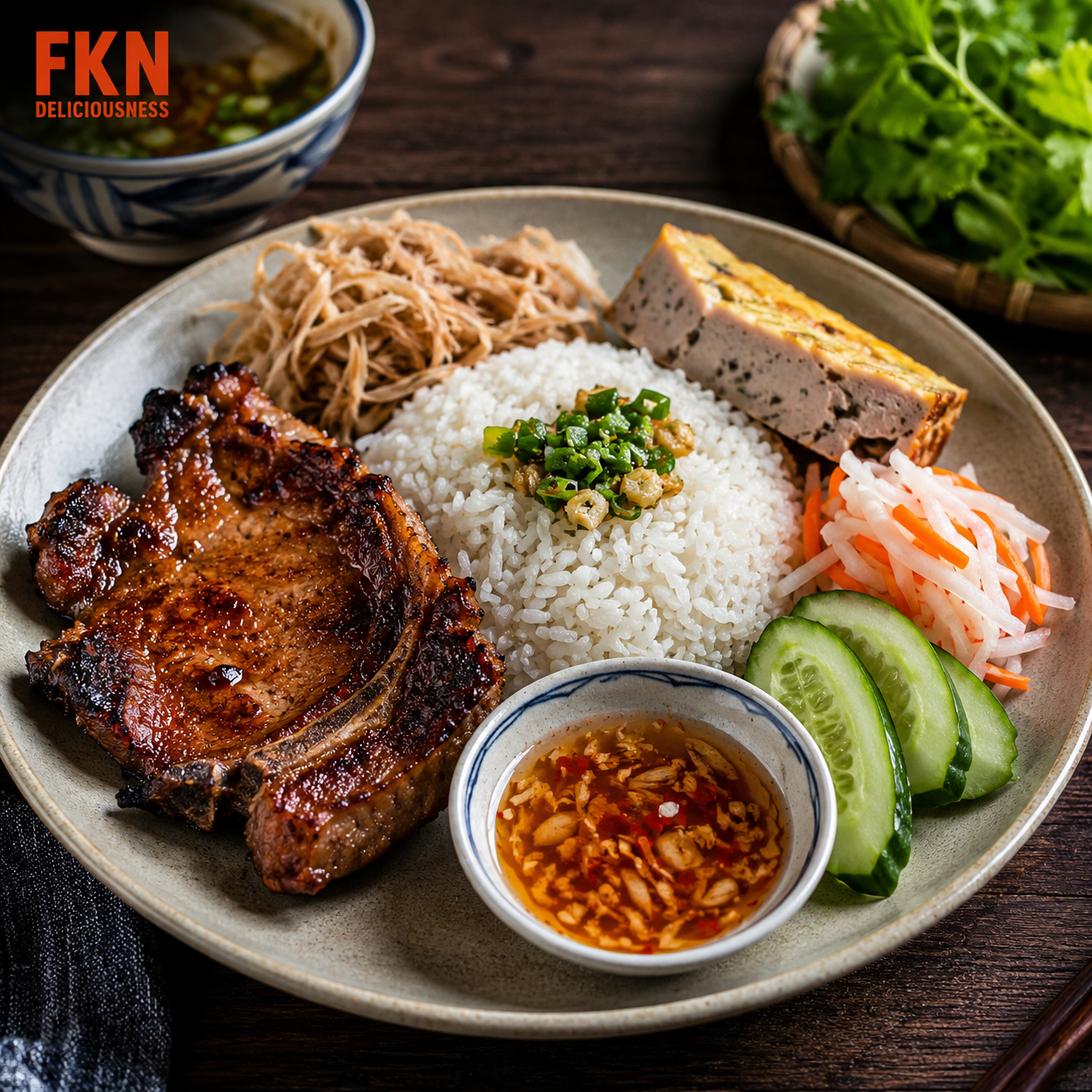
Cơm tấm is the kind of plate that hits the table looking humble, then completely takes over your appetite. You smell the grilled pork first, smoky, sweet, and a little charred at the edges, before your eyes land on the broken rice, fried egg, pickled vegetables, cucumber, scallion oil, and that small bowl of nước mắm waiting to pull everything together.
At its core, cơm tấm means “broken rice,” a Vietnamese rice dish built around fractured rice grains that were once considered less valuable than whole grains. It became especially famous in Saigon and southern Vietnam, where the classic version, cơm tấm sườn bì chả, usually comes with grilled pork chop, shredded pork skin, steamed egg meatloaf, pickled carrot and daikon, cucumber, scallion oil, and fish sauce dressing. What started as a practical working-class meal became one of the most recognizable plates in Vietnamese food.
Vietnamese people eat cơm tấm for breakfast, lunch, dinner, and late-night hunger, which tells you everything about its range. A good plate should have rice that is soft but not mushy, pork that tastes grilled instead of just sweet, chả that is tender and savory, bì that brings texture, and nước mắm that is balanced enough to season the whole plate without drowning it. First-time visitors should notice the contrast: broken rice grains, smoky meat, cool vegetables, rich egg, and that sweet-salty fish sauce all working like one complete bite.
Cơm tấm belongs on any serious what to eat in Vietnam list because it captures the soul of southern Vietnamese street food in one plate. It is everyday food, but it never feels ordinary when done right. Order it in Saigon from a busy grill station with smoke rolling onto the sidewalk, and you understand why broken rice became something whole.