Bánh Mì: Vietnam’s Crispy Baguette With A Street Food Soul
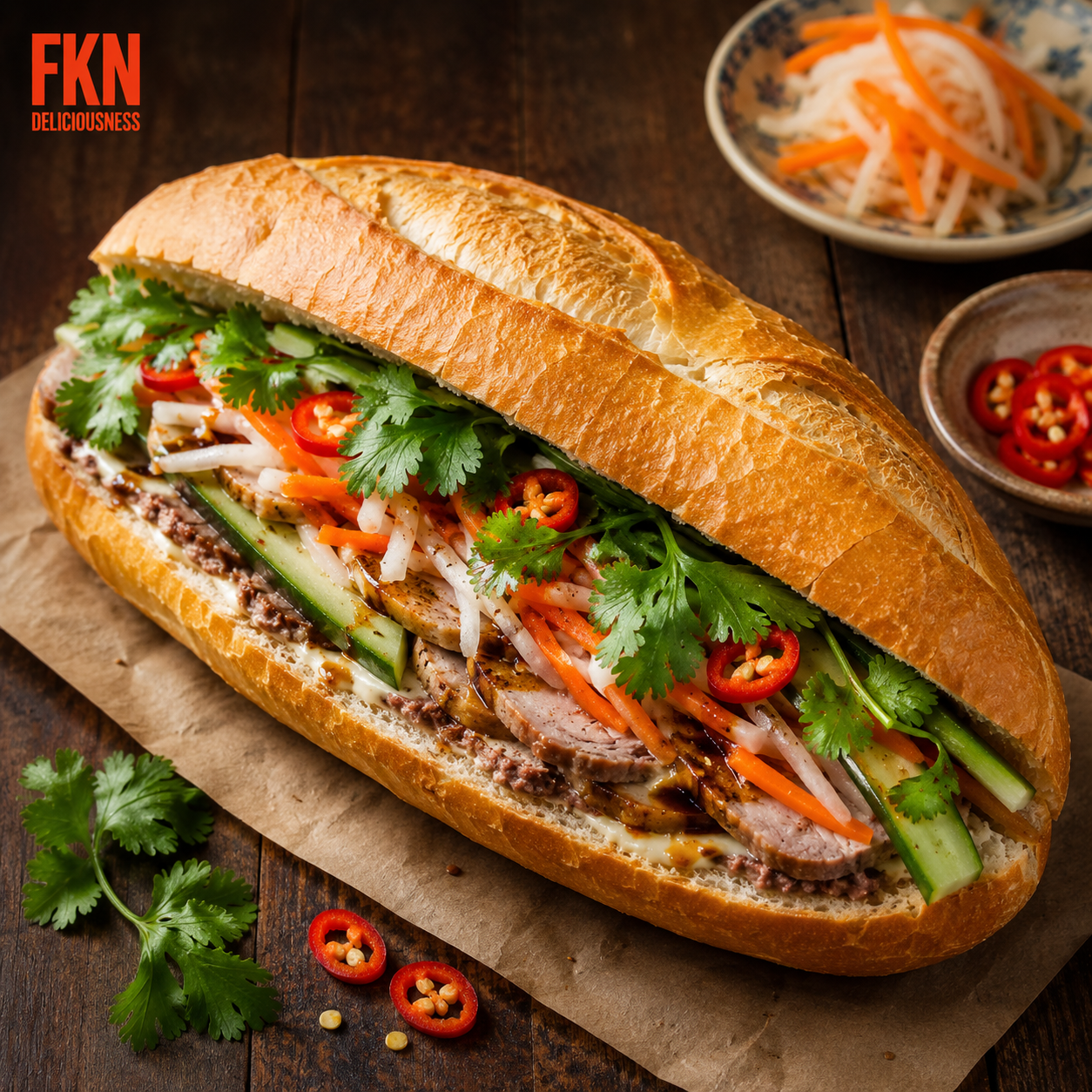
The first thing you notice about bánh mì is the crackle. That thin, golden baguette breaks under your teeth before giving way to rich pâté, butter, pickled vegetables, fresh herbs, chili, and whatever the cart has been perfecting since sunrise.
Bánh mì carries the shadow of French bread, but Vietnam turned it into something completely its own. The Vietnamese baguette is lighter, airier, and sharper than the heavy loaves that inspired it, built for speed, humidity, motorbikes, street corners, and hungry people on the move. Inside, you might find pâté, Vietnamese butter or mayonnaise, cold cuts, grilled pork, shredded chicken, fried egg, cucumber, cilantro, pickled carrot and daikon, chili, and a splash of seasoning sauce.
Vietnamese people eat bánh mì everywhere: for breakfast before work, as a quick lunch, after school, late at night, or standing beside a cart while the bread is still warm. A good version should feel balanced, not overloaded. The bread should shatter, the pickles should cut through the fat, the herbs should brighten everything, and the chili should remind you that this is not just bread with filling. This is street food architecture.
Bánh mì belongs on every traveler’s what to eat in Vietnam list because it tells a bigger story in one bite. It is French influence rewritten in Vietnamese rhythm, humble ingredients turned into something fast, affordable, and unforgettable. Whether you find it from a famous shop in Saigon, a morning cart in Da Nang, or a neighborhood stall in Hanoi, bánh mì is one of the clearest examples of how Vietnam takes history, heat, texture, and hustle, then feeds it back to you wrapped in paper.