Bánh Mì Thịt Nguội Recipe: Vietnam’s Classic Cold Cut Baguette
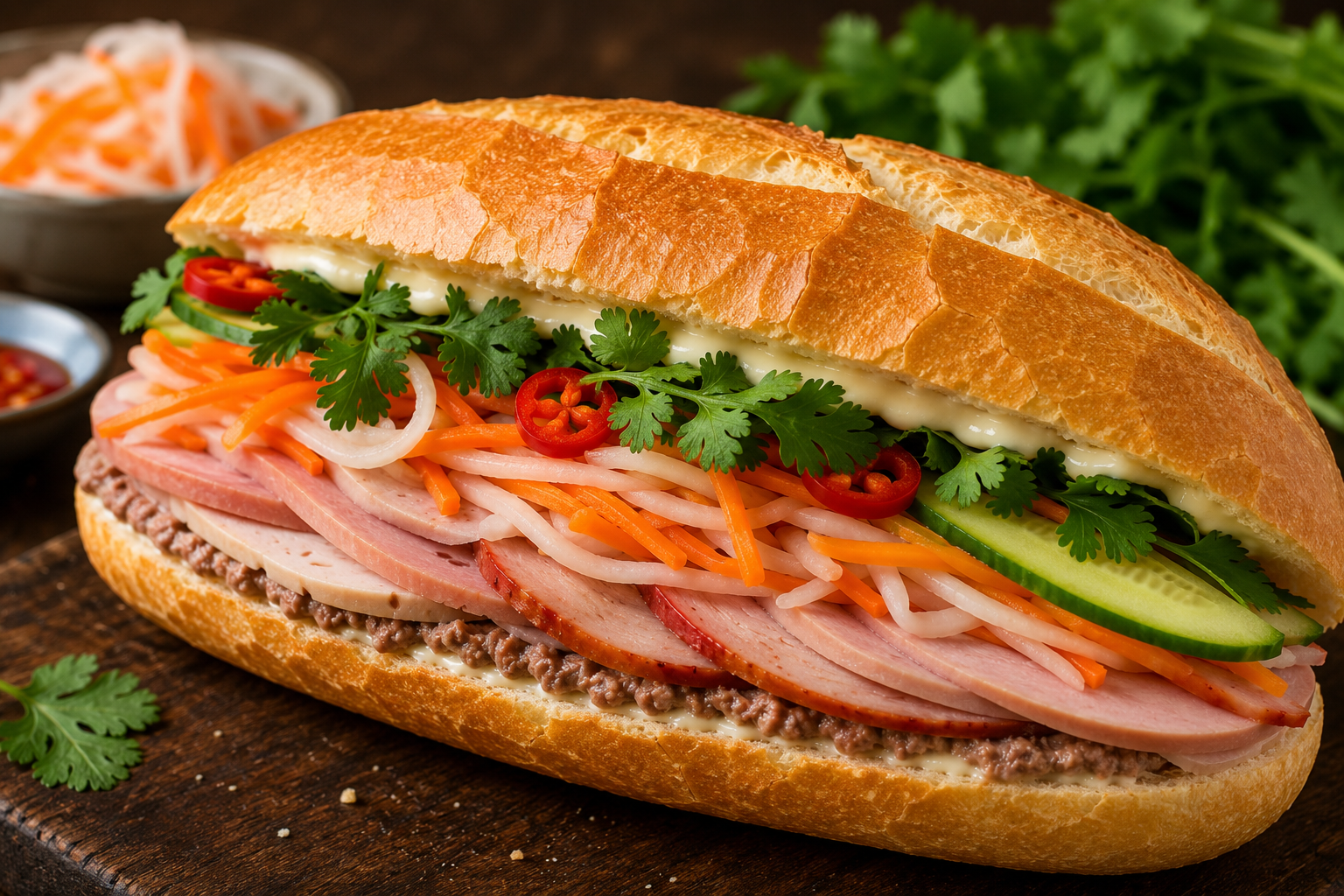
A good bánh mì thịt nguội is not about stuffing bread with as much meat as possible. It is about balance.
The baguette should crack lightly when you bite it, then almost disappear. The pâté brings depth. The Vietnamese egg mayonnaise softens the edges. The cold cuts bring salt and richness. Then the pickled carrot and daikon, cucumber, cilantro, chili, and seasoning sauce cut through everything and wake the whole thing up.
This is the old-school bánh mì most people recognize from street carts and neighborhood shops in Vietnam: crisp bread, pâté, bơ trứng, thịt nguội, đồ chua, herbs, and chili, built quickly but never randomly.
For a home cook, the goal is not to reinvent it. The goal is to understand each layer, slice everything thin, keep the bread crisp, and build a baguette that tastes like Vietnam instead of a regular deli sandwich.
Ingredients
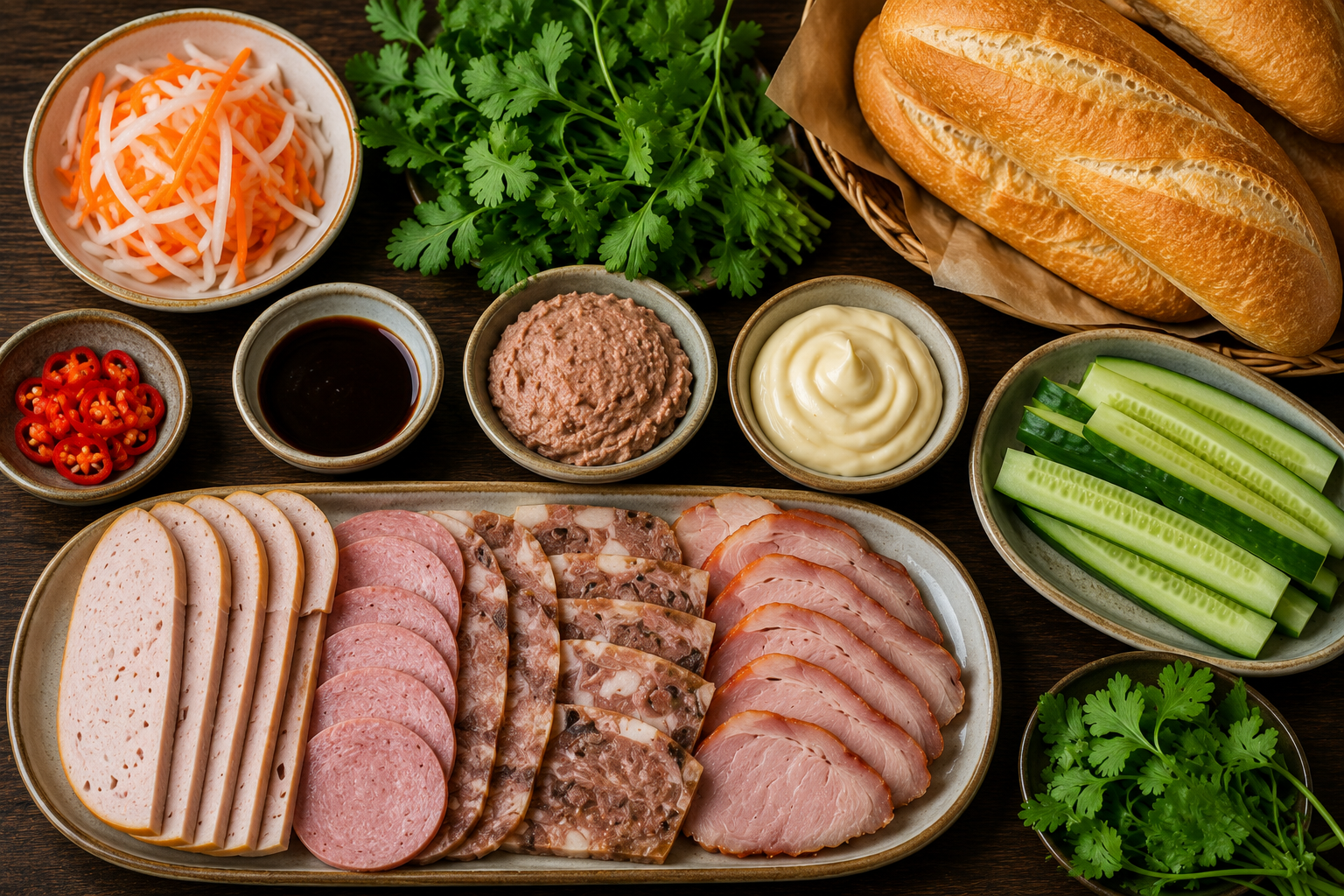
For The Vietnamese Egg Mayonnaise
2 large egg yolks
1 cup neutral oil, such as canola, sunflower, avocado, or another light oil
1 teaspoon lime juice or white vinegar
½ teaspoon sugar
¼ teaspoon salt
For The Pickled Carrot And Daikon
5 ounces carrot, peeled and cut into thin matchsticks
5 ounces daikon radish, peeled and cut into thin matchsticks
¾ cup rice vinegar or white vinegar
½ cup warm water
¼ cup sugar
1½ teaspoons salt
For The Baguettes
4 small Vietnamese-style baguettes, about 7 to 8 inches each
7 ounces Vietnamese pork roll, thinly sliced
4 ounces Vietnamese head cheese, thinly sliced
4 ounces Vietnamese ham, red pork, or another Vietnamese cold cut, thinly sliced
4 ounces pâté
1 cucumber, sliced lengthwise into thin strips
1 small bunch cilantro, washed and dried
2 fresh red chilies, thinly sliced
2 tablespoons Maggi seasoning, soy sauce, or a light savory seasoning sauce
Optional But Good
1 tablespoon chili sauce
A few thin slices white onion, if you like a sharper bite
Extra pâté, if you want a richer old-school style bánh mì
Bánh mì thịt nguội is usually built from the same core family of ingredients: crisp bread, pâté, Vietnamese-style bơ or mayonnaise, thin sliced cold cuts such as chả lụa and head cheese, cucumber, cilantro, chili, pickled vegetables, and a final savory seasoning sauce.
How To Make Bánh Mì Thịt Nguội
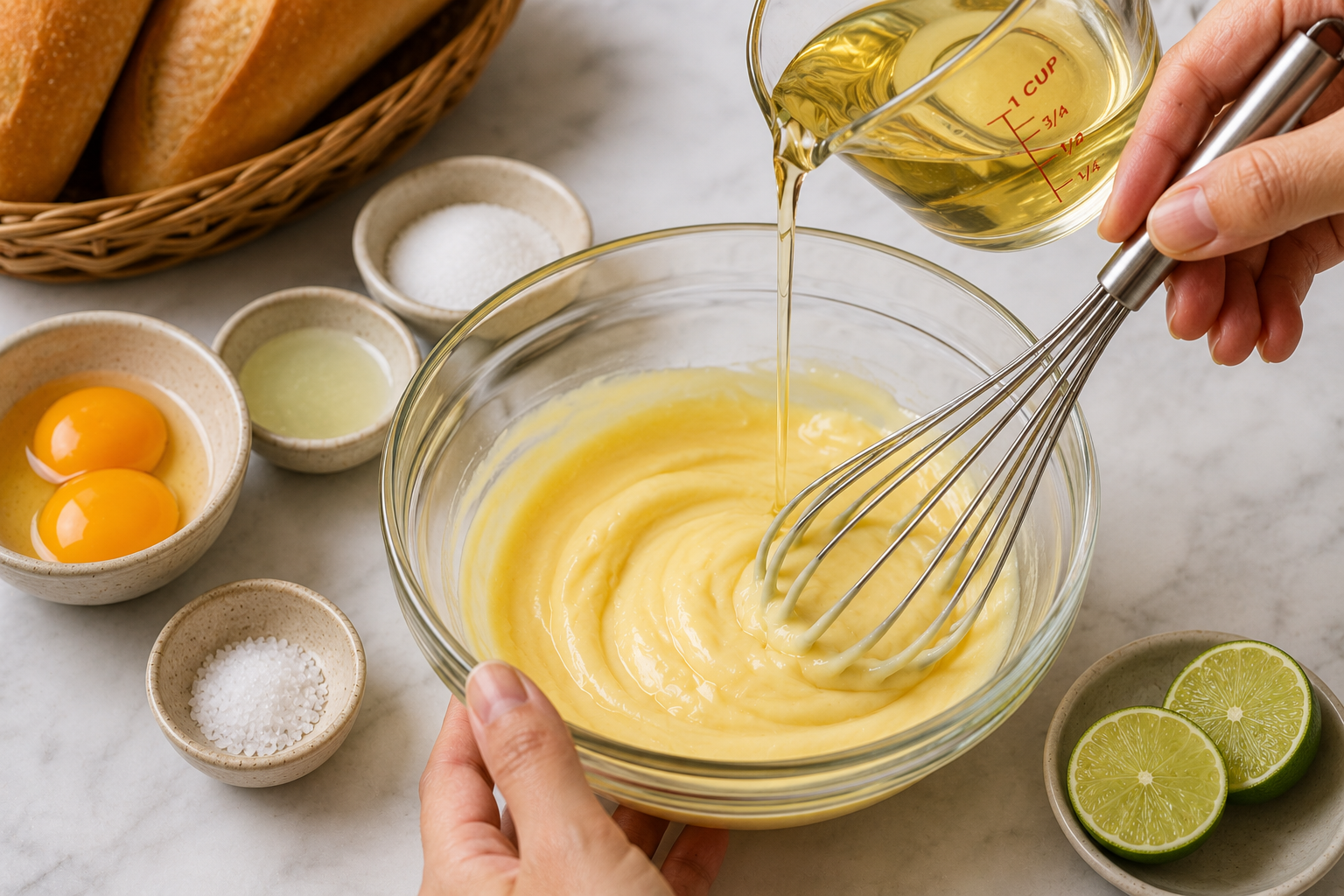
Step 1: Make The Vietnamese Egg Mayonnaise
Place the egg yolks, lime juice or vinegar, sugar, and salt in a mixing bowl. Whisk until the yolks look smooth, glossy, and slightly lighter in color.
Slowly drizzle in the oil while whisking constantly. Start with just a few drops at a time. Once the mixture begins to thicken, add the oil in a thin steady stream.
The mayonnaise should become thick, pale yellow, and creamy. It should taste rich, lightly salty, and just sharp enough to keep it from feeling heavy.
If the mayonnaise gets too thick, whisk in ½ teaspoon water at a time until it loosens. If it breaks, start with a fresh egg yolk in a clean bowl and slowly whisk the broken mixture back into it.
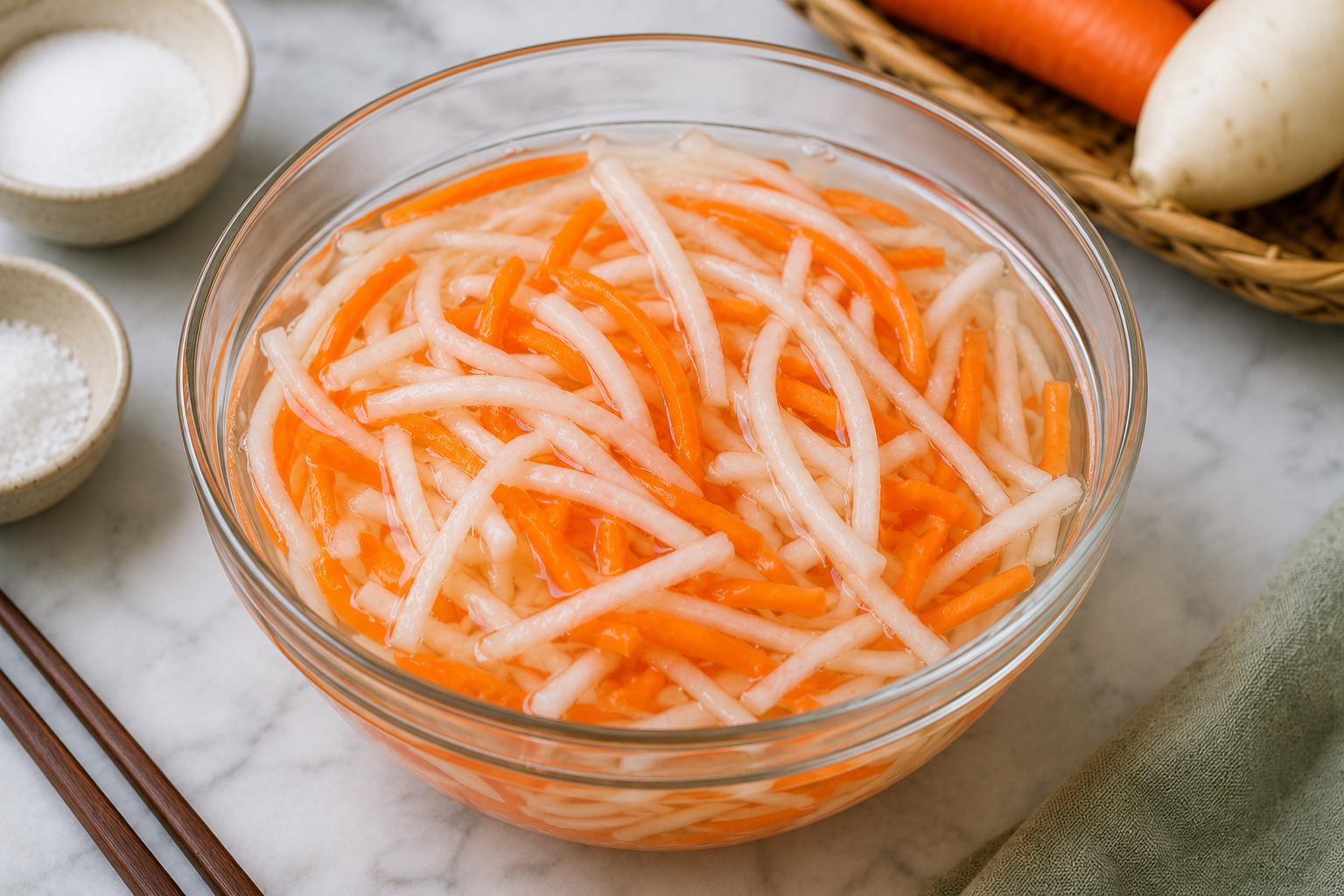
Step 2: Make The Pickled Carrot And Daikon
Combine the vinegar, warm water, sugar, and salt in a bowl. Stir until the sugar and salt dissolve.
Add the carrot and daikon matchsticks. Press them down so they sit mostly under the brine. Let them pickle for at least 30 minutes.
The vegetables should stay crisp, but the raw bite should soften. You want them sharp, lightly sweet, and salty enough to cut through the pâté, egg mayonnaise, and cold cuts.
Drain the pickles before building the bánh mì. Extra brine will make the bread soggy, and bánh mì only works when the bread stays crisp.
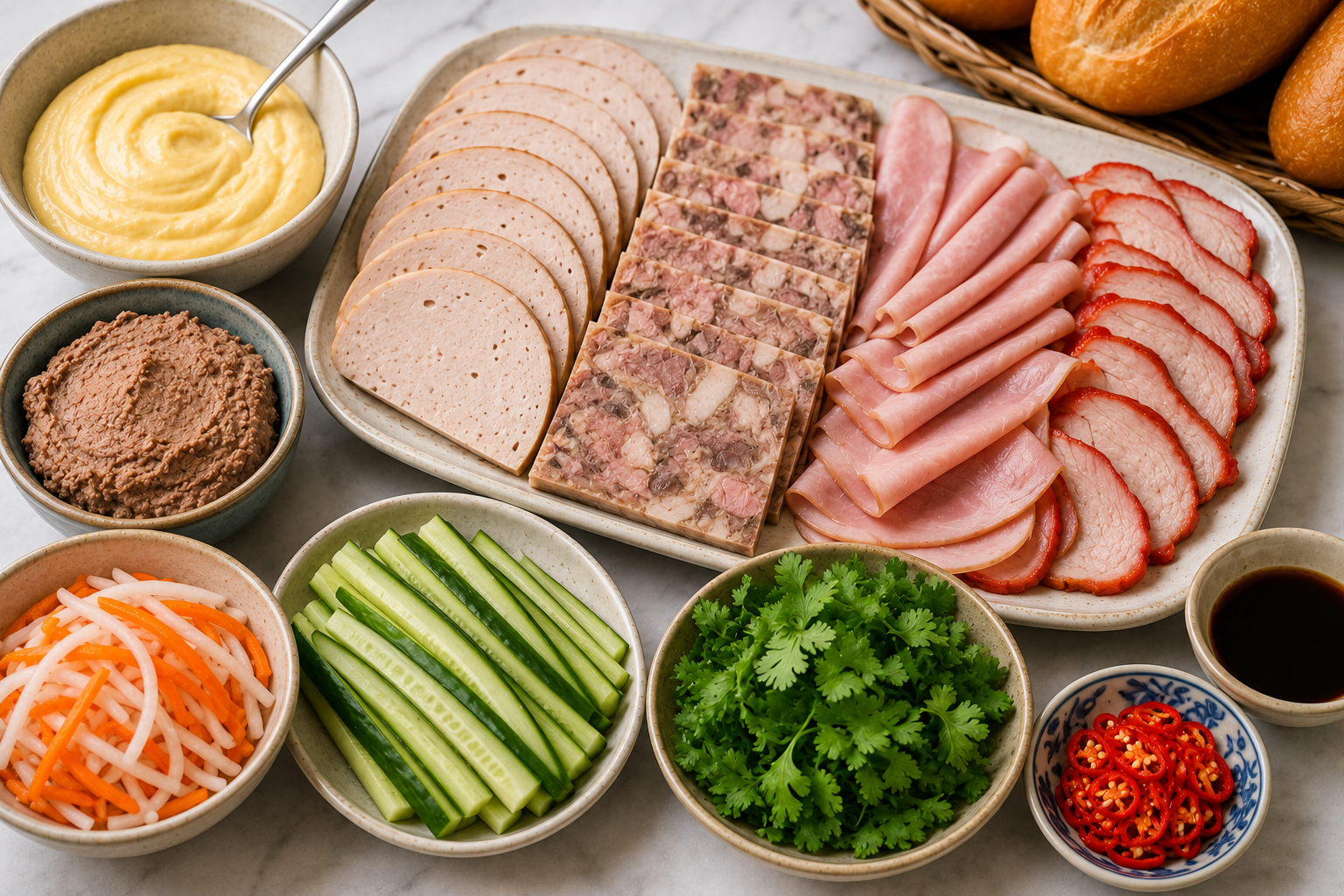
Step 3: Prepare The Cold Cuts And Fresh Components
Slice the Vietnamese pork roll, head cheese, ham, red pork, or other Vietnamese cold cuts thinly. Thin slices are important because bánh mì thịt nguội should feel layered, not bulky.
Slice the cucumber into long strips, wash and dry the cilantro, and slice the chilies. Set out the pâté, Vietnamese egg mayonnaise, drained pickles, cold cuts, and seasoning sauce before warming the bread.
This is the part that makes the sandwich move quickly. In Vietnam, bánh mì is built fast because all the components are ready before the bread is opened. The same idea works at home: prep everything first, then assemble while the baguette is still warm and crisp.
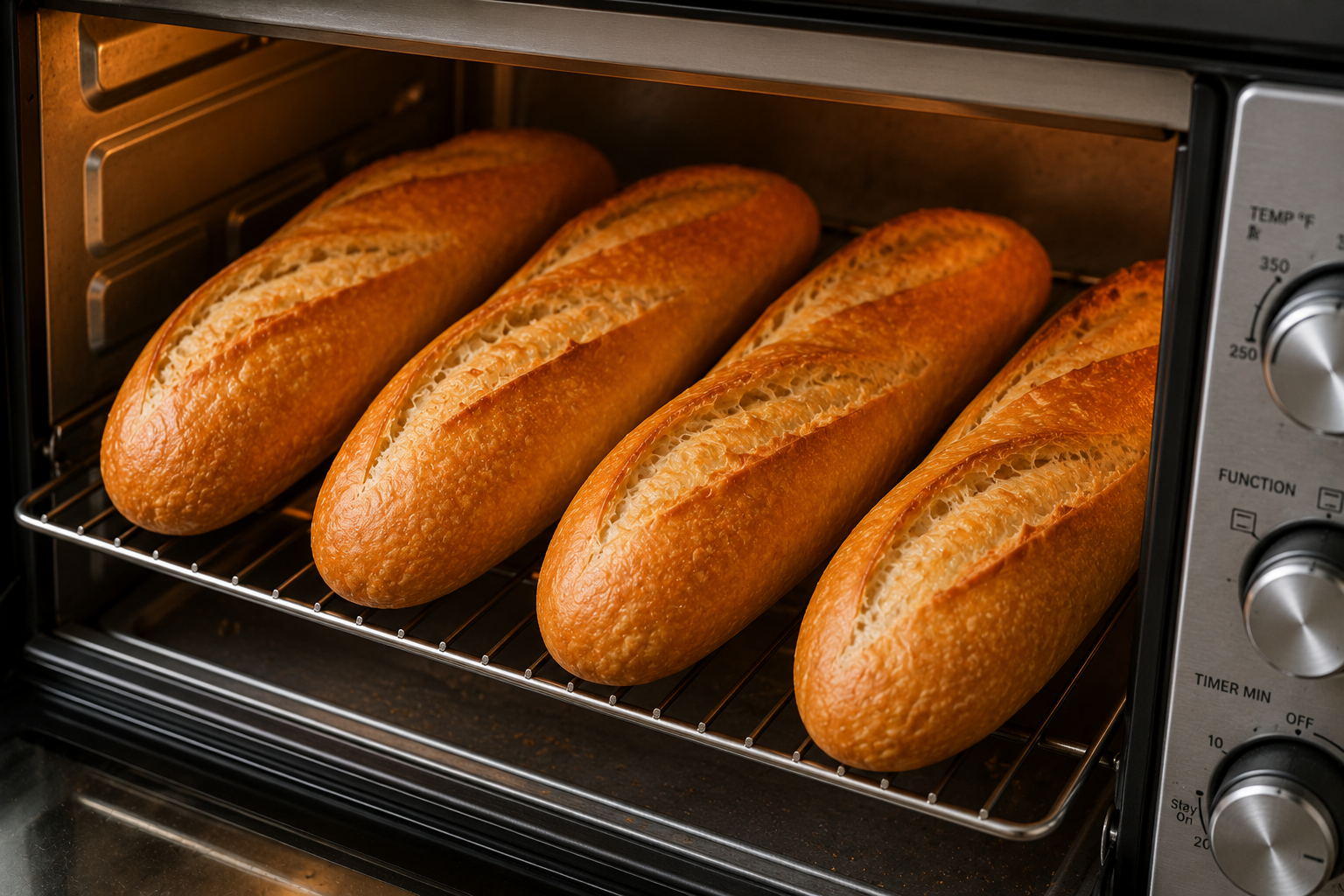
Step 4: Warm The Baguettes
Warm the baguettes right before assembling. Use a toaster oven or oven at 350°F for 3 to 5 minutes, just until the crust feels crisp again.
The bread should feel light and crackly on the outside, with a soft interior that can hold the fillings. It should not turn hard all the way through.
This step matters because bánh mì depends on texture. If the bread is soft, the sandwich feels flat. If the bread is too dry, it shatters. You want that quick crack when you bite in, then the bread should almost get out of the way.
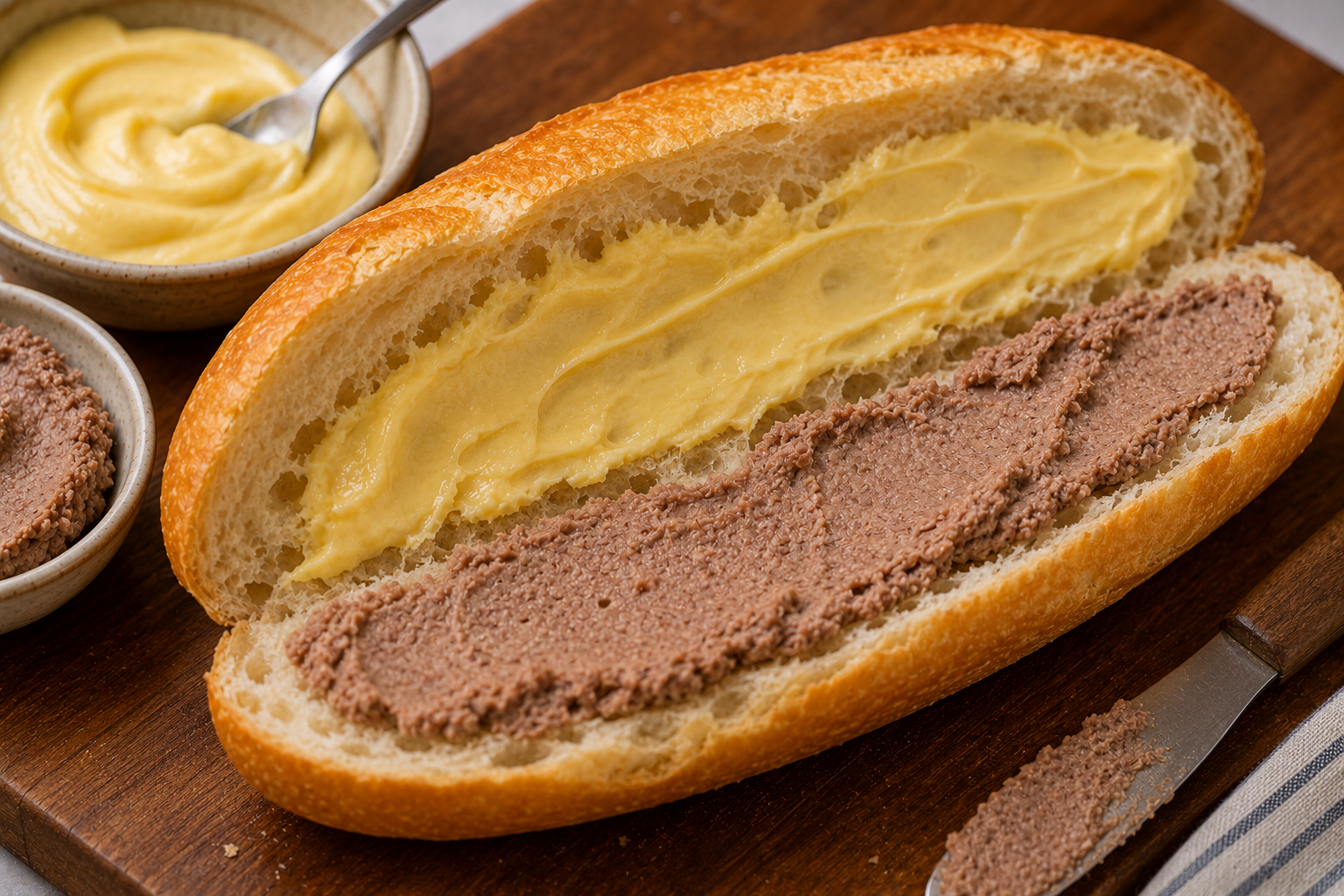
Step 5: Spread The Pâté And Vietnamese Egg Mayonnaise
Split each warm baguette lengthwise, but do not cut all the way through. Open it gently so the bread holds together like a hinge.
Spread pâté on one side and Vietnamese egg mayonnaise on the other. The pâté brings salt, depth, and that old-school bánh mì richness. The egg mayonnaise gives the bread a soft, creamy layer that keeps the cold cuts from eating dry.
Do not overload the bread with spread. You want enough richness to coat the inside, but not so much that the fillings slide around or the baguette turns heavy.
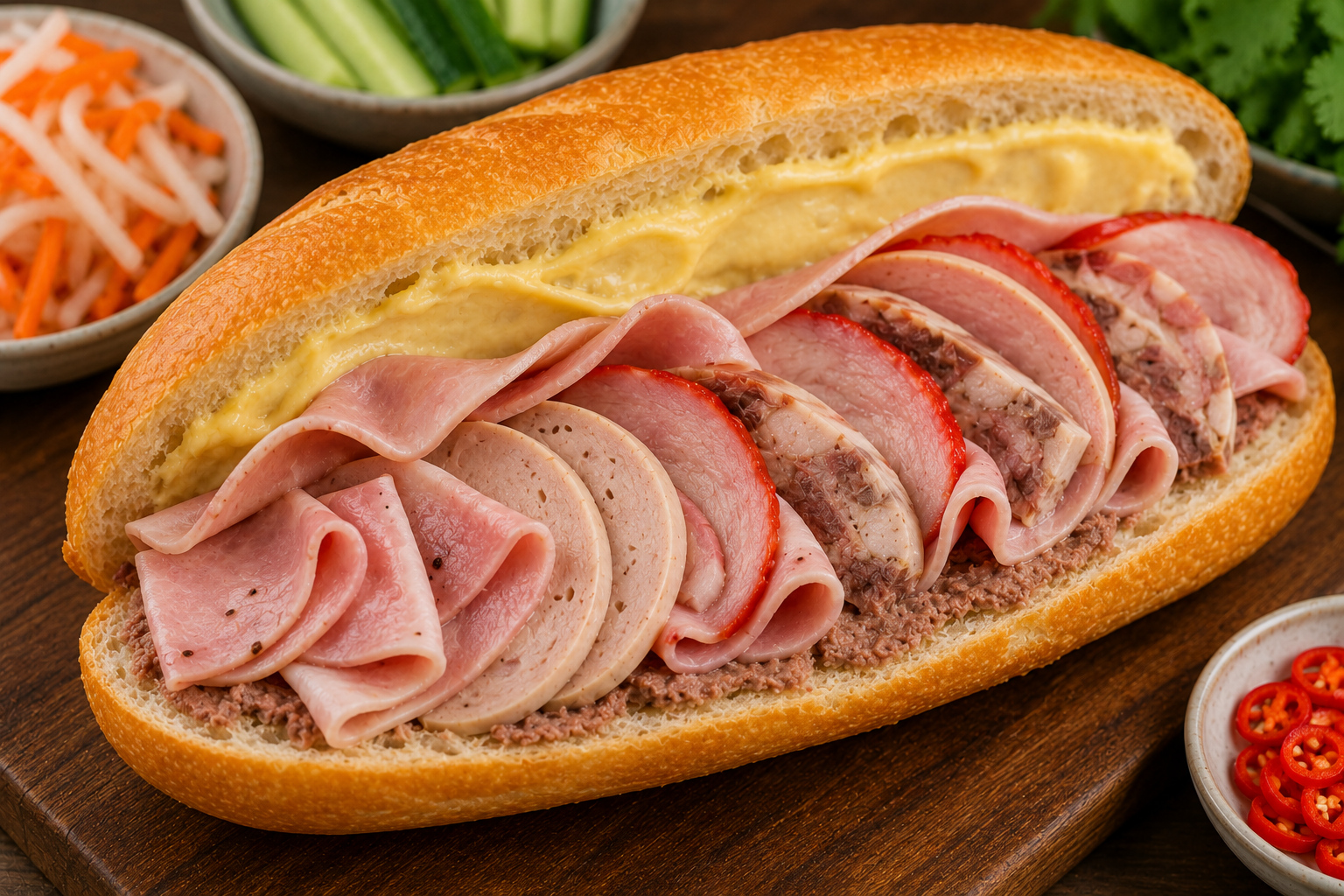
Step 6: Layer The Vietnamese Cold Cuts
Add the Vietnamese pork roll, head cheese, ham, red pork, or whatever mix of Vietnamese cold cuts you are using.
Fold the slices slightly as you place them into the bread. Do not stack them flat and dense. The goal is layers, not a heavy block of meat.
A good bánh mì thịt nguội should have enough cold cuts to make the bite savory and satisfying, but not so much that it eats like an American deli sub. The meat is one part of the balance. The pâté, egg mayonnaise, pickles, herbs, cucumber, chili, and bread still need room to do their jobs.
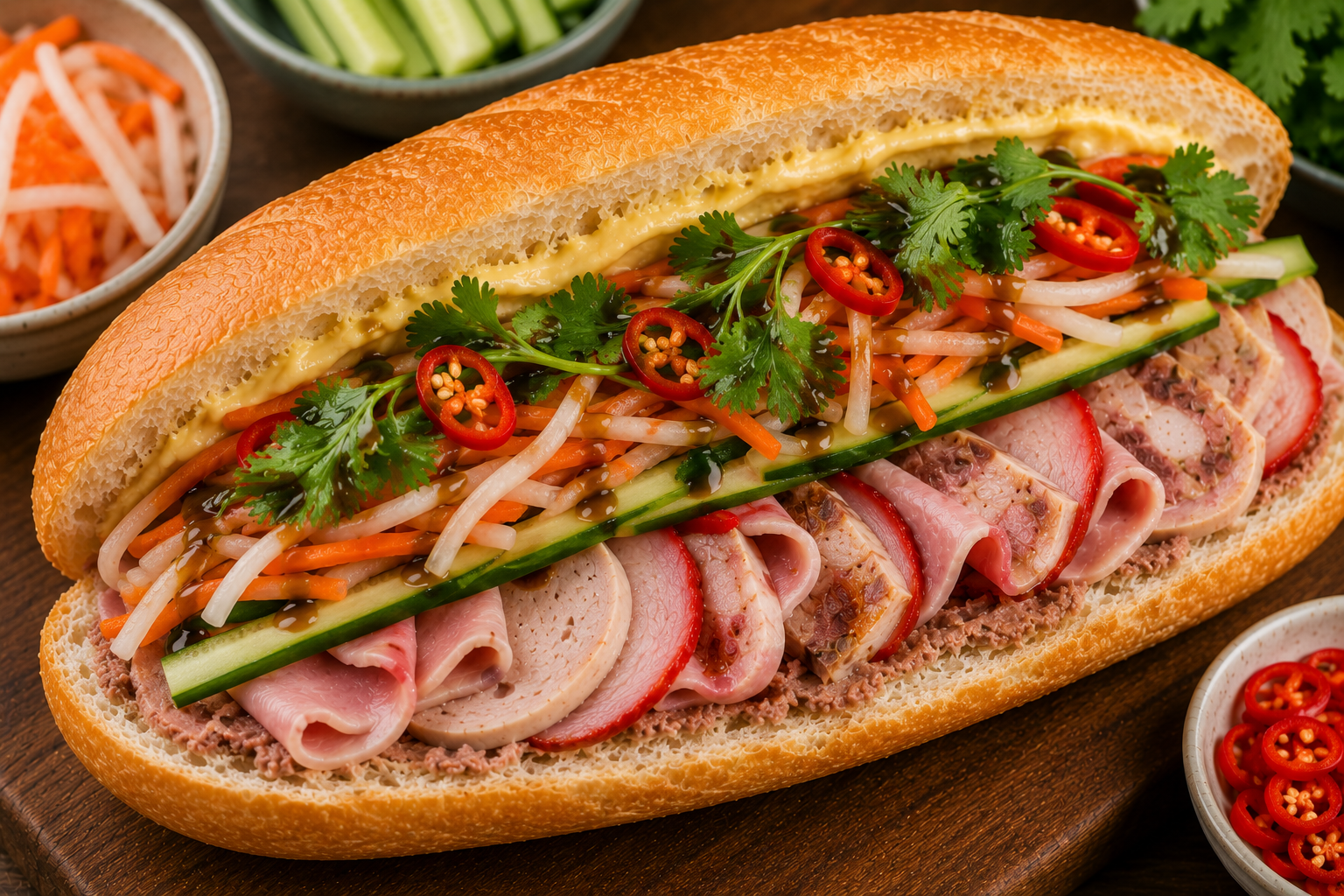
Step 7: Add The Pickles, Herbs, Chili, And Seasoning
Add cucumber strips first so they sit against the cold cuts and give the bánh mì a clean crunch.
Add the drained pickled carrot and daikon, then tuck in cilantro and sliced chili. The pickles should brighten the rich pâté, mayonnaise, and cold cuts. The herbs should feel fresh, not decorative.
Finish with a light drizzle of Maggi seasoning, soy sauce, or another light savory seasoning sauce. Do not soak the bread. You only need enough to season the inside and pull the cold cuts, pâté, mayonnaise, pickles, cucumber, and herbs together.
Final Thoughts
Bánh mì thịt nguội is one of those Vietnamese foods that looks simple until you pay attention.
It is not just bread with cold cuts. It is crisp bread, rich pâté, creamy egg mayonnaise, savory sliced meats, sharp pickles, cool cucumber, fresh cilantro, chili heat, and a small hit of seasoning sauce working together in the same bite.
That balance is what makes it feel so Vietnamese. Nothing is there by accident. The richness needs the pickles. The cold cuts need the herbs. The bread needs to be crisp enough to hold everything, but light enough to disappear when you bite it.
Make the components properly, keep the layers thin, and do not overload the baguette. That is when bánh mì thịt nguội starts tasting like the kind of food you find on the street in Vietnam, not just something assembled at home.