Cơm Tấm Recipe: Vietnam’s Broken Rice Plate With Street Food Soul
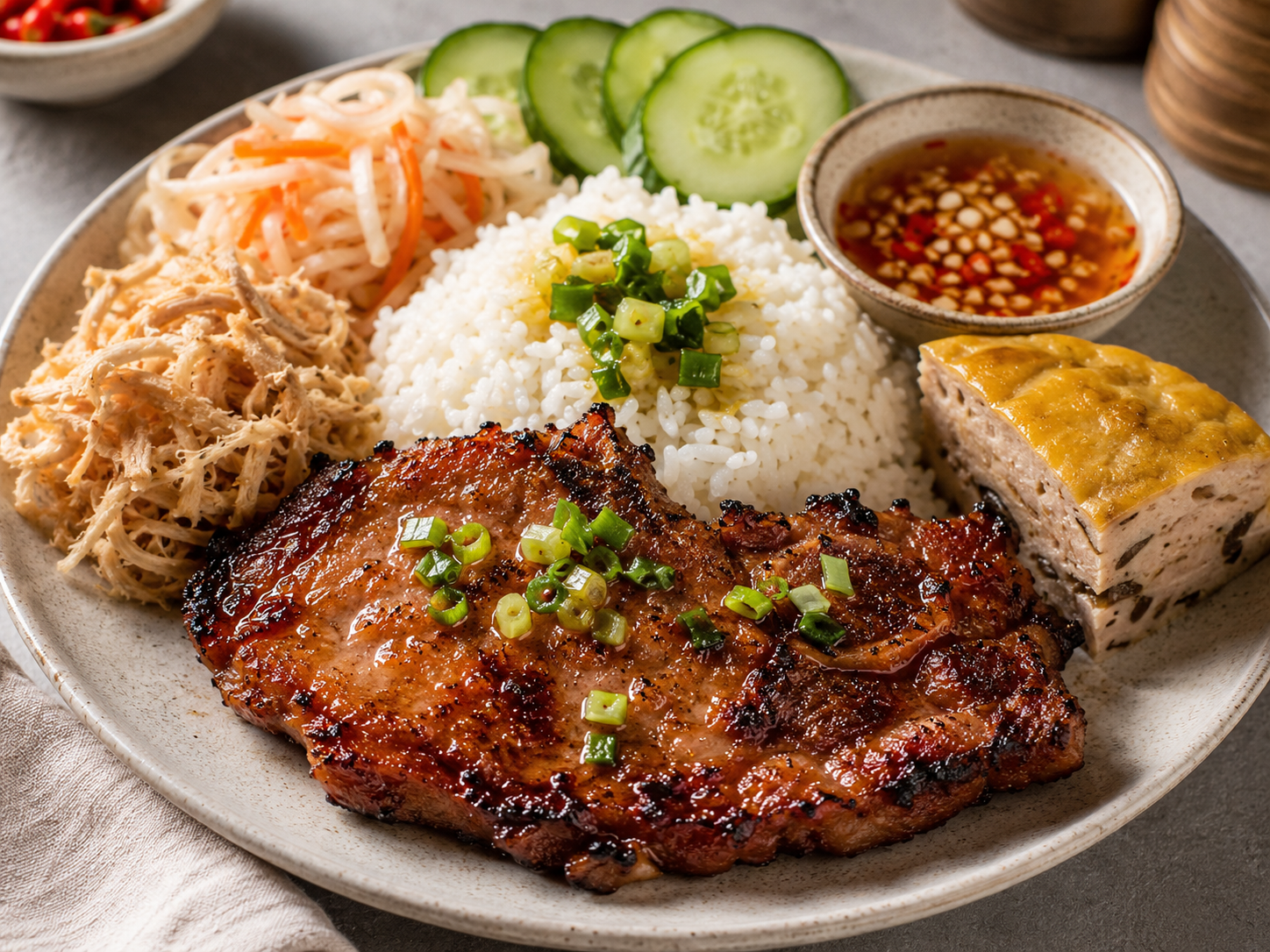
Cơm Tấm is one of those Vietnamese plates that does not need to explain itself once it hits the table. The rice is soft but separate, the grilled pork smells like smoke, fish sauce, garlic, and caramelized edges, and everything on the plate has a job.
In Saigon, this is everyday food with memory built into it. A broken rice plate can be breakfast before work, lunch on a plastic stool, or dinner when the city is still hot and the charcoal smoke is hanging low over the sidewalk.
The full plate, sườn bì chả, is the one I always come back to. Grilled pork chop, shredded pork skin, steamed egg meatloaf, pickles, cucumber, scallion oil, and that sweet-salty fish sauce poured over the rice instead of treated like a dipping sauce.
This home version keeps the spirit of the Vietnamese street plate intact while making it realistic for a U.S. kitchen. You do not need a sidewalk grill or a Saigon morning to make good Cơm Tấm. You just need broken rice, balanced fish sauce, properly marinated pork, and enough patience to let each small component do its part.
Ingredients
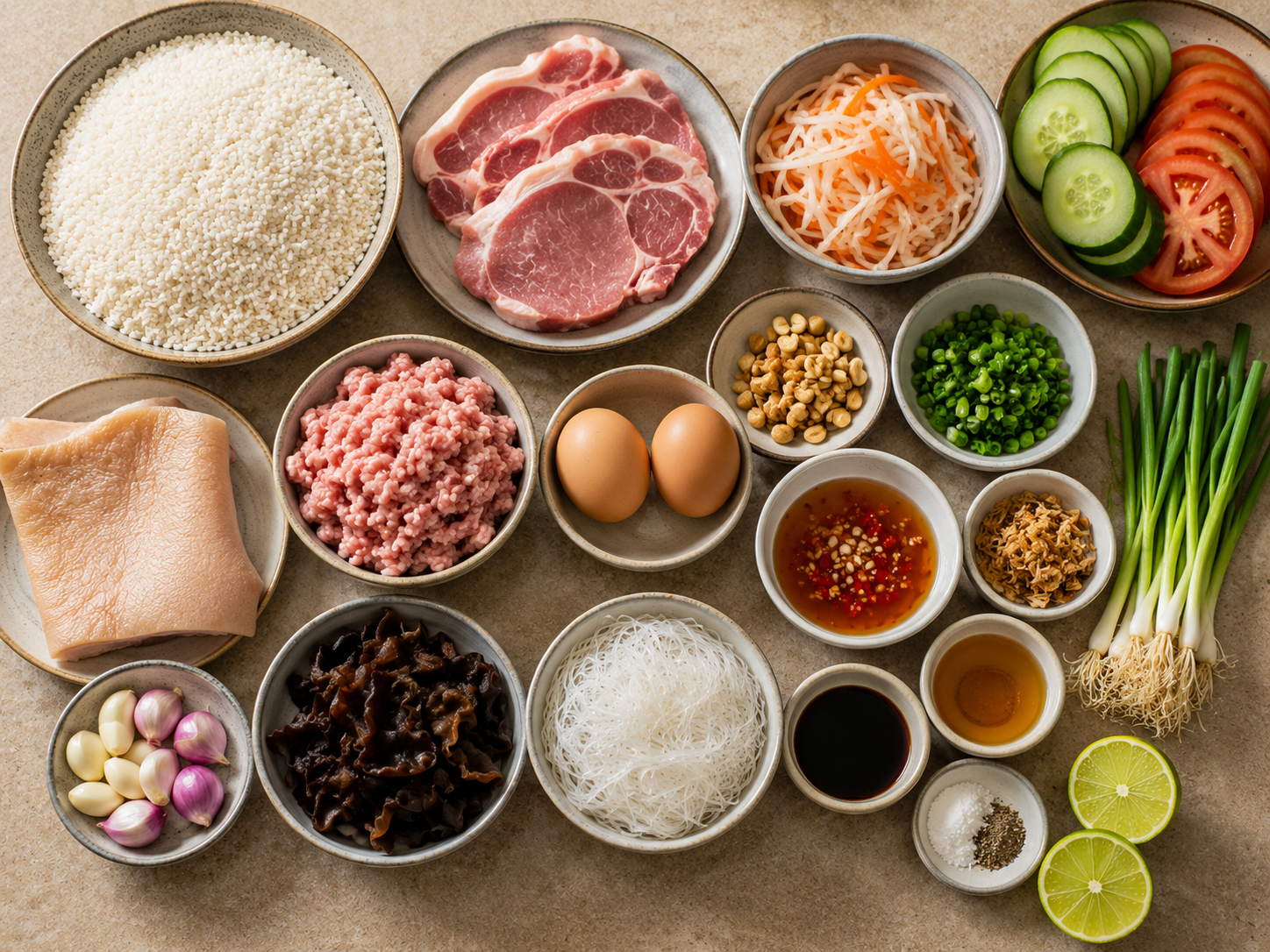
For The Broken Rice
2 cups broken jasmine rice, rinsed until the water runs mostly clear
2 cups water
¼ teaspoon salt
For The Grilled Pork Chops
4 thin-cut bone-in pork chops, about ½ inch thick
3 tablespoons fish sauce
2 tablespoons oyster sauce
1 tablespoon soy sauce
2 tablespoons sugar
1 tablespoon honey
1 tablespoon neutral oil
1 tablespoon finely minced lemongrass, tender pale part only
4 garlic cloves, finely grated
2 shallots, finely grated
½ teaspoon black pepper
For The Egg Meatloaf
½ pound ground pork
4 large eggs, divided
1 ounce dried glass noodles, soaked and cut into short pieces
½ ounce dried wood ear mushrooms, soaked, trimmed, and finely chopped
2 tablespoons finely minced shallot
1 tablespoon fish sauce
1 teaspoon sugar
½ teaspoon salt
½ teaspoon black pepper
For The Shredded Pork Skin
8 ounces cooked pork skin, thinly sliced
4 ounces cooked lean pork, thinly shredded
3 tablespoons roasted rice powder
½ teaspoon salt
½ teaspoon sugar
¼ teaspoon black pepper
For The Pickled Vegetables
5 ounces carrot, peeled and cut into thin matchsticks
5 ounces daikon radish, peeled and cut into thin matchsticks
¾ cup rice vinegar or white vinegar
½ cup warm water
¼ cup sugar
1½ teaspoons salt
For The Scallion Oil
6 scallions, thinly sliced
¼ cup neutral oil
¼ teaspoon salt
¼ teaspoon sugar
For The Fish Sauce Dressing
½ cup warm water
¼ cup fish sauce
¼ cup sugar
3 tablespoons lime juice or rice vinegar
2 garlic cloves, finely minced
1 to 2 Thai chilies, thinly sliced
For Serving
1 small cucumber, sliced
1 tomato, sliced
Extra scallion oil
Extra fish sauce dressing for pouring over the rice
How To Make Cơm Tấm
Step 1: Marinate The Pork Chops
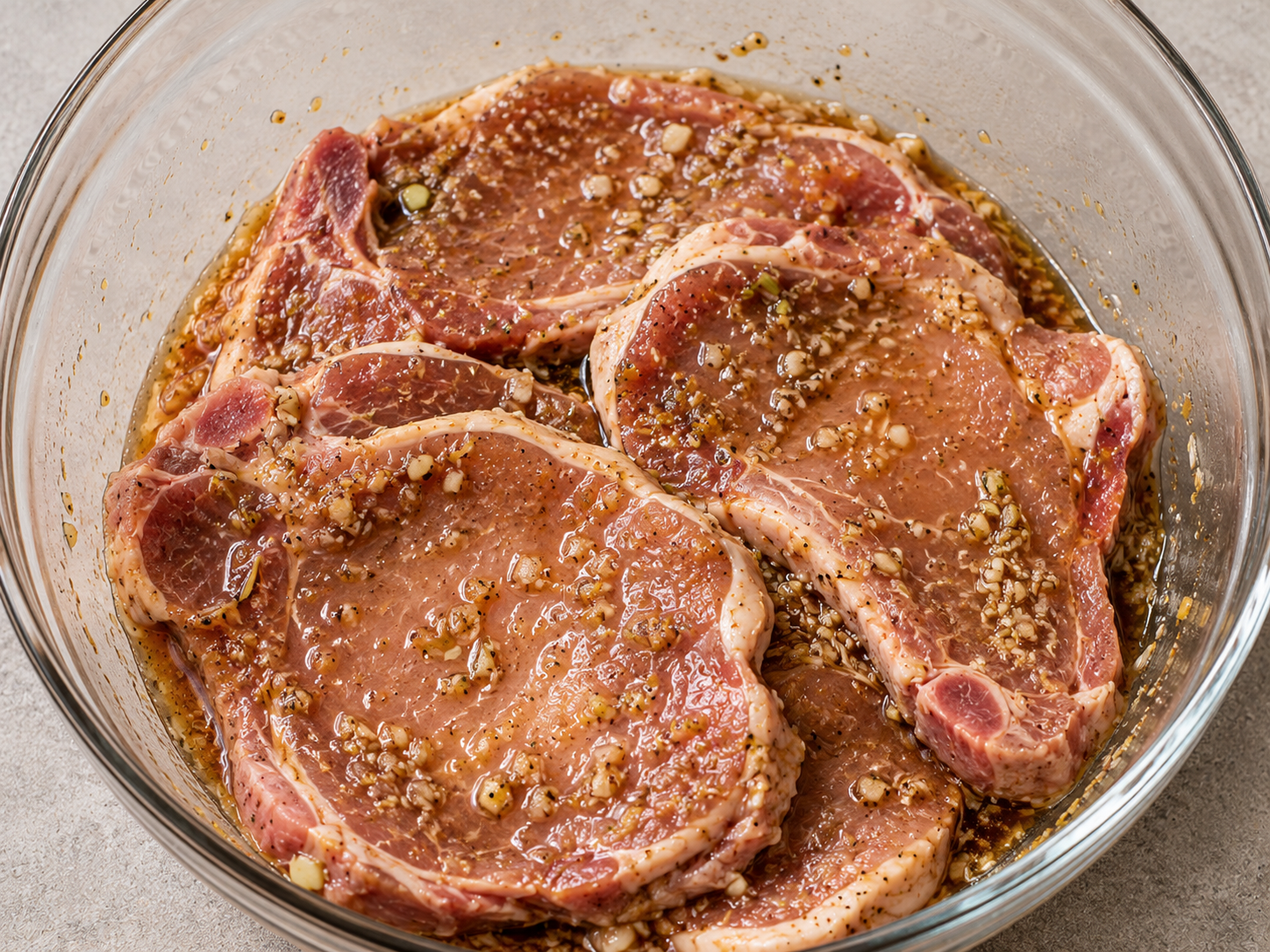
Place the pork chops in a large bowl or shallow container. Add the fish sauce, oyster sauce, soy sauce, sugar, honey, neutral oil, minced lemongrass, garlic, shallots, and black pepper.
Use your hands or tongs to coat the pork evenly on both sides. The marinade should look glossy, slightly thick, and aromatic from the garlic, shallot, and lemongrass.
Cover and refrigerate for at least 2 hours, or overnight if you have time. A longer marinade gives the pork a deeper savory-sweet flavor and helps the edges caramelize when cooked.
Before grilling or pan-searing, let the pork sit at room temperature for 20 to 30 minutes. This helps the meat cook more evenly instead of tightening up too quickly in the pan.
Step 2: Make The Pickled Carrot And Daikon
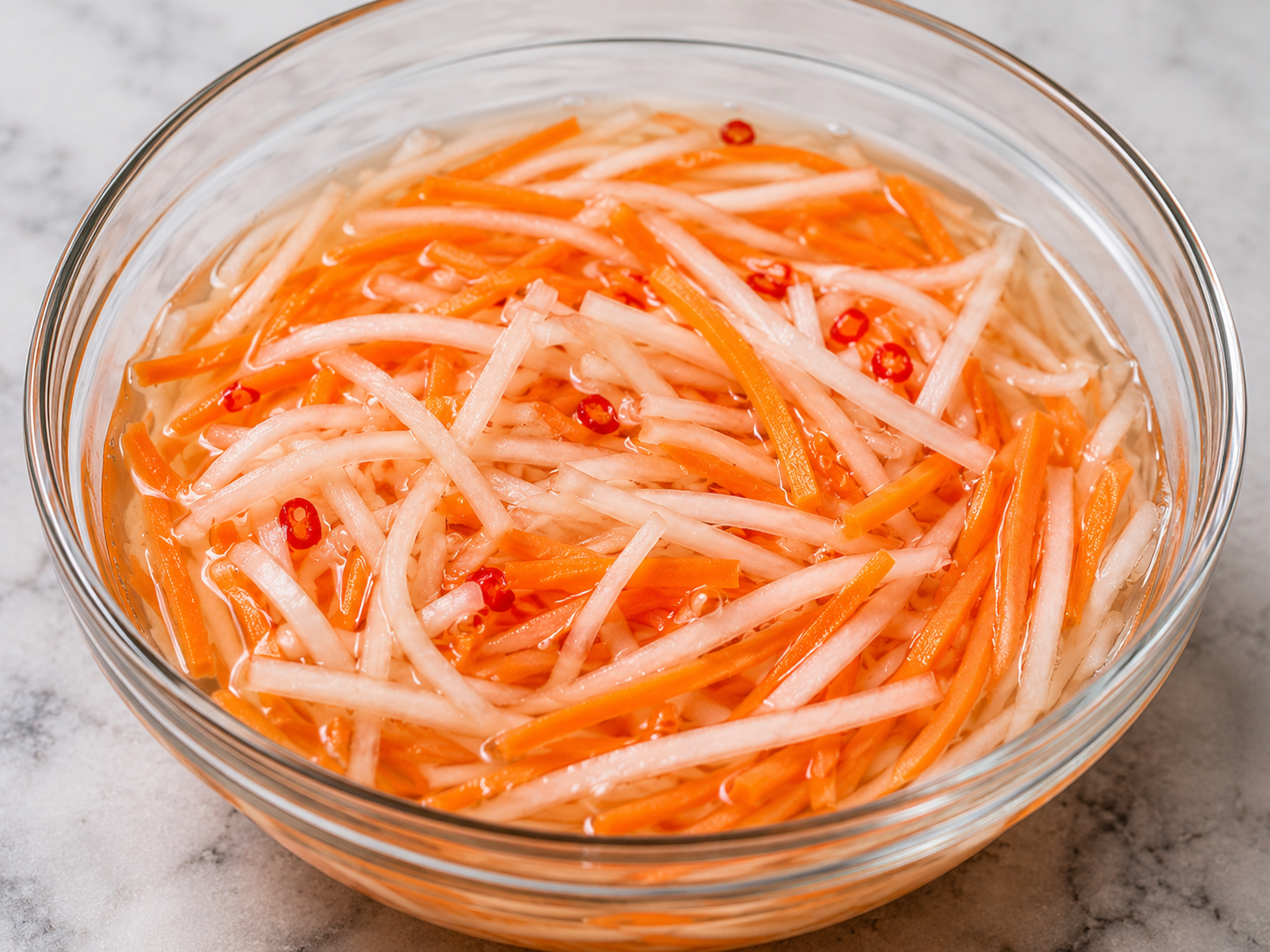
Place the carrot and daikon matchsticks in a bowl. In a separate bowl, stir together the vinegar, warm water, sugar, and salt until dissolved.
Pour the brine over the vegetables and toss well. The vegetables should be fully coated and mostly submerged.
Let them sit for at least 30 minutes while you prepare the rest of the dish. They should soften slightly but still keep their crunch. The flavor should be bright, lightly sweet, and acidic enough to cut through the pork and rice.
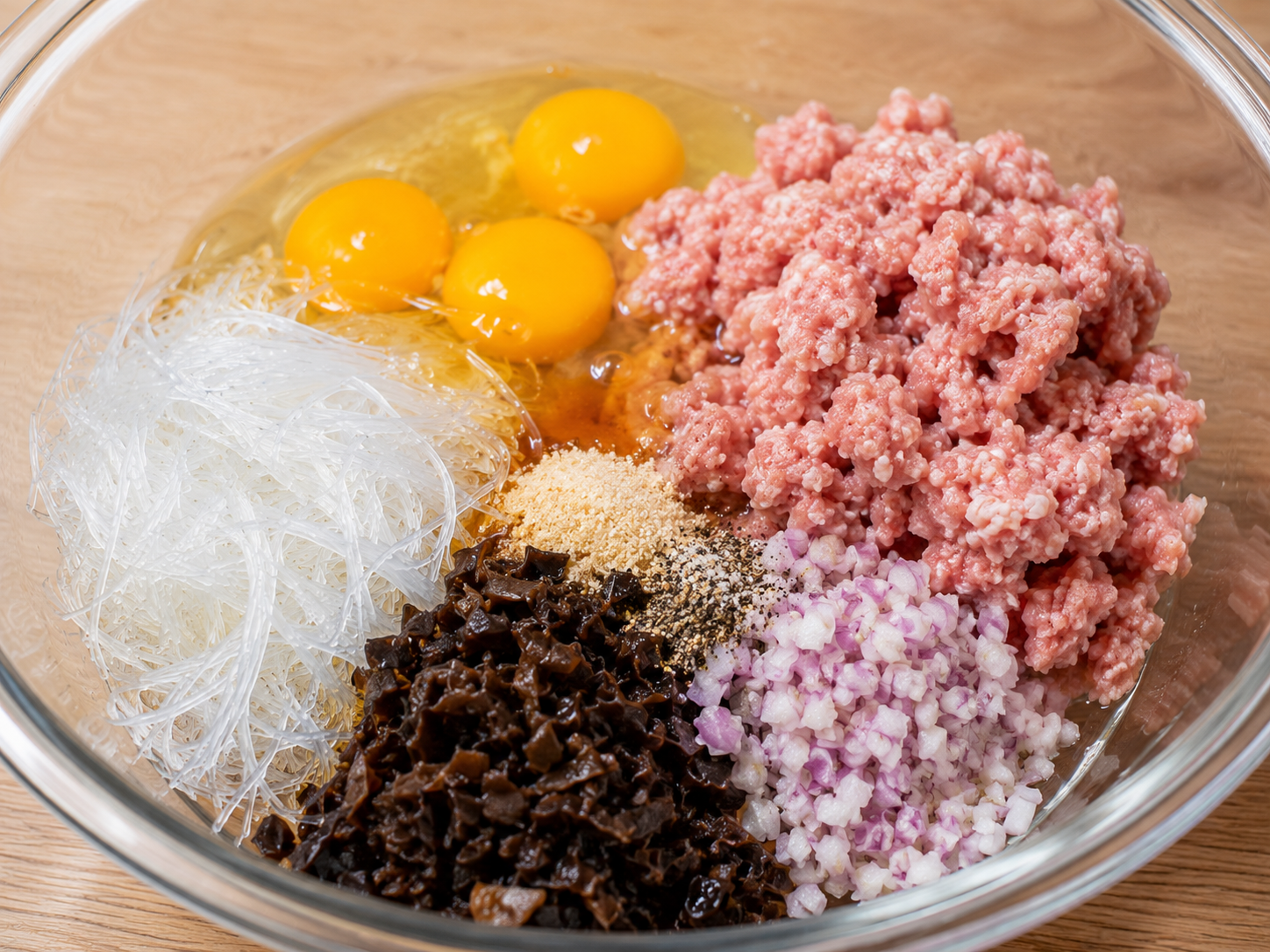
Step 3: Make The Egg Meatloaf Mixture
Soak the glass noodles in warm water for about 10 minutes, then drain and cut them into short pieces. Soak the wood ear mushrooms until softened, then trim away any tough centers and finely chop them.
In a mixing bowl, combine the ground pork, 3 whole eggs, glass noodles, wood ear mushrooms, shallot, fish sauce, sugar, salt, and black pepper. Mix until everything is evenly distributed, but do not overwork it into a paste.
Lightly oil a heatproof dish that fits inside your steamer. Spread the mixture into the dish in an even layer, about 1 to 1½ inches thick. Smooth the top so it steams evenly.
Save the remaining egg yolk for brushing over the top near the end of steaming. This gives the chả trứng its familiar golden surface.
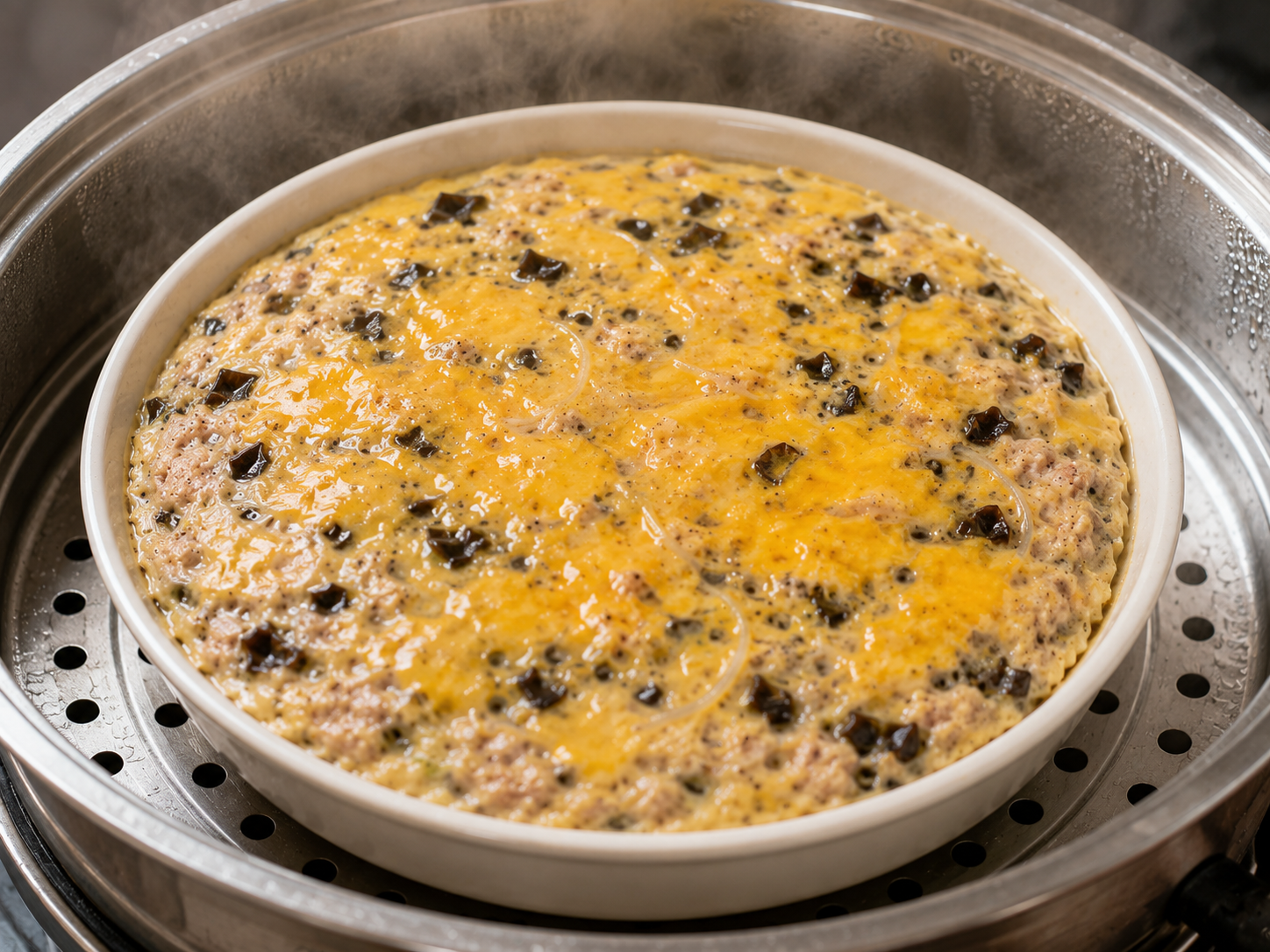
Step 4: Steam The Egg Meatloaf
Bring a steamer to a steady simmer. Place the dish of egg meatloaf mixture inside, cover, and steam for 25 to 30 minutes, or until the center is set and no longer loose.
Keep the heat at a gentle but steady simmer. If the steam is too aggressive, the meatloaf can puff unevenly or turn rough instead of staying tender.
Beat the reserved egg yolk with 1 teaspoon of water. Brush it over the top of the meatloaf, then steam uncovered for another 3 to 5 minutes, just until the surface turns glossy and golden.
Let the meatloaf rest for 10 minutes before slicing. It should be firm enough to cut cleanly, but still moist inside with small pieces of glass noodles and wood ear mushrooms running through each slice.
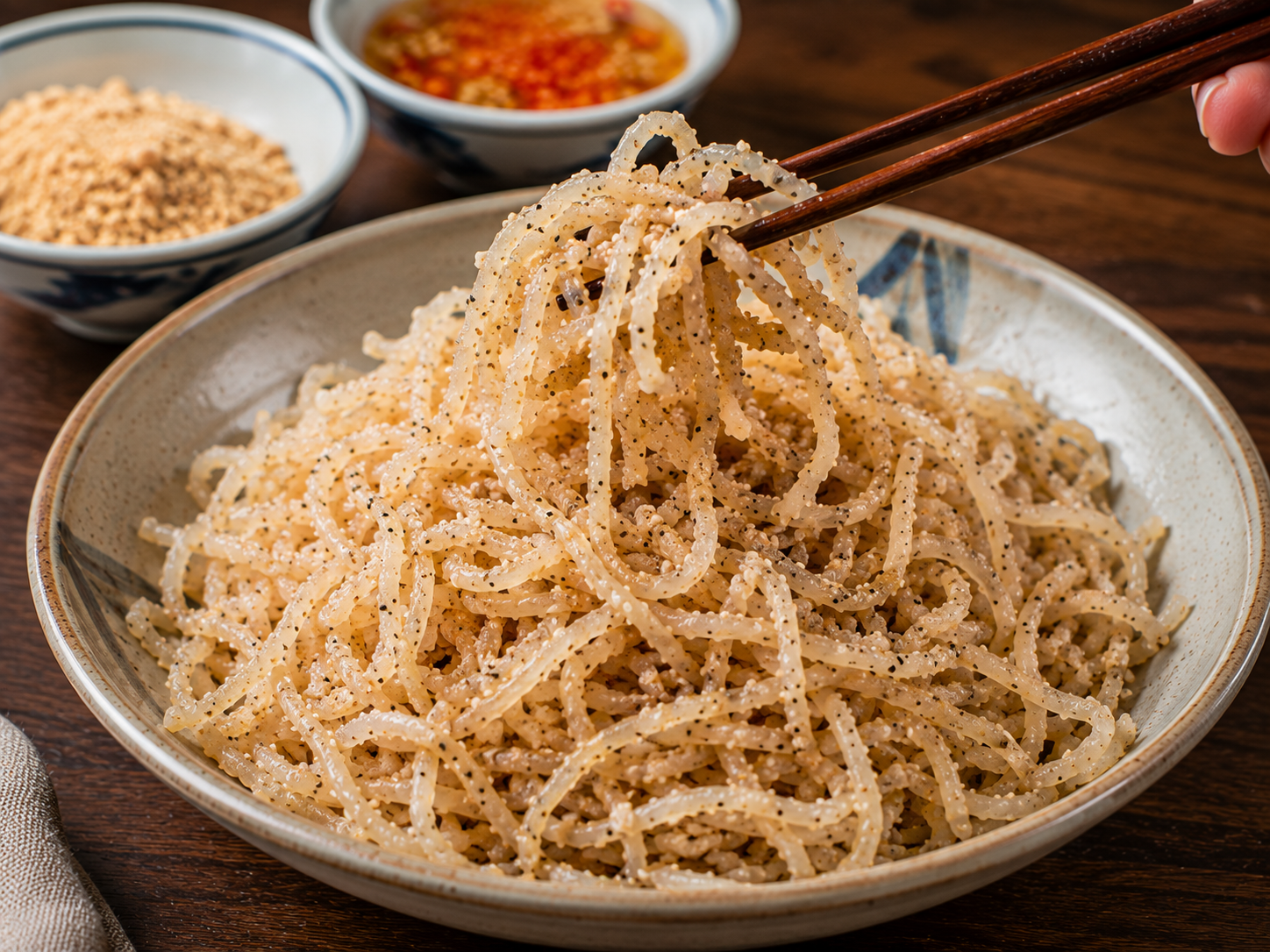
Step 5: Prepare The Shredded Pork Skin
In a bowl, combine the thinly sliced cooked pork skin, shredded cooked lean pork, roasted rice powder, salt, sugar, and black pepper.
Toss gently until the pork skin is lightly coated and the roasted rice powder clings to the surface. The mixture should look dry, loose, and slightly sandy, not wet or saucy.
Taste a small piece and adjust lightly with salt if needed. The bì should be savory and nutty from the roasted rice powder, with a chewy texture that contrasts with the soft rice and grilled pork.
Set it aside at room temperature while you finish the rice, sauce, scallion oil, and pork chops.
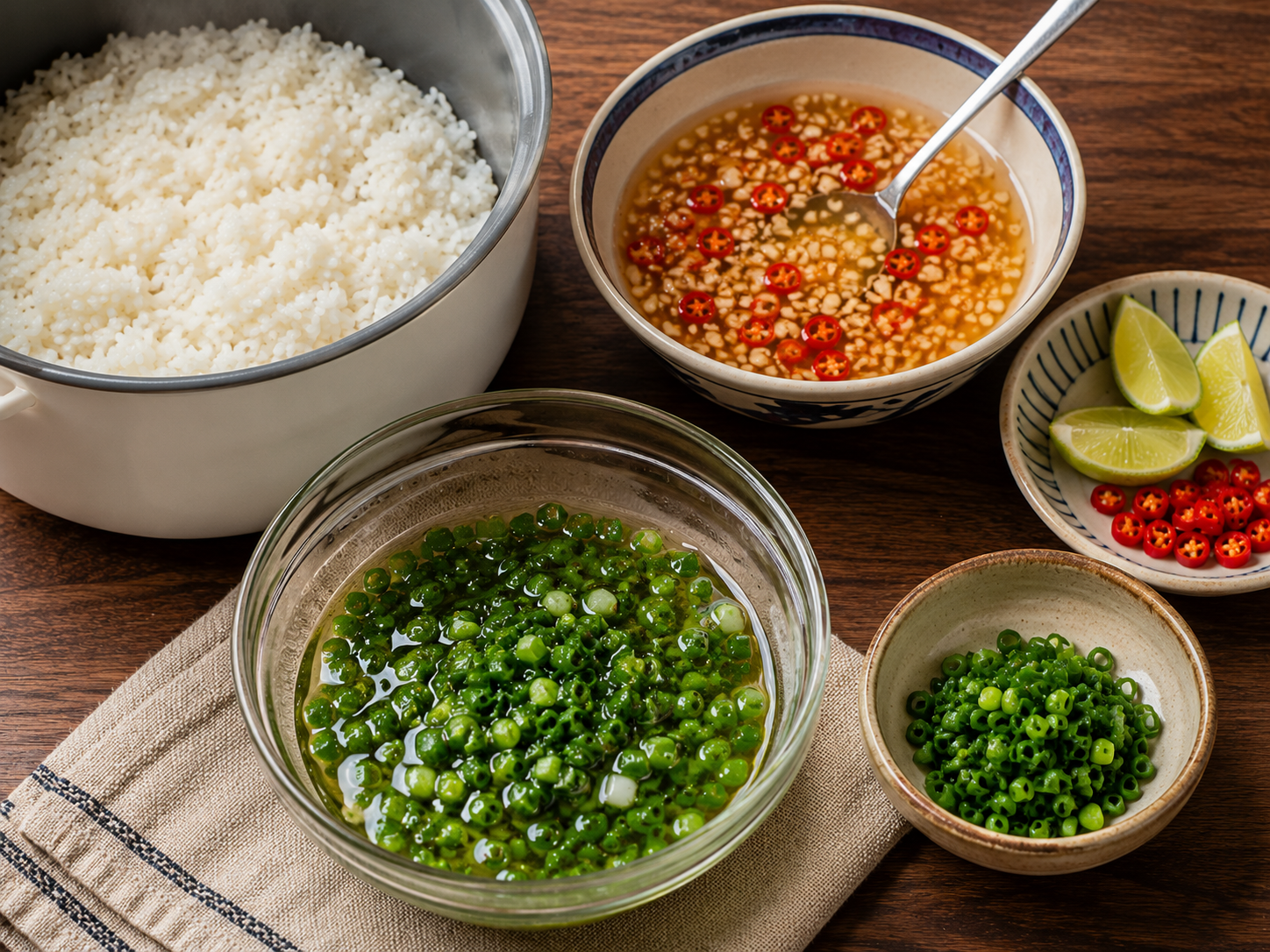
Step 6: Cook The Broken Rice, Make The Sauce, And Prepare The Scallion Oil
Rinse the broken rice in several changes of water until the water runs mostly clear. Drain well, then add the rice, water, and salt to a rice cooker or pot.
Cook until tender, then let the rice rest covered for 10 minutes before fluffing. Broken rice should be soft and slightly fragmented, but not mushy. The grains should still hold enough shape to soak up the fish sauce dressing.
For the fish sauce dressing, stir the warm water and sugar together until dissolved. Add the fish sauce, lime juice or vinegar, minced garlic, and sliced chilies. Taste and adjust carefully. It should be salty, sweet, lightly sour, and strong enough to season the rice when poured over the plate.
For the scallion oil, place the sliced scallions, salt, and sugar in a heatproof bowl. Heat the neutral oil in a small pan until hot but not smoking, then pour it over the scallions. The scallions should sizzle gently and turn glossy without browning.
Step 7: Grill Or Pan-Sear The Pork Chops
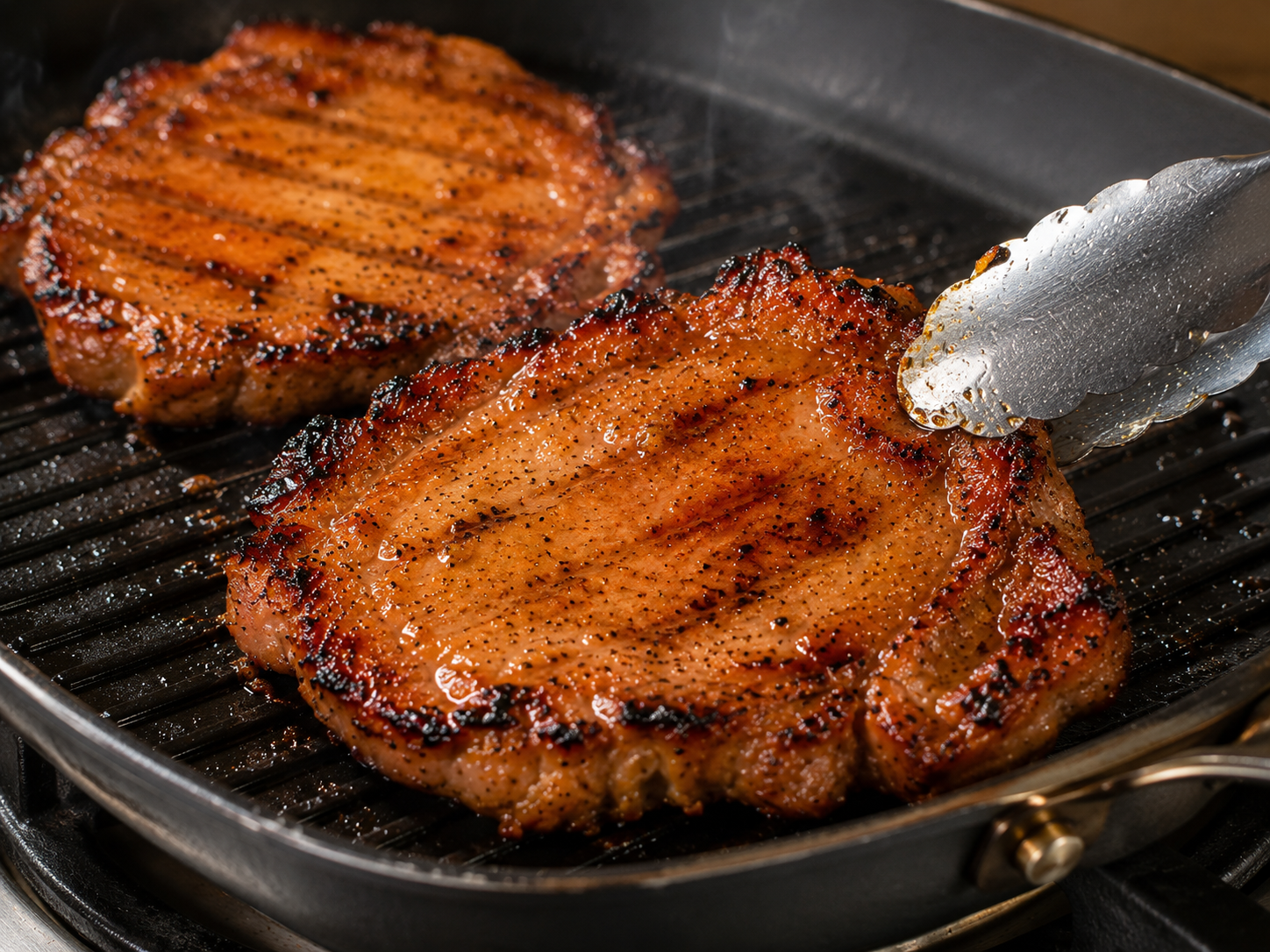
Heat a grill, grill pan, or heavy skillet over medium-high heat. Lightly oil the surface so the marinade does not stick too aggressively.
Remove the pork chops from the marinade and let the excess drip off. Cook for 3 to 5 minutes per side, depending on thickness, until the pork is cooked through and the edges are caramelized.
The pork should smell smoky, garlicky, and slightly sweet. You want dark golden edges and a glossy surface, not a pale steamed look. If the sugars in the marinade start to darken too quickly, lower the heat slightly and keep cooking until the center is done.
Let the pork rest for 5 minutes before plating. This keeps the juices in the meat instead of running out across the rice.
Step 8: Assemble The Cơm Tấm Plate
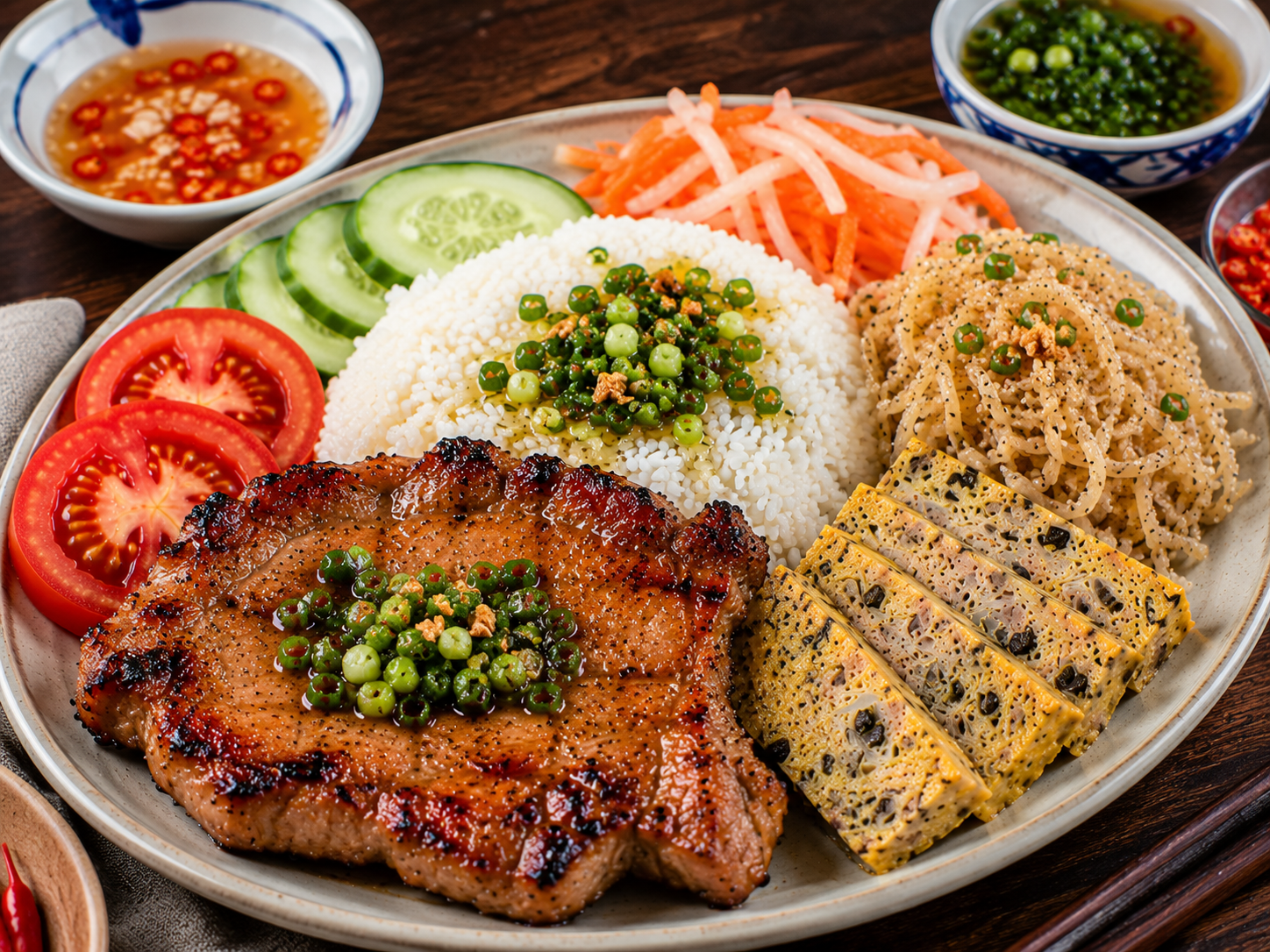
Spoon the broken rice onto a large plate, slightly off-center so the other components have room. Add a little scallion oil over the rice while it is still warm.
Place the grilled pork chop next to the rice. Add a few slices of egg meatloaf, a mound of shredded pork skin, pickled carrot and daikon, cucumber, and tomato.
Spoon a little more scallion oil over the pork and rice. Serve the fish sauce dressing on the side, but do not be shy with it. Cơm Tấm is meant to be seasoned at the table, and the sauce should run into the rice, pork, pickles, and egg meatloaf.
The finished plate should feel balanced: smoky pork, soft rice, chewy shredded pork skin, tender egg meatloaf, bright pickles, cool cucumber, and sweet-salty fish sauce tying everything together.
Final Thoughts
Cơm Tấm teaches you how much can happen on one plate when every component has a purpose.
The grilled pork brings smoke, fat, garlic, and sweetness. The broken rice catches everything. The egg meatloaf adds softness. The shredded pork skin gives chew. The pickles cut through the richness. The fish sauce dressing does what Vietnamese food does best, it pulls salt, sugar, acid, heat, and funk into balance.
This is not a complicated dish because it is fancy. It is layered because everyday Vietnamese food understands contrast better than almost anything else.
Make the parts with care, plate them simply, and let the sauce run into the rice.