Phở Bò Recipe: Northern Vietnam’s Classic Beef Noodle Soup
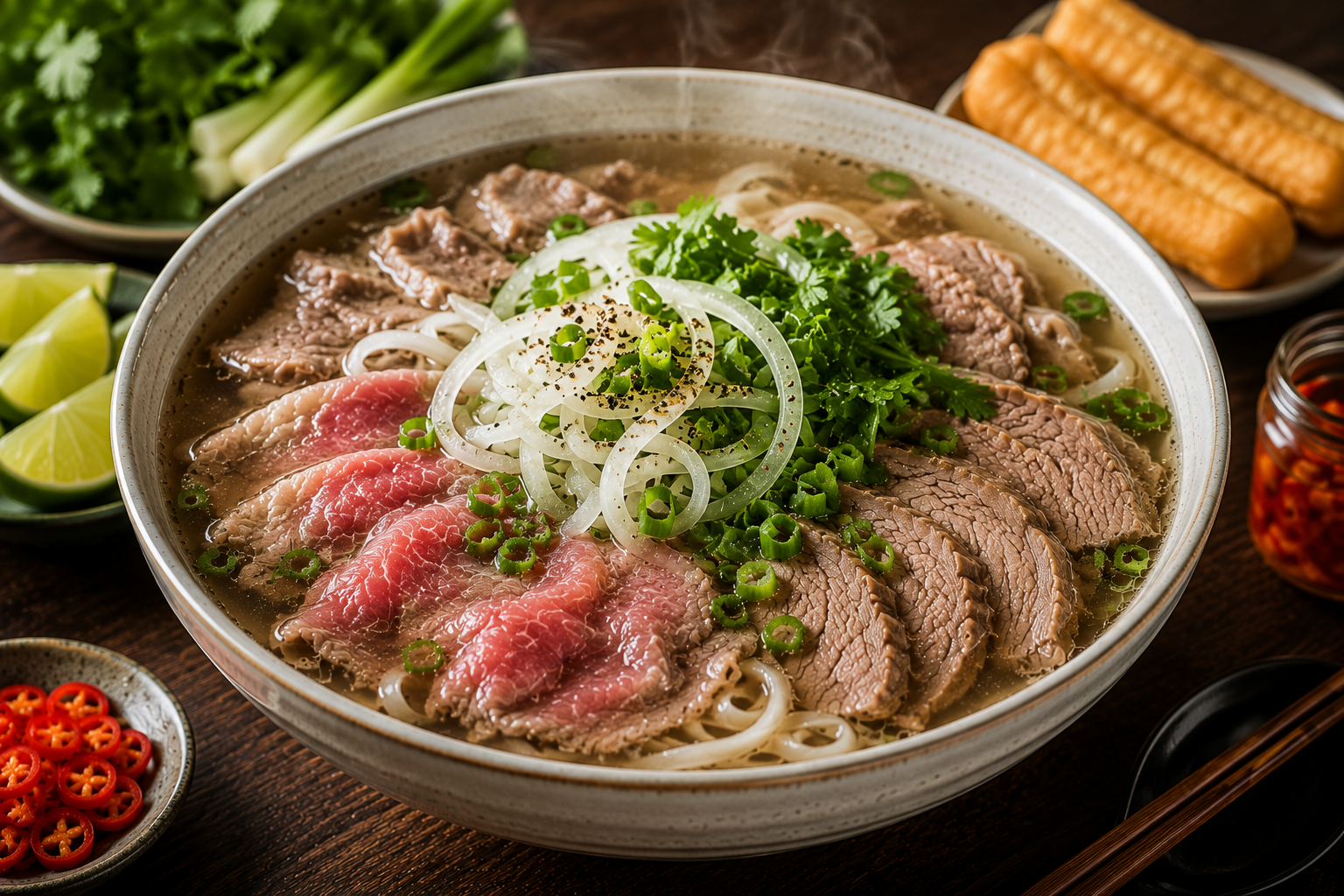
Phở bò is the bowl Vietnam is known for, but the best versions never feel loud. They are clear, fragrant, balanced, and built slowly from beef bones, charred ginger, onion, warm spices, rice noodles, and thin slices of beef that cook in the heat of the broth.
The first thing that hits you is the steam. Star anise, cinnamon, roasted onion, ginger, and beef fat rise from the bowl before the spoon even touches the broth. Then comes the quiet work underneath: sweetness from bones, salt from fish sauce, depth from time, and that clean finish that makes you want another sip before you reach for the noodles.
This version is built around Northern-style phở bò, closer to phở Bắc than southern-style phở. The bowl is restrained, clear, aromatic, and focused on the broth. No hoisin sauce. No sriracha. No mountain of herbs. Nothing should cover the work you just did.
You do not make phở bò because it is fast. You make it because some dishes teach you how to slow down, pay attention, and build flavor the right way.
Ingredients
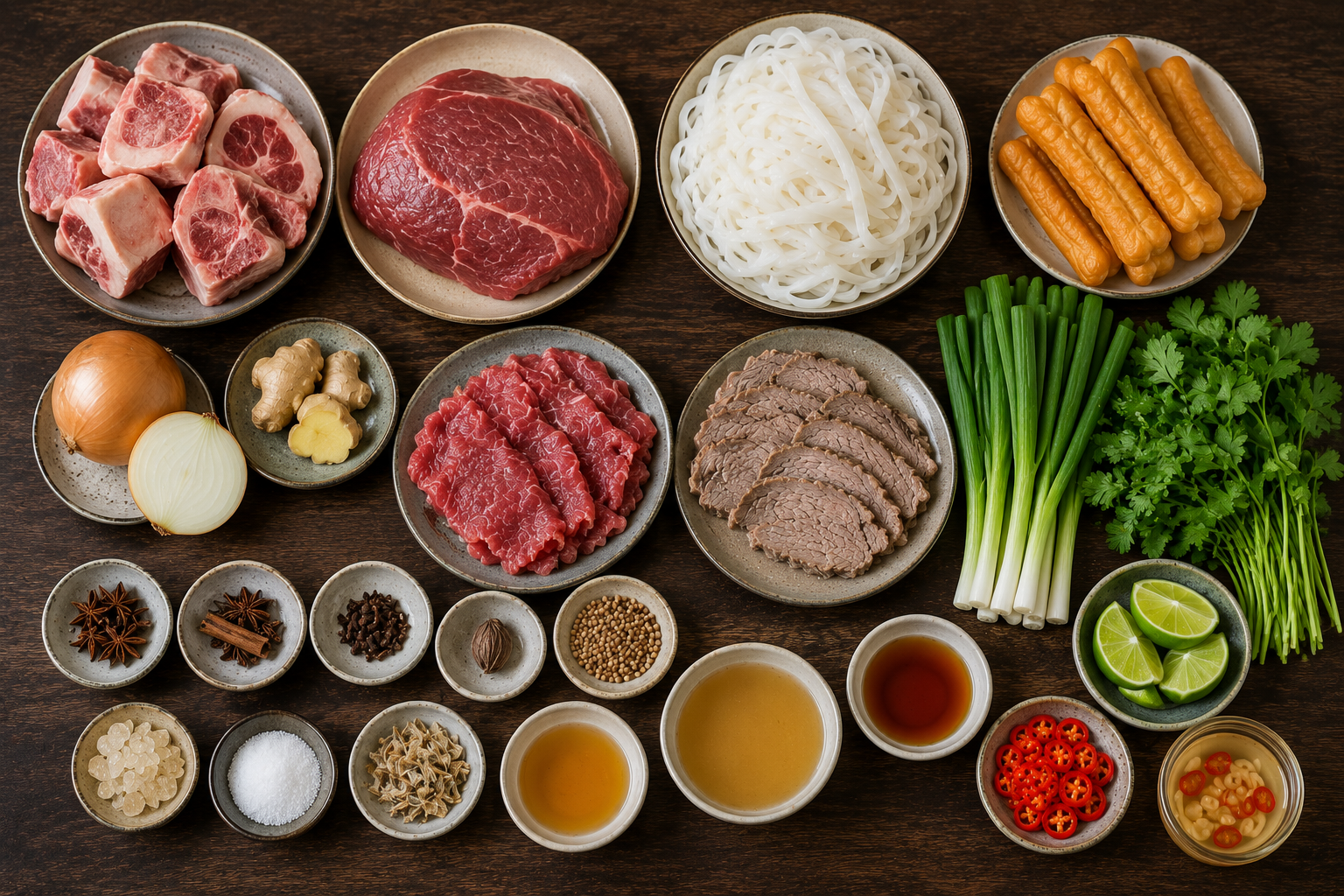
For The Beef Broth
4 pounds beef marrow bones, knuckle bones, or a mix
1½ pounds beef brisket, beef chuck, or flank
1 large yellow onion, halved
4-inch piece fresh ginger, split lengthwise
5 star anise pods
1 cinnamon stick
4 whole cloves
1 black cardamom pod, optional
1 tablespoon coriander seeds
1 small piece rock sugar, about 1 ounce
2 tablespoons fish sauce, plus more as needed
1 tablespoon kosher salt, plus more as needed
12 cups water, plus more for blanching the bones
1 small piece dried sá sùng, optional, toasted and rinsed well if available
For The Noodles And Beef
1½ pounds fresh bánh phở noodles or 14 ounces dried flat rice noodles
12 ounces beef eye round, sirloin, or tenderloin, sliced very thin
Cooked brisket from the broth, cooled slightly and thinly sliced
For The Bowl
½ yellow onion, sliced paper thin
4 scallions, thinly sliced
½ cup cilantro leaves and tender stems, roughly chopped
Freshly ground black pepper
For The Table
Lime wedges, optional
Fresh red or green chilies, thinly sliced
Chili vinegar or garlic vinegar, optional
Extra fish sauce, optional
Additional scallions and cilantro, optional
Quẩy, optional
How To Make Phở Bò
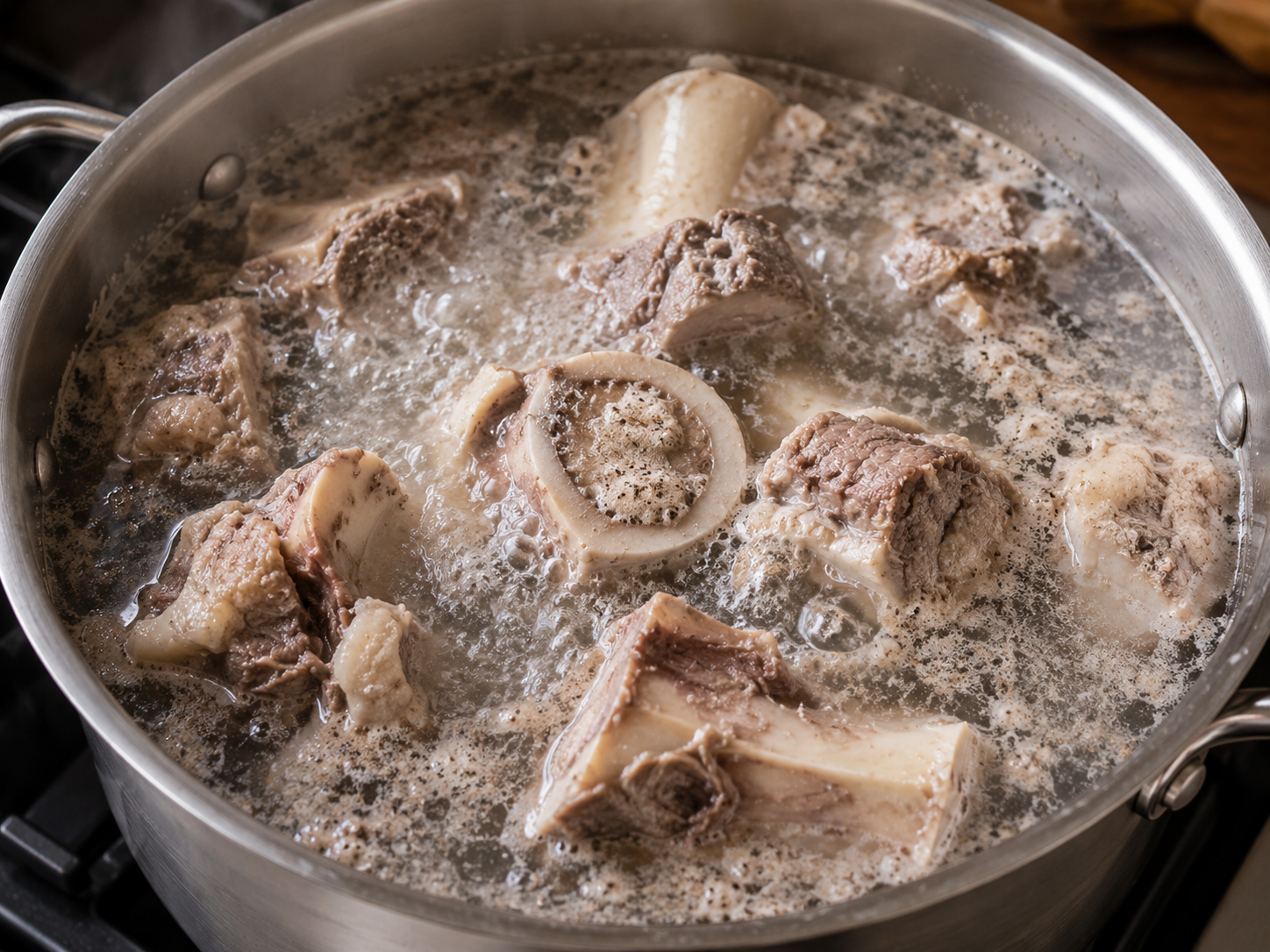
Step 1: Blanch And Clean The Beef Bones
Place the beef bones in a large stockpot and cover them with cold water. Bring the pot to a strong boil and let the bones boil for 10 minutes. The water will turn cloudy, gray, and foamy. That is the point.
Drain the bones, rinse them well under warm running water, and scrub away any dark bits or blood clinging to the bones. Wash the pot before using it again.
This step is not glamorous, but it is one of the details that separates clear phở broth from muddy beef soup. Vietnamese phở depends on broth that tastes deep but still looks clean. The cleaner the bones are now, the cleaner the bowl will taste later.
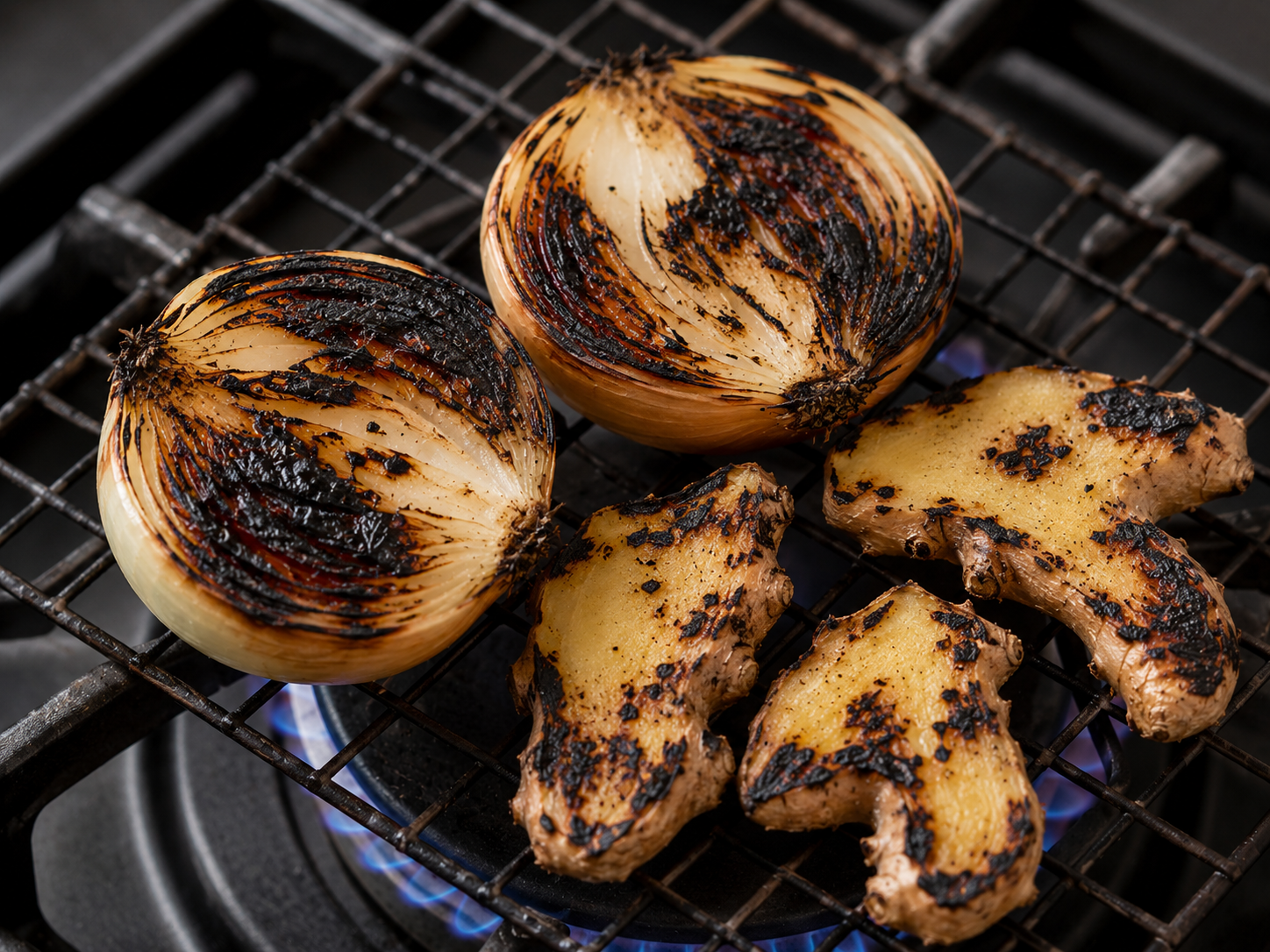
Step 2: Char The Onion And Ginger
Place the halved onion and split ginger directly over a gas flame, under a broiler, or in a dry cast iron pan. Char them until the edges are blackened and the flesh smells sweet and smoky, about 8 to 12 minutes.
Do not be afraid of the dark edges. That char brings the roasted sweetness that makes phở smell like phở before the spices even go in. Once charred, scrape off any loose burned flakes, but do not rinse away all the flavor.
Step 3: Toast The Spices
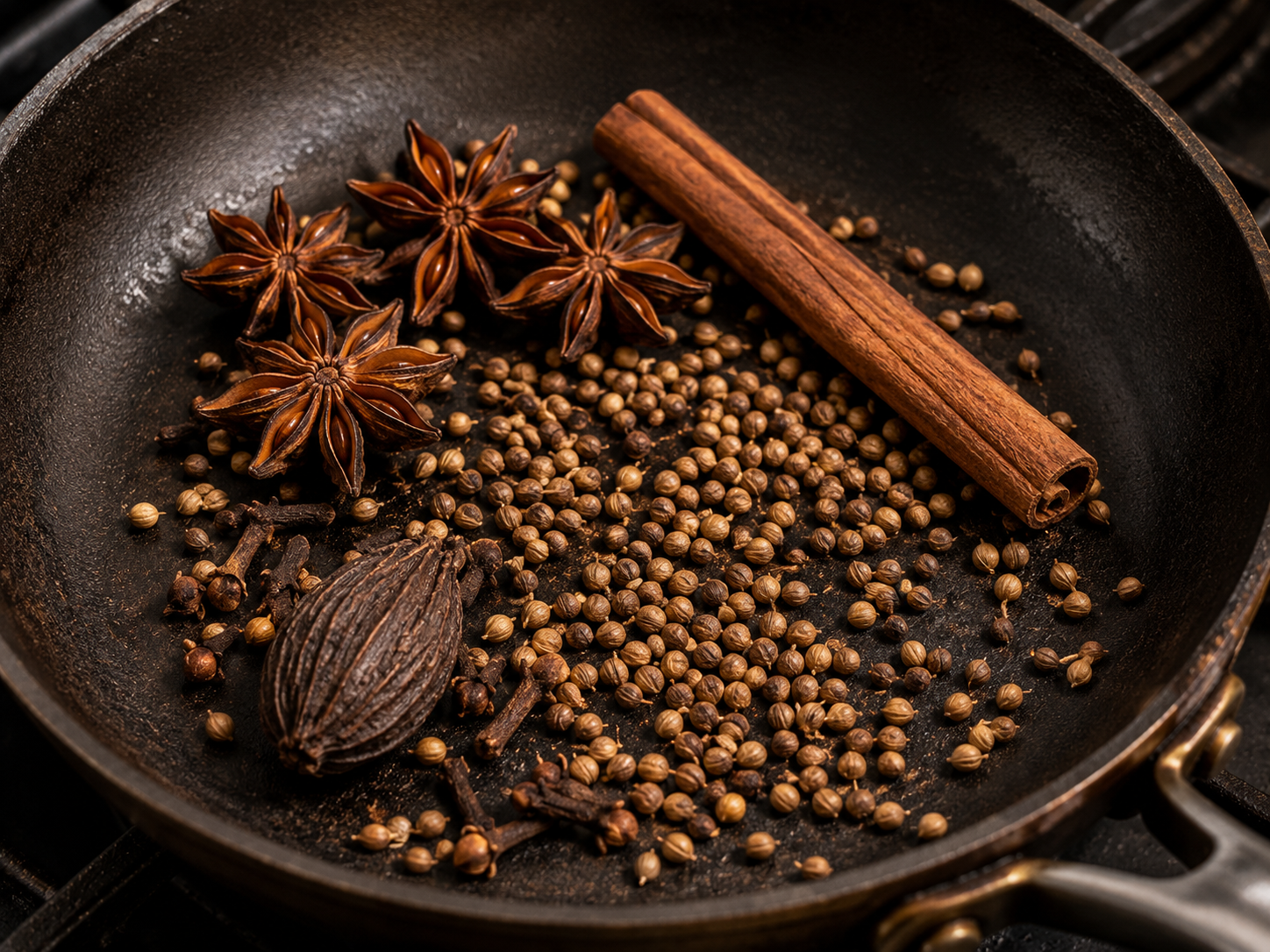
Add the star anise, cinnamon, cloves, coriander seeds, and black cardamom to a dry pan over medium heat. Toast for 2 to 3 minutes, shaking the pan often, until the spices smell warm and fragrant.
The spices should wake up, not burn. If they turn bitter or smoky, start again. Phở broth should carry the spice quietly in the background, not taste like a spice cabinet.
Tie the toasted spices in cheesecloth or place them in a spice bag. If using dried sá sùng, add it to the same bag after it has been toasted and rinsed. This keeps the broth easier to strain and the final bowl clean.
Step 4: Build The Broth
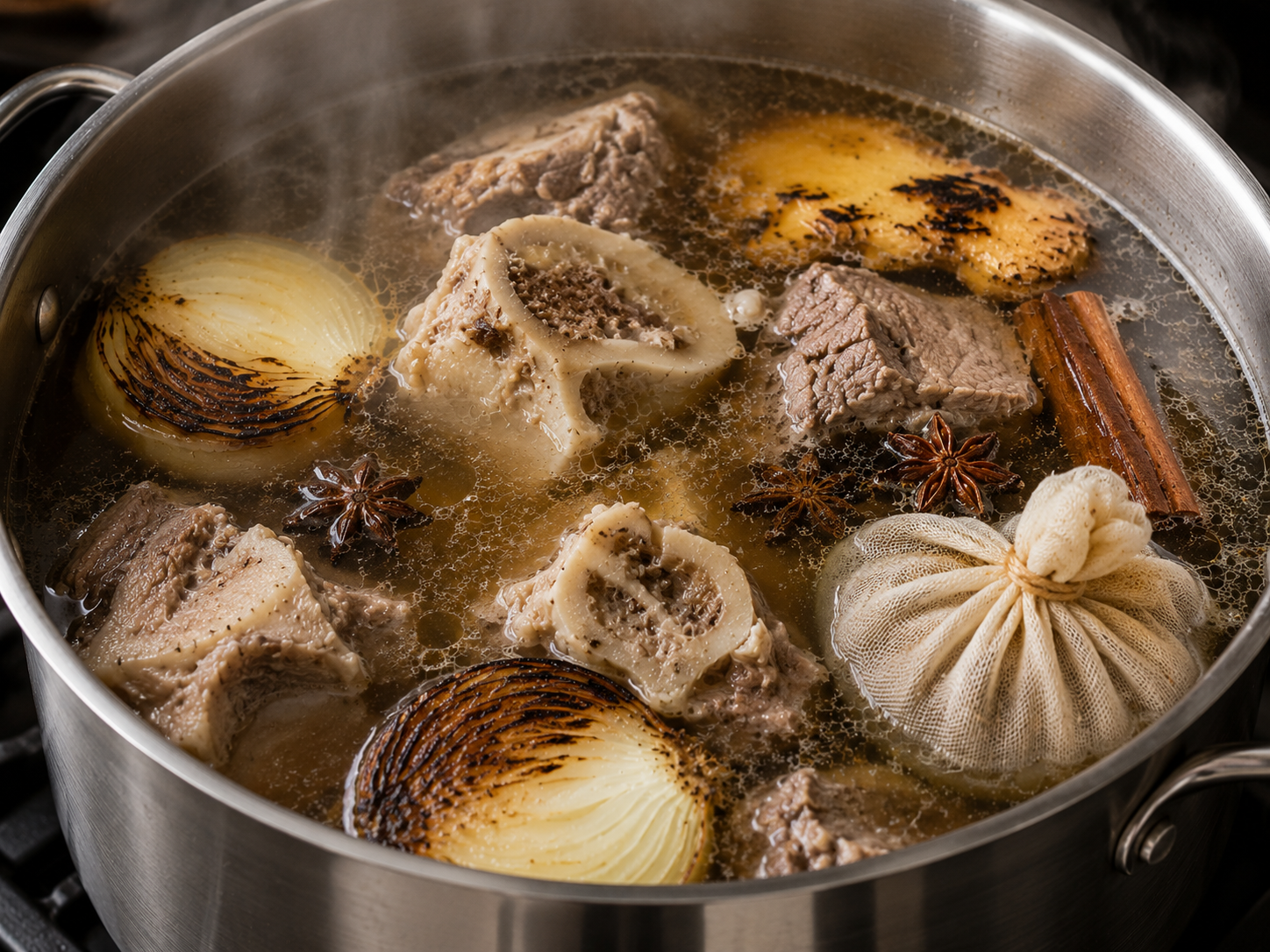
Return the cleaned bones to the washed pot. Add the brisket or chuck, charred onion, charred ginger, spice bag, rock sugar, salt, fish sauce, and 12 cups water.
Bring the pot up slowly over medium-high heat. Once it reaches a boil, immediately lower the heat to a gentle simmer. You want small bubbles rising slowly, not a hard rolling boil.
Simmer uncovered for 3 to 4 hours, skimming foam and excess fat from the surface as needed. A hard boil will make the broth cloudy and heavy. A patient simmer gives you the clean beef flavor that phở needs.
After about 90 minutes, check the brisket or chuck. When it feels tender but still sliceable, remove it from the pot and let it cool. If it stays in too long, it can become dry and stringy. Keep the bones simmering.
Step 5: Strain And Season The Broth
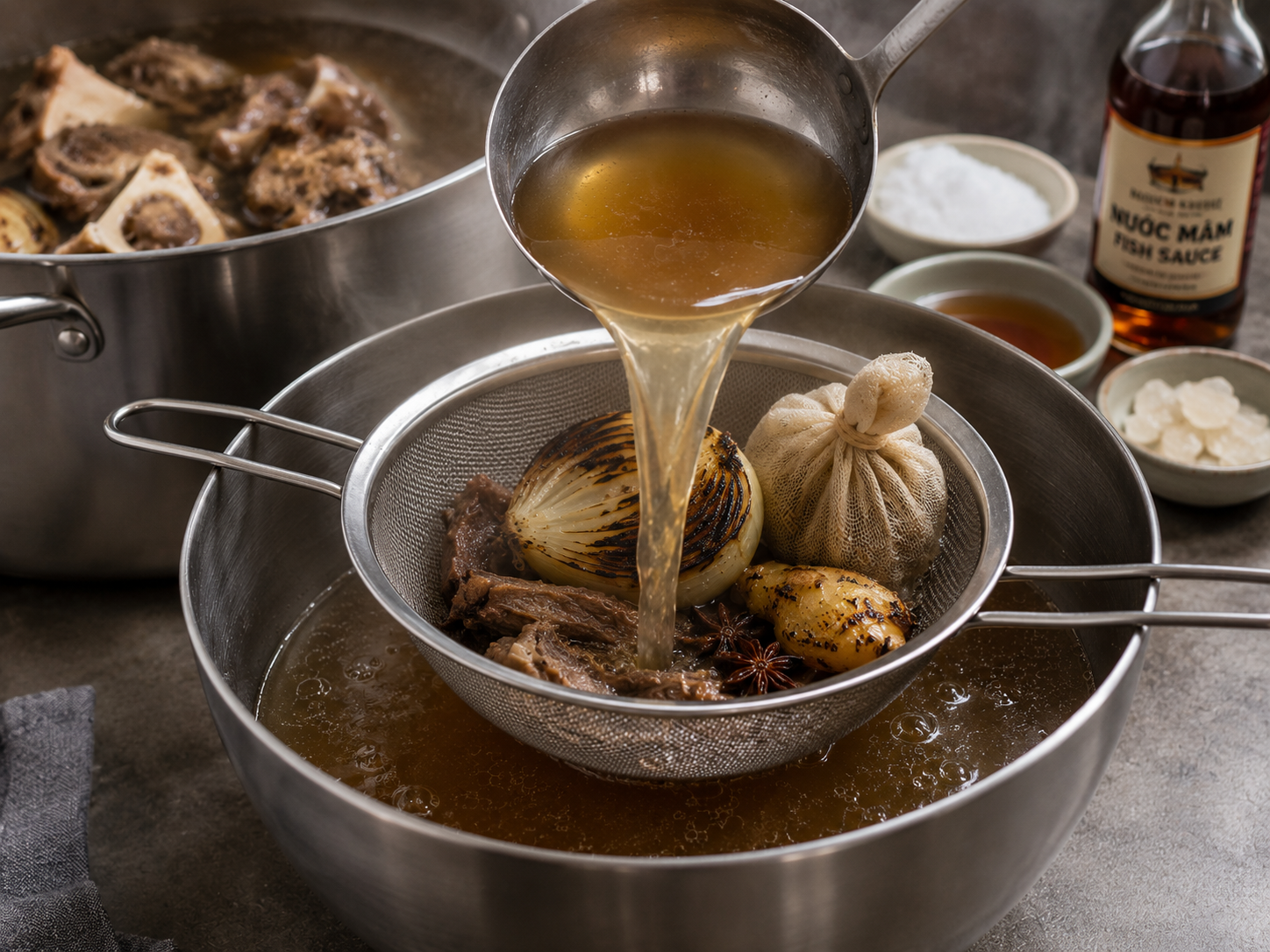
Remove the bones, aromatics, and spice bag. Strain the broth through a fine mesh strainer into a clean pot.
Taste the broth before adjusting. It should taste beefy, lightly sweet, aromatic, and slightly strong because the noodles and beef will soften the final bowl.
Add more fish sauce, salt, or a small piece of rock sugar as needed. The balance should be savory first, then gently sweet, with the spice sitting underneath. If the broth tastes flat, it usually needs a little more salt o
Step 6: Prepare The Beef, Herbs, And Noodles
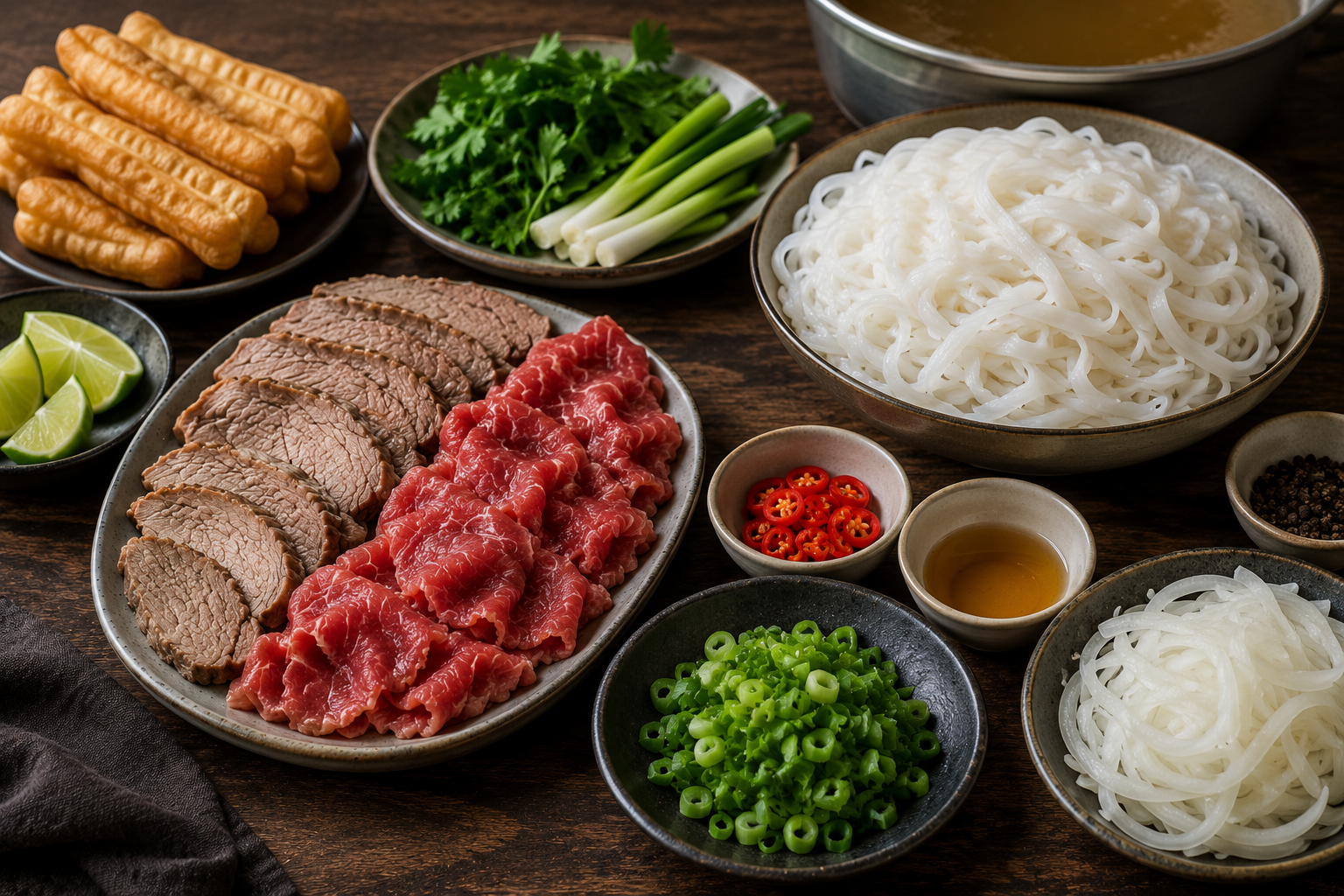
Slice the cooked brisket thinly across the grain. Keep the raw beef very cold, then slice it as thin as possible. If needed, place the beef in the freezer for 20 to 30 minutes so it firms up and cuts cleanly.
Slice the onion paper thin. Cut the scallions. Roughly chop the cilantro. Cut the lime into wedges and slice the chilies.
Prepare the bánh phở according to the package or noodle type. Fresh noodles usually need only a quick dip in hot water. Dried noodles should be soaked or boiled until tender but not mushy. Drain well before adding them to the bowls.
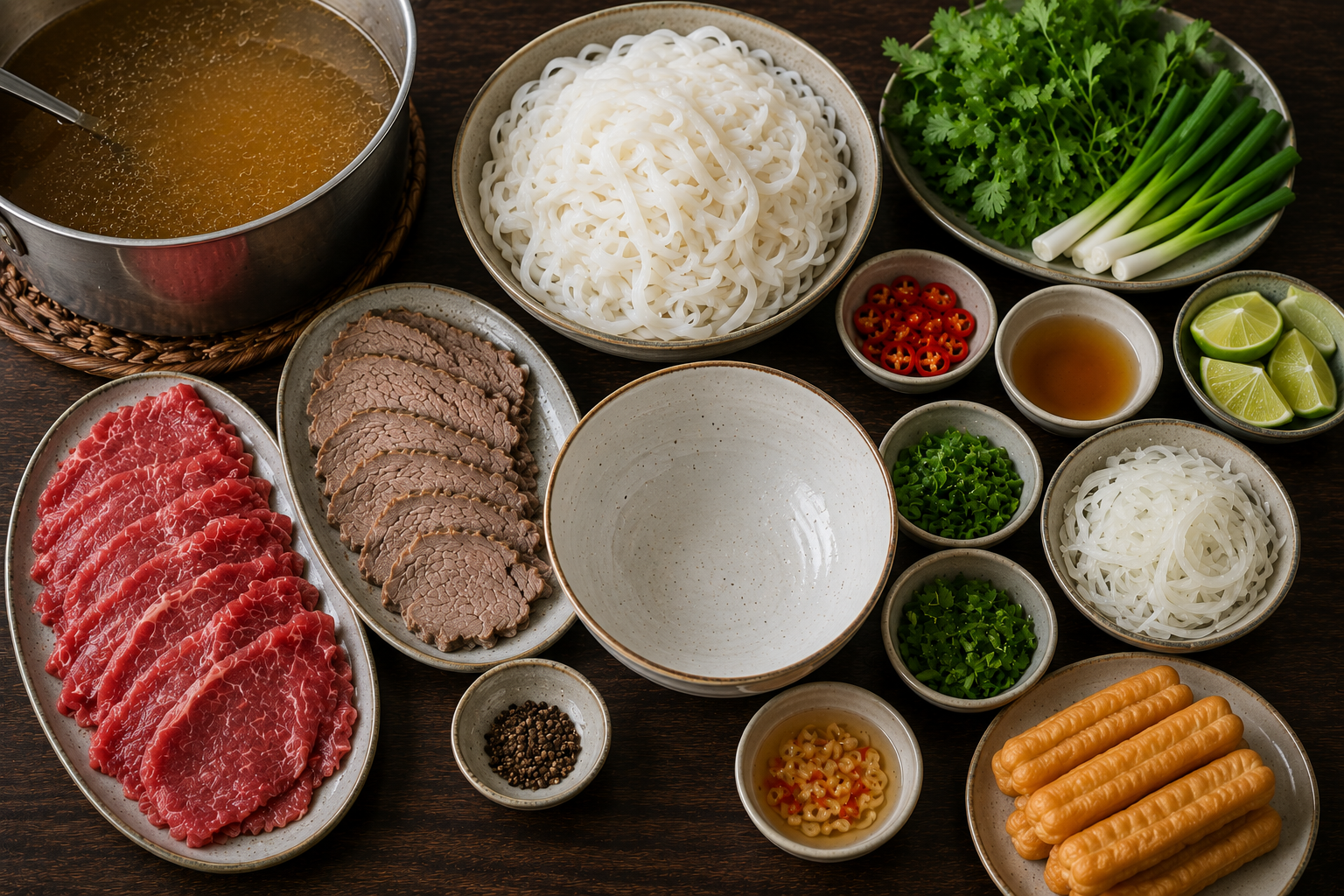
Step 7: Assemble The Bowls
Add warm noodles to each bowl. Arrange a few slices of cooked brisket and raw thin-sliced beef over the noodles. Add sliced onion, scallions, cilantro, and a small pinch of black pepper.
Bring the broth back to a strong simmer. Ladle the hot broth directly over the beef so the thin slices cook in the bowl. The beef should turn from red to pinkish brown while staying tender.
Serve immediately with lime, sliced chilies, chili vinegar, extra fish sauce, scallions, cilantro, and quẩy on the side. Add slowly. Northern-style phở bò should stay focused on the broth.
Final Thoughts
Phở bò rewards patience. Not perfection, not fancy technique, not shortcuts dressed up as wisdom. Just patience.
You clean the bones. You char the onion and ginger. You toast the spices until the kitchen starts to smell like the beginning of a real Vietnamese morning. Then you let time do what time does best.
That is the lesson in a good bowl of phở. The broth has to become clear before it becomes deep. The aromatics have to burn a little before they become sweet. The beef, noodles, herbs, and lime all matter, but only after the foundation is right.
When you make Northern-style phở bò at home, you are not just making Vietnam’s most famous beef noodle soup. You are learning how much care can fit inside one bowl.