Bánh Xèo Recipe: The Crispy Vietnamese Pancake Built For Herbs
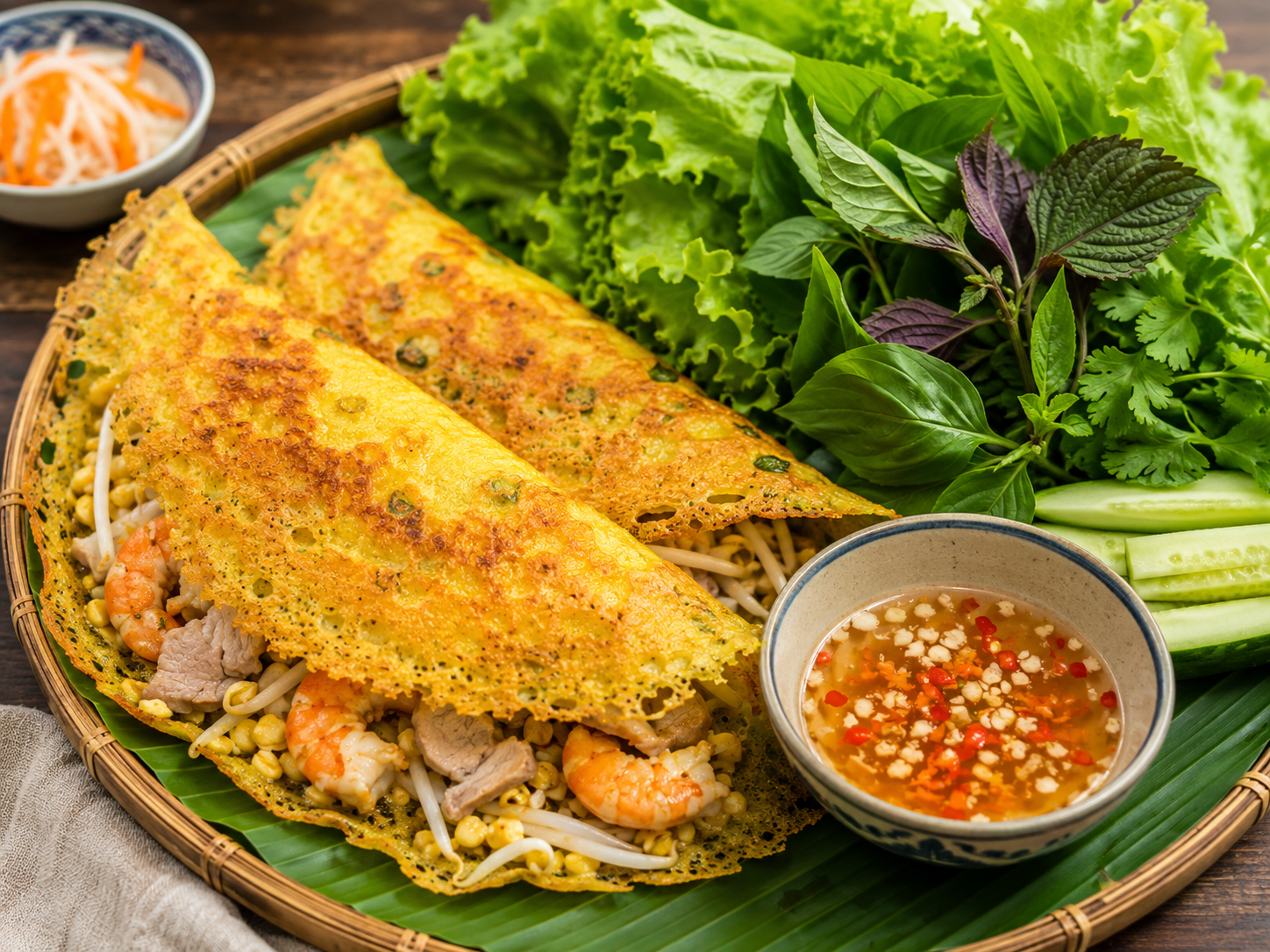
Bánh xèo is one of those Vietnamese dishes that announces itself before it reaches the table. The batter hits the hot pan, the edges start to lace, and that sharp sizzling sound tells you exactly why the dish has its name.
It looks like an omelet, but it is not one. A proper bánh xèo gets its color from turmeric, its structure from rice flour, and its soul from the pile of herbs served beside it. The pancake is only half the story. The lettuce, mustard greens, mint, basil, perilla, cucumber, and nước chấm are what make it feel Vietnamese.
This version leans into the southern-style bánh xèo most people recognize: a wide, crispy rice pancake filled with pork, shrimp, mung beans, and bean sprouts. It should be brittle at the edges, tender near the fold, savory from the filling, and bright once you wrap it in greens and drag it through fish sauce.
At home, the goal is not restaurant perfection. The goal is understanding the rhythm: thin batter, hot pan, enough oil, patient crisping, and a table full of herbs. Once you get that right, bánh xèo stops feeling like a special-occasion dish and starts feeling like something you can actually make.
Ingredients
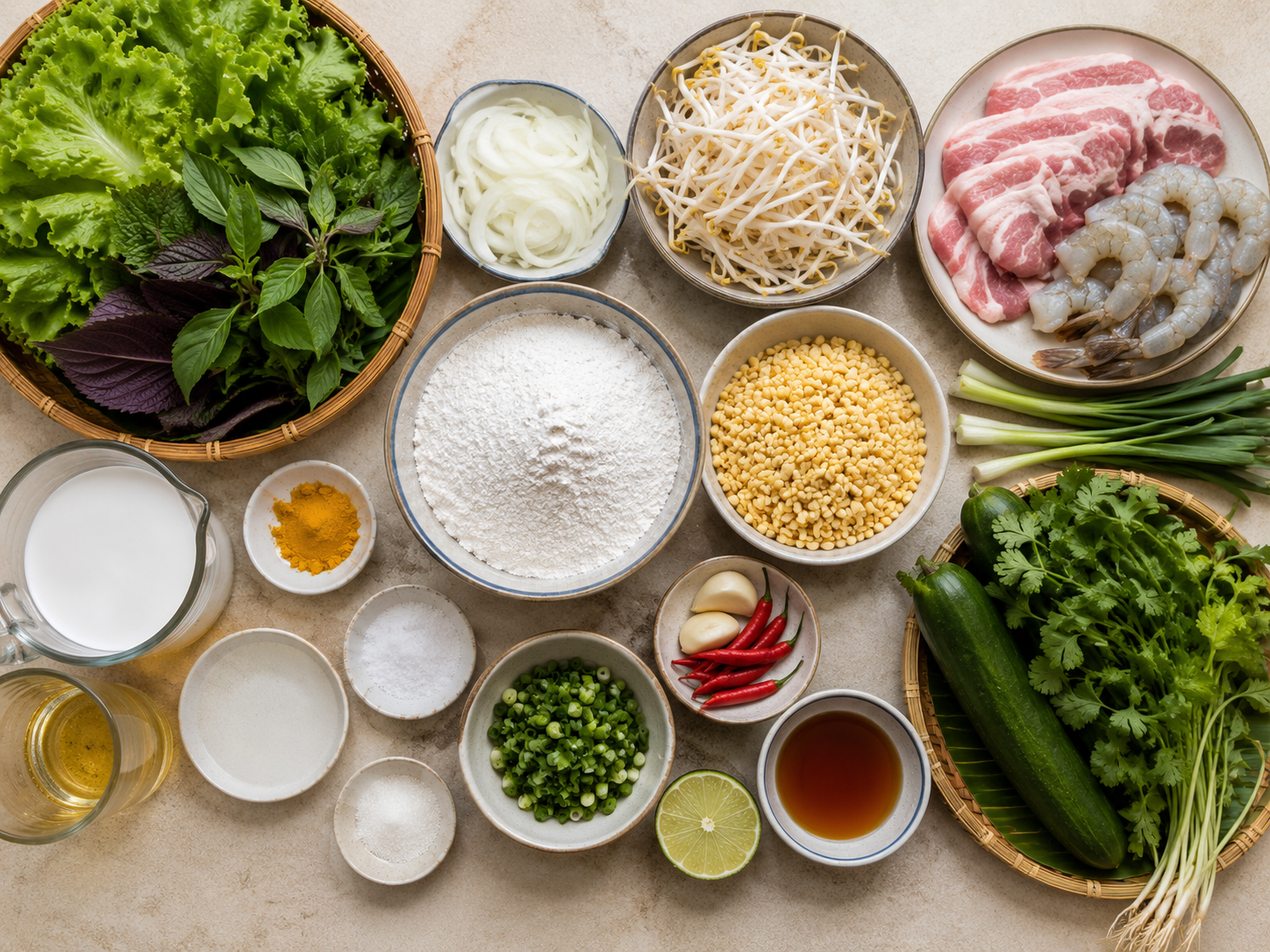
For The Batter
1 cup rice flour
2 tablespoons cornstarch
½ teaspoon ground turmeric
½ teaspoon fine sea salt
¾ cup coconut milk
¾ cup cold water
½ cup cold beer or sparkling water
2 scallions, thinly sliced
For The Filling
6 ounces pork belly or pork shoulder, thinly sliced
8 ounces medium shrimp, peeled and deveined
1 cup cooked split mung beans
3 cups bean sprouts
½ small yellow onion, thinly sliced
½ teaspoon fine sea salt
½ teaspoon sugar
¼ teaspoon black pepper
1 tablespoon neutral oil, plus more for cooking the pancakes
For The Nước Chấm
¼ cup fish sauce
¼ cup warm water
3 tablespoons sugar
3 tablespoons fresh lime juice
1 tablespoon rice vinegar
1 garlic clove, finely minced
1 Thai chile or Fresno chile, thinly sliced
For Serving
1 head butter lettuce, green leaf lettuce, or mustard greens, leaves separated
1 small cucumber, cut into sticks
1 cup fresh mint
1 cup Thai basil
1 cup Vietnamese perilla, if available
½ cup cilantro
Pickled carrot and daikon, optional
How To Make Bánh Xèo
Step 1: Make The Batter
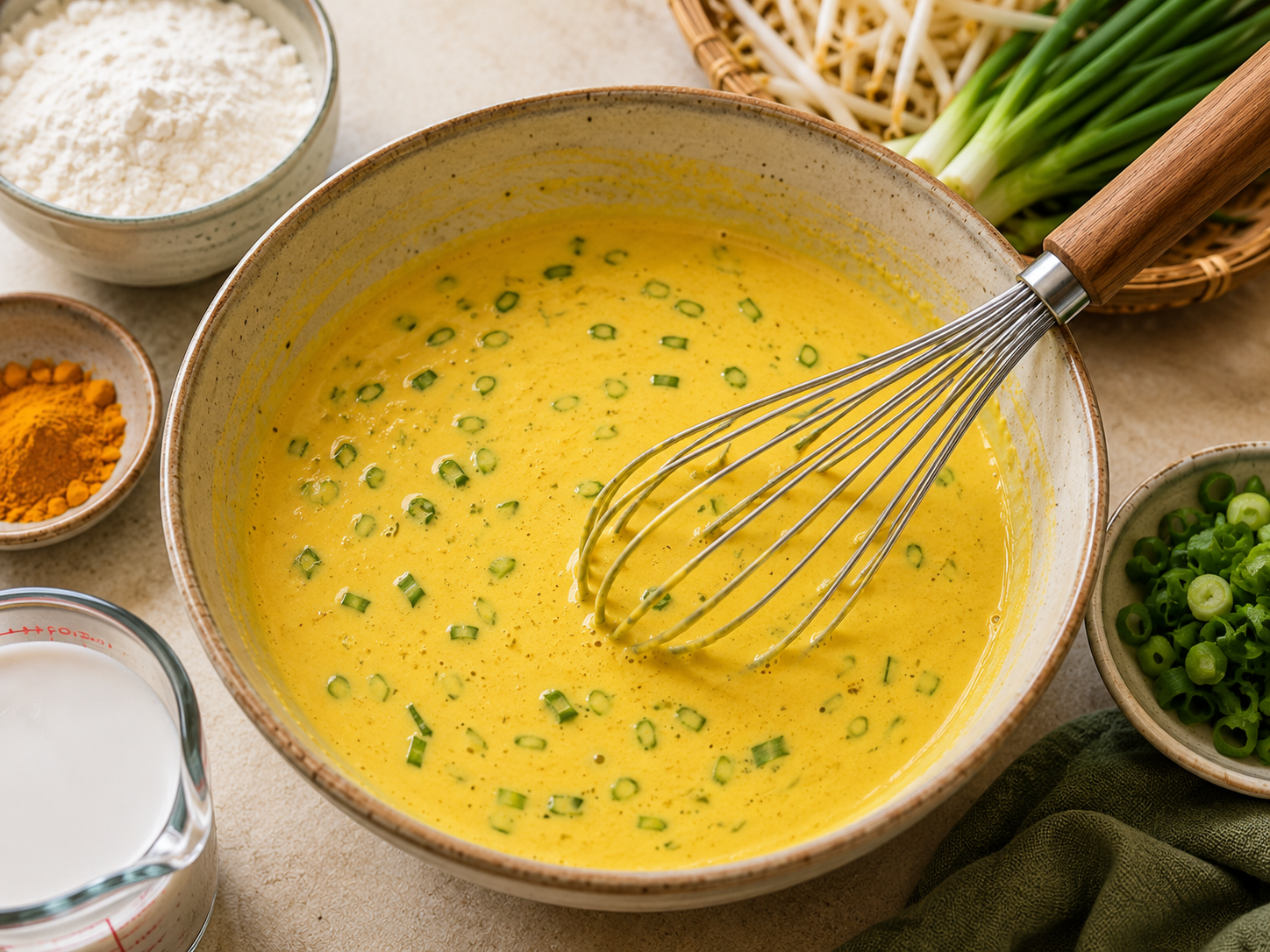
In a large bowl, whisk together the rice flour, cornstarch, turmeric, and salt. Add the coconut milk, cold water, and beer or sparkling water. Whisk until the batter is smooth and thin, with no dry pockets of flour at the bottom of the bowl.
Stir in the sliced scallions. Let the batter rest for at least 30 minutes at room temperature. This rest helps the flour hydrate and gives the pancake a better texture in the pan.
The batter should look thinner than American pancake batter. It should pour easily and move quickly when you tilt the skillet. If it looks thick or heavy after resting, whisk in 1 to 2 tablespoons of cold water.
Step 2: Make The Nước Chấm
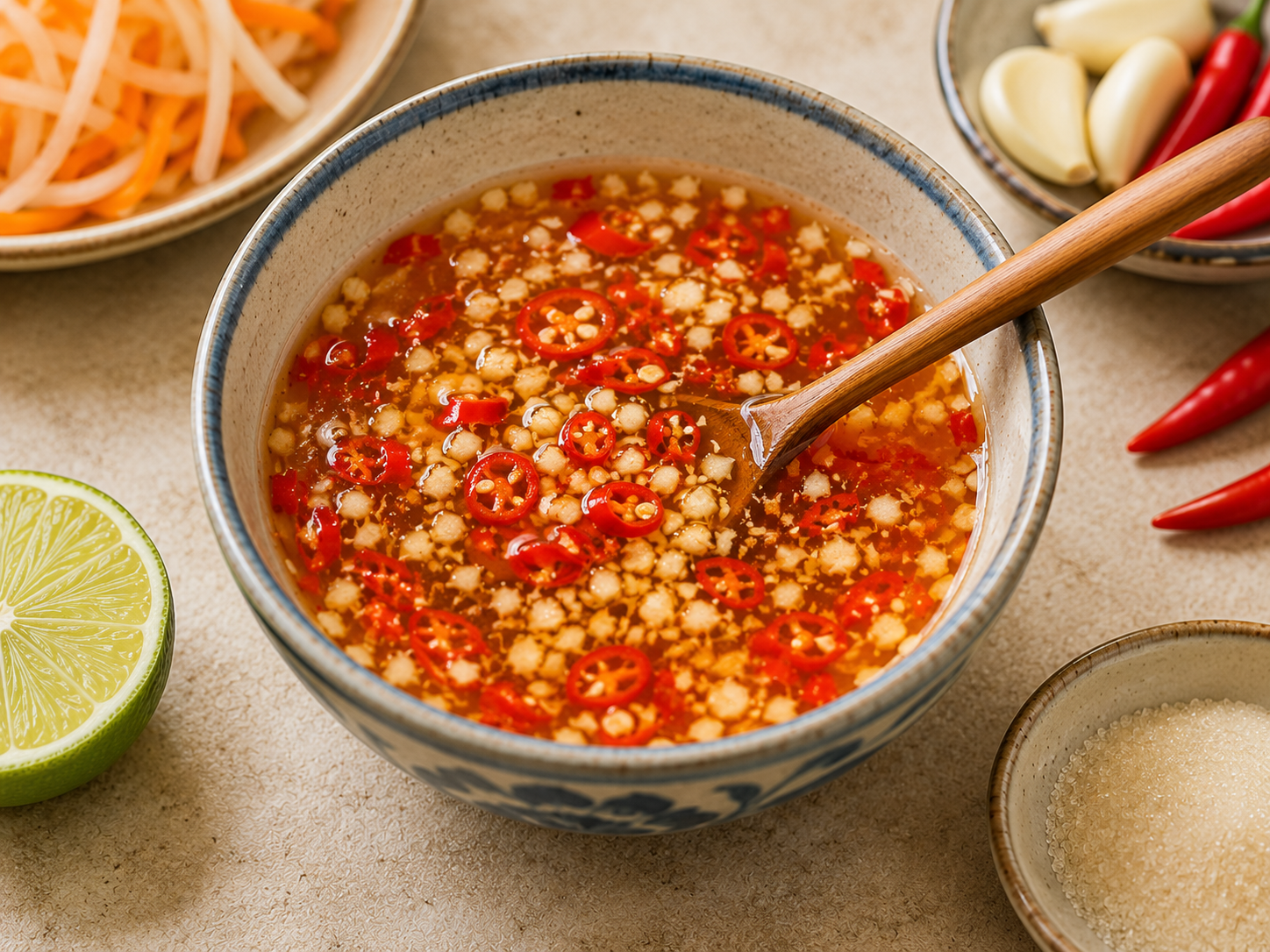
In a small bowl, stir the warm water and sugar until the sugar dissolves. Add the fish sauce, lime juice, and rice vinegar. Stir again, then add the garlic and chile.
Taste the sauce. It should be salty, sweet, sour, and bright. If it tastes too strong, add a splash of water. If it tastes flat, add a little more lime juice. If it tastes too sharp, add a small pinch of sugar.
Set the sauce aside while you cook. The garlic and chile will flavor the sauce more as it sits.
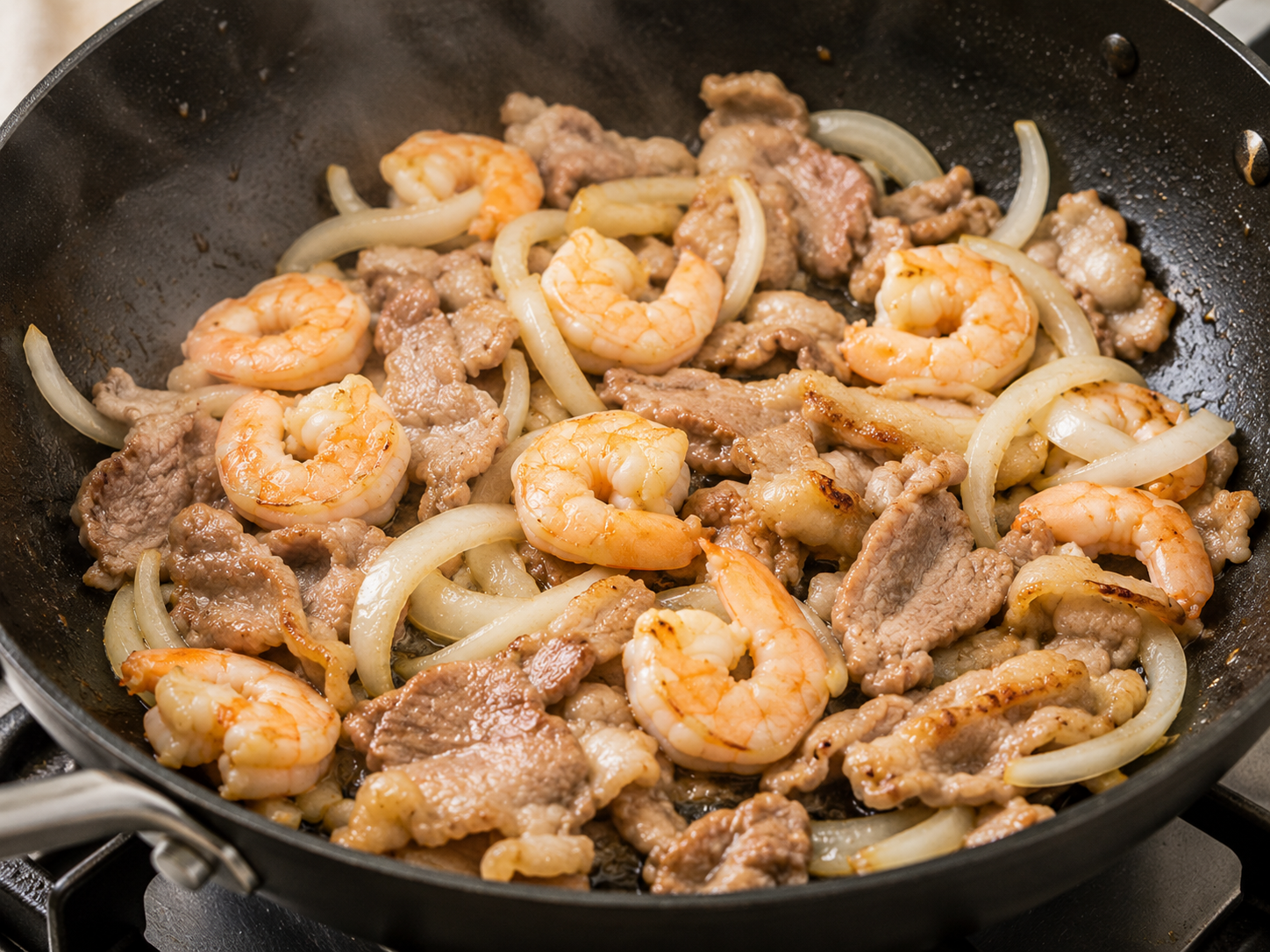
Step 3: Prepare The Filling
Season the pork with salt, sugar, and black pepper. Keep the shrimp separate and season lightly with a small pinch of salt.
Heat 1 tablespoon of neutral oil in a skillet over medium-high heat. Add the pork and cook for 2 to 3 minutes, until the edges are lightly browned and some fat has rendered. Add the onion and cook for 1 minute, just until it begins to soften.
Add the shrimp and cook for 1 to 2 minutes, until they just turn pink. Do not overcook them. They will warm again inside the pancake.
Transfer the pork, shrimp, and onion to a plate. Wipe out the skillet if there are dark bits stuck to the bottom.
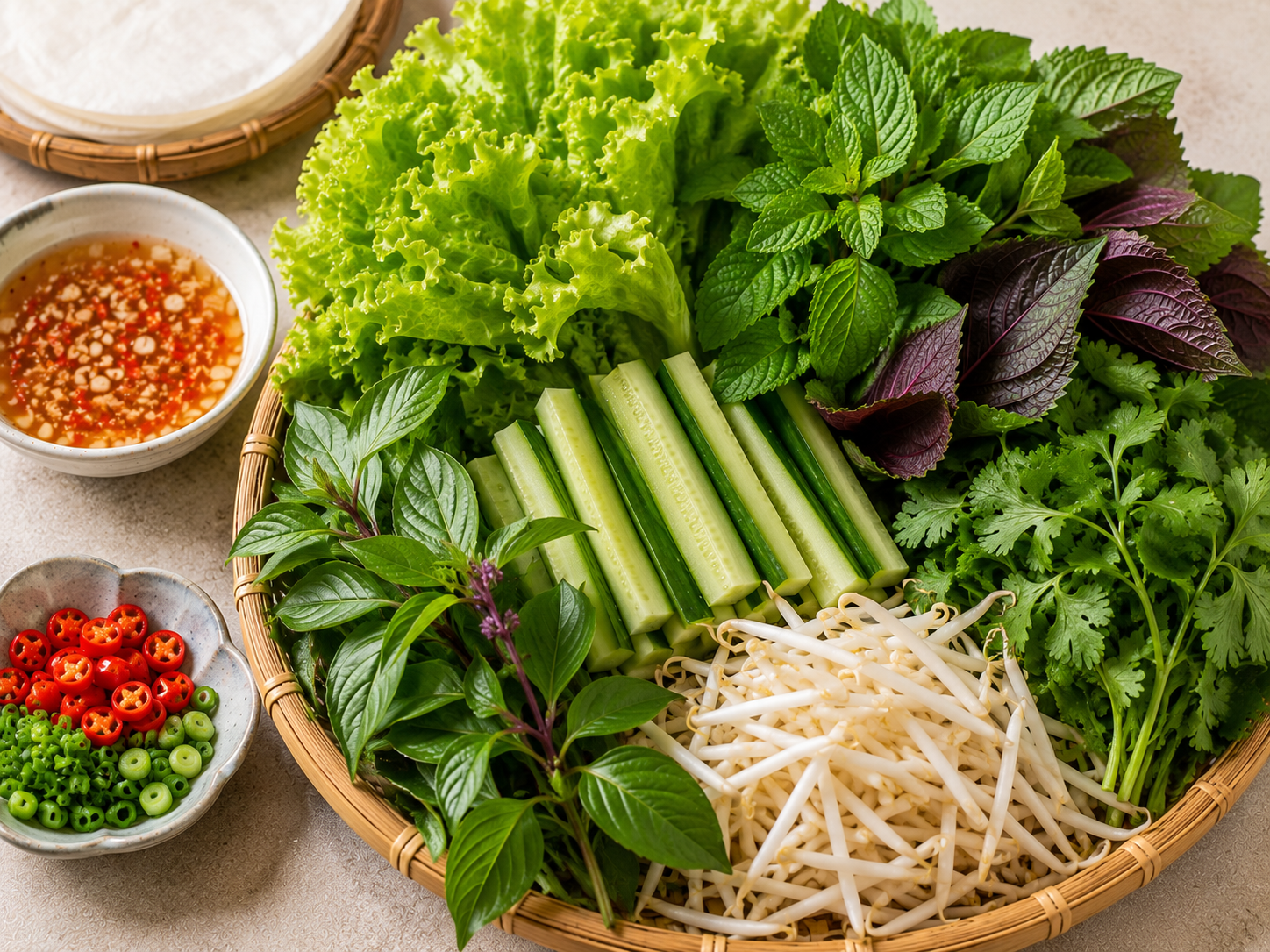
Step 4: Set Up The Herbs And Vegetables
Wash and dry the lettuce, herbs, and cucumber. This part matters more than people think. Wet herbs make the table messy and dilute the dipping sauce.
Arrange the lettuce, herbs, cucumber, and optional pickles on a platter. Bánh xèo should feel abundant when it hits the table. The pancake is hot and crisp, but the greens are what make it balanced.
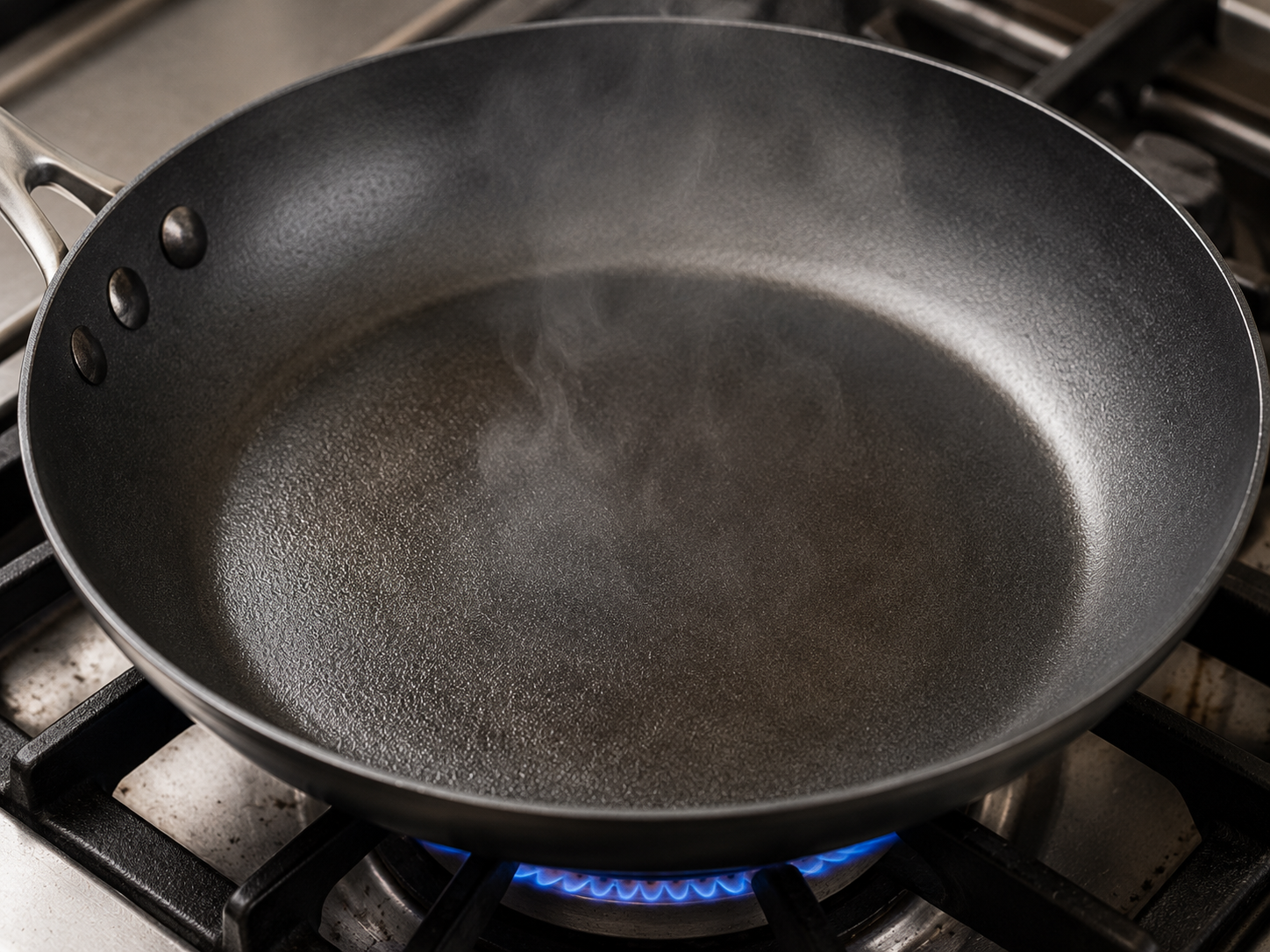
Step 5: Heat The Pan Properly
Use a 10-inch nonstick skillet or well-seasoned carbon steel pan. Place it over medium-high heat and let it get hot before adding oil.
Add 1 to 2 teaspoons of neutral oil and swirl to coat the pan. The oil should shimmer, but it should not smoke heavily. If the batter does not sizzle when it touches the pan, wait longer.
Bánh xèo depends on heat. A pan that is too cool makes a soft, pale pancake. A properly hot pan gives you thin edges, better color, and a cleaner release.
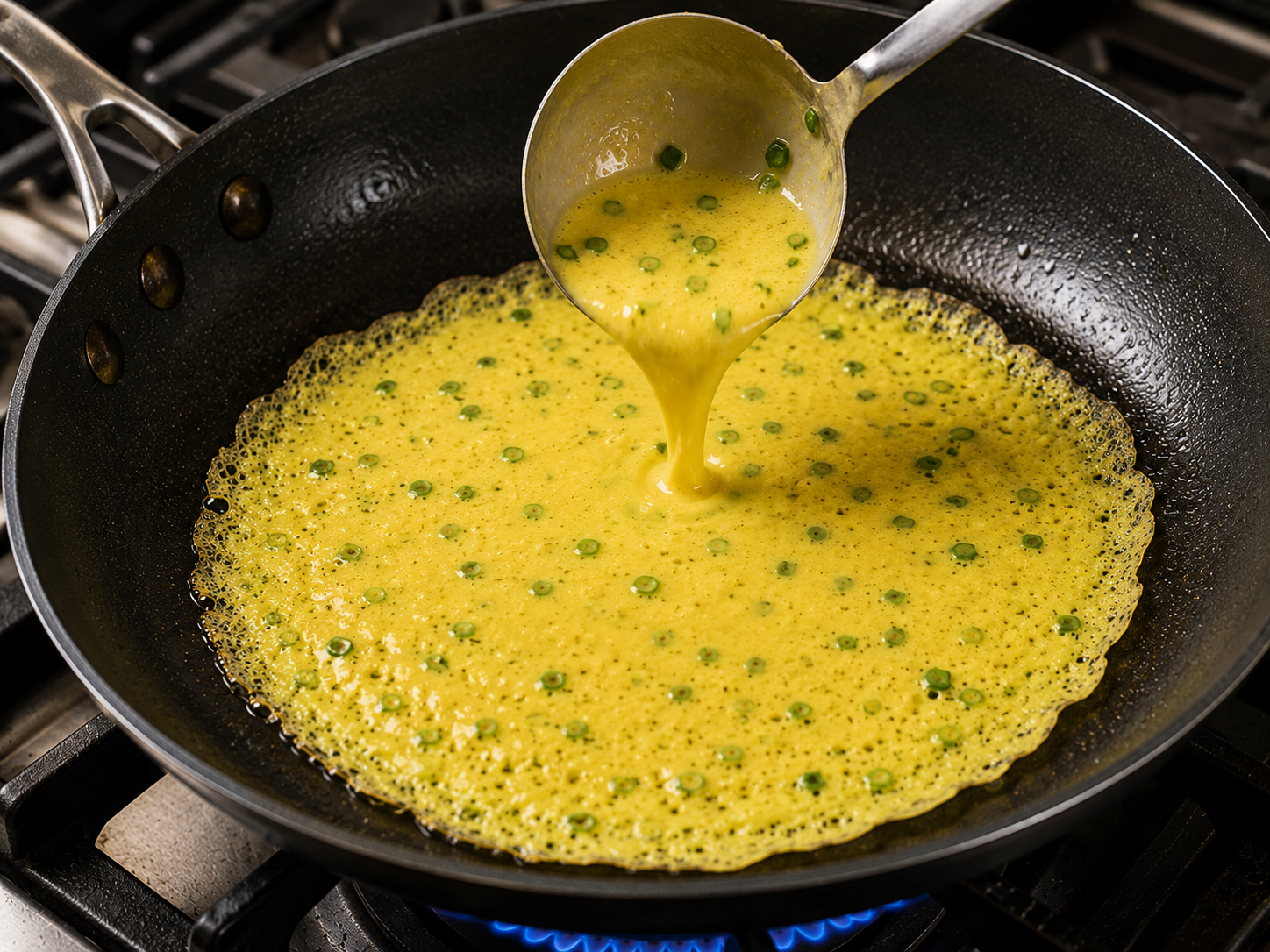
Step 6: Pour The Pancake
Stir the batter before each pancake because the rice flour settles quickly.
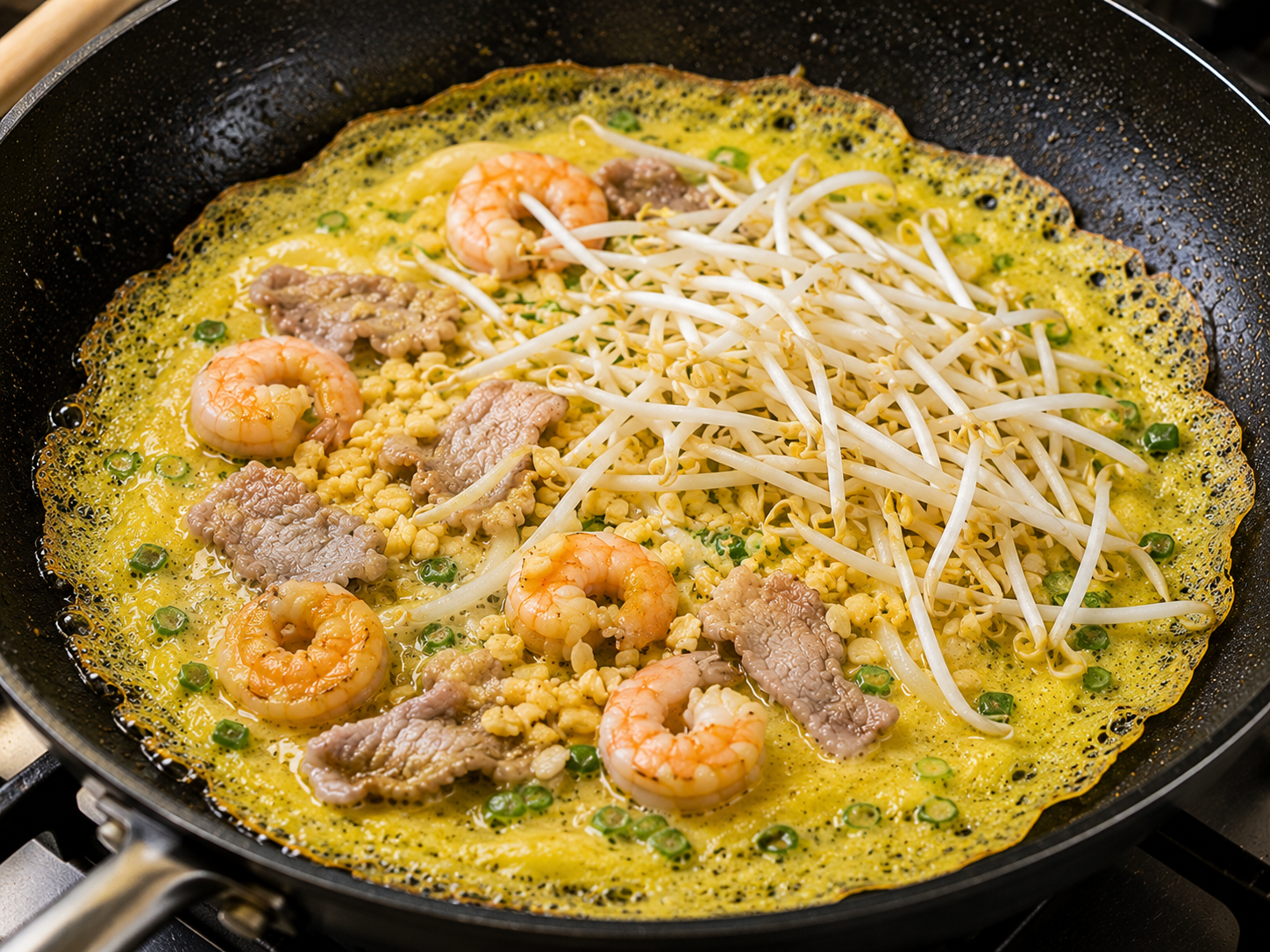
Add a few pieces of pork, shrimp, and onion to the hot pan. Pour about ⅓ cup batter into the skillet and immediately tilt and swirl the pan so the batter runs into a thin, even layer.
The batter should hiss as it spreads. If it sits thick in the middle, use a little less batter on the next pancake or thin the batter with a splash of water.
Step 7: Add Mung Beans And Bean Sprouts
Scatter a few spoonfuls of cooked mung beans over one side of the pancake. Add a small handful of bean sprouts on top.
Cover the pan for 1 to 2 minutes. This traps enough steam to warm the filling and soften the bean sprouts without making the pancake soggy.
Remove the lid and continue cooking uncovered for another 3 to 5 minutes. The edges should pull away from the pan and turn deep golden. The center should look set, not wet.
Step 8: Crisp The Pancake
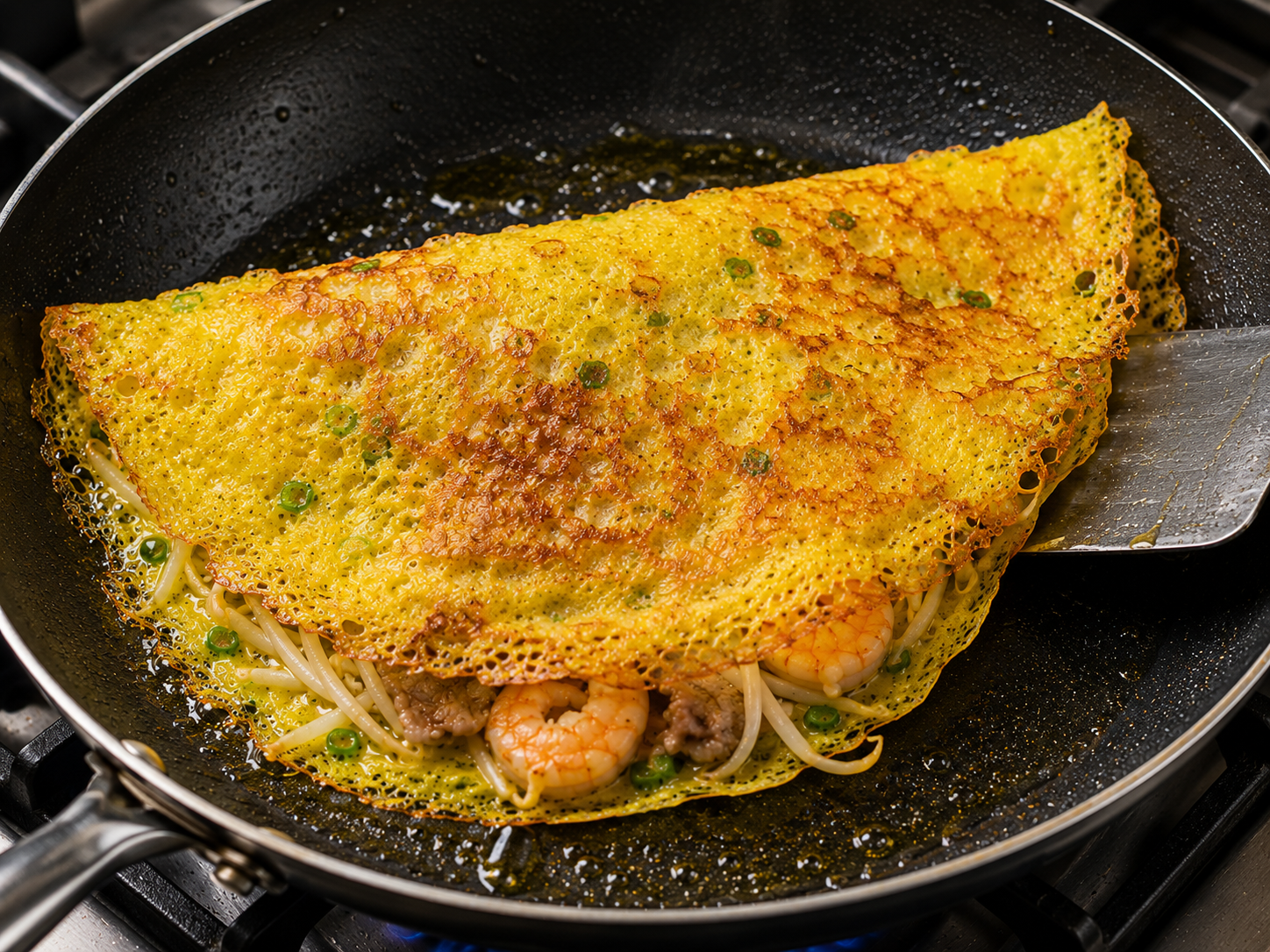
Drizzle ½ to 1 teaspoon of oil around the edge of the pancake if needed. Let it cook until the bottom is crisp and the edges are brittle.
Do not rush this part. Bánh xèo needs time to dry and crisp. If you flip or fold too early, it will tear or collapse. You are looking for a pancake that feels light when you slide a spatula under it.
The bottom should be golden, not pale yellow. The edges should look lacy and crisp. The middle can stay slightly tender, but it should not be gummy.
Use a spatula to fold the pancake in half over the filling. Slide it onto a plate and serve right away while it is hot.
Final Thoughts
Bánh xèo teaches you that Vietnamese food is rarely just one texture or one flavor. The pancake matters, but so does everything around it. The herbs, the lettuce, the dipping sauce, the way you eat with your hands, the sound of the batter in the pan.
It is easy to look at bánh xèo and think the goal is only crispiness. Crispiness is important, but balance is the real point. Too much batter and it gets heavy. Too little heat and it goes soft. Not enough herbs and it loses its character. No nước chấm and the whole thing feels unfinished.
When bánh xèo is right, it feels alive at the table. Hot, loud, messy, fresh, and built to be shared.