Bún Bò Huế Recipe: Central Vietnam’s Spicy Beef Noodle Soup
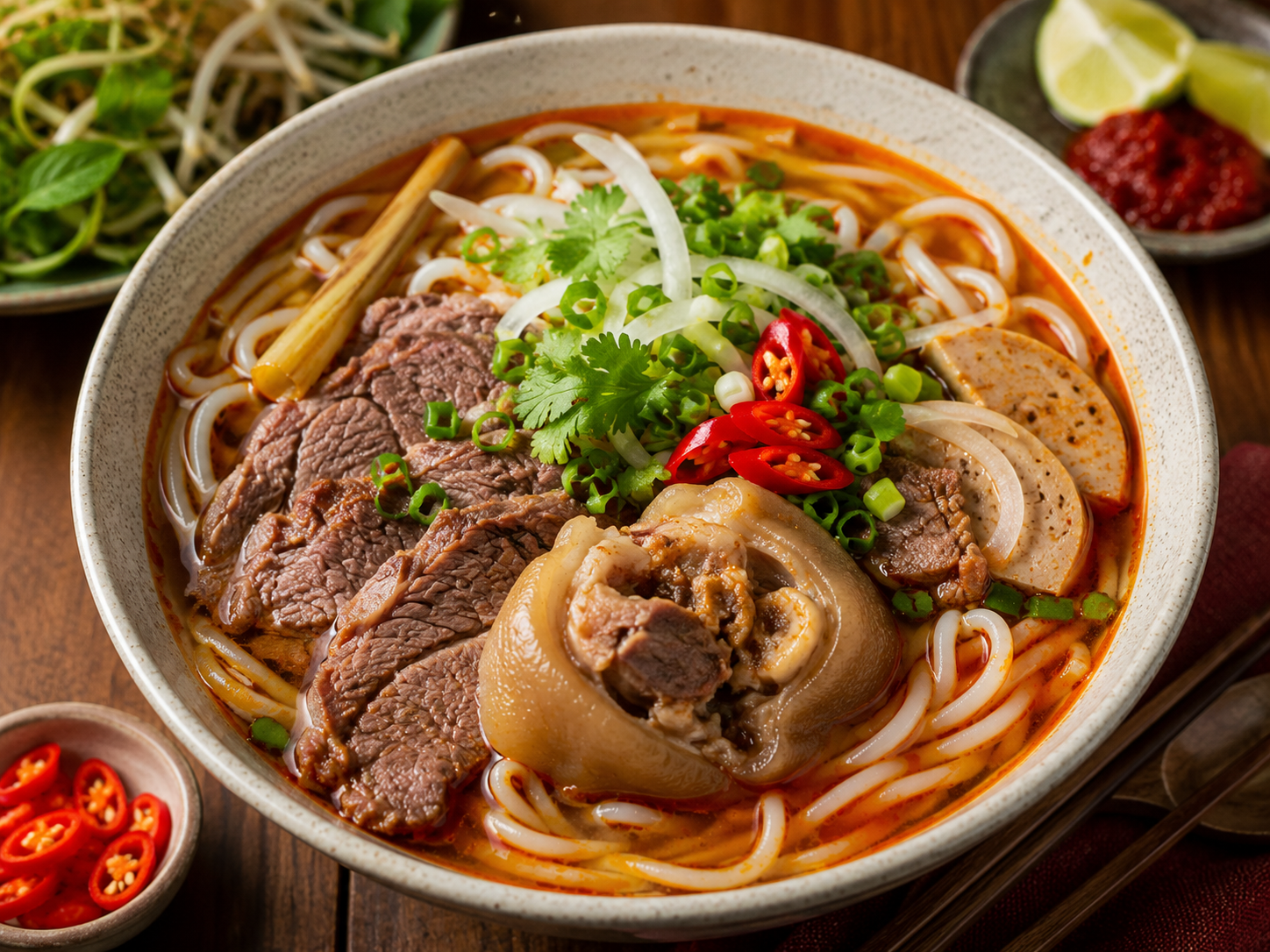
Bún bò Huế does not whisper. It arrives red, fragrant, salty, spicy, and alive with lemongrass. The broth has depth from beef and pork, heat from chili oil, funk from mắm ruốc, and that unmistakable Central Vietnamese edge that makes the bowl feel sharper and more direct than phở.
In Huế, this is not just “spicy beef noodle soup.” It is breakfast, street food, family cooking, and regional identity in one bowl. You see it in the thick round noodles, the slices of beef, the pork hock, the herbs, the lime, the chili, and the broth that stains the spoon orange-red before you even taste it.
A good home version needs to respect that. It should not be watered down into generic beef soup with chili on top. The flavor has to be built from bones, lemongrass, shallots, pineapple if you want that soft Central Vietnamese sweetness, and properly bloomed annatto-chili oil.
This recipe is built for home cooks outside Vietnam, but the goal is still Huế first. Big broth, clean spice, real aroma, chewy noodles, fresh herbs, and enough patience to let the pot become something worth sitting down for.
Ingredients
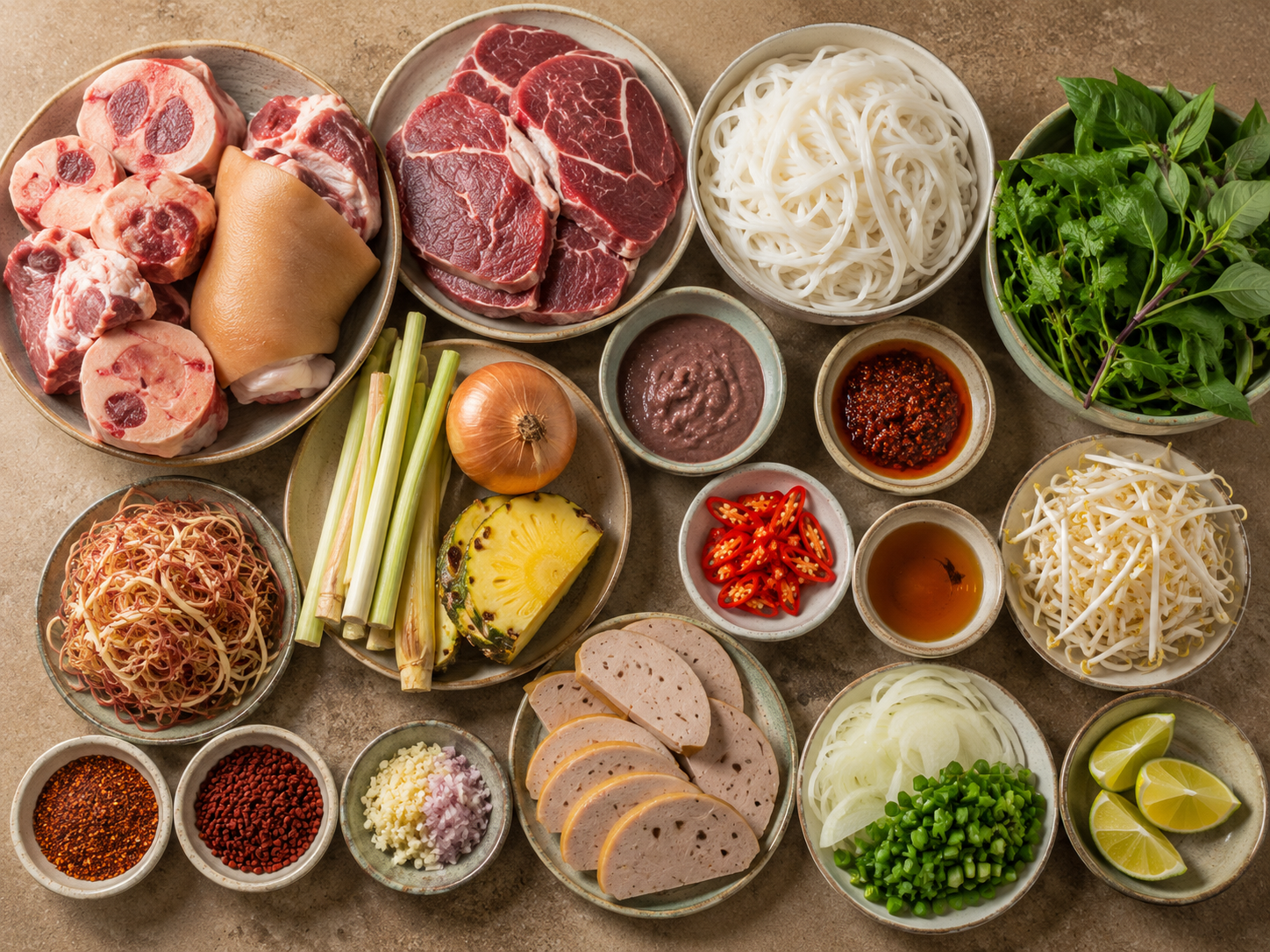
For The Broth
3 pounds beef bones, preferably knuckle, neck, or marrow bones
2 pounds pork hock, cut crosswise into thick pieces
1½ pounds beef shank or beef brisket
1 large yellow onion, peeled and halved
1 small pineapple wedge, about 4 ounces, optional
8 stalks lemongrass, trimmed and bruised
2 tablespoons kosher salt, divided
1 tablespoon sugar
2 tablespoons fish sauce, plus more if needed
2 tablespoons mắm ruốc Huế or Vietnamese fermented shrimp paste
6 quarts water, plus more for blanching
For The Chili Annatto Oil
¼ cup neutral oil
2 tablespoons annatto seeds
3 tablespoons minced lemongrass
2 tablespoons minced shallot
1 tablespoon minced garlic
2 to 3 tablespoons Vietnamese chili flakes or ground dried chili, depending on heat level
1 teaspoon sugar
1 tablespoon fish sauce
For The Noodles
2 pounds fresh thick round rice noodles, bún bò Huế noodles
or 1 pound dried thick round rice noodles
For Serving
½ pound Vietnamese pork sausage, chả lụa or chả bò, thinly sliced
1 small red onion or white onion, thinly sliced
4 green onions, thinly sliced
½ cup chopped cilantro
2 cups bean sprouts
2 cups shredded banana blossom, optional
1 small bunch Vietnamese coriander, rau răm
1 small bunch Thai basil
1 small bunch mint
2 limes, cut into wedges
2 to 3 red chilies, sliced
Extra fish sauce, for adjusting at the table
Extra chili oil, for serving
How To Make Bún Bò Huế
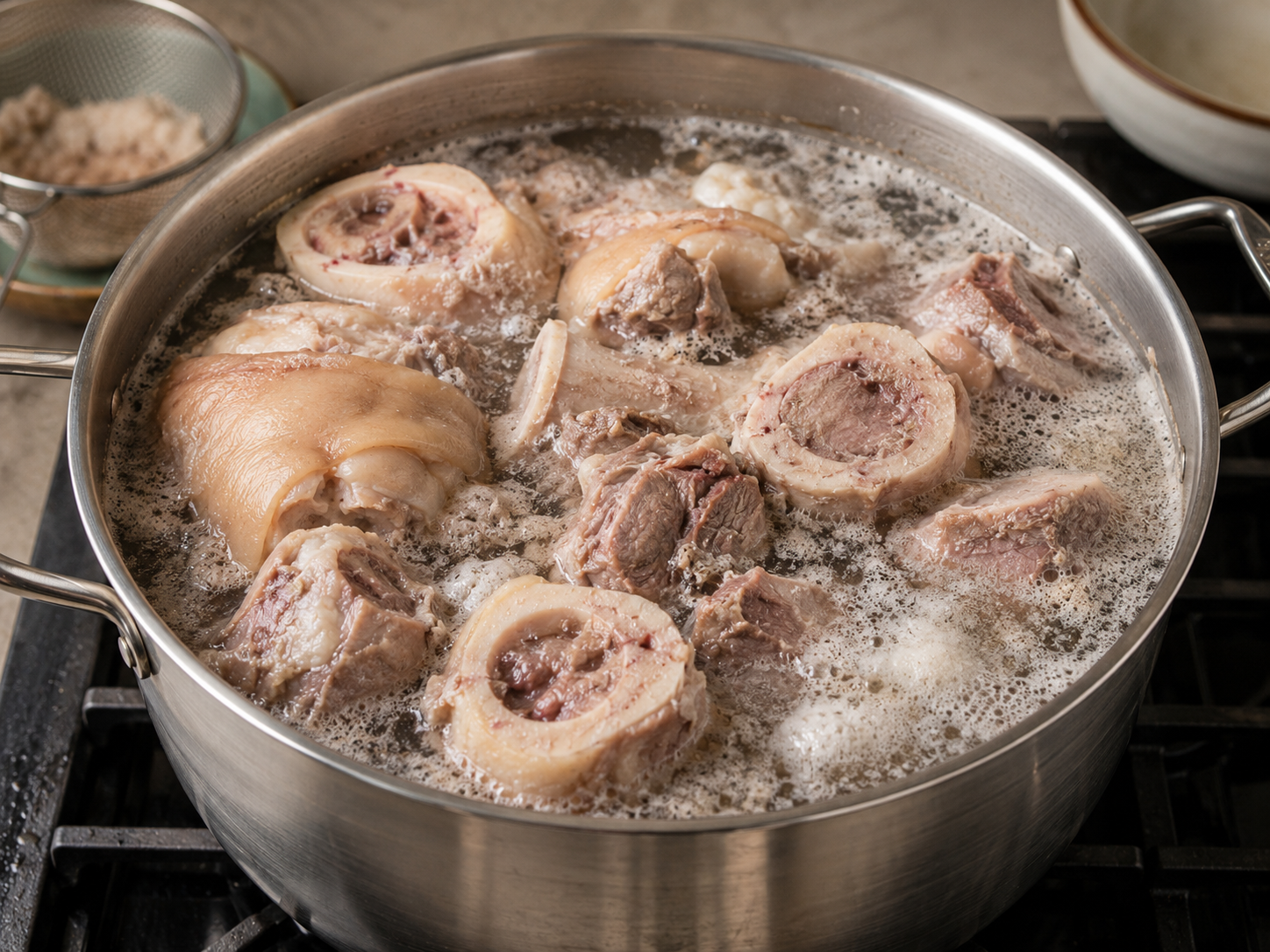
Step 1: Blanch The Bones And Pork Hock
Add the beef bones and pork hock to a large stockpot. Cover with cold water and bring to a hard boil over high heat. Boil for 8 to 10 minutes, until foam, scum, and impurities rise to the surface.
Drain everything into the sink and rinse the bones and pork hock well under warm water. Wash the pot before building the real broth.
This step makes the broth cleaner. Bún bò Huế should be powerful, but it should not taste muddy. Blanching gives you a better foundation before the lemongrass, shrimp paste, and chili oil go in.
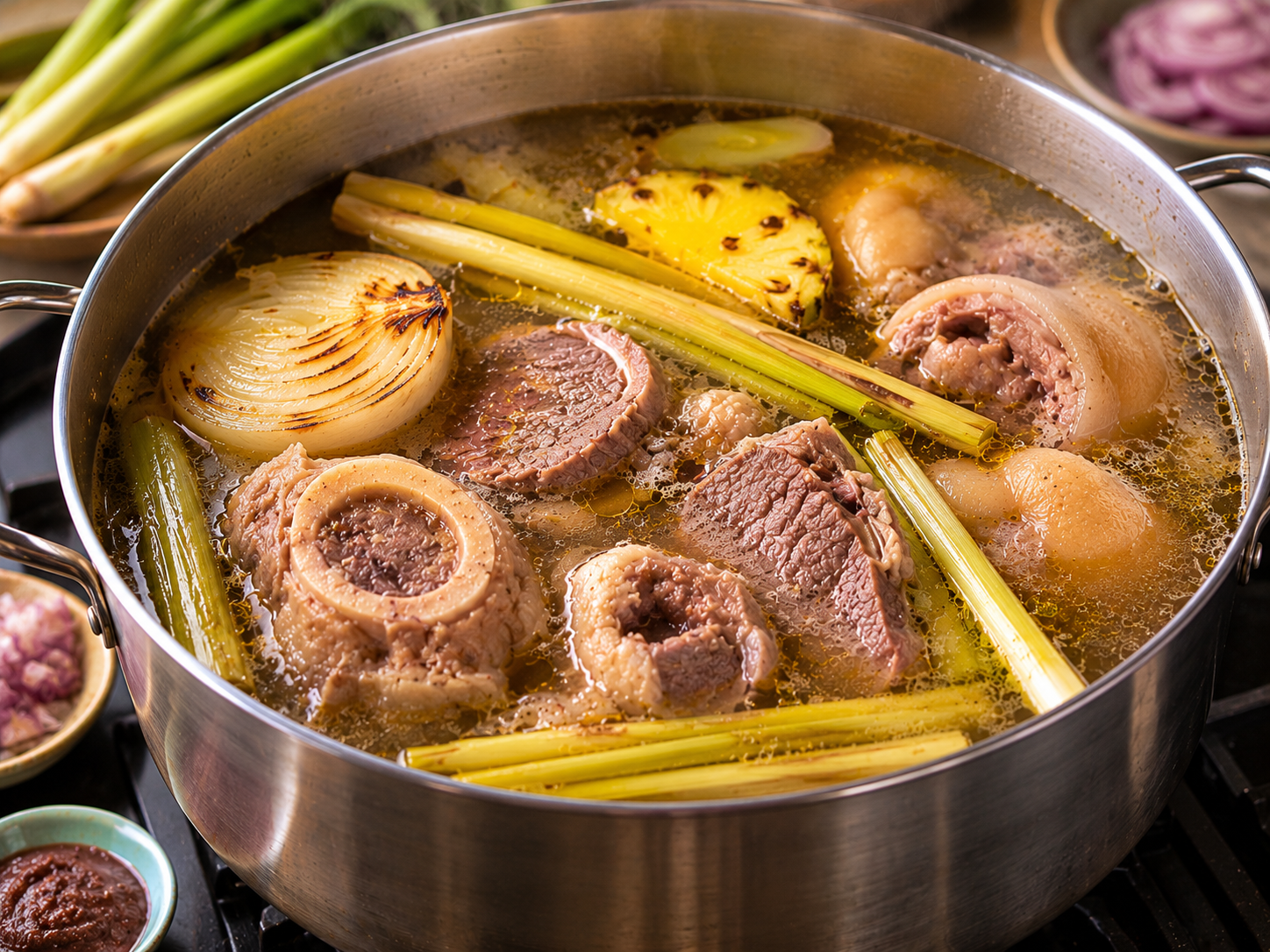
Step 2: Simmer The Broth
Return the cleaned bones and pork hock to the pot. Add the beef shank or brisket, onion, pineapple if using, and bruised lemongrass. Add 6 quarts of fresh water.
Bring the pot to a boil, then lower the heat to a gentle simmer. Skim the surface during the first 20 minutes. Add 1 tablespoon kosher salt and the sugar.
Simmer gently for about 2½ to 3 hours. The broth should move slowly, not violently. A hard boil can make the broth cloudy and rough. The pork hock should become tender but not falling apart, and the beef should be sliceable.
After about 90 minutes, check the beef shank or brisket. If it is tender, remove it and let it cool. If it still feels tight, keep simmering and check every 20 minutes.
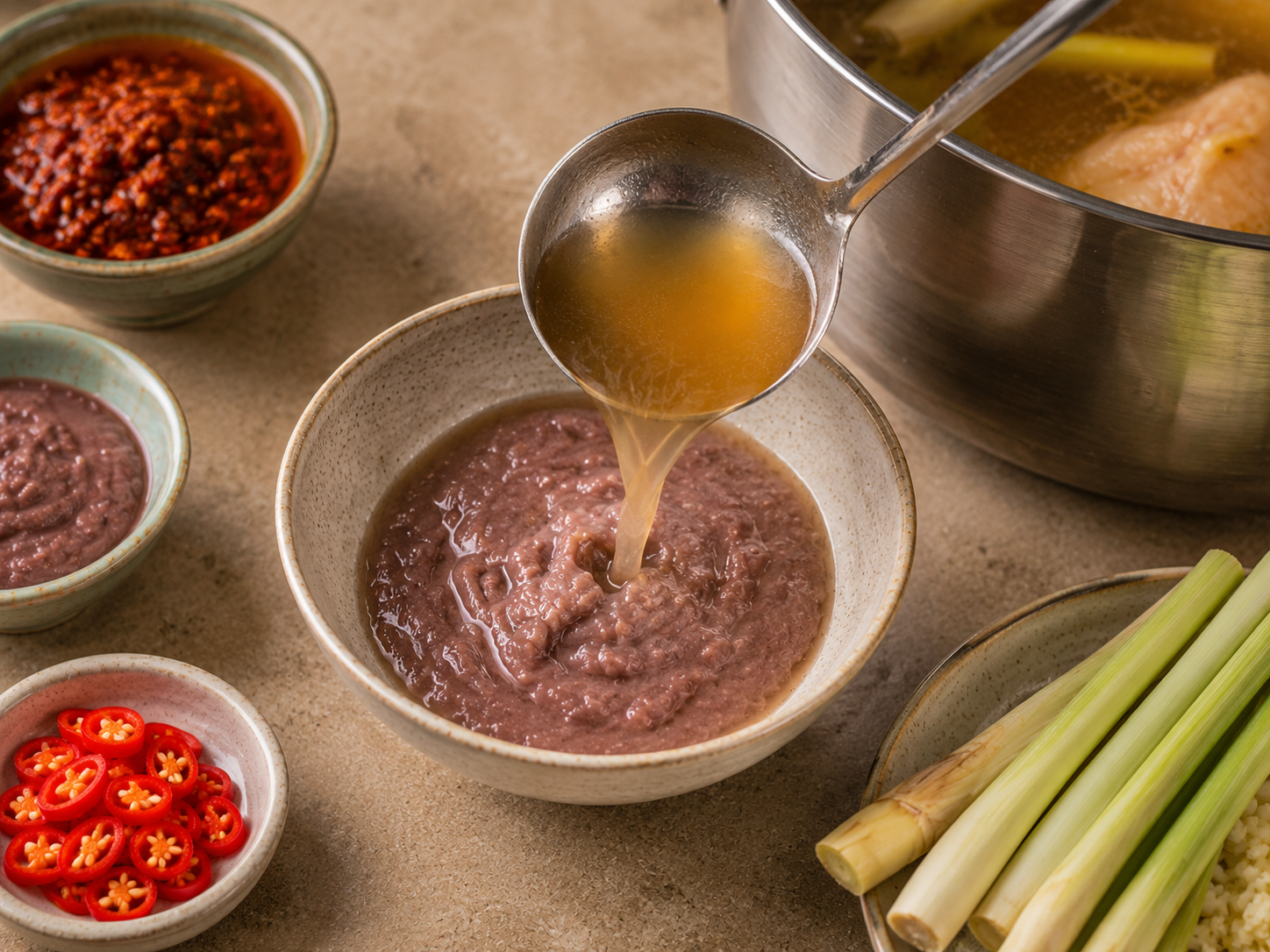
Step 3: Season With Mắm Ruốc
In a small bowl, mix the mắm ruốc with ½ cup hot broth from the pot. Stir well and let it sit for a few minutes so the heavier sediment can settle.
Carefully pour the seasoned liquid into the broth, leaving the gritty sediment behind if there is any. Add fish sauce and the remaining 1 tablespoon kosher salt. Simmer for another 20 to 30 minutes.
Taste the broth. It should be savory, aromatic, lightly funky, and strong enough to carry noodles and herbs. If it tastes flat, add fish sauce 1 tablespoon at a time. If it tastes too sharp, add a small pinch of sugar and let it simmer a little longer.
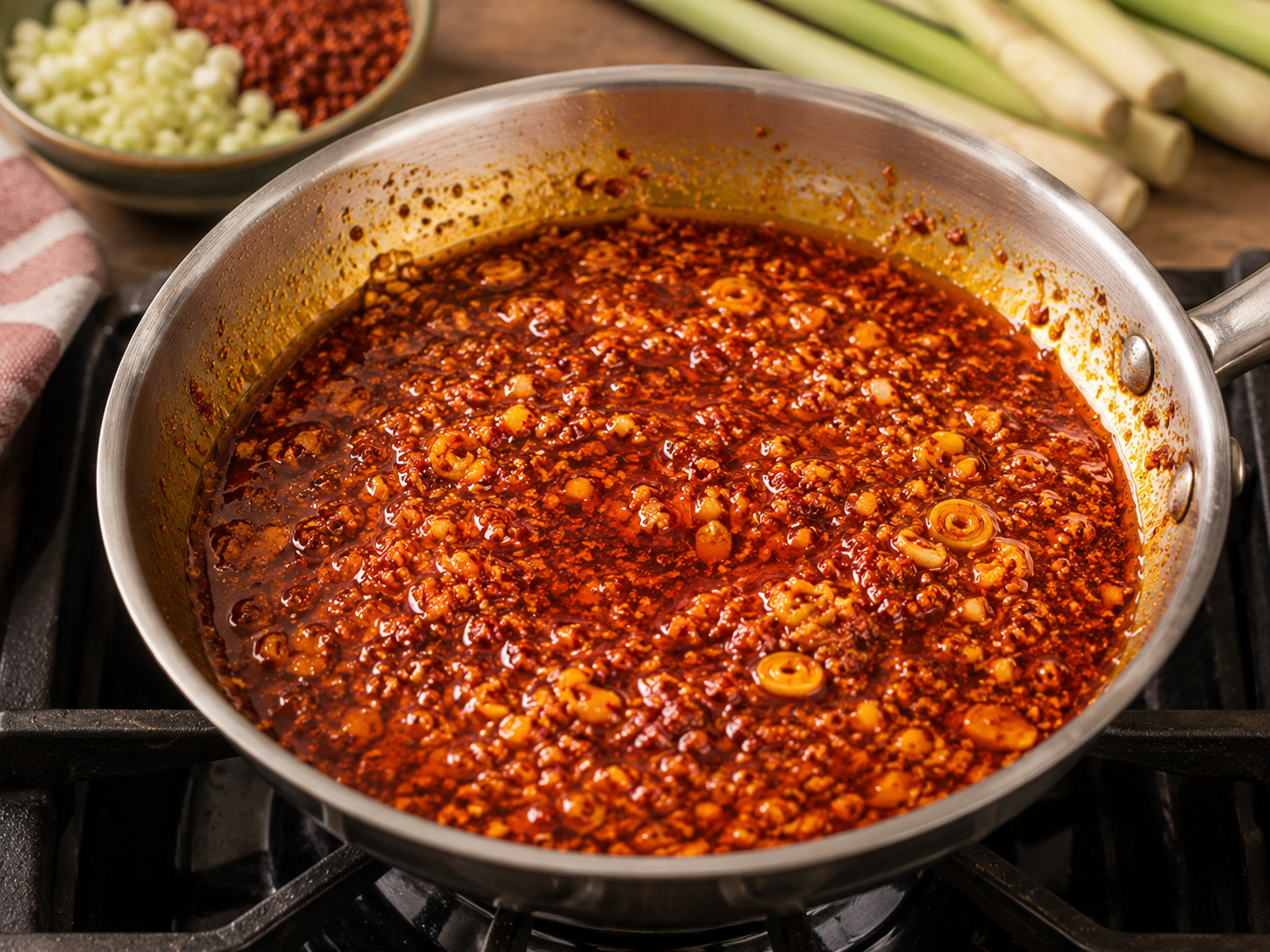
Step 4: Make The Chili Annatto Oil
Heat the neutral oil in a small pan over medium-low heat. Add the annatto seeds and cook for 2 to 3 minutes, until the oil turns deep orange-red. Do not let the seeds burn.
Strain out the annatto seeds and return the colored oil to the pan. Add the minced lemongrass, shallot, and garlic. Cook gently for 2 to 3 minutes, until fragrant.
Add the chili flakes, sugar, and fish sauce. Stir for another 30 seconds, then turn off the heat. The oil should smell roasted, spicy, and deeply aromatic, not bitter.
Stir most of this chili oil into the broth. Save a little for serving at the table.
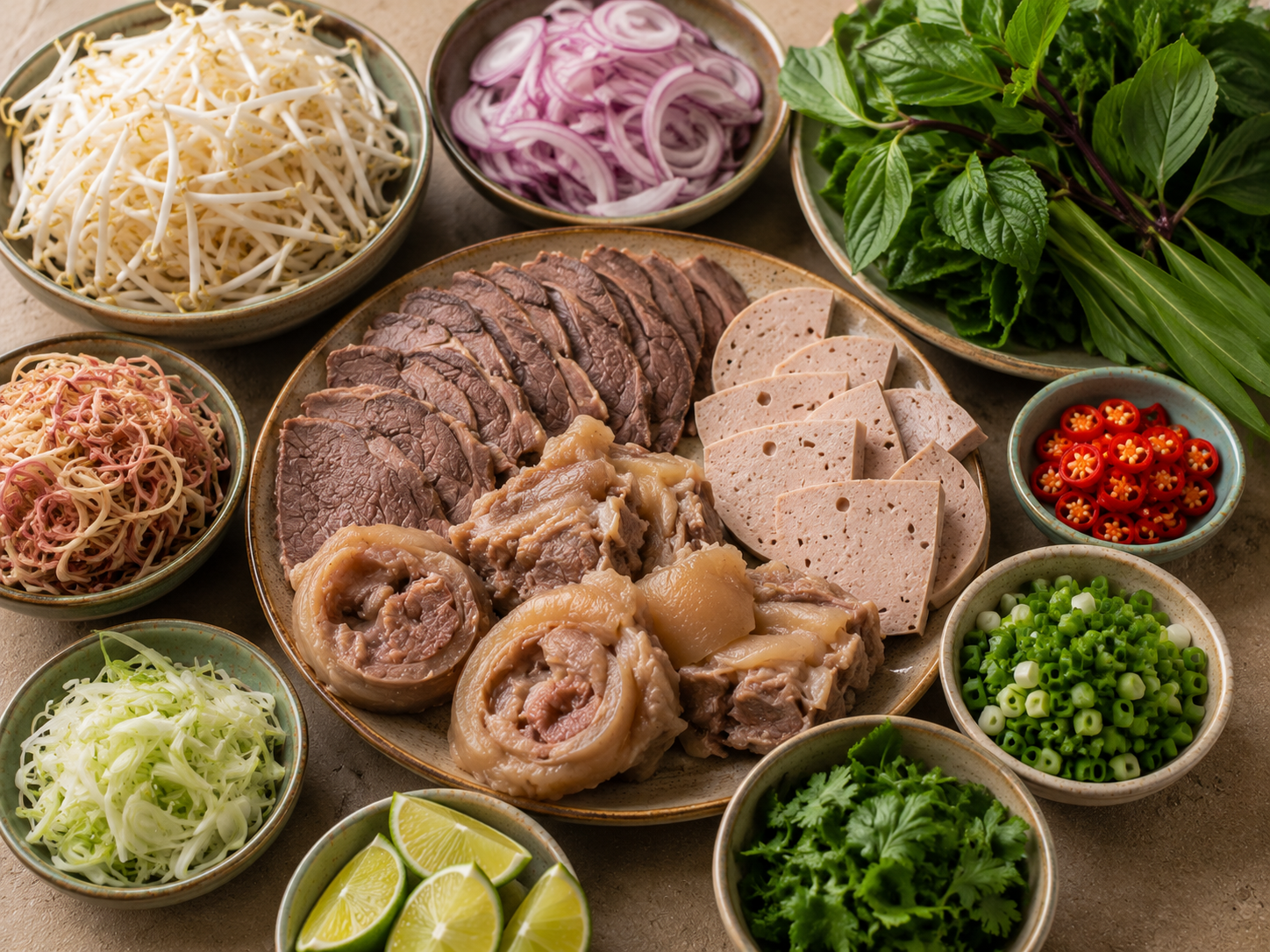
Step 5: Prepare The Meat And Toppings
Remove the pork hock from the broth when tender. Let it cool slightly. Keep the pieces whole or cut them into smaller serving pieces.
Slice the cooled beef shank or brisket thinly across the grain. Slice the Vietnamese sausage. Thinly slice the onion, chop the green onion and cilantro, and wash the herbs.
If using banana blossom, soak it briefly in cold water with a squeeze of lime to keep it fresh and crisp. Drain before serving.
The toppings should be ready before the noodles go into bowls. Once the noodles are hot, the bowl should come together quickly.
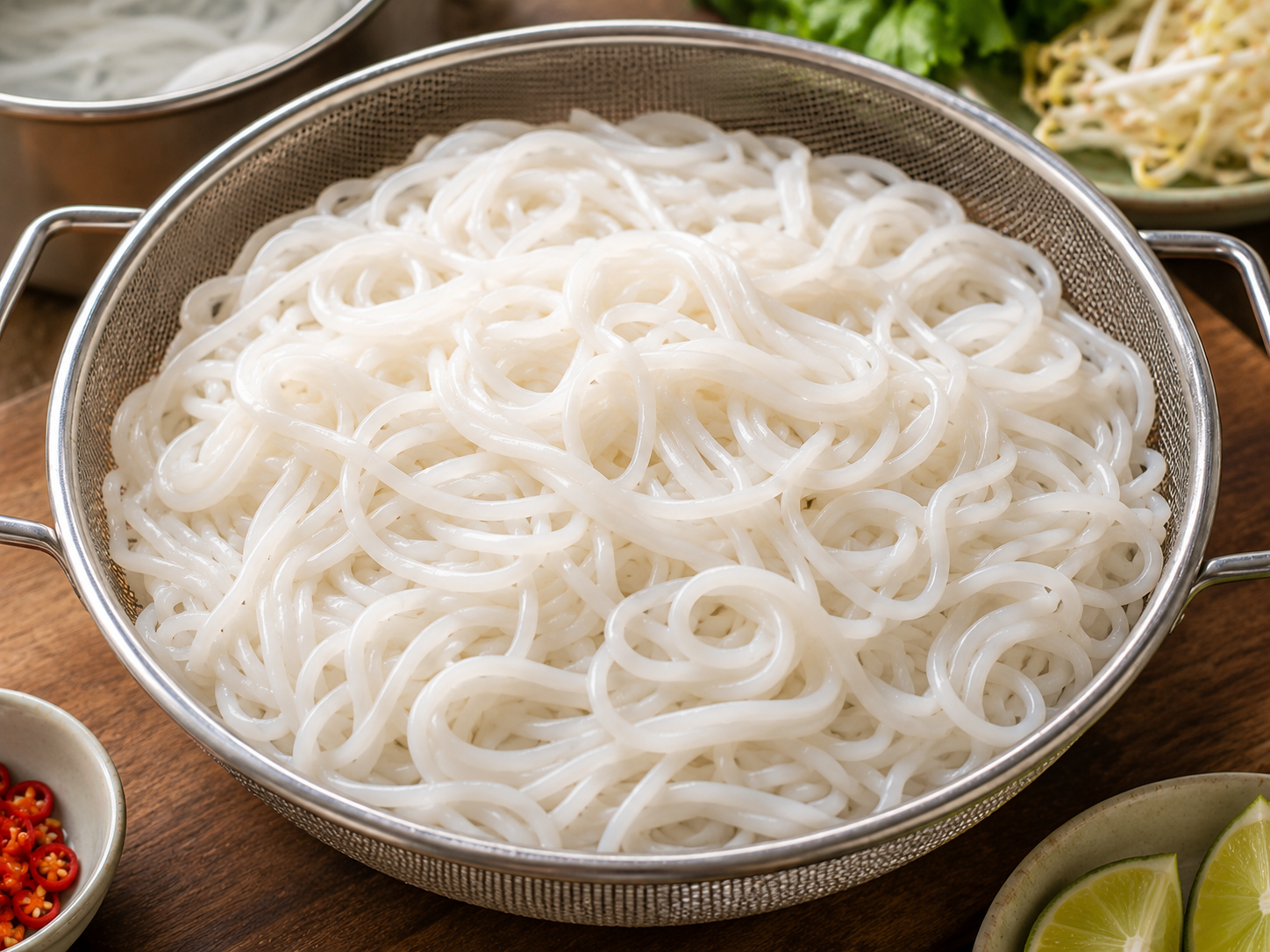
Step 6: Prepare The Noodles
If using fresh noodles, rinse them briefly and warm them in boiling water for 20 to 30 seconds, just until hot and loosened.
If using dried noodles, cook according to the package directions until tender but still chewy. Rinse under warm water to remove excess starch, then drain well.
The noodles should be thick, round, and springy. They are part of what makes bún bò Huế feel different from phở. Thin noodles will still taste good, but they will not eat the same way.
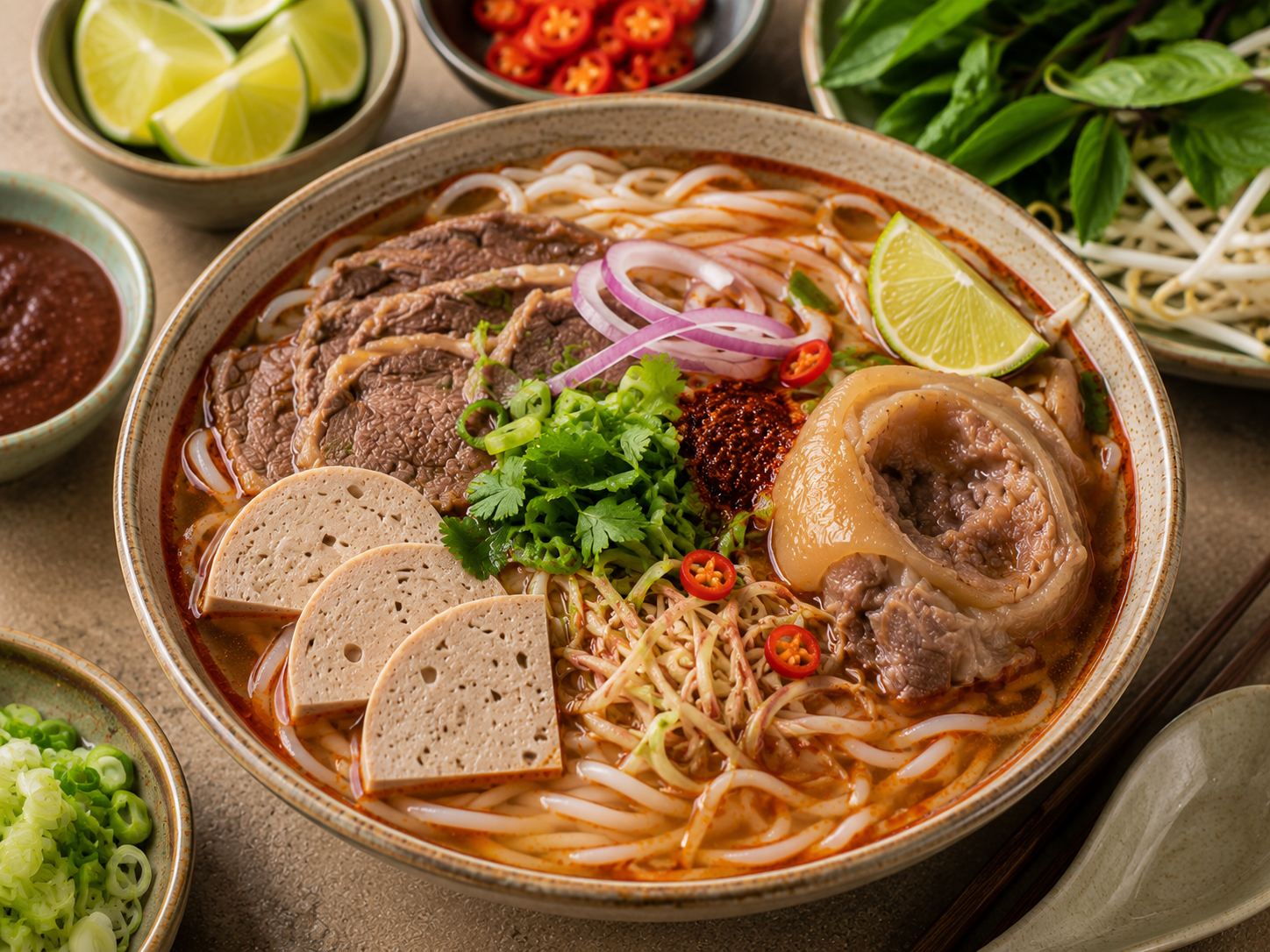
Step 7: Assemble The Bowls
Divide the hot noodles among serving bowls. Add sliced beef, pork hock, Vietnamese sausage, sliced onion, green onion, and cilantro.
Bring the broth back to a strong simmer. Ladle the hot red broth over the noodles and toppings. The broth should be hot enough to wake everything up in the bowl.
Serve with bean sprouts, banana blossom, Vietnamese coriander, Thai basil, mint, lime wedges, sliced chilies, and extra chili oil on the side.
Taste before adding everything. Bún bò Huế is built in layers. The broth gives you the base, the herbs give you lift, the lime sharpens it, and the chili oil decides how far you want to go.
Final Thoughts
Bún bò Huế teaches you that Vietnamese noodle soups are not all trying to be gentle. Some bowls are built with muscle. Some need funk, fire, salt, herbs, and patience before they make sense.
This is one of those dishes where shortcuts show up fast. You can taste when the lemongrass was rushed. You can taste when the broth has no bones behind it. You can taste when the chili oil is just color instead of flavor.
But when the pot is right, the bowl feels complete. Thick noodles, red broth, tender meat, fresh herbs, lime, chili, and that deep Central Vietnamese backbone. It is not phở. It is not trying to be. It is bún bò Huế, and it deserves its own respect.