Mì Quảng Recipe: Central Vietnam’s Turmeric Noodle Bowl
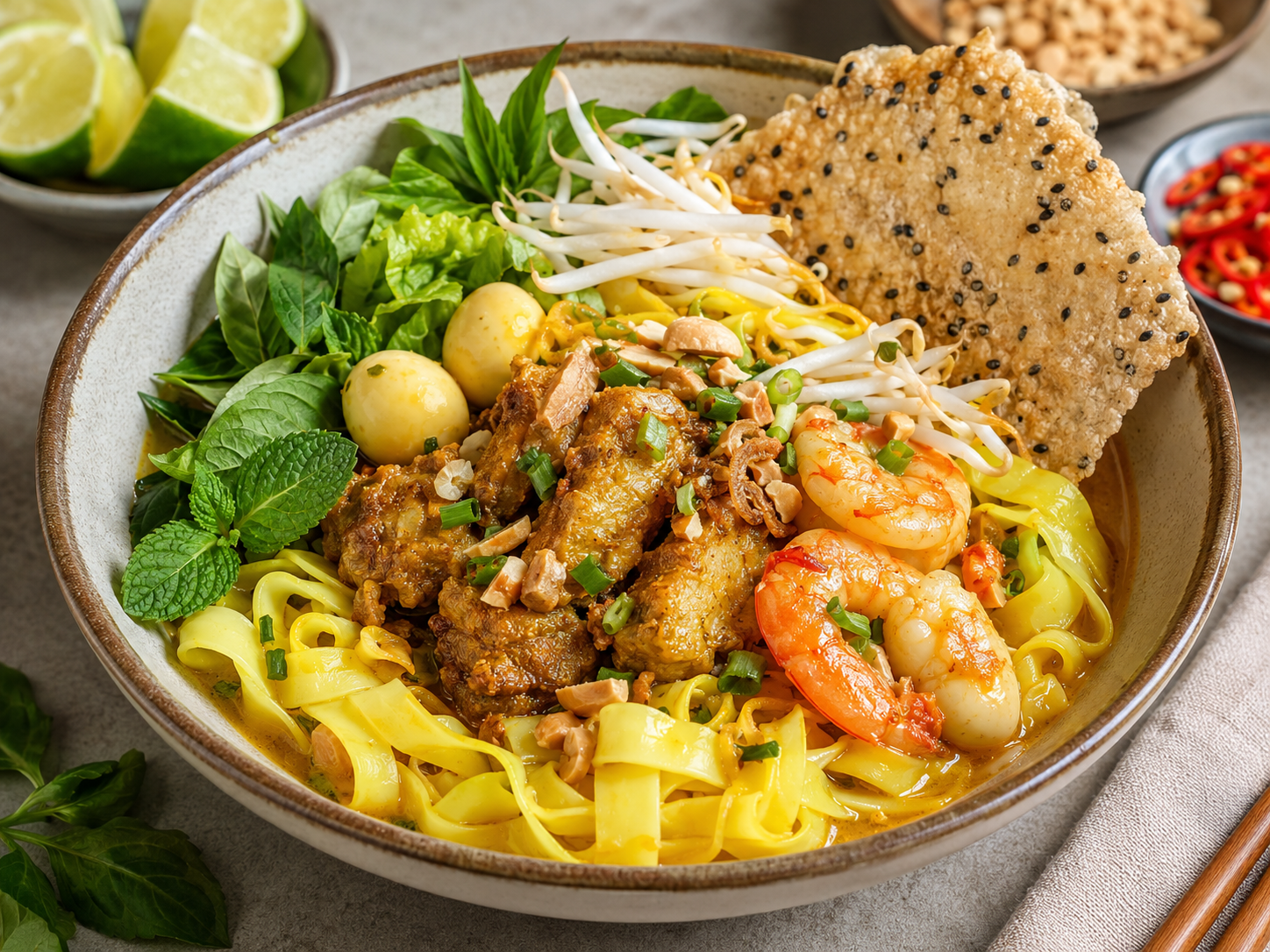
Mì Quảng does not behave like most Vietnamese noodle soups. It sits somewhere between a noodle bowl, a salad, and a deeply seasoned broth dish, with just enough liquid to coat the noodles instead of drowning them.
That is the point. The broth should be concentrated, golden from turmeric, savory with fish sauce, and rich enough to cling to the wide rice noodles. The herbs stay fresh. The peanuts bring crunch. The toasted rice cracker breaks over the top like something casual but necessary.
This is Central Vietnam in a bowl. Practical, bright, a little rugged, and built from contrast. Soft noodles against crisp cracker. Warm broth against raw greens. Pork and shrimp against lime, chili, and herbs.
A good home version does not need to imitate a street stall perfectly. It needs to understand what makes Mì Quảng recognizable: shallow broth, turmeric color, rice noodles, fresh vegetables, roasted peanuts, bánh tráng mè, and that unmistakable Central Vietnamese balance of savory, nutty, fresh, and sharp.
Ingredients
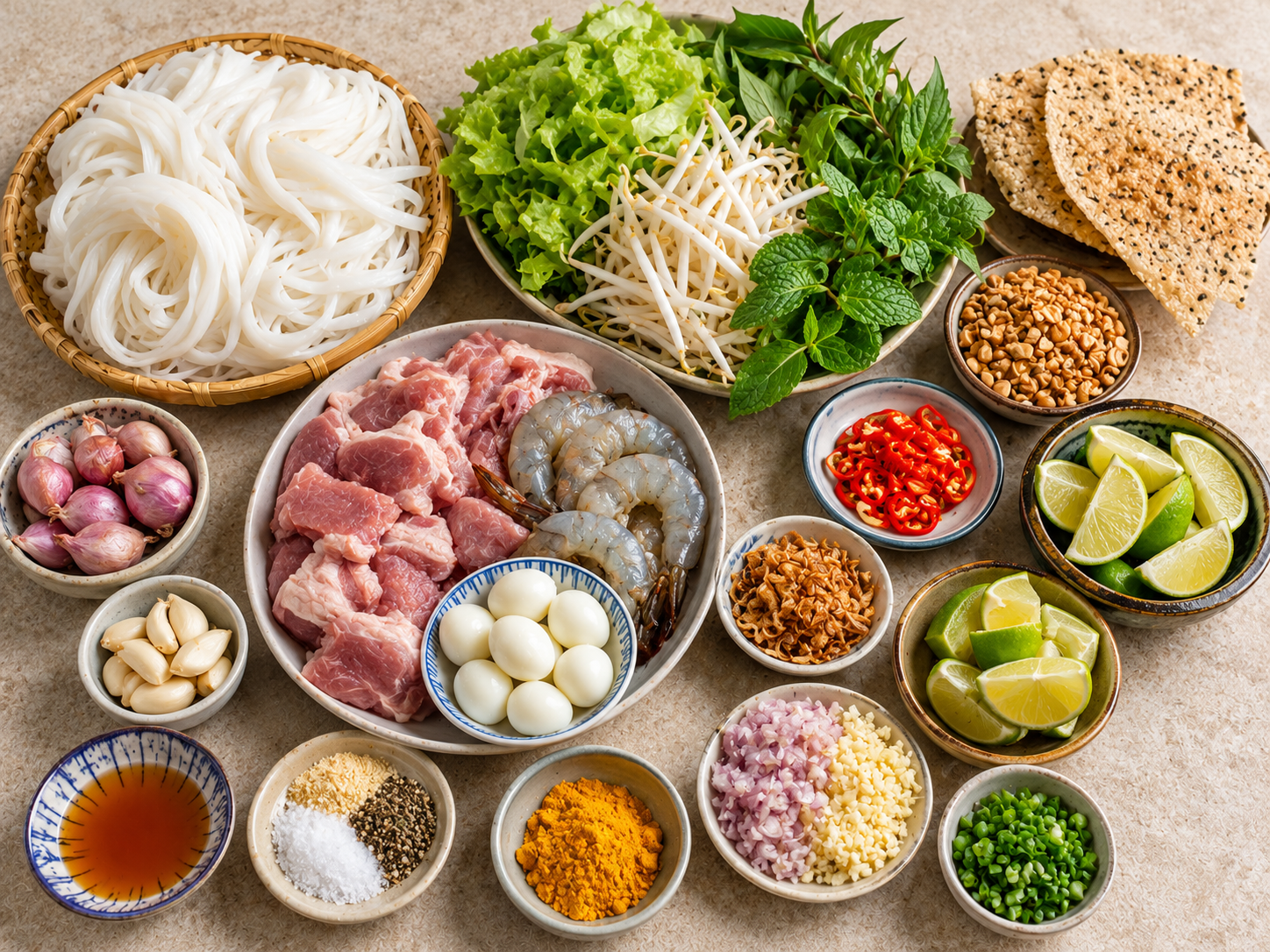
For The Pork, Shrimp, And Broth
1 pound pork shoulder or pork butt, sliced into thin bite-size pieces
8 ounces shrimp, peeled and deveined
8 quail eggs, boiled and peeled
6 cups water
1 small yellow onion, halved
4 garlic cloves, minced
2 shallots, minced
1 tablespoon fresh turmeric, grated, or 1½ teaspoons ground turmeric
2 tablespoons neutral oil
2 tablespoons fish sauce
1 tablespoon oyster sauce
1 teaspoon sugar
1 teaspoon kosher salt, plus more as needed
½ teaspoon black pepper
½ teaspoon chicken bouillon powder, optional but common for home-style depth
For The Noodles
14 ounces wide dried rice noodles, or 1½ pounds fresh Mì Quảng noodles
1 tablespoon neutral oil
½ teaspoon ground turmeric, if using plain rice noodles
For The Bowl
3 cups shredded lettuce or young mustard greens
1 cup bean sprouts
½ cup fresh mint leaves
½ cup Vietnamese coriander, rau răm, or cilantro
½ cup Thai basil, optional
½ cup roasted peanuts, lightly crushed
2 sesame rice crackers, bánh tráng mè, toasted and broken into pieces
2 limes, cut into wedges
2 fresh red chilies or green chilies, sliced
Fried shallots, optional
Fish sauce or chili sauce, for adjusting at the table
How To Make Mì Quảng
Step 1: Marinate The Pork And Shrimp
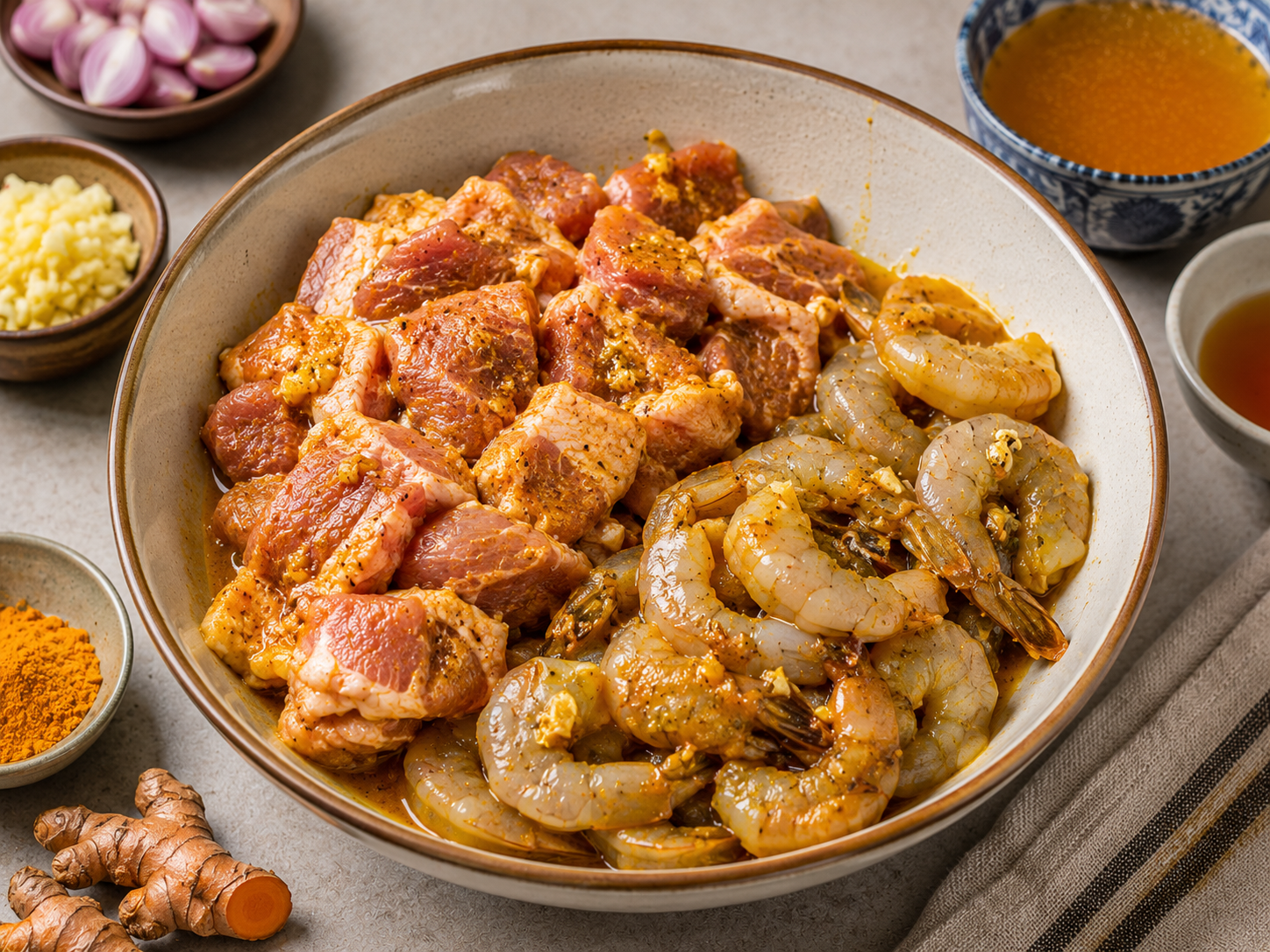
Place the sliced pork in a bowl with half of the minced garlic, half of the minced shallots, 1 tablespoon fish sauce, oyster sauce, sugar, black pepper, and half of the turmeric. Mix well and let it sit for at least 20 minutes.
In a separate small bowl, season the shrimp with a pinch of salt, a little black pepper, and a small pinch of turmeric. Keep the shrimp separate because it cooks much faster than the pork.
The pork should look lightly stained yellow and glossy from the seasoning. Do not over-marinate the shrimp. It only needs enough seasoning to taste like part of the bowl.
Step 2: Build The Golden Broth
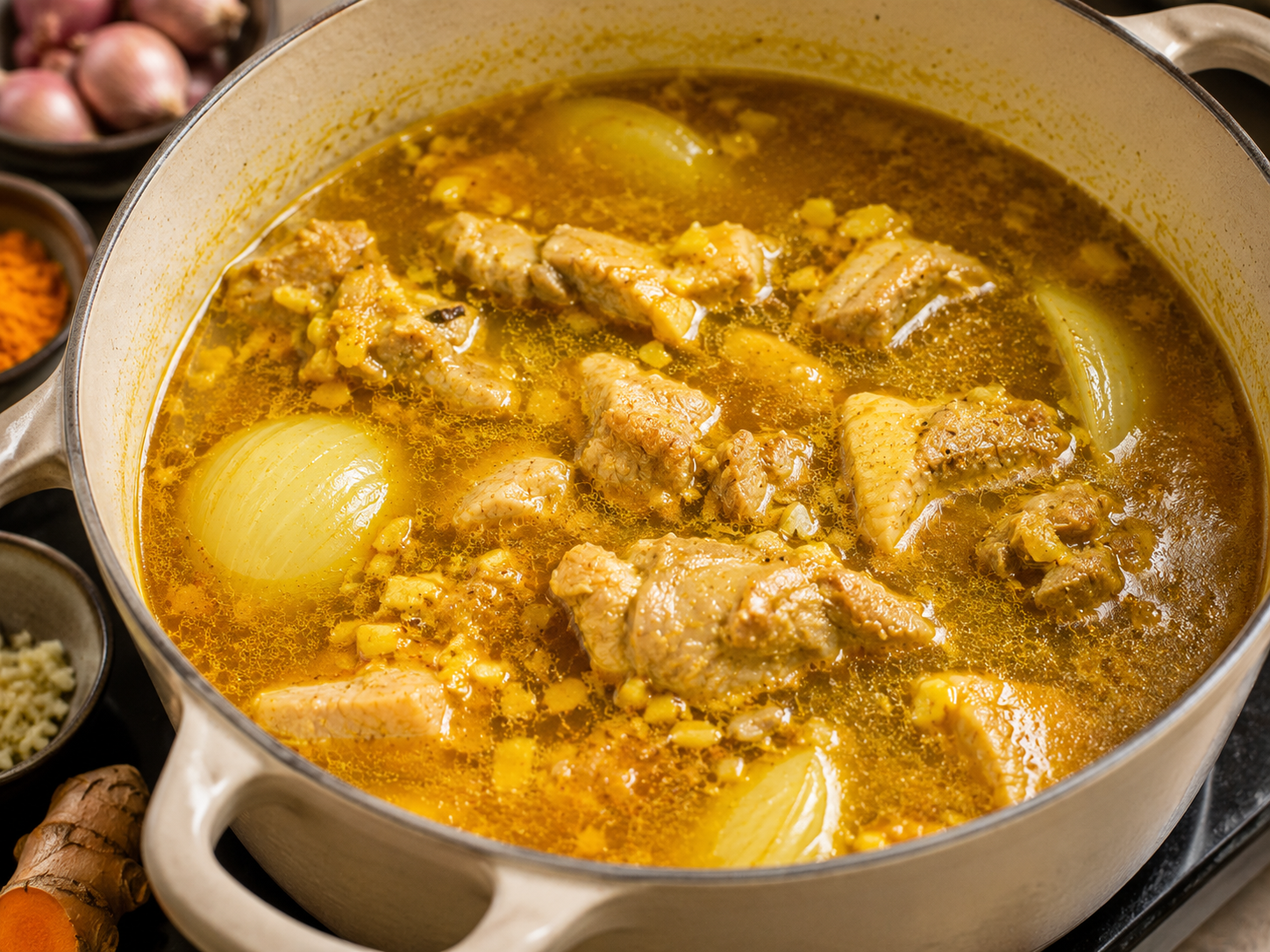
Heat 2 tablespoons neutral oil in a medium pot over medium heat. Add the remaining shallots and garlic. Cook for 1 to 2 minutes until fragrant, but do not let them burn.
Add the marinated pork and stir until the edges lose their raw color. Add the onion halves and 6 cups water. Bring the pot to a boil, then lower to a steady simmer.
Simmer for 35 to 45 minutes, until the pork is tender and the broth tastes savory and rounded. Skim the surface if needed. Season with the remaining fish sauce, kosher salt, and chicken bouillon powder if using.
The broth should be golden, aromatic, and more concentrated than a normal noodle soup. If it tastes flat, add a little more fish sauce. If it tastes too strong, add a splash of water.
Step 3: Add The Shrimp And Quail Eggs
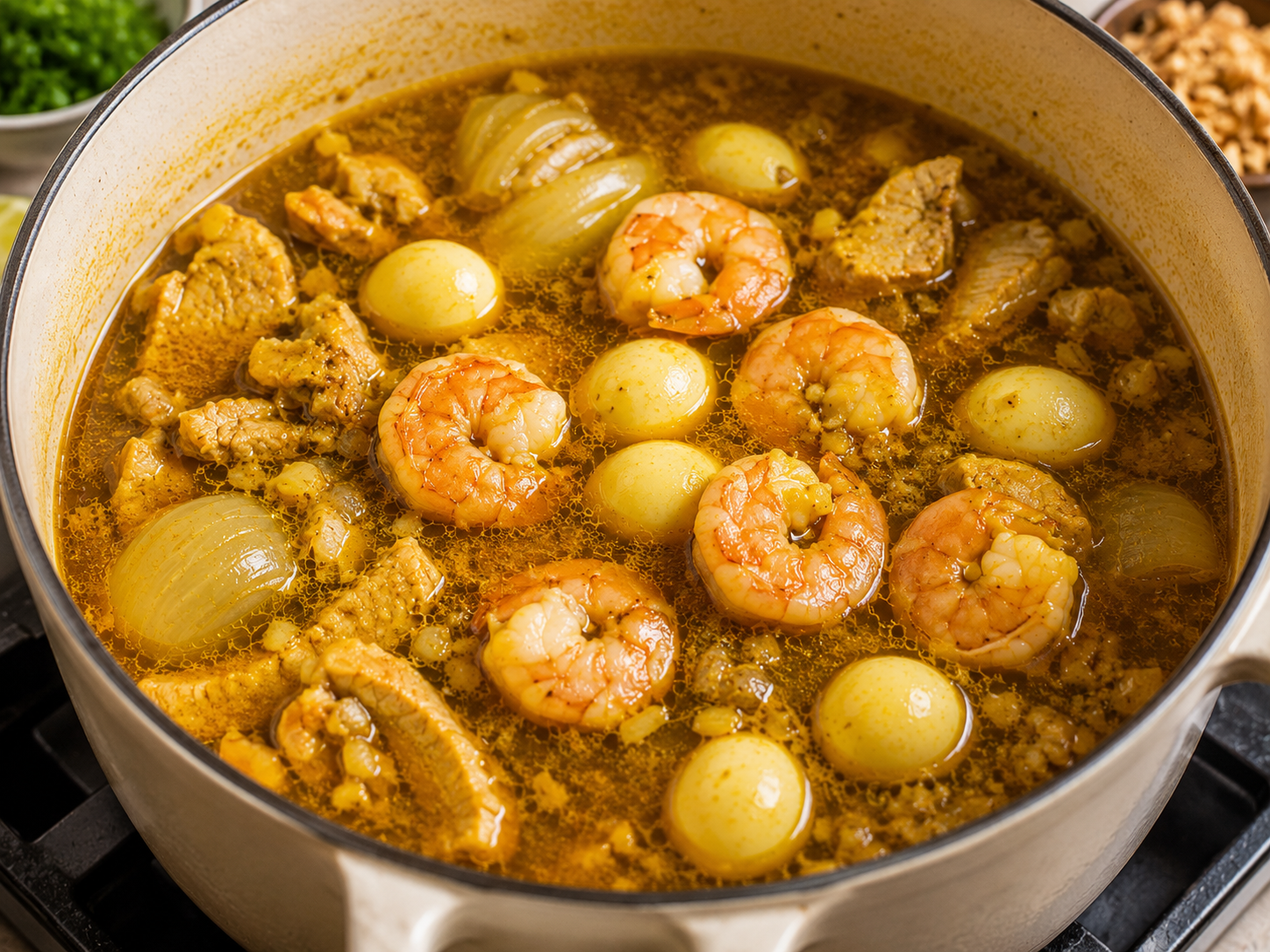
Add the peeled quail eggs to the broth and simmer for 5 minutes so they can absorb some color and seasoning.
Add the shrimp during the last 2 to 3 minutes of cooking. The shrimp should turn pink and just firm. Do not boil them hard or they will become rubbery.
Taste the broth again. Mì Quảng broth should be bold because each bowl only gets a small amount. You are not filling the bowl like phở. You are seasoning noodles, herbs, meat, and toppings with a few ladles of concentrated broth.
Step 4: Prepare The Noodles
Cook the dried rice noodles according to the package directions until tender but not mushy. Rinse briefly under warm water and drain well.
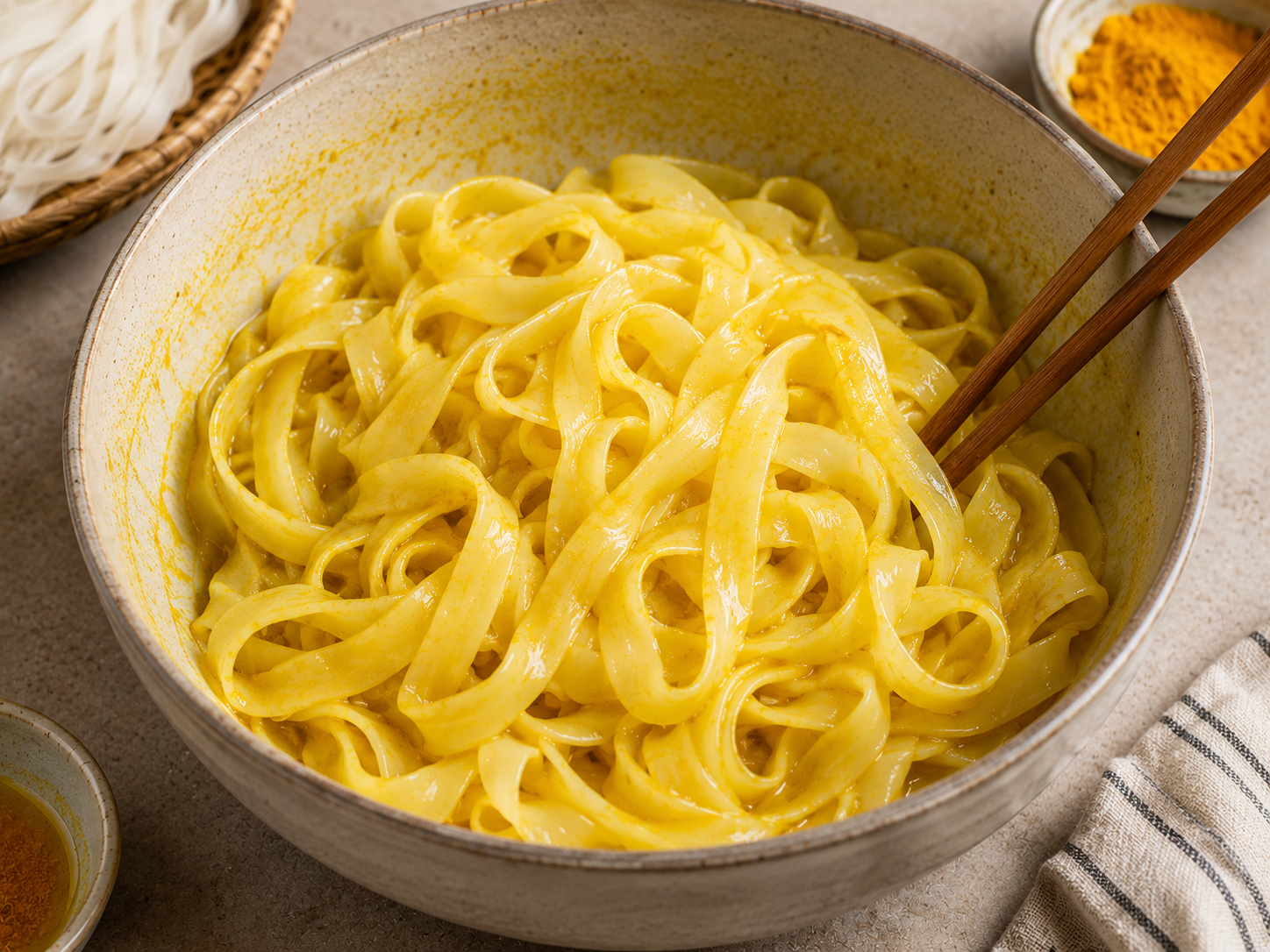
If your noodles are not already yellow, warm 1 tablespoon oil with ½ teaspoon ground turmeric in a pan over low heat for 30 seconds. Toss the drained noodles in the turmeric oil until lightly coated.
Fresh Mì Quảng noodles only need to be warmed. Do not overcook them. The noodles should stay wide, soft, and slightly chewy, not broken or gummy.
Step 5: Prepare The Greens And Toppings
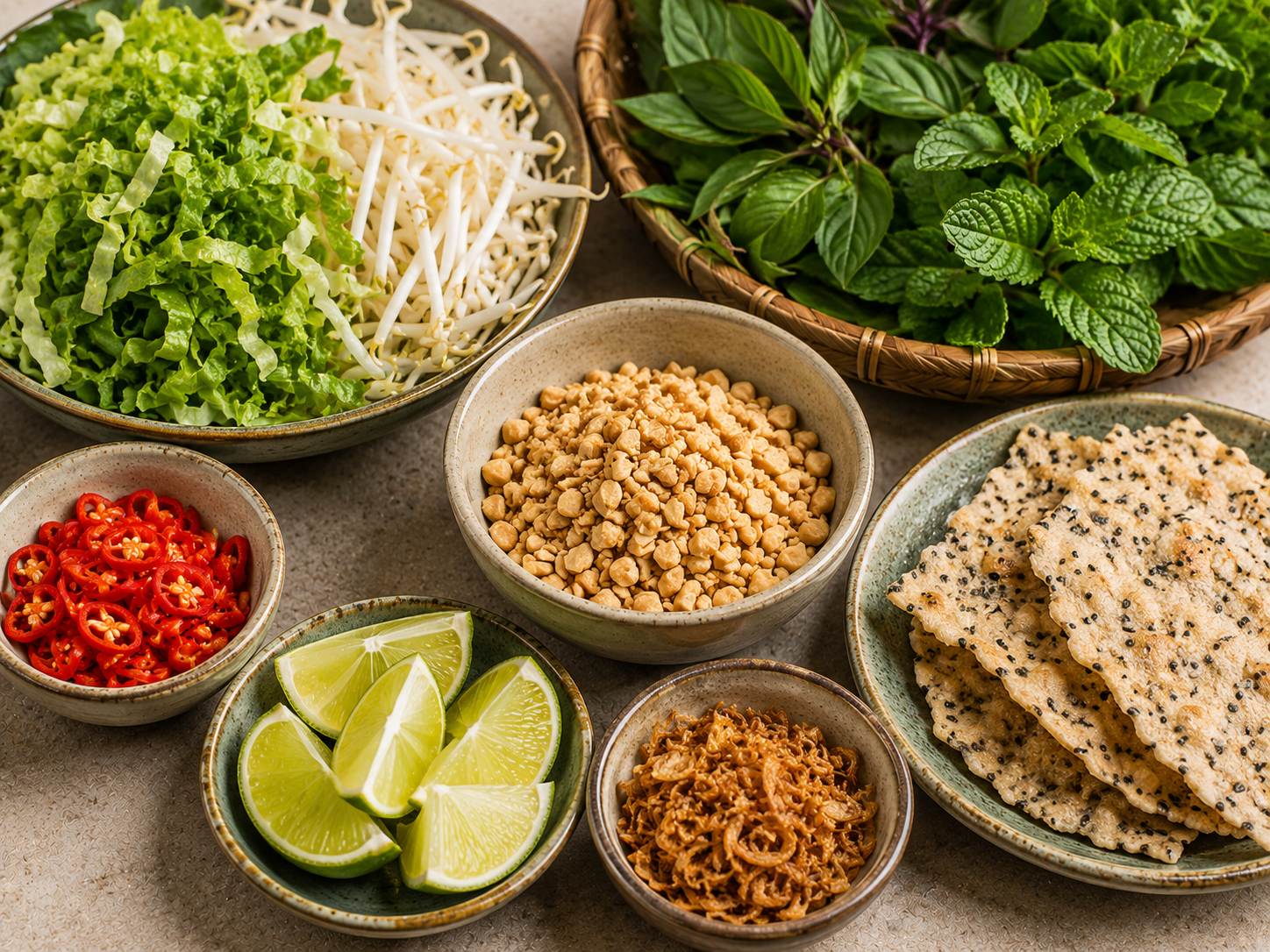
Wash and dry the lettuce, herbs, and bean sprouts. Tear the herbs by hand if the leaves are large. Lightly crush the roasted peanuts.
Toast the sesame rice crackers over a flame, in a dry pan, or in the oven until crisp. Break them into large pieces for serving.
The toppings are not decoration. They are part of the dish. The herbs bring lift, the sprouts bring freshness, the peanuts bring fat and crunch, and the rice cracker gives Mì Quảng its unmistakable texture.
Step 6: Set Up The Bowls
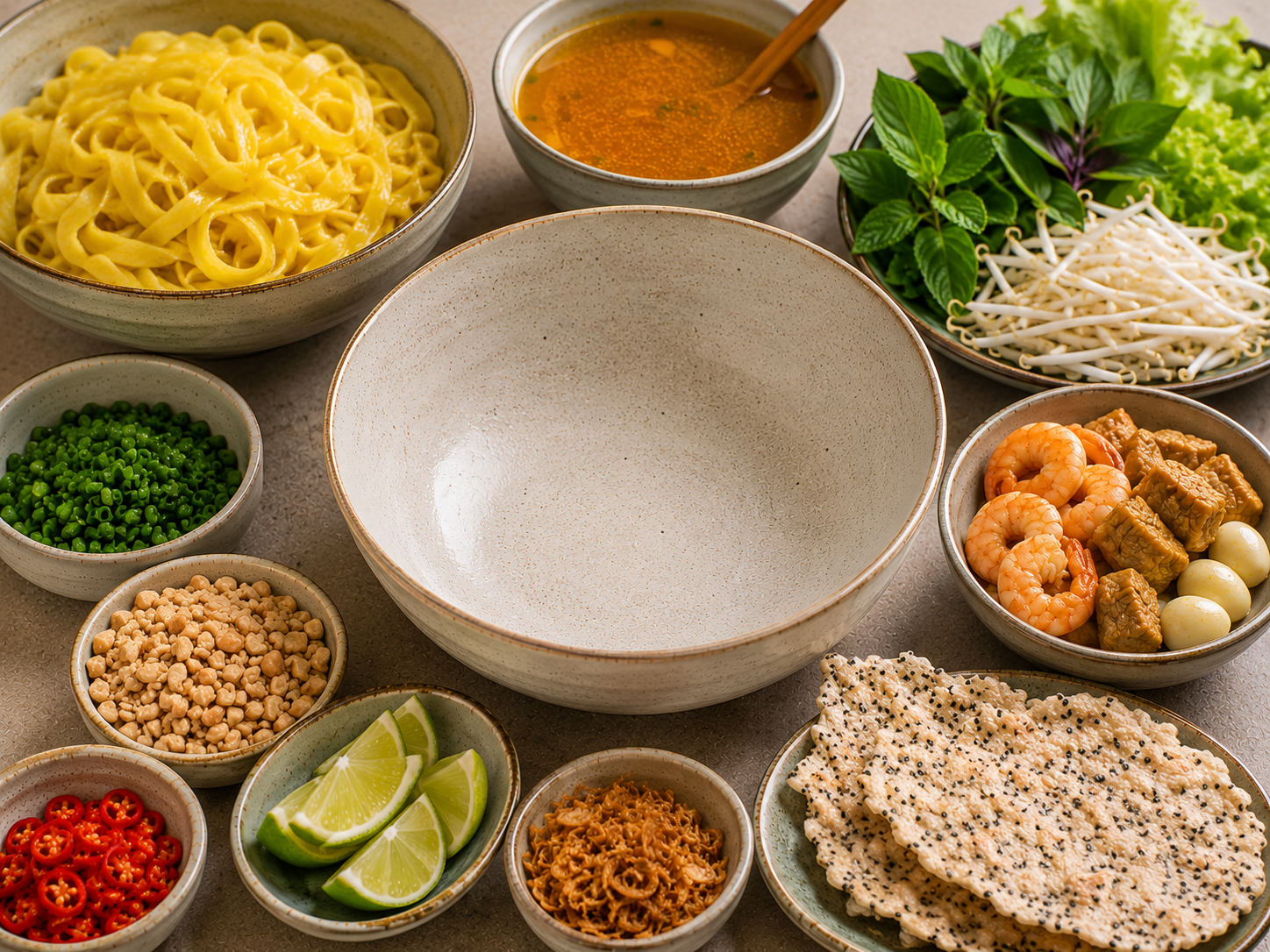
Place a handful of shredded lettuce or greens at the bottom of each bowl. Add a portion of turmeric rice noodles on top.
Arrange pork, shrimp, and quail eggs over the noodles. Add bean sprouts, herbs, crushed peanuts, and fried shallots if using.
Keep the bowl loose, not packed. Mì Quảng should feel abundant, but the ingredients need room for the broth to move through the noodles and greens.
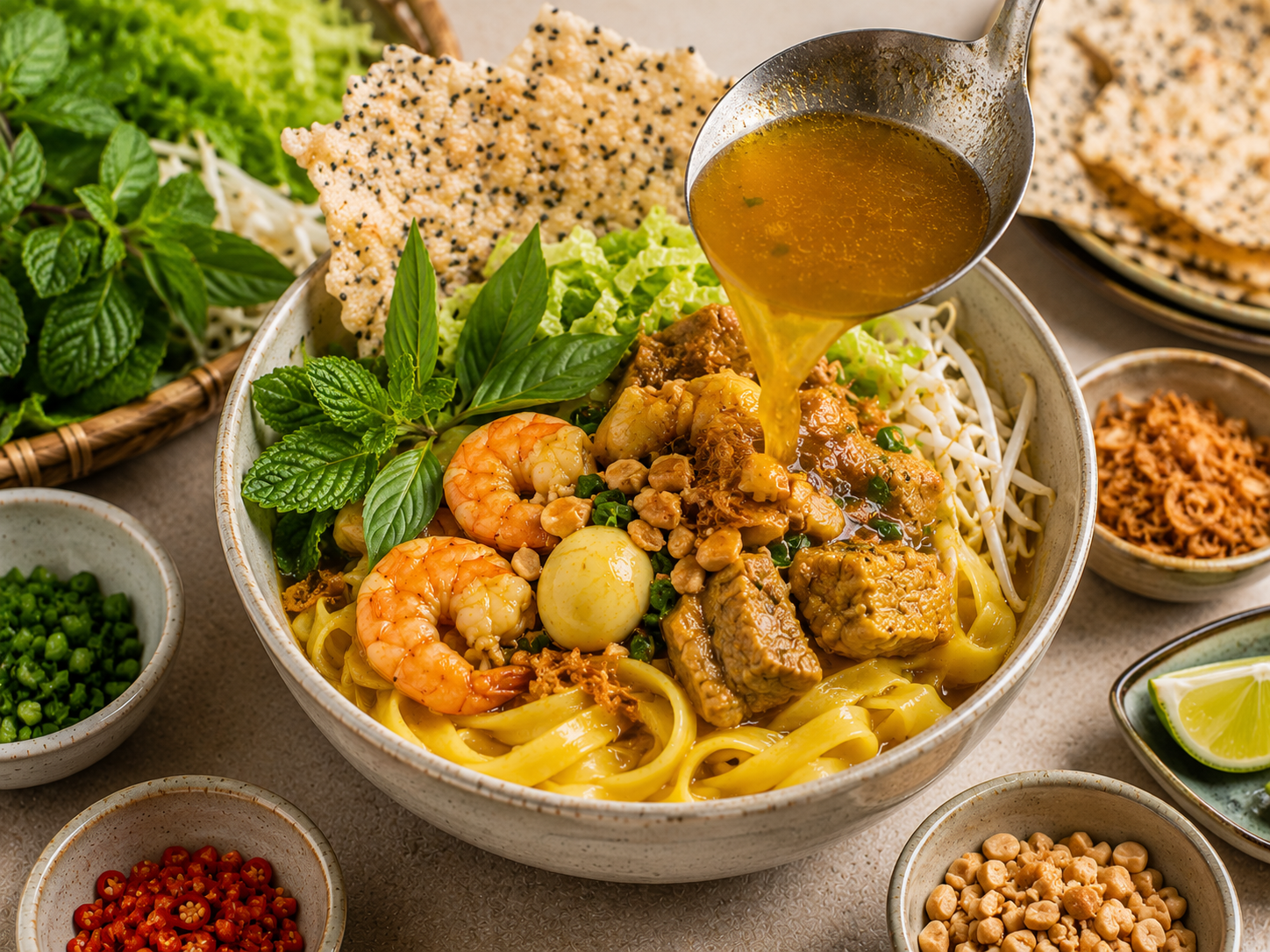
Step 7: Ladle The Broth
Spoon a small amount of hot broth into each bowl, about ½ to ¾ cup per serving. The broth should come partway up the noodles, not cover everything.
This is the detail that separates Mì Quảng from regular noodle soup. Too much broth makes the bowl lose its identity. Too little broth makes it dry. You want enough to season the noodles and warm the greens while still letting the toppings stay bright.
Finish each bowl with more peanuts, herbs, chili, lime, and a large piece of toasted sesame rice cracker.
Final Thoughts
Mì Quảng teaches you that Vietnamese noodle dishes are not all built around big bowls of broth. Some are about restraint. A few ladles of strong stock. A pile of herbs. A cracker snapped over the top. Enough texture to keep every bite changing.
That is what makes this dish feel so Central Vietnamese to me. It is practical food, but it has character. It does not need polish to be beautiful. It needs balance, confidence, and the right details in the bowl.
Make the broth strong. Keep the noodles wide. Do not skip the peanuts, herbs, lime, or rice cracker. Those are not extras. They are the dish.