Gỏi Cuốn Recipe: Vietnamese Fresh Spring Rolls
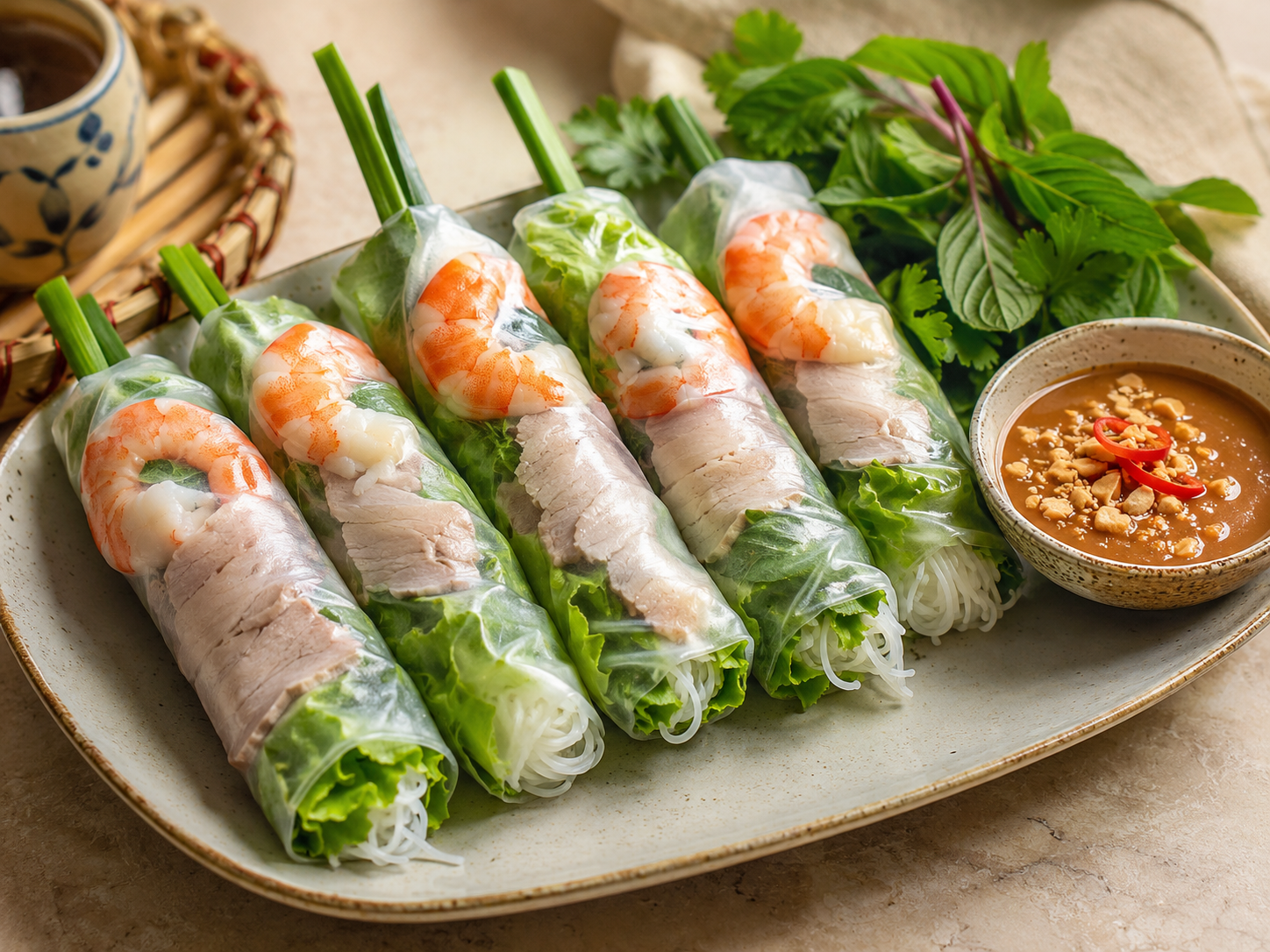
Gỏi cuốn is one of those Vietnamese dishes that looks simple until you start paying attention. A sheet of bánh tráng, a little pork, a few shrimp, rice noodles, lettuce, herbs, and sauce. Nothing is hidden. Every weak ingredient shows.
The best rolls are cool, soft, chewy, clean, and generous with herbs. The pork should be tender. The shrimp should taste sweet, not rubbery. The rice paper should hold together without turning gummy. The sauce should be salty, nutty, a little sweet, and strong enough to pull the whole thing into focus.
In Vietnam, gỏi cuốn is not trying to be fancy. It is practical food. Fresh food. Food built for hot weather, shared tables, and hands reaching across a plate. It has the same logic as a good Vietnamese salad: herbs first, texture everywhere, protein used with restraint, and sauce doing the heavy lifting.
This version stays close to the classic southern-style gỏi cuốn tôm thịt, with boiled pork, shrimp, bún, lettuce, fresh herbs, bánh tráng, and a peanut-hoisin dipping sauce inspired by the kind of tương chấm you see across homes and casual shops in Vietnam. It is light, but not boring. Simple, but not careless. The whole dish lives or dies on balance.
Ingredients
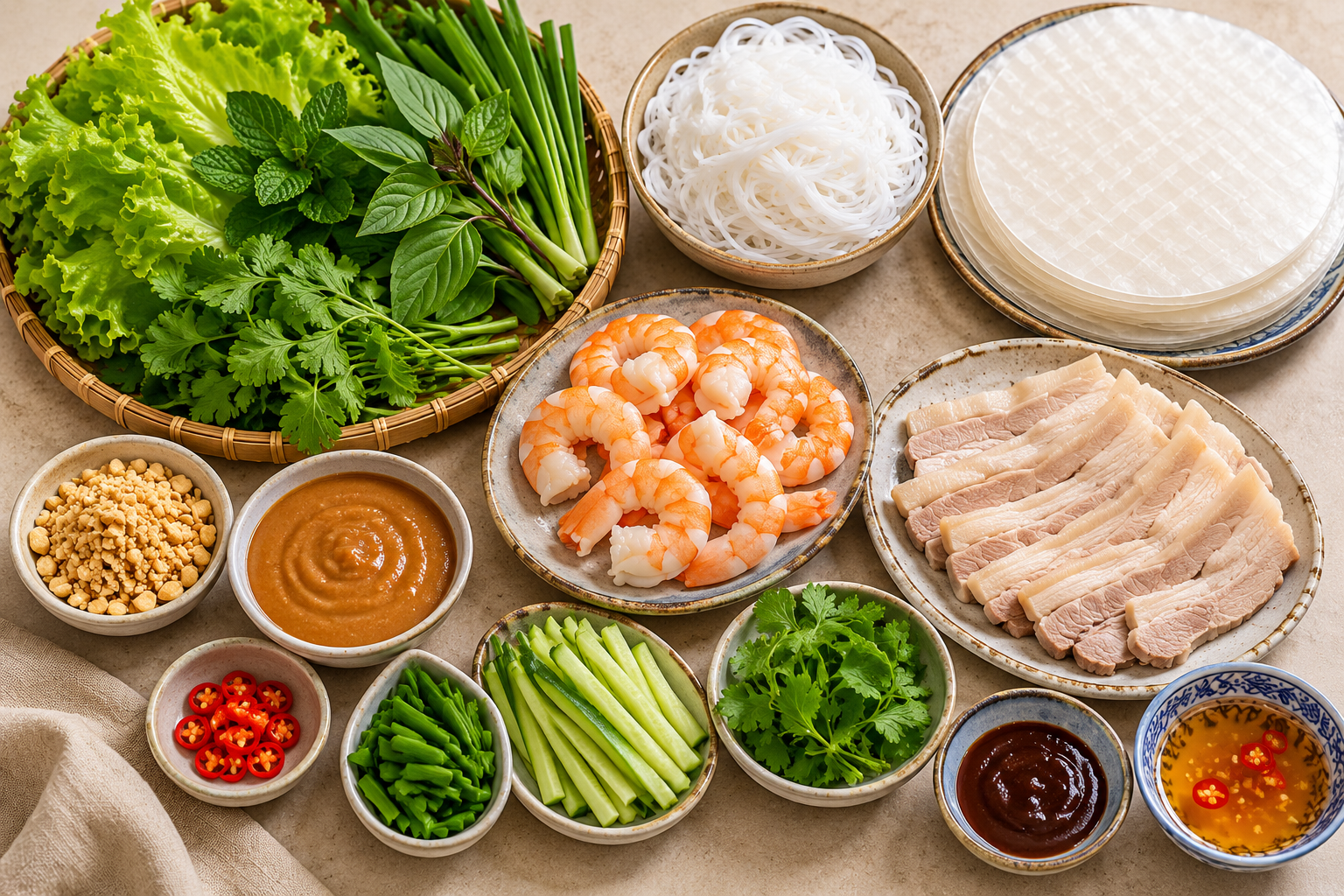
For The Rolls
12 round rice paper wrappers, 8½ inches wide
5 ounces dried rice vermicelli noodles, bún
¾ pound pork belly or pork shoulder
¾ pound medium shrimp, shell-on if possible
12 soft lettuce leaves, green leaf, butter lettuce, or red leaf
1 small cucumber, cut into thin sticks
1 cup fresh mint leaves
1 cup Thai basil leaves
½ cup cilantro sprigs
½ cup garlic chives, optional but traditional
For The Pork And Shrimp
6 cups water
2 teaspoons salt
1 small shallot, halved
1 thin slice ginger, optional
For The Peanut-Hoisin Dipping Sauce
½ cup hoisin sauce
¼ cup smooth peanut butter
¾ cup water, plus more as needed
1 tablespoon fish sauce
1 tablespoon rice vinegar or lime juice
1 teaspoon sugar, optional
1 teaspoon neutral oil
2 garlic cloves, finely minced
1 to 2 teaspoons chili garlic sauce, optional
For Serving
2 tablespoons roasted peanuts, crushed
Fresh sliced chili, optional
Extra herbs, optional
How To Make Gỏi Cuốn
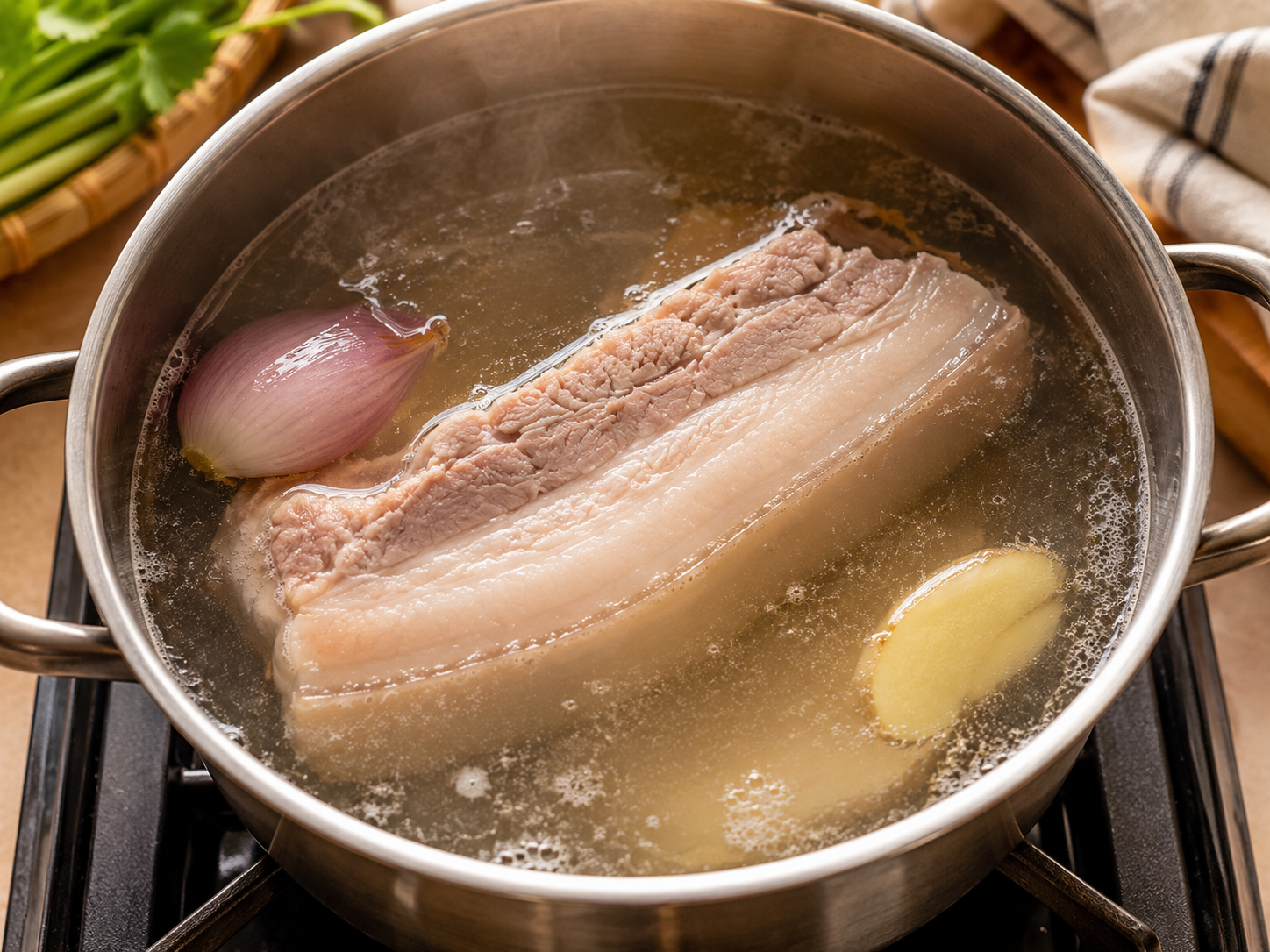
Step 1: Cook The Pork Gently
Add 6 cups water, salt, shallot, and ginger to a medium pot. Bring it to a boil, then lower the heat to a gentle simmer.
Add the pork and simmer until cooked through and tender, about 25 to 35 minutes depending on thickness. The water should move gently, not pound the meat. Hard boiling can make the pork tight and dry.
Transfer the pork to a plate and let it cool. Once cool enough to handle, slice it thinly across the grain. The slices should be flexible enough to tuck into the rolls without tearing the rice paper.
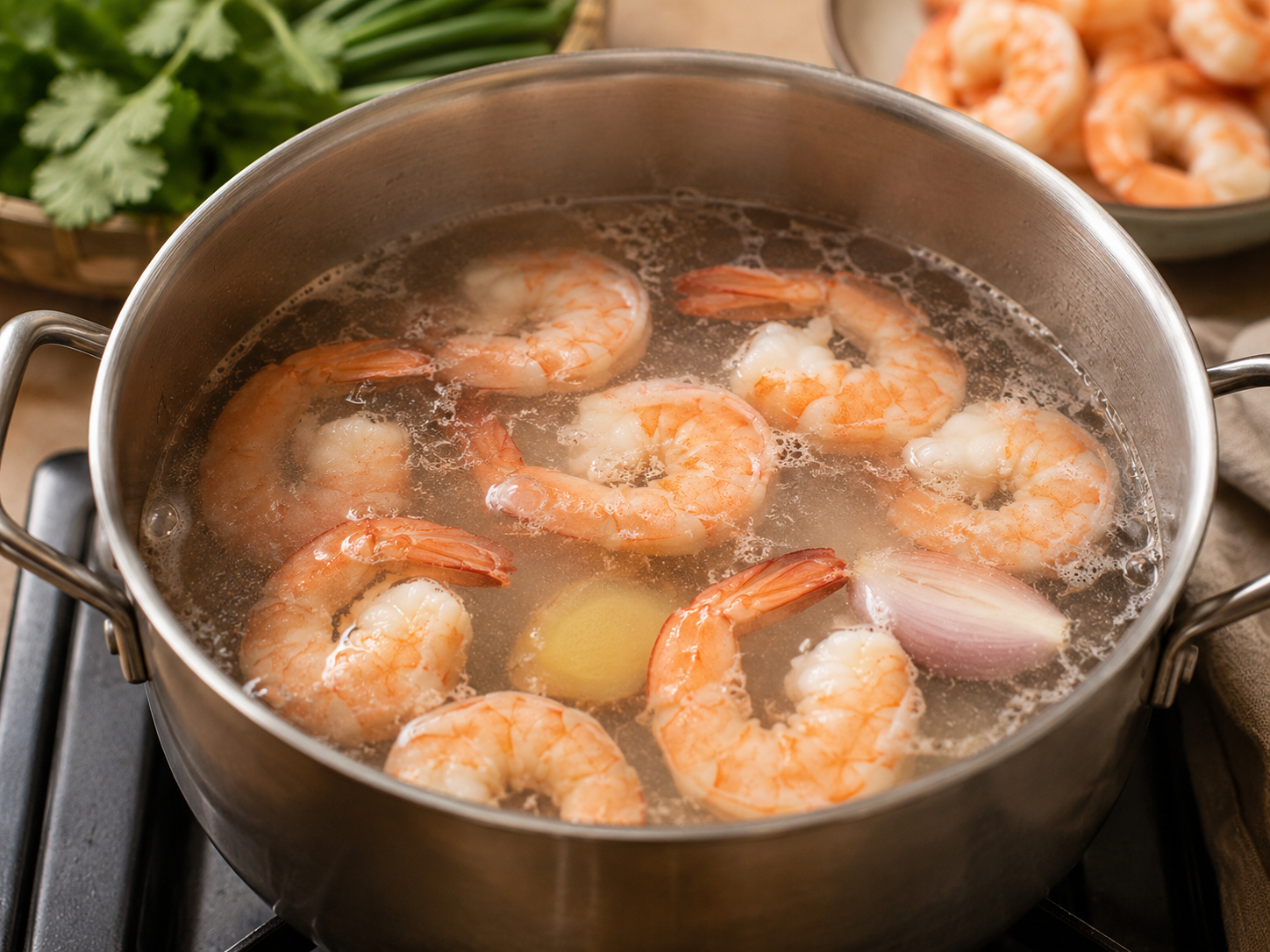
Step 2: Cook The Shrimp
Bring the pork cooking liquid back to a gentle boil. Add the shrimp and cook just until they turn pink and firm, about 2 to 3 minutes.
Transfer the shrimp to a bowl of cool water to stop the cooking. Peel them, remove the vein if needed, and slice each shrimp in half lengthwise.
This lengthwise cut matters. It gives each roll that clean shrimp pattern through the rice paper without making the inside too bulky.
Step 3: Cook The Noodles And Prepare The Herbs
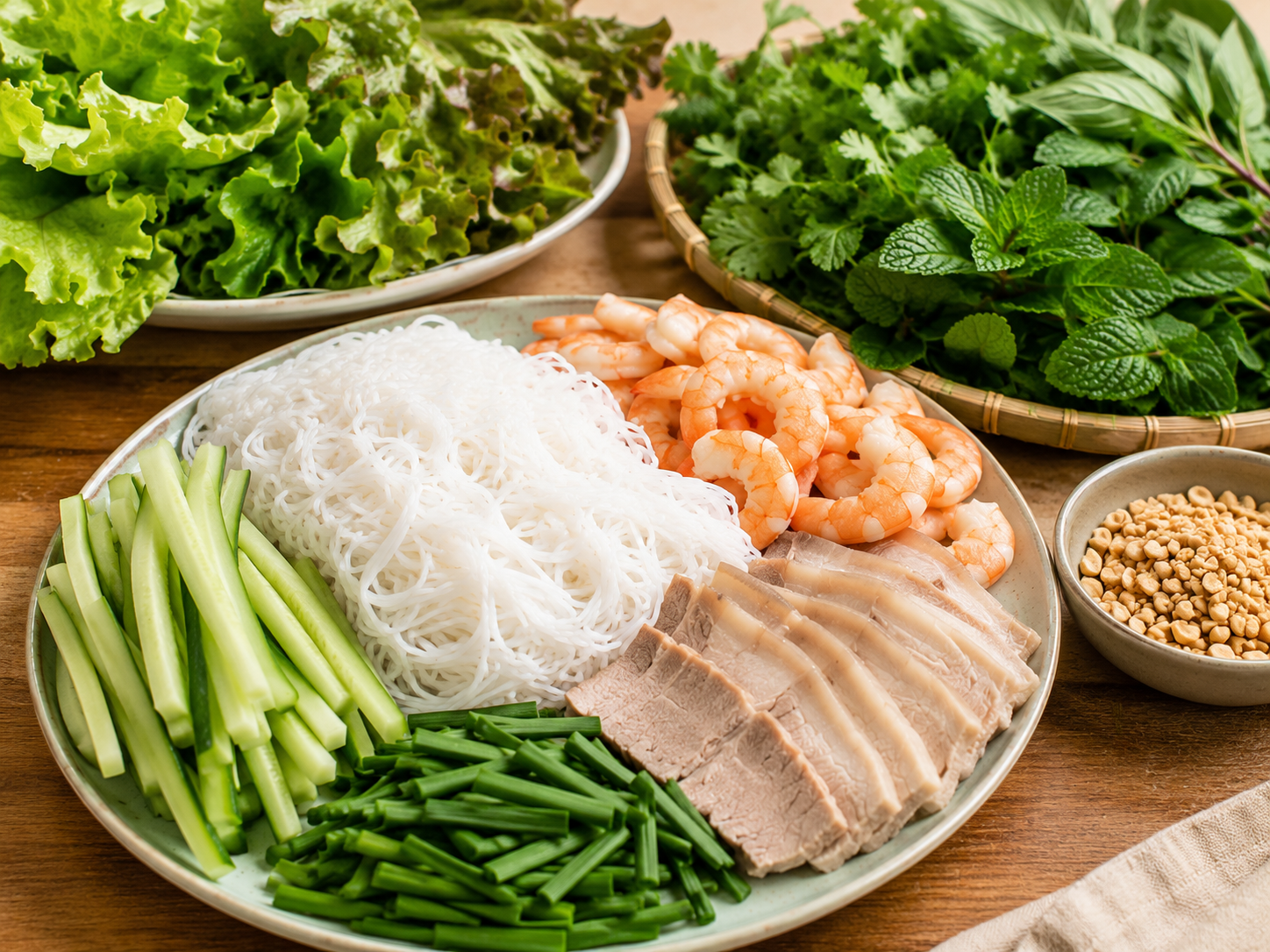
Cook the rice vermicelli according to the package directions, usually 3 to 5 minutes. Rinse under cool water until the noodles are no longer hot or sticky, then drain well.
Wash and dry the lettuce and herbs. Keep the leaves whole when possible. Cut the cucumber into thin sticks.
The key here is dryness. Wet herbs and wet noodles make the rolls slippery inside and can weaken the rice paper. Everything should feel fresh and cool, but not dripping.
Step 4: Make The Peanut-Hoisin Sauce
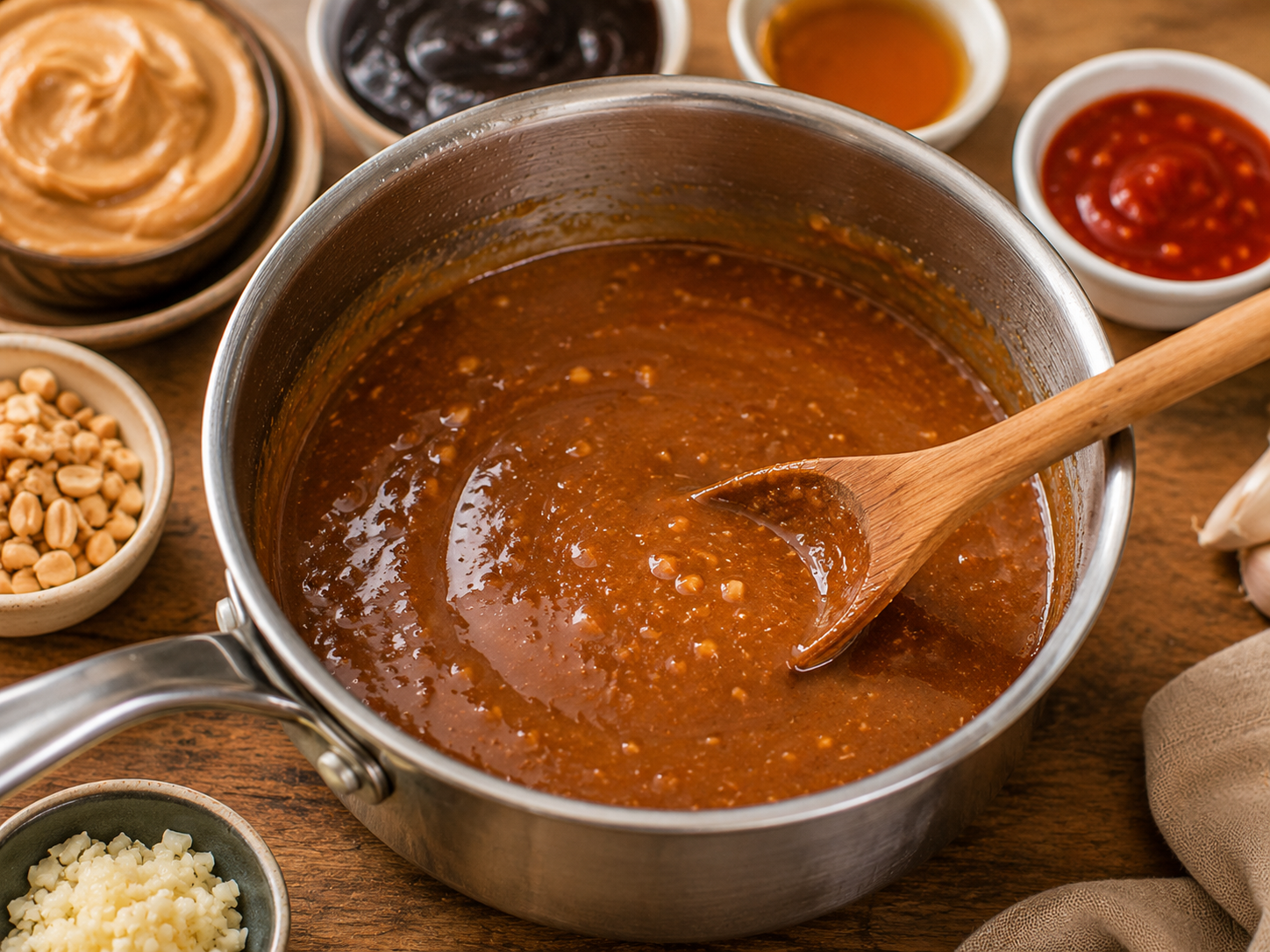
Heat the neutral oil in a small saucepan over medium-low heat. Add the garlic and cook for 30 to 45 seconds, just until fragrant. Do not brown it.
Add the hoisin sauce, peanut butter, water, fish sauce, vinegar or lime juice, sugar if using, and chili garlic sauce if using. Stir until smooth.
Simmer for 2 to 3 minutes, until glossy and pourable. If the sauce gets too thick, add water 1 tablespoon at a time. It should coat a spoon but still be loose enough for dipping.
Transfer to a bowl and top with crushed roasted peanuts.
Step 5: Set Up Your Rolling Station
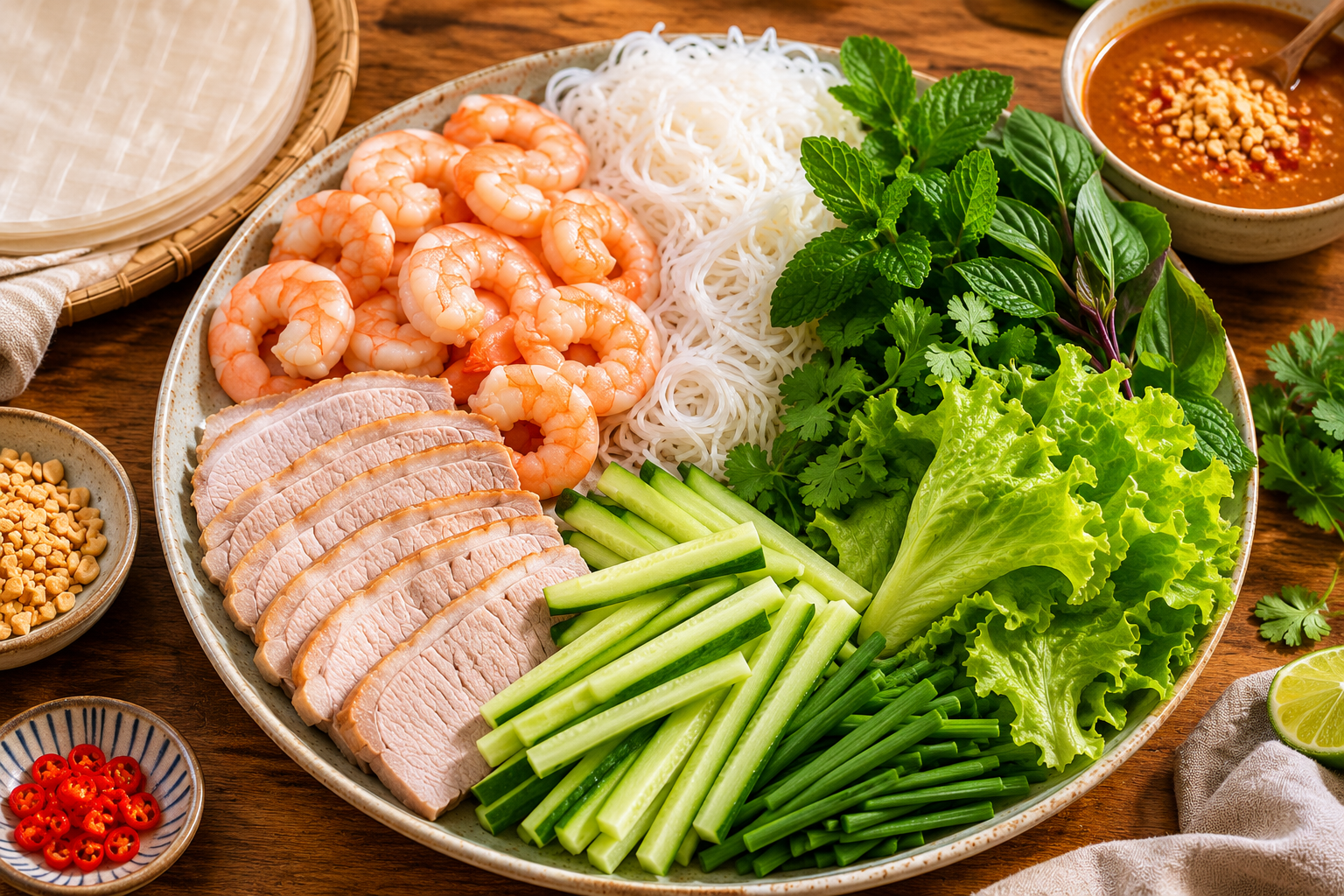
Arrange the sliced pork, halved shrimp, noodles, lettuce, cucumber, herbs, and garlic chives on a tray or board.
Fill a wide shallow bowl or skillet with warm water. Keep a clean plate or cutting board nearby for rolling.
Do not soak the rice paper until it feels completely soft in the water. That is one of the easiest ways to make gỏi cuốn tear. Dip it briefly, lay it down, and let it continue softening as you build the roll.
Step 6: Add The Shrimp And Roll Tight
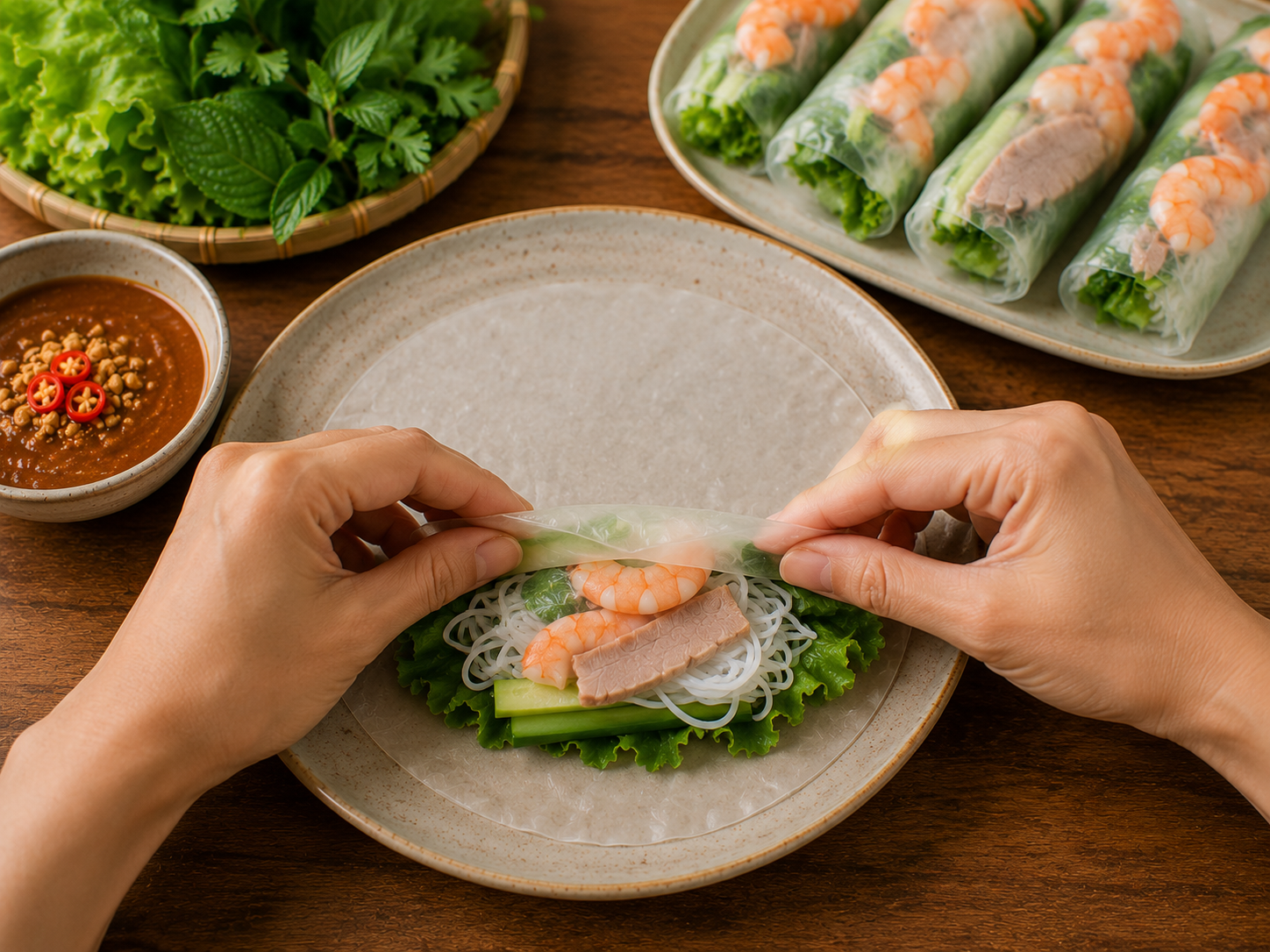
Fold the bottom of the rice paper over the filling, then fold in the sides.
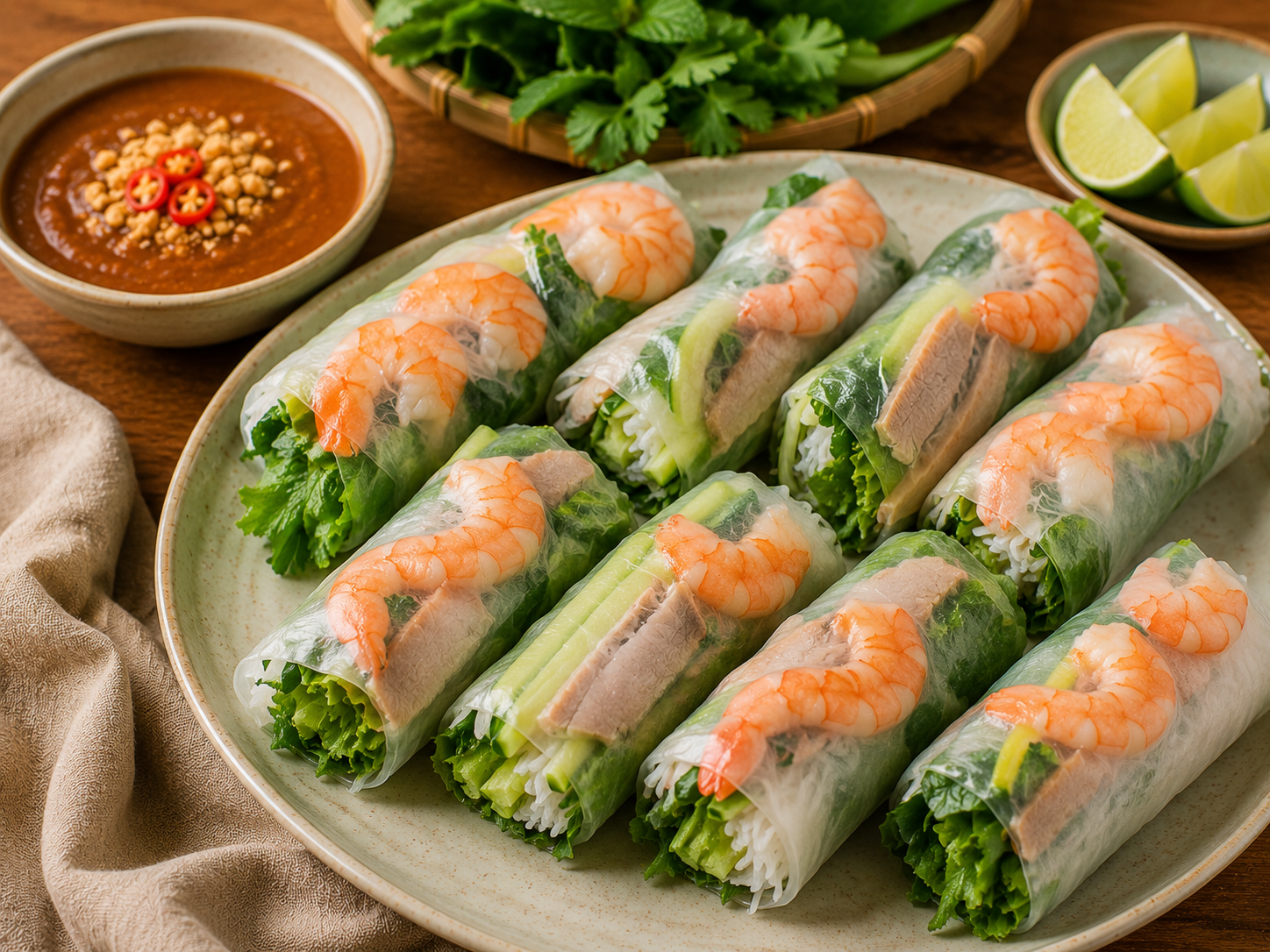
Place 2 to 3 shrimp halves above the folded section, cut side facing up so the color shows through the wrapper. Add a garlic chive with one end sticking out if using.
Continue rolling forward with steady pressure until sealed. The roll should feel snug, but not squeezed. Repeat with the remaining wrappers and filling.
If the rice paper sticks to your board, lightly dampen the surface. If it tears, use less filling or let the wrapper soften a little longer before rolling.
Step 7: Serve Fresh
Serve the gỏi cuốn soon after rolling with the peanut-hoisin dipping sauce.
The rolls are best when the rice paper is soft and slightly chewy, the herbs are still lifted and fragrant, and the shrimp and pork are cool but not cold from the fridge.
Final Thoughts
Gỏi cuốn teaches restraint. It is not about hiding behind heat, fat, or heavy seasoning. It is about choosing fresh ingredients, cooking the protein gently, handling the rice paper properly, and letting herbs carry the bite.
That is a very Vietnamese way to eat. Light but satisfying. Simple but detailed. Built around balance instead of excess.
Once you understand the rhythm, gỏi cuốn becomes less of a strict recipe and more of a table habit. A tray of herbs, noodles, pork, shrimp, rice paper, and sauce. Everyone rolls. Everyone dips. Everyone has their own version, but the feeling stays the same.