Bò Lúc Lắc Recipe: Vietnamese Shaking Beef
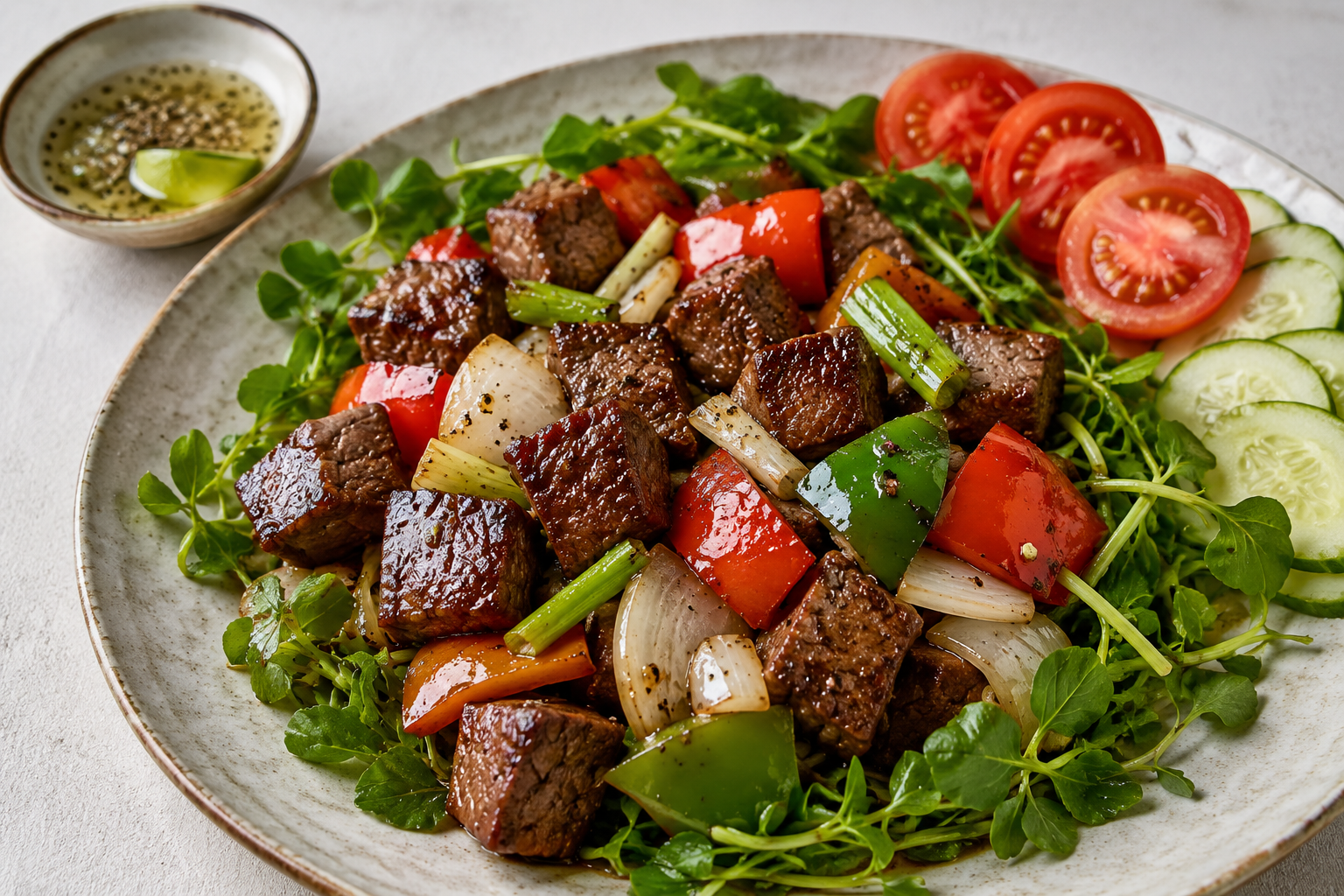
Bò lúc lắc is built around a few minutes of controlled heat. Marinated cubes of beef hit a very hot pan, brown around the edges, and stay tender and juicy inside.
The flavor should be savory, garlicky, and heavy with black pepper, with just enough sweetness to round out the fish sauce, soy sauce, and oyster sauce. The beef should look glossy rather than buried beneath a thick, sticky sauce.
In Vietnam, the plate may include crisp onion and bell peppers, fresh watercress, tomatoes, cucumber, steamed rice, or French fries. What keeps the dish recognizable is the cube-cut beef and the quick shaking motion used to sear its surfaces without cooking away its tenderness.
This home version works within the limits of an ordinary stove. The beef cooks in small batches so the pan stays hot, the vegetables retain their crunch, and every cube develops the browned edges that make bò lúc lắc more than an everyday beef stir-fry.
Ingredients
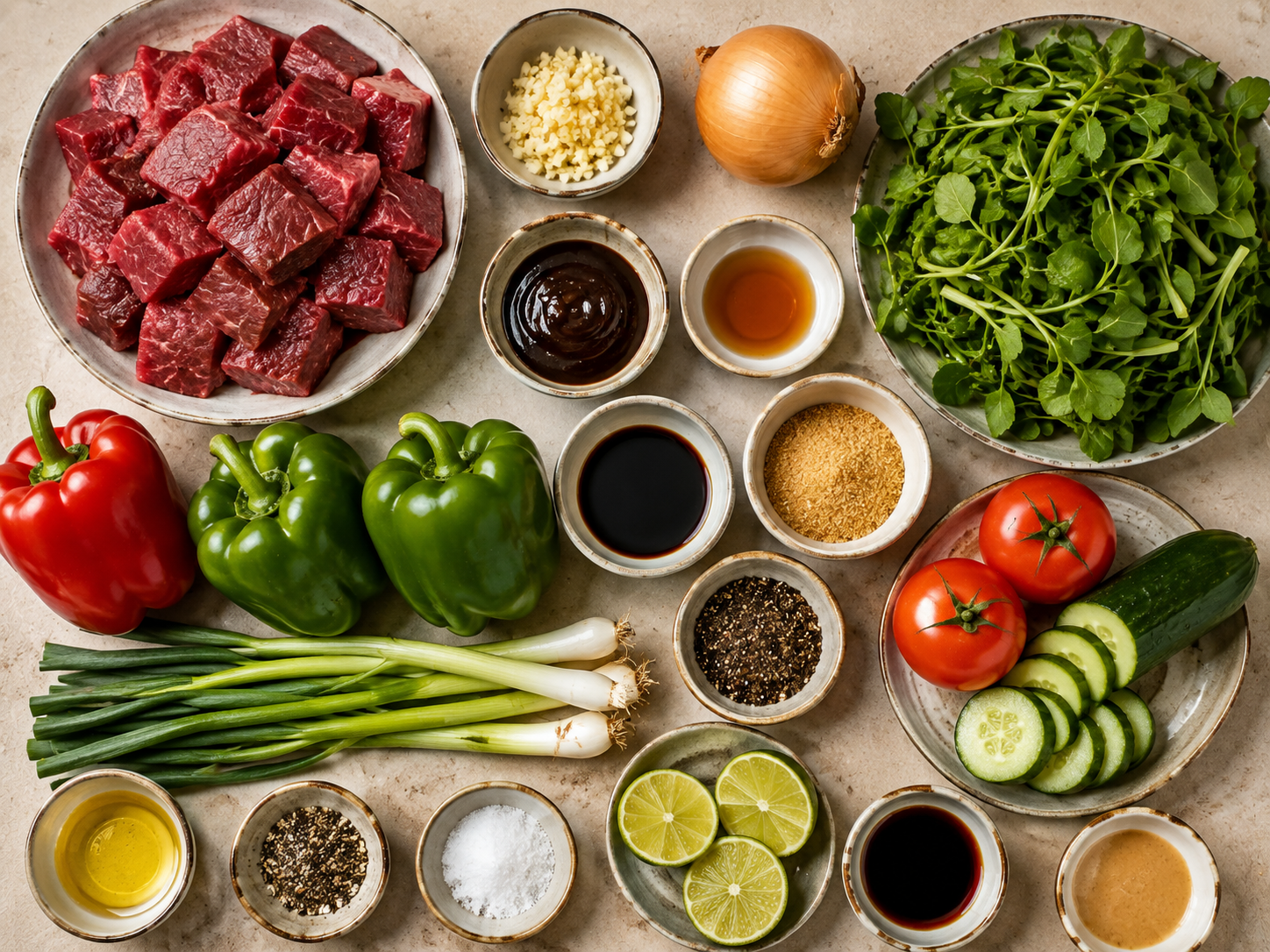
For The Beef
1½ pounds beef tenderloin or top sirloin (680 grams), cut into 1-inch cubes
1 tablespoon oyster sauce
2 teaspoons fish sauce
2 teaspoons light soy sauce
2 teaspoons sugar
1 teaspoon dark soy sauce, optional, for deeper color
1 tablespoon neutral cooking oil
5 garlic cloves, finely minced
1 teaspoon coarsely ground black pepper
For The Vegetables
1 medium yellow onion, cut into 1-inch pieces and separated into layers
1 small red bell pepper, cut into 1-inch pieces
1 small green bell pepper, cut into 1-inch pieces
2 scallions, cut into 2-inch lengths
2 tablespoons neutral cooking oil, divided
1 tablespoon unsalted butter, optional
For The Lime Pepper Sauce
½ teaspoon kosher salt
1 teaspoon coarsely ground black pepper
1½ tablespoons freshly squeezed lime juice
For The Plate
3 packed cups watercress or small lettuce leaves
2 medium tomatoes, cut into wedges or thick slices
½ English cucumber, thinly sliced
Steamed jasmine rice or French fries, optional
How To Make Bò Lúc Lắc
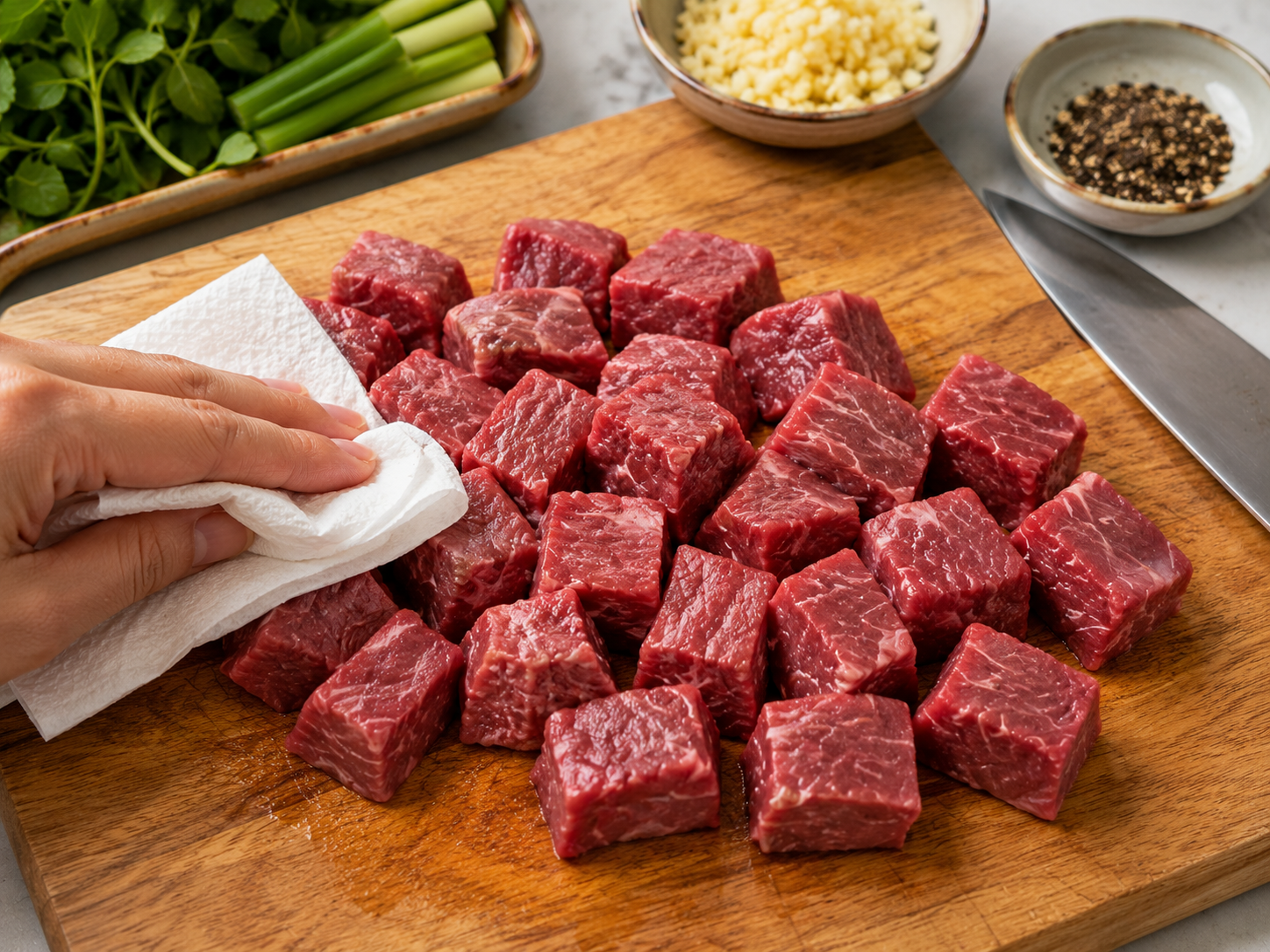
Step 1: Cut And Dry The Beef
Trim away any thick pieces of silver skin or hard exterior fat from the beef.
Cut the meat into evenly sized cubes about 1 inch across. Pieces that are too small will overcook before they develop a proper crust, while uneven pieces will finish at different times.
Pat the beef thoroughly dry with paper towels. Removing surface moisture is essential because wet beef releases steam and cools the pan instead of browning.
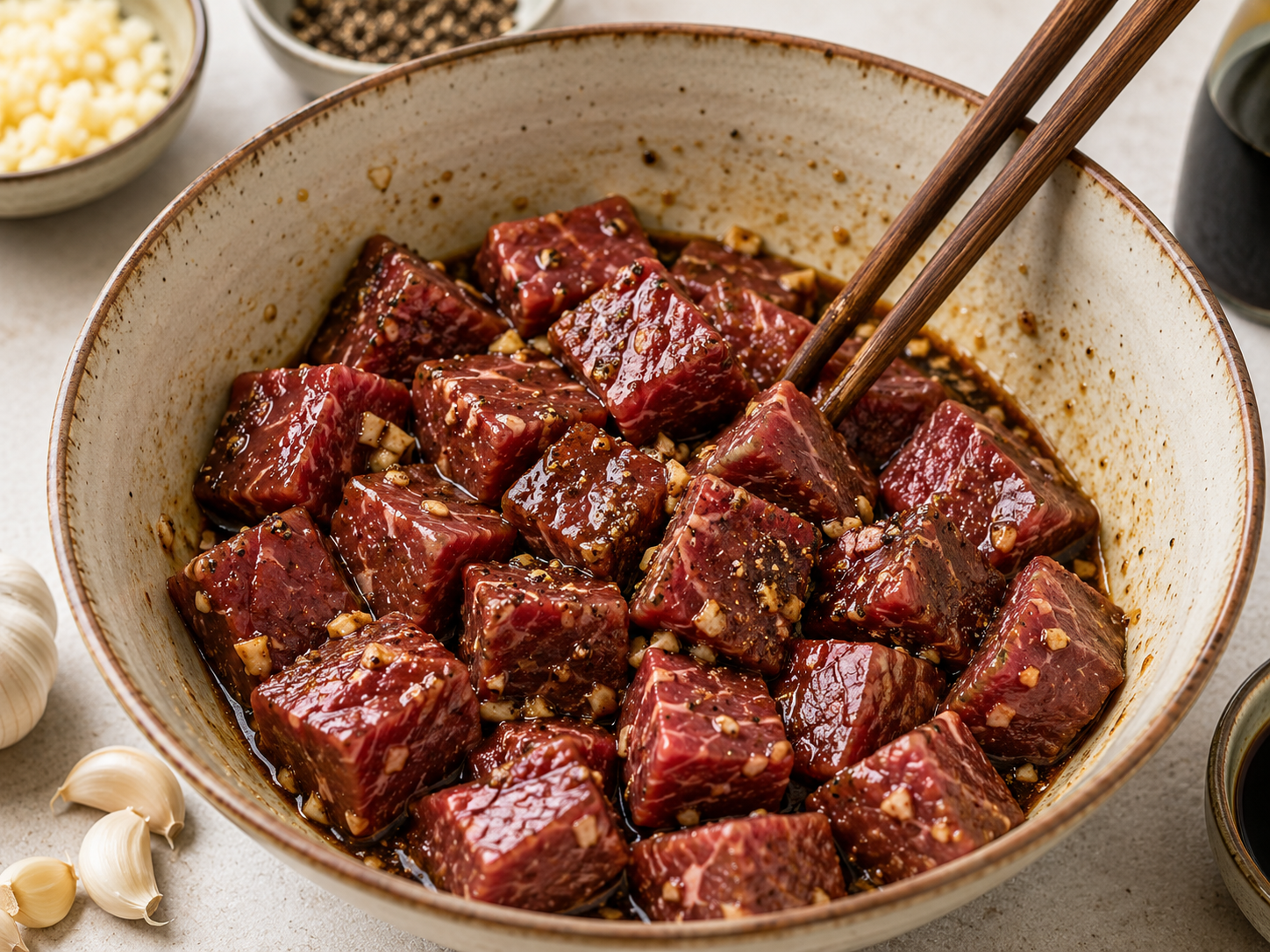
Step 2: Marinate The Beef
Combine the oyster sauce, fish sauce, light soy sauce, sugar, dark soy sauce, oil, garlic, and black pepper in a large bowl.
Add the beef and toss until every piece is evenly coated. Cover and marinate at room temperature for 20 minutes, or refrigerate for up to 1 hour.
Remove refrigerated beef about 15 minutes before cooking. Very cold meat lowers the temperature of the pan and takes longer to brown.
Do not leave the beef in the marinade overnight. The seasoning is concentrated, and the meat can become too salty.
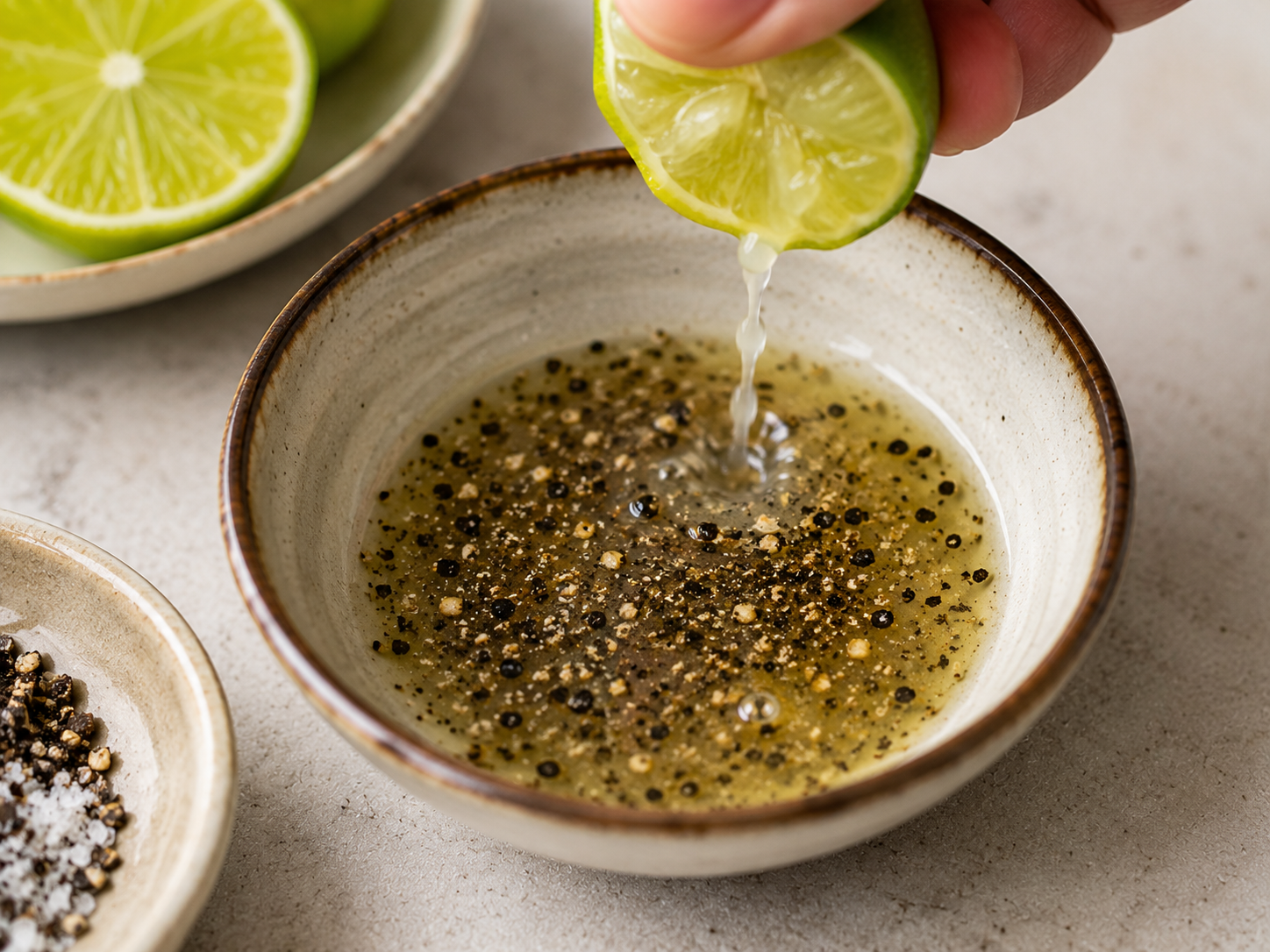
Step 3: Prepare The Dipping Sauce
Combine the salt and black pepper in a small dipping bowl. Add the lime juice just before serving and stir briefly.
Prepare any rice or French fries before cooking the beef. Once the pan is hot, the rest of the recipe moves quickly.
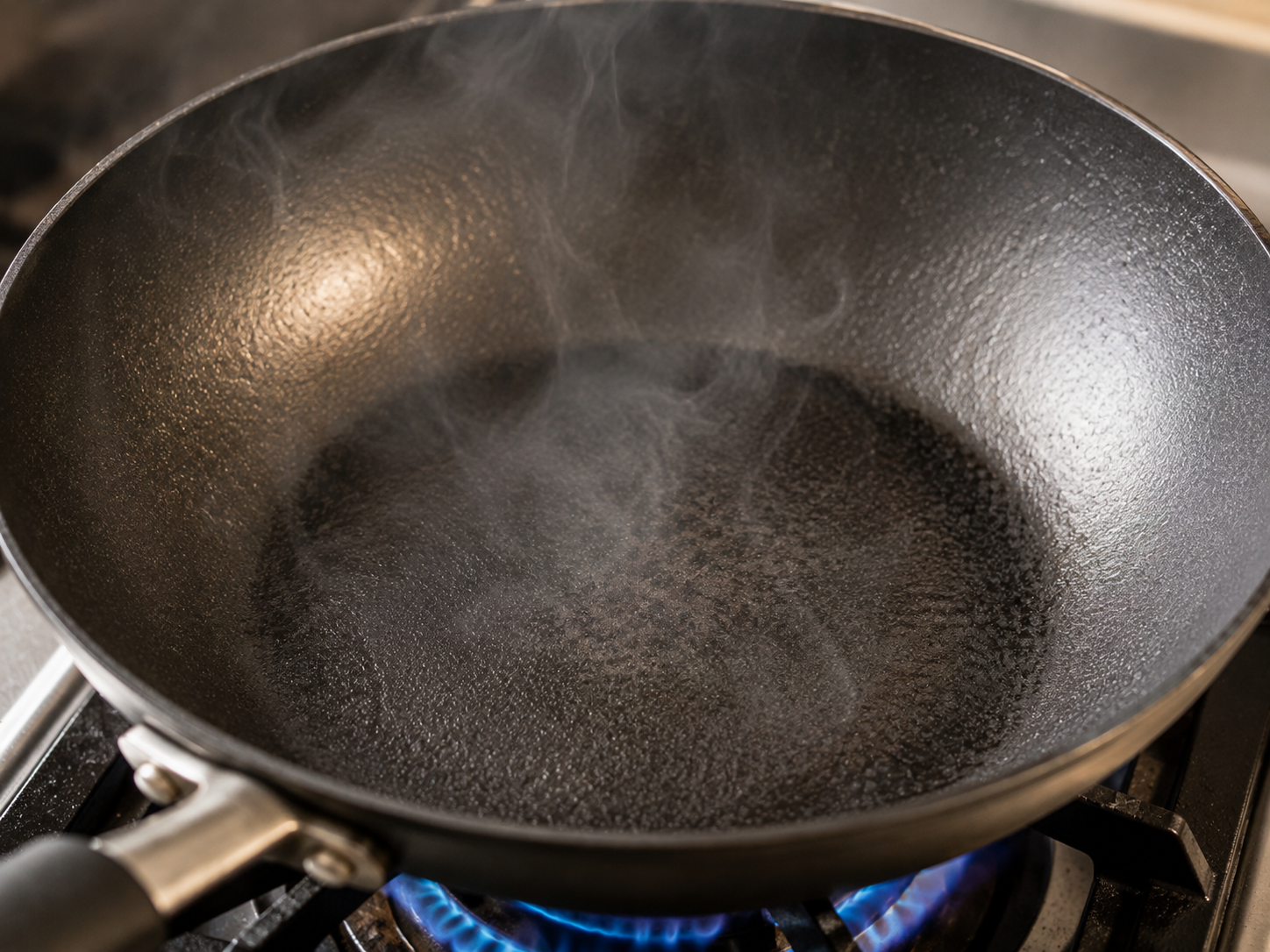
Step 4: Heat The Pan
Place a large wok, cast-iron skillet, or heavy stainless-steel skillet over high heat.
Let it heat for 2 to 3 minutes, until the cooking surface is very hot and a faint wisp of smoke begins to appear.
Add 1 tablespoon of the oil and swirl it around the pan.
Use the widest pan available. Crowding traps steam around the meat, so cook the beef in two batches unless your pan can hold the pieces in a single layer with space between them.
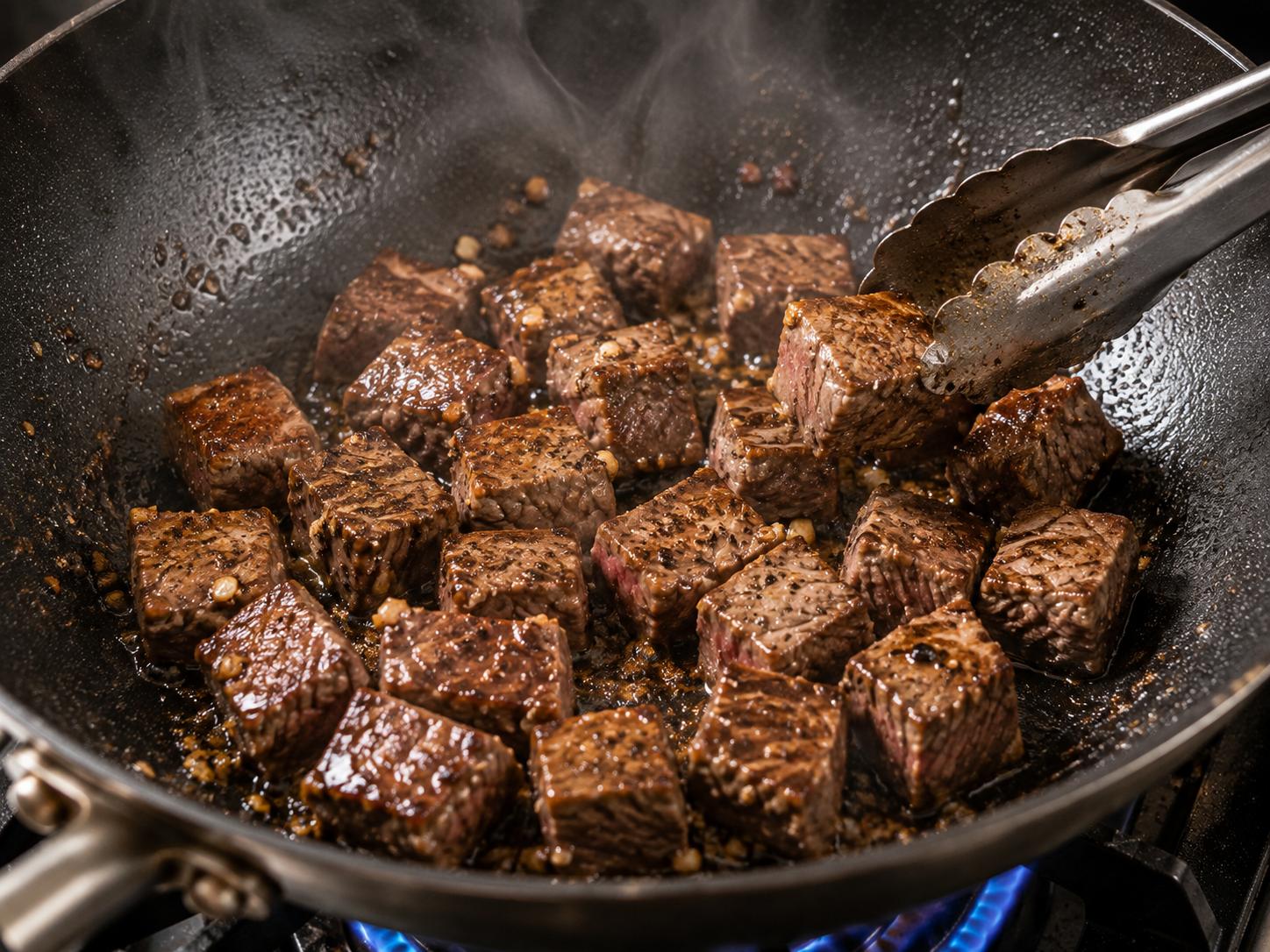
Step 5: Sear The Beef In Batches
Lift half of the beef from the marinade, allowing any excess liquid to drip back into the bowl.
Arrange the pieces in a single layer in the hot pan. Let them cook without moving for 45 to 60 seconds, until the bottom surfaces develop a dark brown crust.
Shake the pan or quickly turn the cubes with tongs. Continue cooking for another 60 to 90 seconds, tossing occasionally so several sides make contact with the hot surface.
Transfer the beef to a clean plate while the centers are still slightly less cooked than you prefer. The meat will continue cooking when it returns to the pan.
Add a little more oil if the pan looks dry, then repeat with the remaining beef.
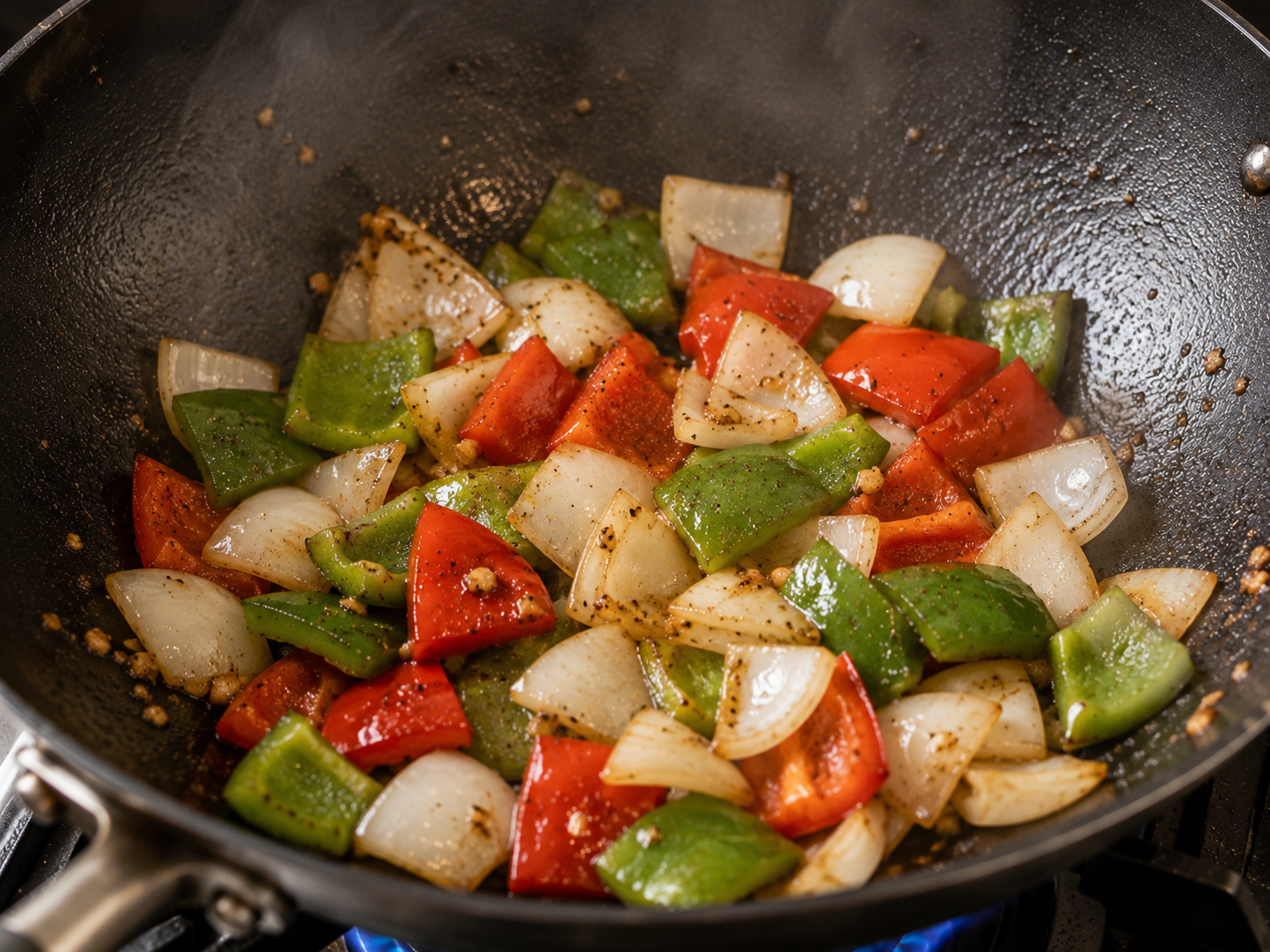
Step 6: Cook The Vegetables
Return the empty pan to high heat and add the remaining oil.
Add the onion and bell peppers. Stir-fry for 1½ to 2 minutes, shaking or tossing them frequently.
The vegetables should become lightly blistered around the edges while remaining crisp in the center. Do not cook them until completely soft.
Add the scallions and cook for another 15 seconds.
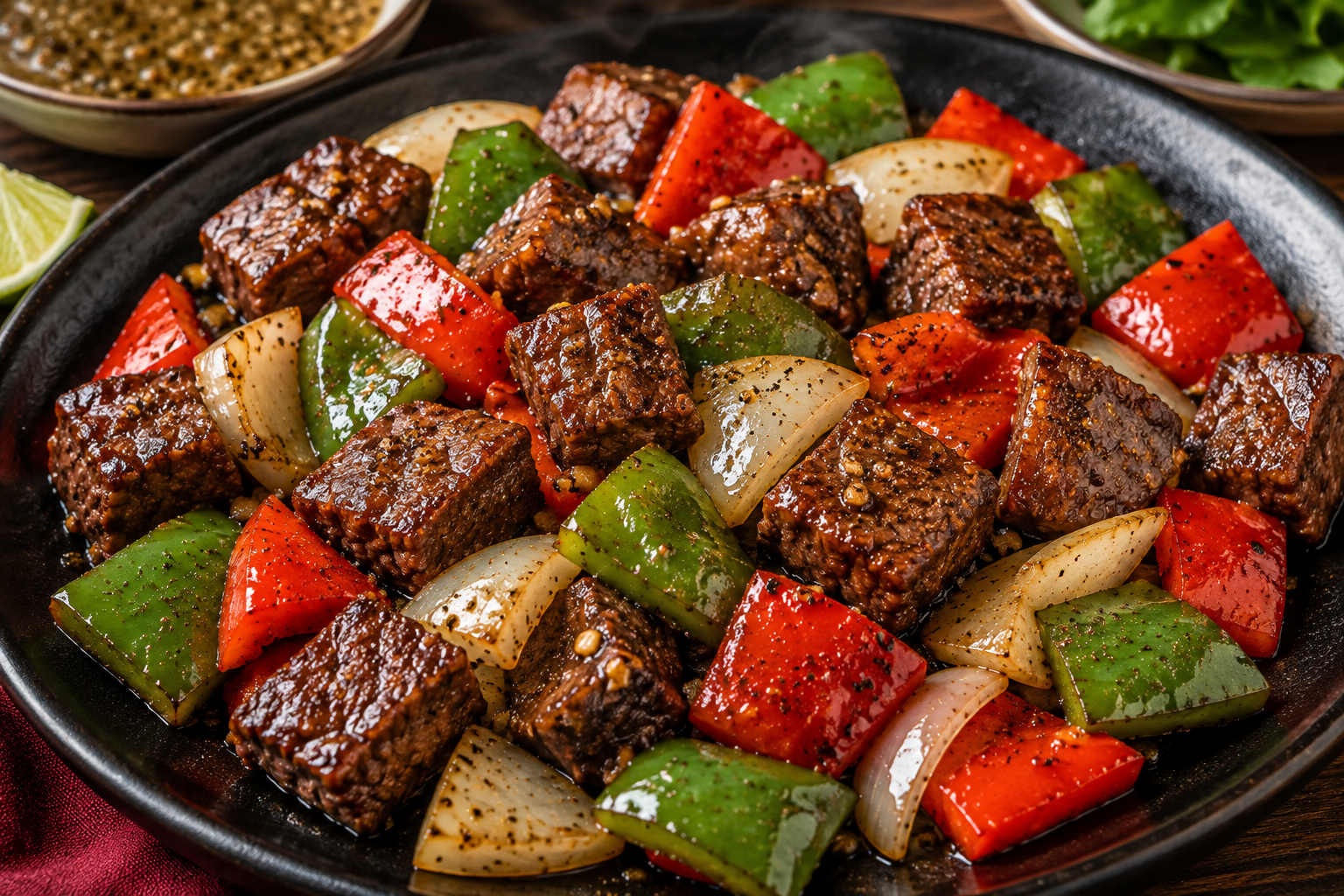
Step 7: Finish The Bò Lúc Lắc
Return all the seared beef and any juices on the plate to the pan.
Add the butter, if using. Toss or shake the pan continuously for 20 to 30 seconds, just until the beef is hot and lightly glazed.
Taste one piece. The seasoning should be savory, peppery, and slightly sweet, with no loose sauce collecting at the bottom of the pan.
Remove the pan from the heat immediately. Leaving the beef in the hot pan will continue cooking the center and can make it tough.
Spoon the bò lúc lắc and vegetables over the prepared watercress, allowing some of the warm juices to lightly dress the leaves.
Serve immediately with the lime pepper sauce and steamed rice or French fries, if using.
Final Thoughts
Bò lúc lắc shows how much Vietnamese cooking can accomplish with a hot pan, a short ingredient list, and careful timing. The marinade provides the flavor, but the character of the dish comes from the sear.
The most important decision is knowing when to stop cooking. Give the beef room, let the first side brown before moving it, and remove it while the center is still tender. The vegetables should retain enough crunch to balance the richness of the meat.
When those details are right, bò lúc lắc delivers exactly what its name promises: glossy cubes of beef, smoky browned edges, crisp vegetables, and a sharp squeeze of lime and black pepper cutting through every bite.