Rau Muống Xào Tỏi Recipe: Vietnamese Garlic Water Spinach
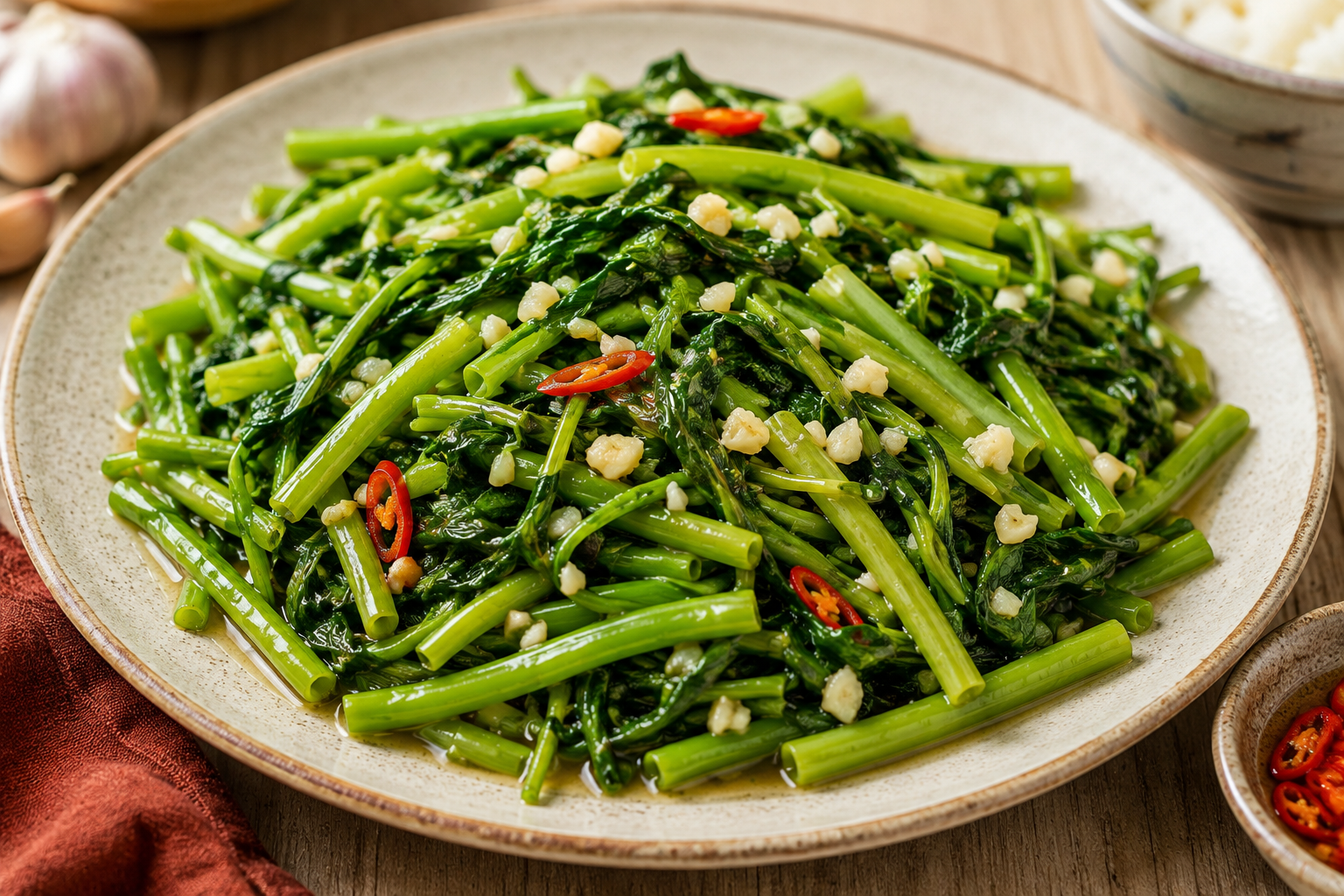
Rau muống xào tỏi looks simple because it is simple. Fresh water spinach, plenty of garlic, a hot pan, and a small amount of seasoning come together in just a few minutes.
That simplicity leaves nowhere to hide. The hollow stems should remain juicy and crisp, the leaves should be tender without turning soft, and the garlic should taste deeply aromatic without becoming bitter or burnt.
Across Vietnam, it is the kind of vegetable dish that fits naturally into an everyday family meal. Its savory, garlicky flavor works beside steamed rice, braised meat, fried fish, grilled seafood, or a bowl of light soup.
The key is controlling heat and moisture. This recipe uses a quick blanch followed by a fast stir-fry, a practical method for home stoves that keeps the rau muống bright green, properly seasoned, and crisp enough to snap when you bite into it.
Ingredients
For The Water Spinach
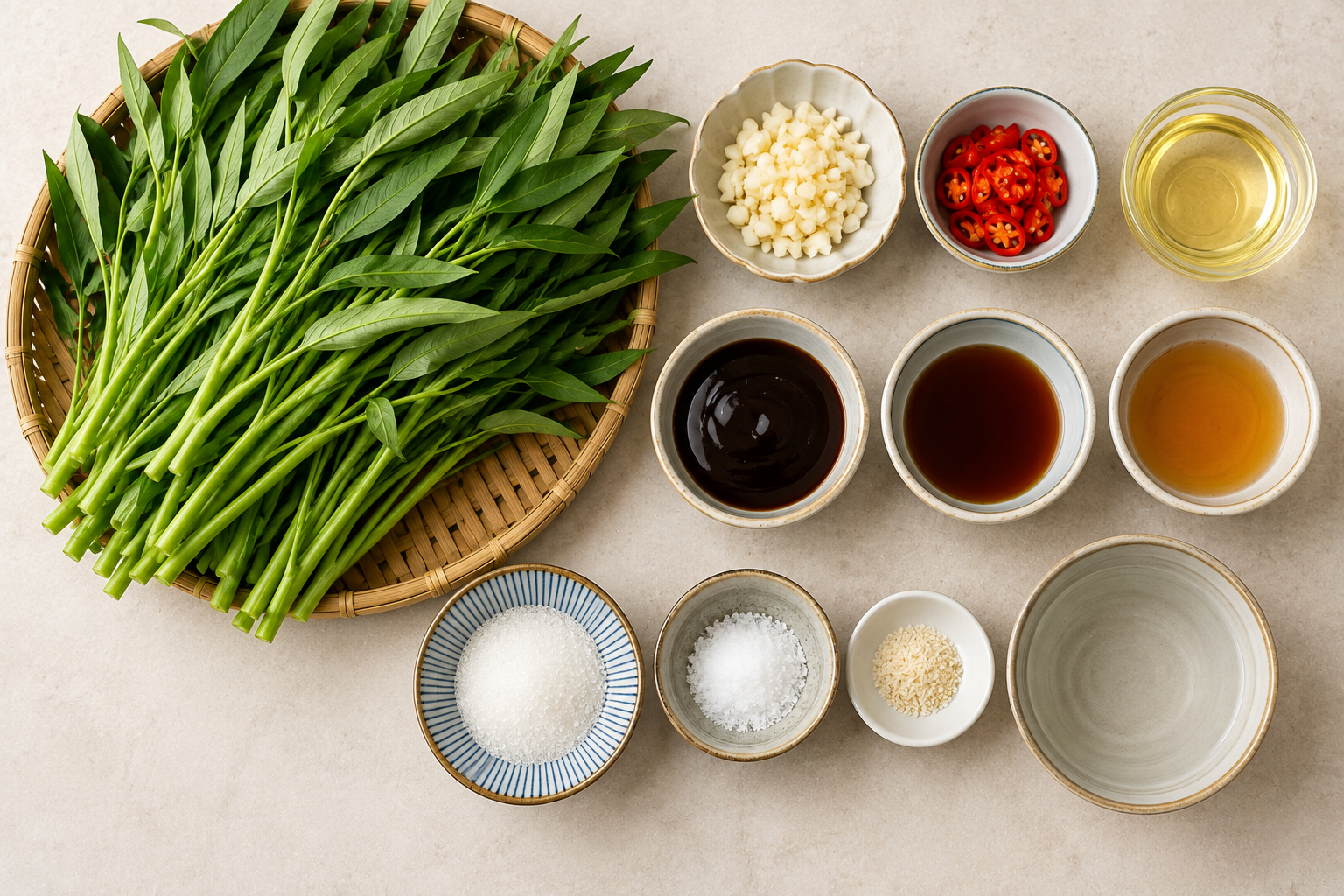
1 pound water spinach (450 grams), tough ends trimmed
8 large garlic cloves, finely chopped and divided
1 small red bird’s eye chili, thinly sliced, optional
2 tablespoons neutral cooking oil or pork fat
For The Seasoning
1 tablespoon oyster sauce
2 teaspoons fish sauce
2 tablespoons water
½ teaspoon sugar
¼ teaspoon MSG or mushroom seasoning, optional
For Blanching
3 quarts water
1 tablespoon kosher salt
4 cups ice
How To Make Rau Muống Xào Tỏi
Step 1: Clean And Cut The Water Spinach
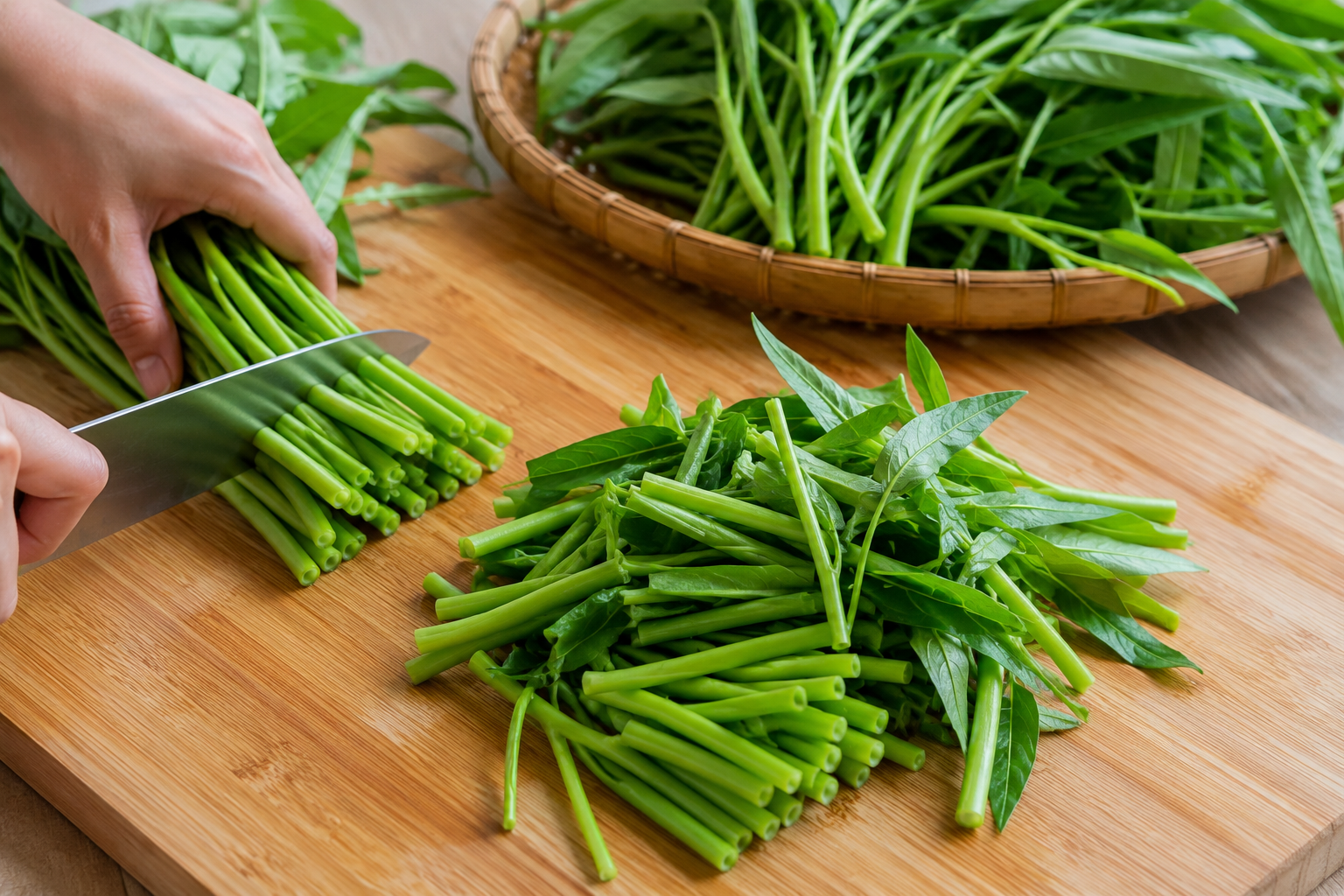
Remove any yellow leaves, damaged stems, and tough pieces from the bottom of the bunch.
Wash the water spinach in several changes of cold water. Pay attention to the hollow stems and the areas where the leaves meet the stalks, since dirt and grit can collect there.
Cut the water spinach into pieces about 3 to 4 inches long. Keep the thicker lower stems separate from the leafy upper sections so they can be added to the blanching water first.
Drain well while you prepare the remaining ingredients.
Step 2: Mix The Seasoning
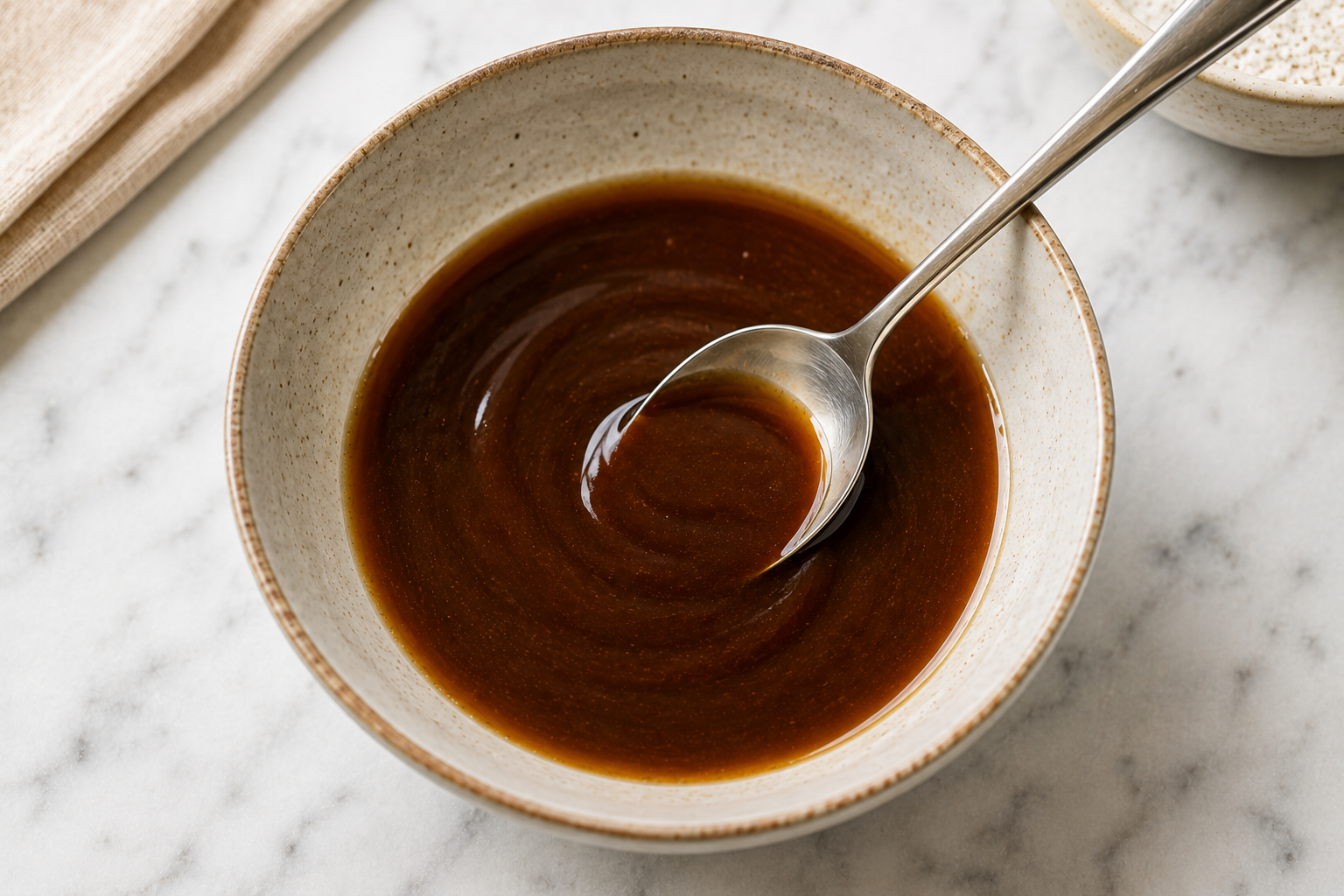
Combine the oyster sauce, fish sauce, water, sugar, and MSG in a small bowl.
Stir until the sugar has mostly dissolved.
Mixing the seasoning before cooking allows it to enter the pan all at once. Rau muống cooks quickly, so there will not be enough time to measure individual seasonings once it is in the wok.
Step 3: Blanch The Water Spinach
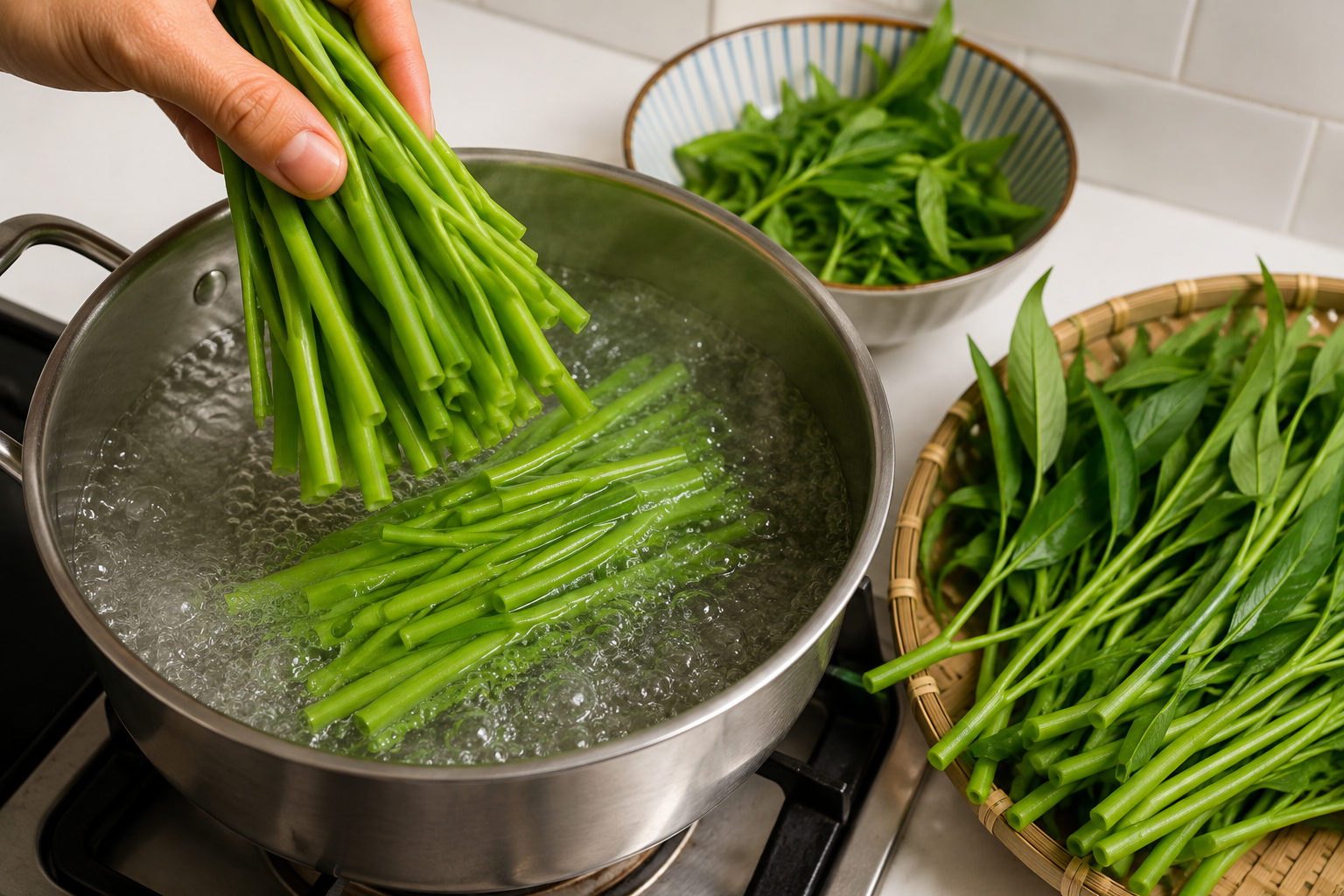
Bring 3 quarts of water to a strong boil in a large pot. Add the salt.
Prepare a large bowl with the ice and enough cold water to create an ice bath.
Add the thick stem sections to the boiling water and cook for 20 seconds. Add the leafy sections and continue cooking for another 15 to 20 seconds.
The leaves should collapse slightly, but the stems should still feel firm.
Immediately transfer the water spinach to the ice bath. Let it cool for about 1 minute, then drain it thoroughly.
Shake off as much water as possible. Gently press the vegetable between clean kitchen towels or spin it briefly in a salad spinner.
Do not skip the drying step. Water left on the vegetables will cool the wok, dilute the seasoning, and cause the rau muống to steam instead of stir-fry.
Step 4: Heat The Wok
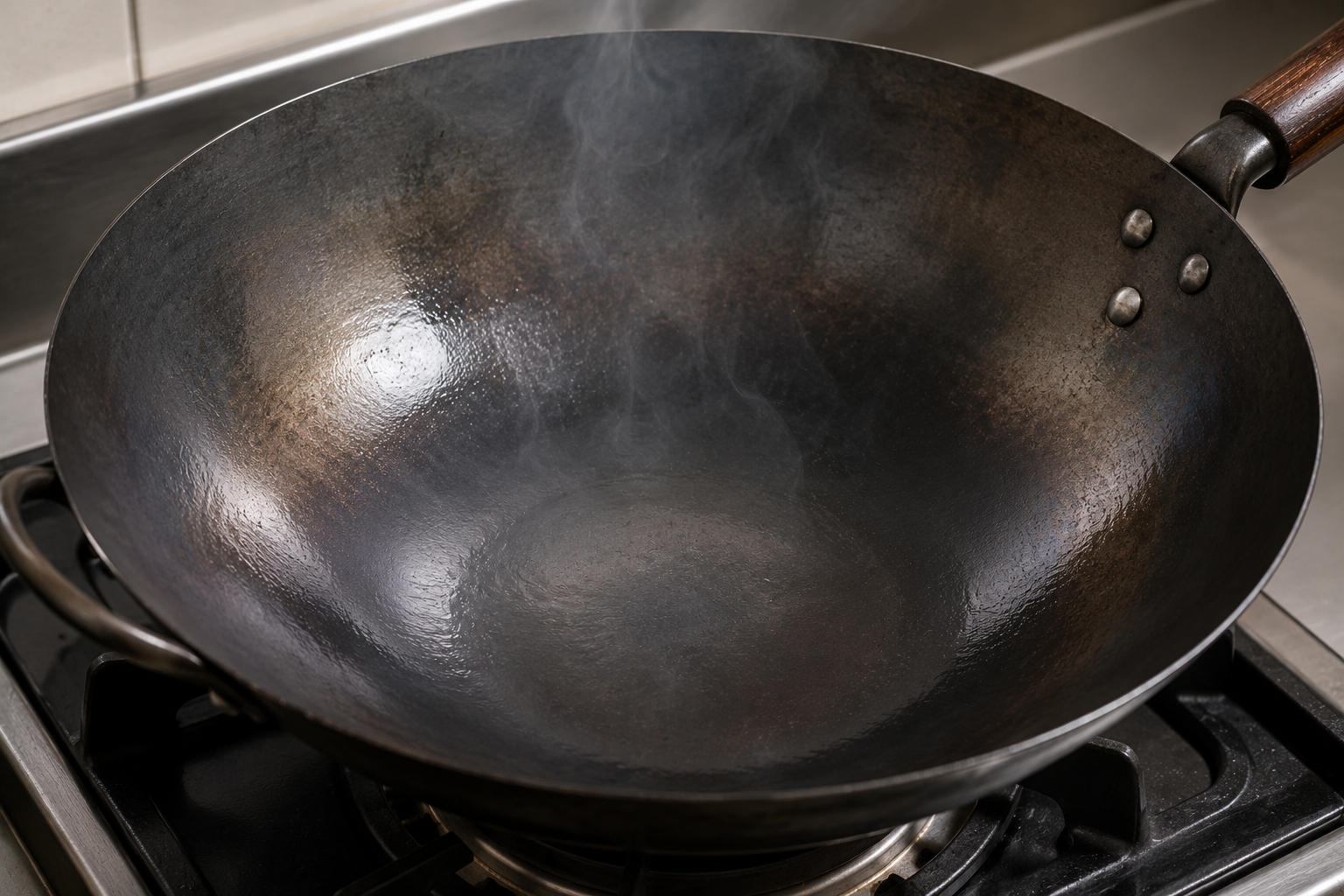
Place a large wok or wide skillet over high heat.
Let the pan heat until it is very hot and a faint wisp of smoke begins to appear.
Add the oil and swirl it around the cooking surface.
Use the largest pan you have. Crowding the vegetables traps steam and makes it difficult to keep the stems crisp. Cook in two batches when using a small skillet or a low-powered stove.
Step 5: Fry The Garlic
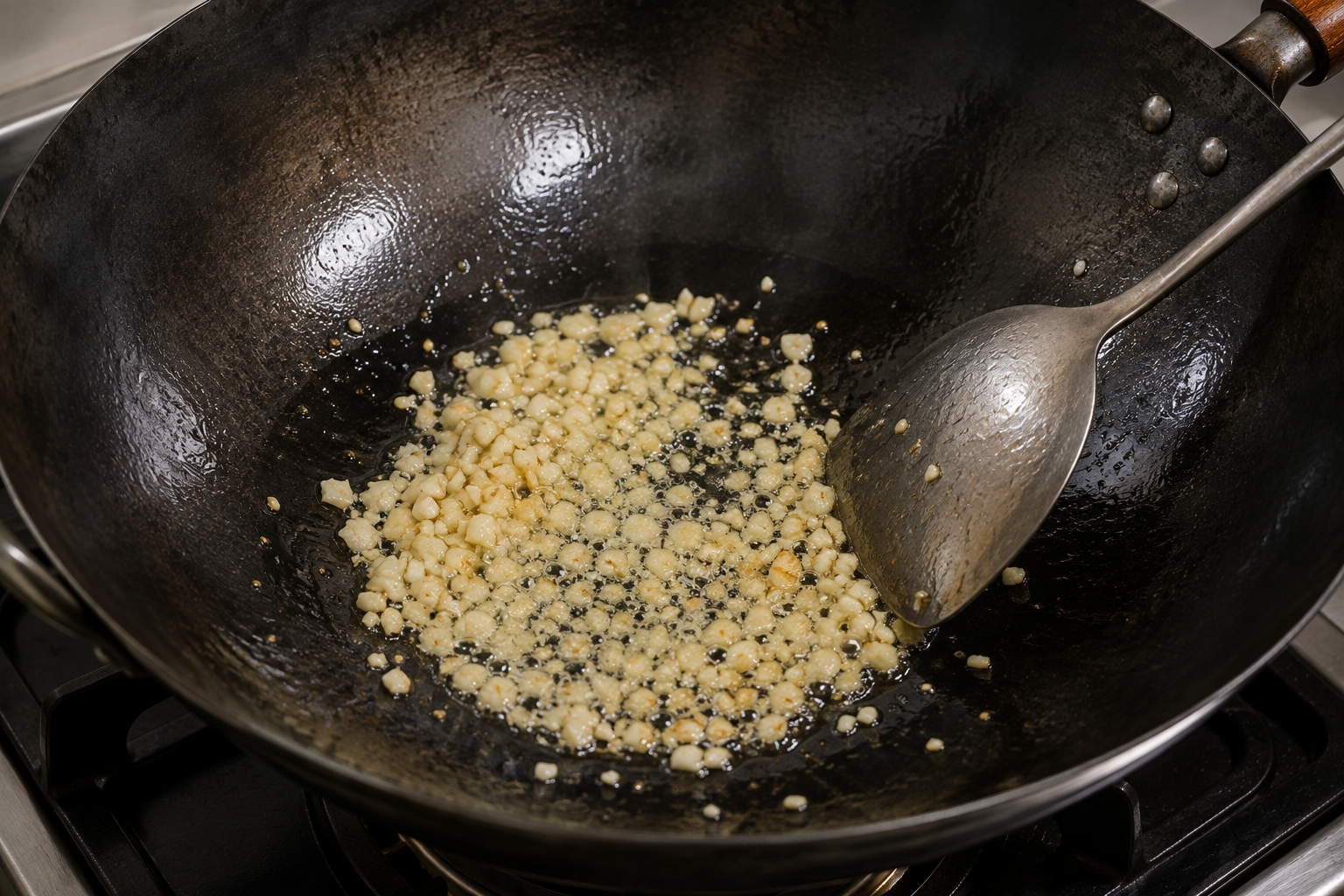
Add about two-thirds of the chopped garlic to the hot oil.
Stir constantly for 10 to 15 seconds, just until the garlic becomes fragrant.
Do not wait for it to turn deeply golden. Garlic continues cooking after the vegetables enter the wok, and browned garlic can become bitter before the rau muống is finished.
Step 6: Stir-Fry The Water Spinach
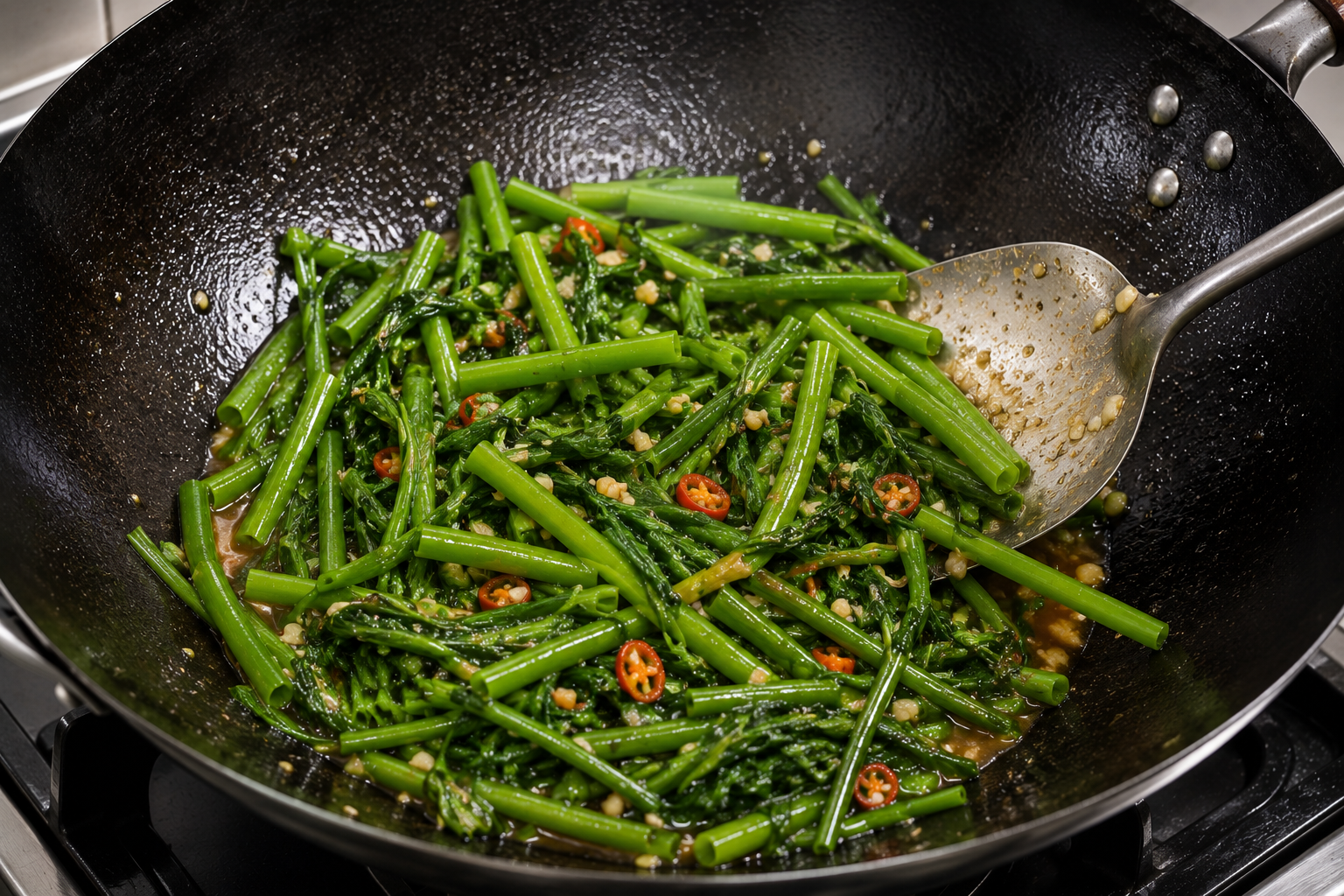
Add the drained water spinach to the wok.
Use tongs, chopsticks, or a wok spatula to lift and turn the vegetables continuously for about 30 seconds.
Pour the prepared seasoning mixture around the hot sides of the wok rather than directly into the center. The heat helps the liquid reduce quickly before it collects at the bottom of the pan.
Continue tossing for 45 to 60 seconds. The leaves should be tender and glossy, while the stems should remain bright green and lightly crisp.
Final Thoughts
Rau muống xào tỏi is a reminder that everyday Vietnamese cooking often depends more on control than complexity. There are only a few ingredients, but each one has to be handled properly.
The vegetable must be cleaned thoroughly, dried well, and cooked over enough heat to preserve its texture. The garlic needs time to release its aroma without becoming bitter, and the seasoning should coat the stems and leaves without collecting underneath them.
Get those details right and the result is exactly what the dish should be: green, crisp, savory, deeply garlicky, and ready for a bowl of hot rice.