Gỏi Gà Bắp Cải Recipe: Vietnamese Chicken Cabbage Salad
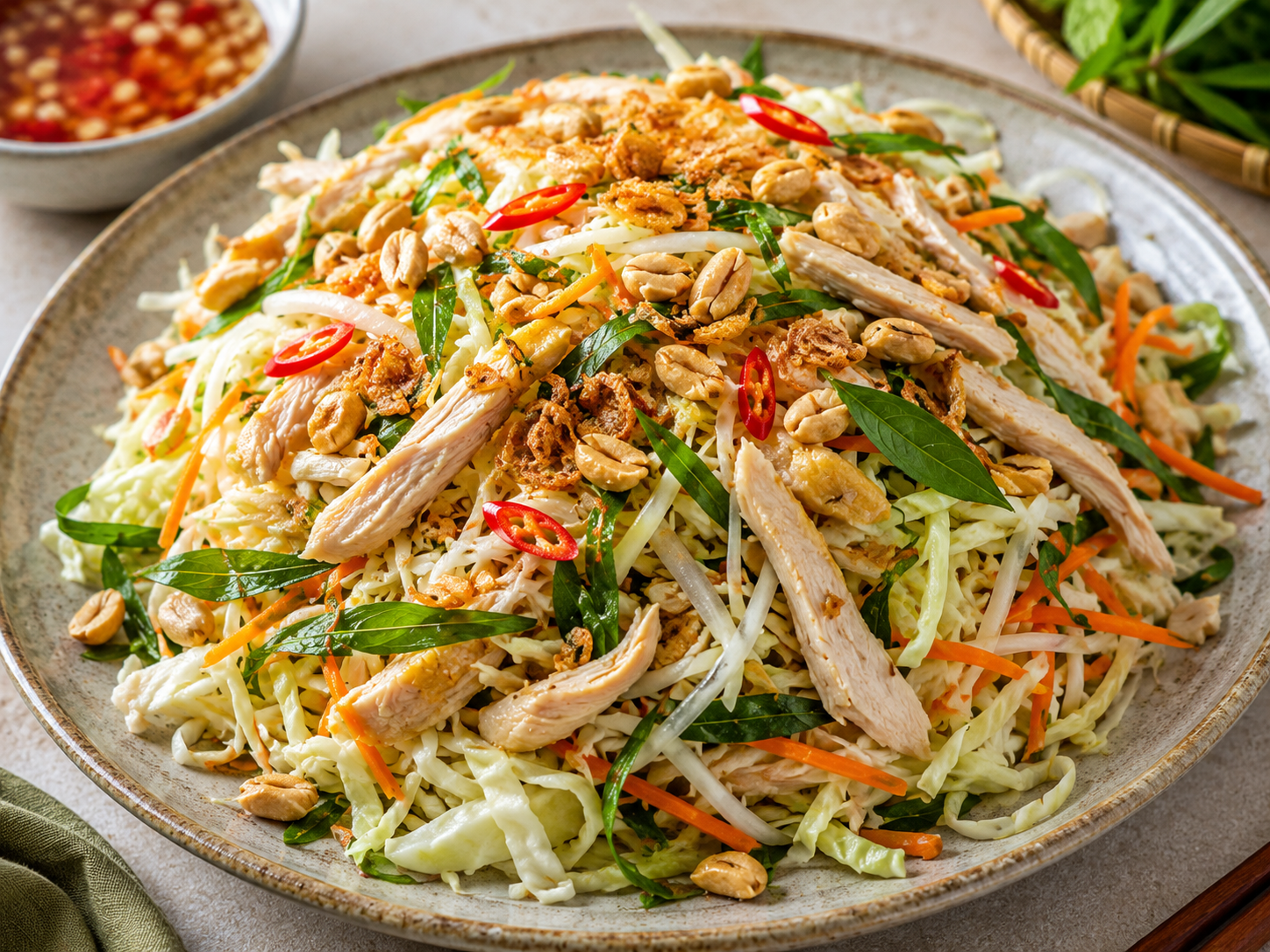
Gỏi gà bắp cải is built around contrast. Tender shredded chicken meets crisp cabbage, sweet onion, carrot, peppery rau răm, roasted peanuts, and fried shallots, all pulled together by a bright fish sauce dressing.
It is refreshing without feeling light or forgettable. The chicken gives the salad substance, while lime, fish sauce, sugar, garlic, and chili create the sweet, sour, salty balance that makes Vietnamese gỏi so easy to keep eating.
The best versions do not drown the vegetables in dressing or soften the cabbage into coleslaw. Every ingredient should remain recognizable, with enough seasoning to bring the bowl together while preserving its crunch.
This recipe keeps that balance at the center. The chicken stays juicy, the cabbage stays crisp, and the dressing is added gradually so the finished salad tastes fresh, savory, aromatic, and distinctly Vietnamese.
Ingredients
For The Chicken
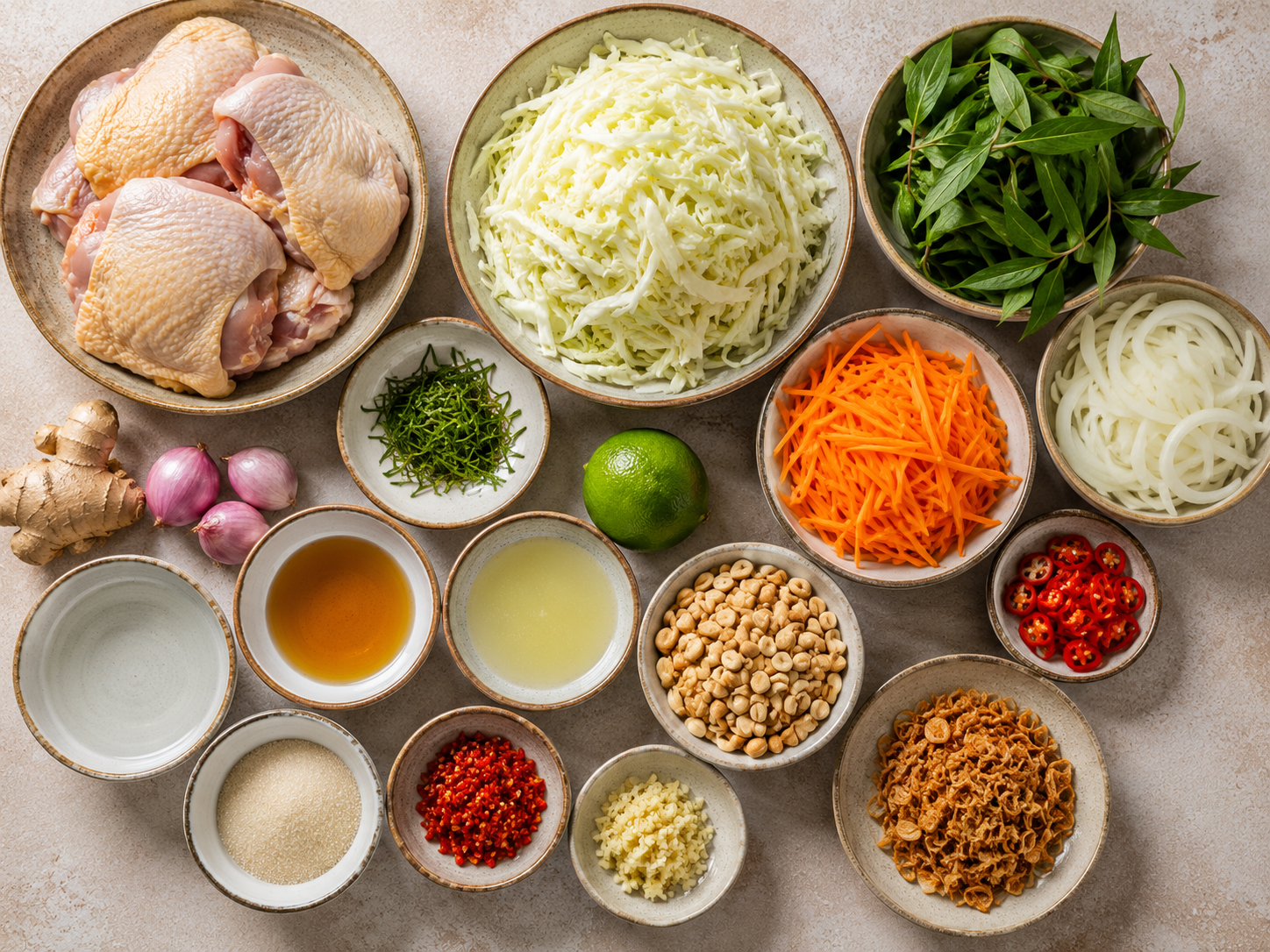
1½ pounds bone-in, skin-on chicken thighs (680 grams)
6 cups water
1-inch piece fresh ginger, lightly crushed
2 shallots, peeled and lightly crushed
1 teaspoon kosher salt
For The Cabbage Salad
14 ounces green cabbage (400 grams), very thinly shredded
1 medium carrot, about 4 ounces (115 grams), peeled and cut into fine matchsticks
½ medium yellow or white onion, very thinly sliced
½ cup loosely packed rau răm leaves, roughly torn
4 makrut lime leaves, center ribs removed and very thinly sliced, optional
⅓ cup roasted unsalted peanuts, lightly crushed
⅓ cup fried shallots
1 red chili, thinly sliced, optional
½ teaspoon freshly ground black pepper
For Soaking The Onion
2 cups ice water
2 tablespoons rice vinegar
1 tablespoon sugar
For The Fish Sauce Dressing
3 tablespoons fish sauce
3 tablespoons freshly squeezed lime juice
2 tablespoons plus 2 teaspoons sugar
2 tablespoons warm water
2 garlic cloves, finely minced
1 to 2 bird’s eye chilies, finely minced
How To Make Gỏi Gà Bắp Cải
Step 1: Gently Cook The Chicken
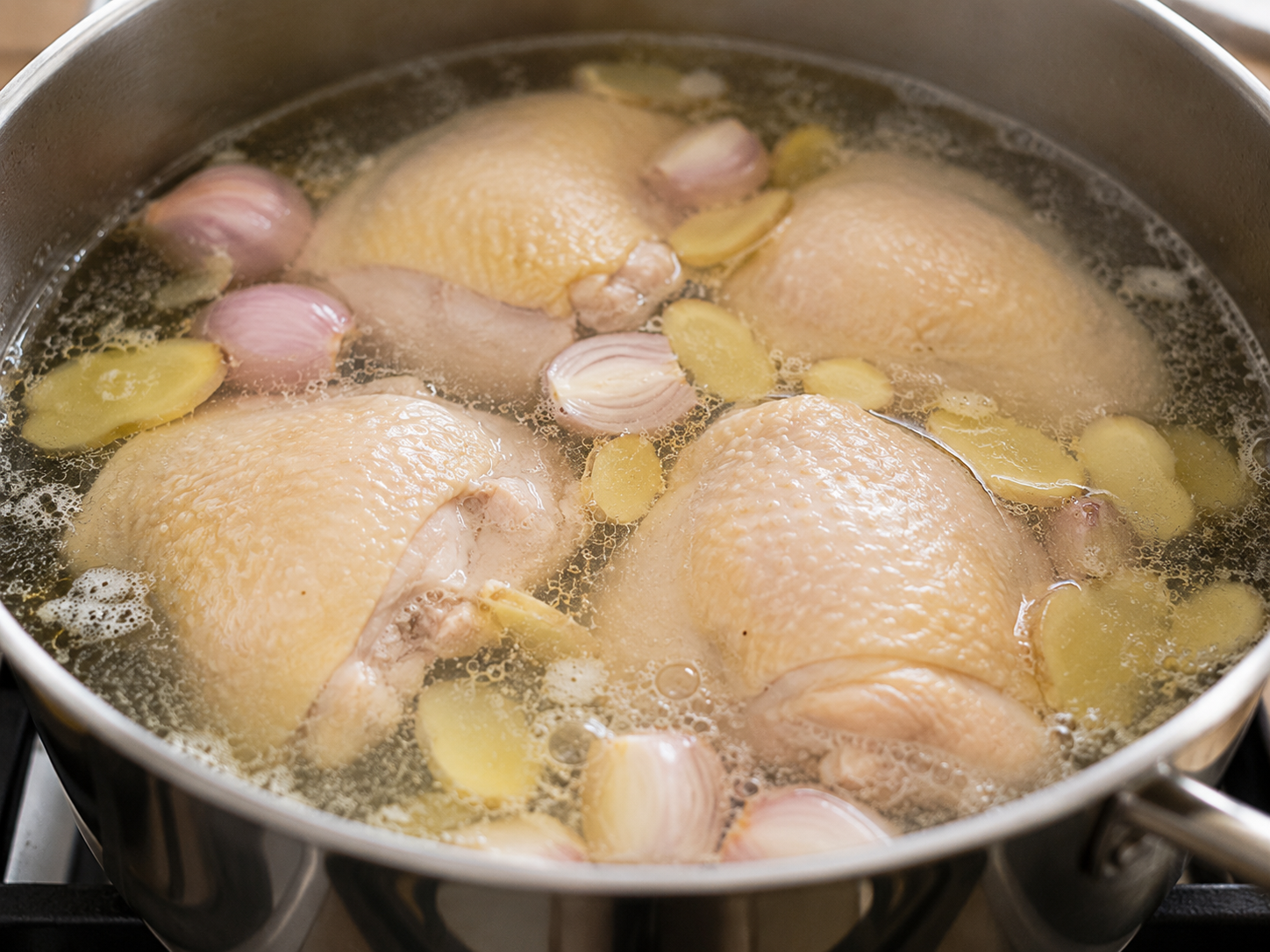
Place the chicken thighs in a medium pot with the water, ginger, shallots, and salt. The chicken should be completely covered. Add a little more water if necessary.
Bring the water to a gentle simmer over medium heat. Do not let it boil aggressively. Strong boiling tightens the meat and can leave the outside dry before the area around the bone finishes cooking.
Once the water begins to simmer, lower the heat and cook gently for 15 minutes. Turn off the heat, cover the pot, and let the chicken remain in the hot broth for another 10 minutes.
Check that the thickest part of the chicken has reached 165°F (74°C). Transfer the chicken to a plate and let it cool until it can be handled comfortably.
Keep the cooking liquid for soup, cháo, or another dish.
Step 2: Prepare The Onion
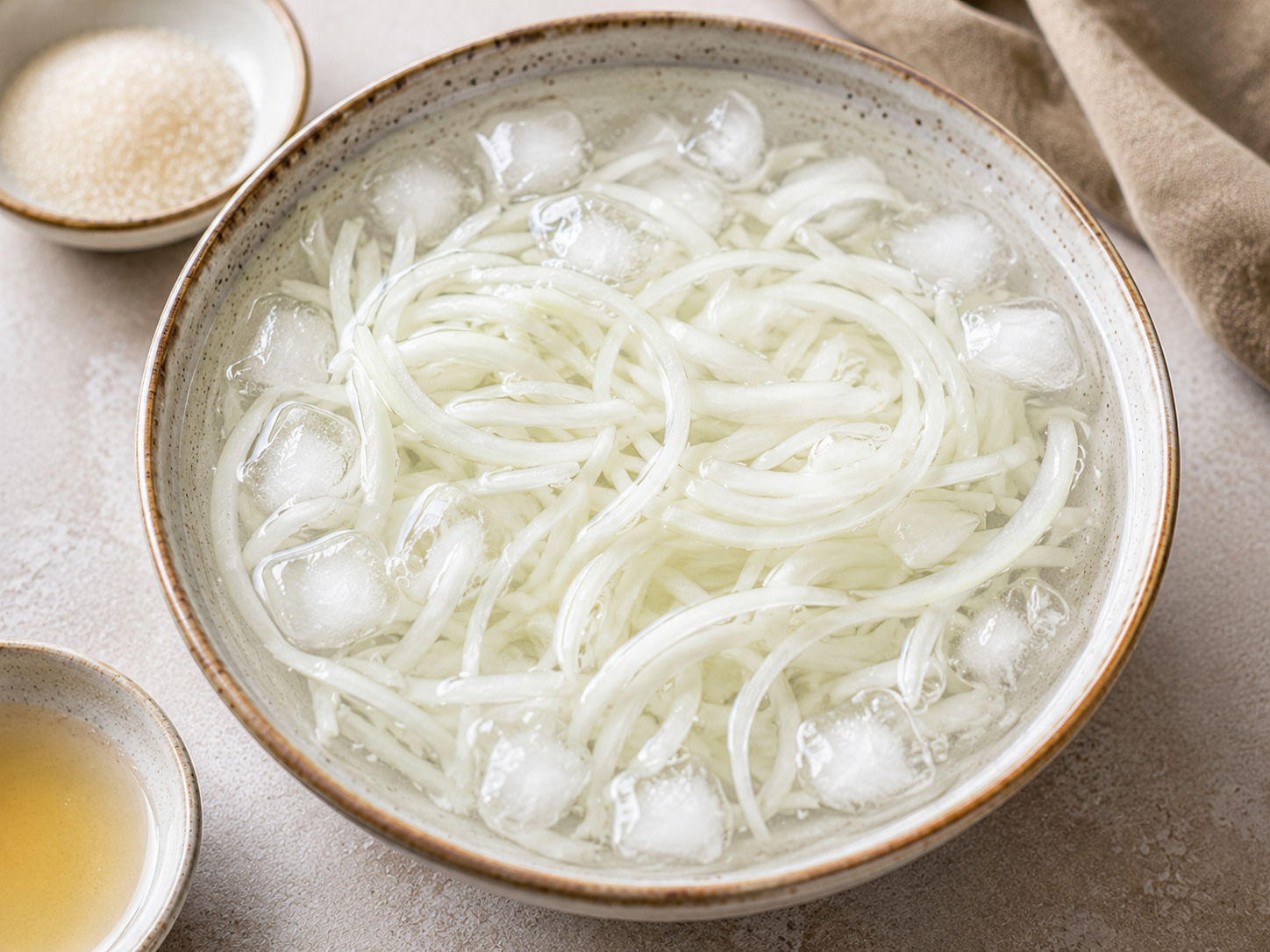
Combine the ice water, rice vinegar, and sugar in a medium bowl. Stir until the sugar begins to dissolve.
Add the sliced onion and soak it for 15 minutes. This softens the harsh raw flavor while keeping the onion crisp.
Drain the onion thoroughly. Gently squeeze out the excess water with clean hands or blot it dry with a clean kitchen towel.
Step 3: Crisp And Dry The Vegetables
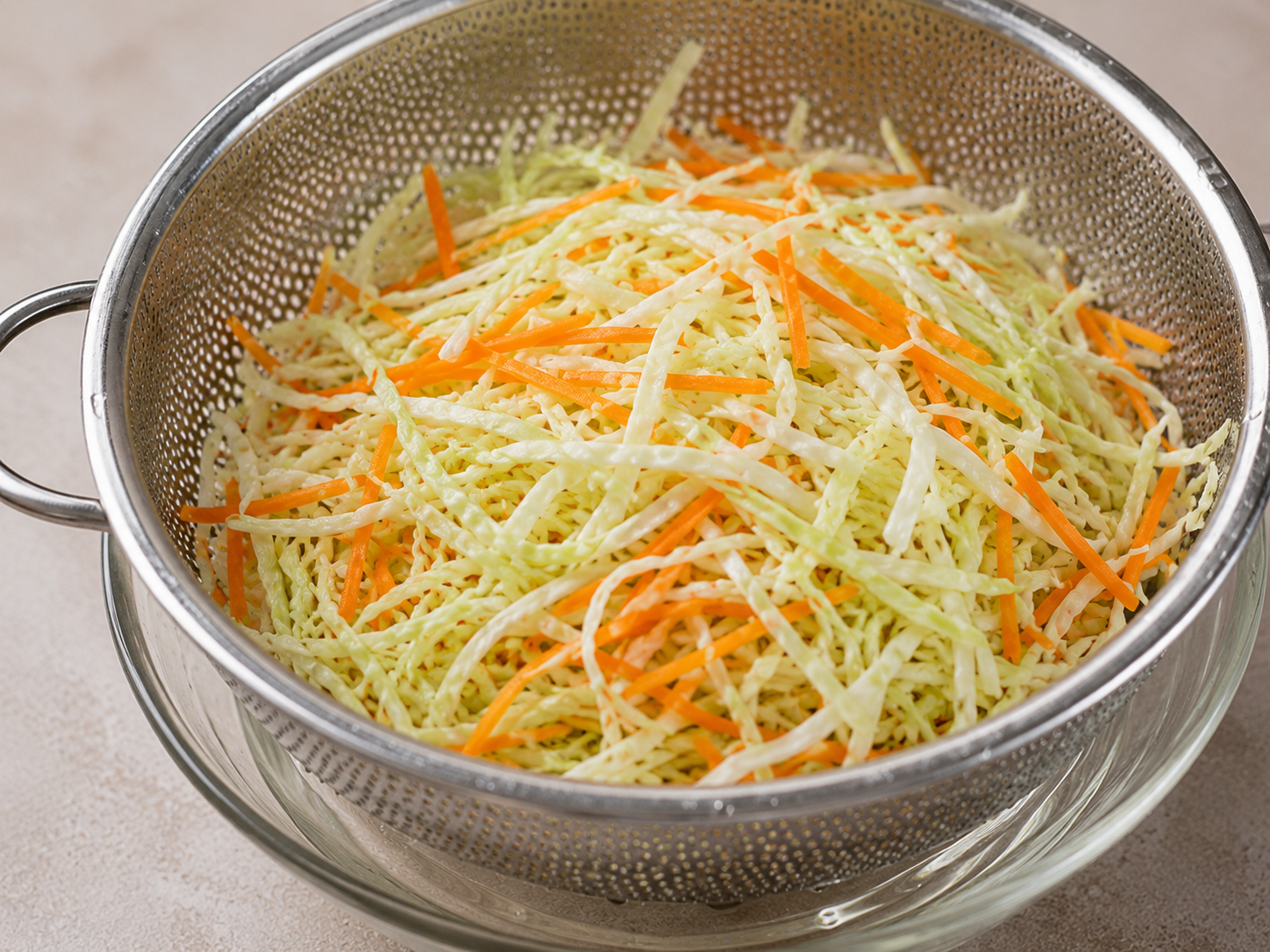
Place the shredded cabbage and carrot in a large bowl of ice water for 5 to 10 minutes.
Drain the vegetables in a colander, then dry them thoroughly in a salad spinner or with clean kitchen towels.
This step matters. Water trapped in the cabbage will dilute the dressing and collect at the bottom of the finished salad.
Step 4: Make The Fish Sauce Dressing
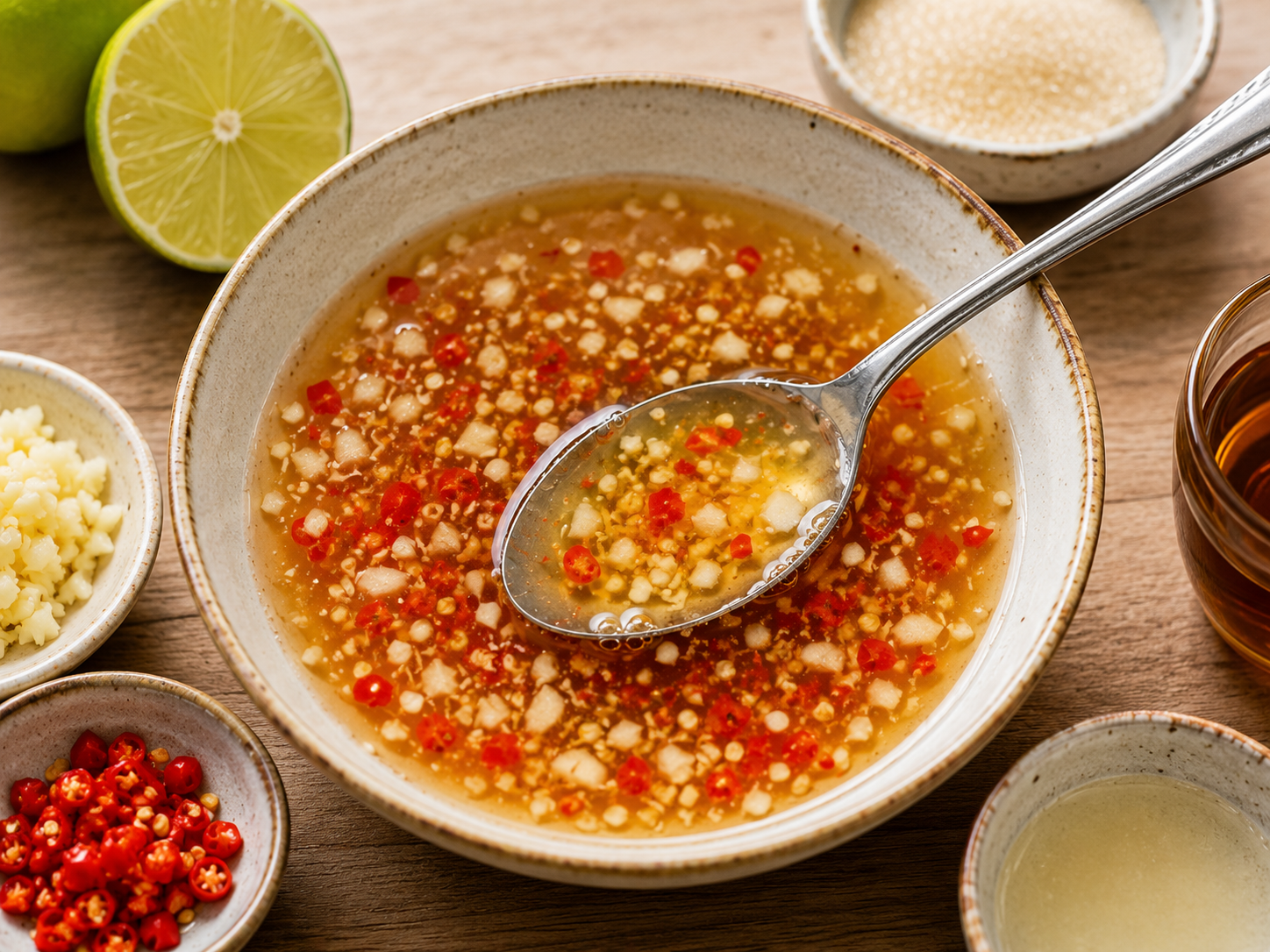
Combine the sugar and warm water in a small bowl. Stir until the sugar has mostly dissolved.
Add the fish sauce and lime juice, then stir again. Mix in the garlic and bird’s eye chilies.
Taste the dressing before using it. It should be stronger than a dipping sauce, with a clear balance of saltiness, sweetness, and acidity. The flavor will soften once it is mixed with the chicken and vegetables.
Add a little more lime juice if it tastes flat, a small amount of sugar if it is too sharp, or a teaspoon of water if it tastes overly concentrated.
Step 5: Shred And Season The Chicken
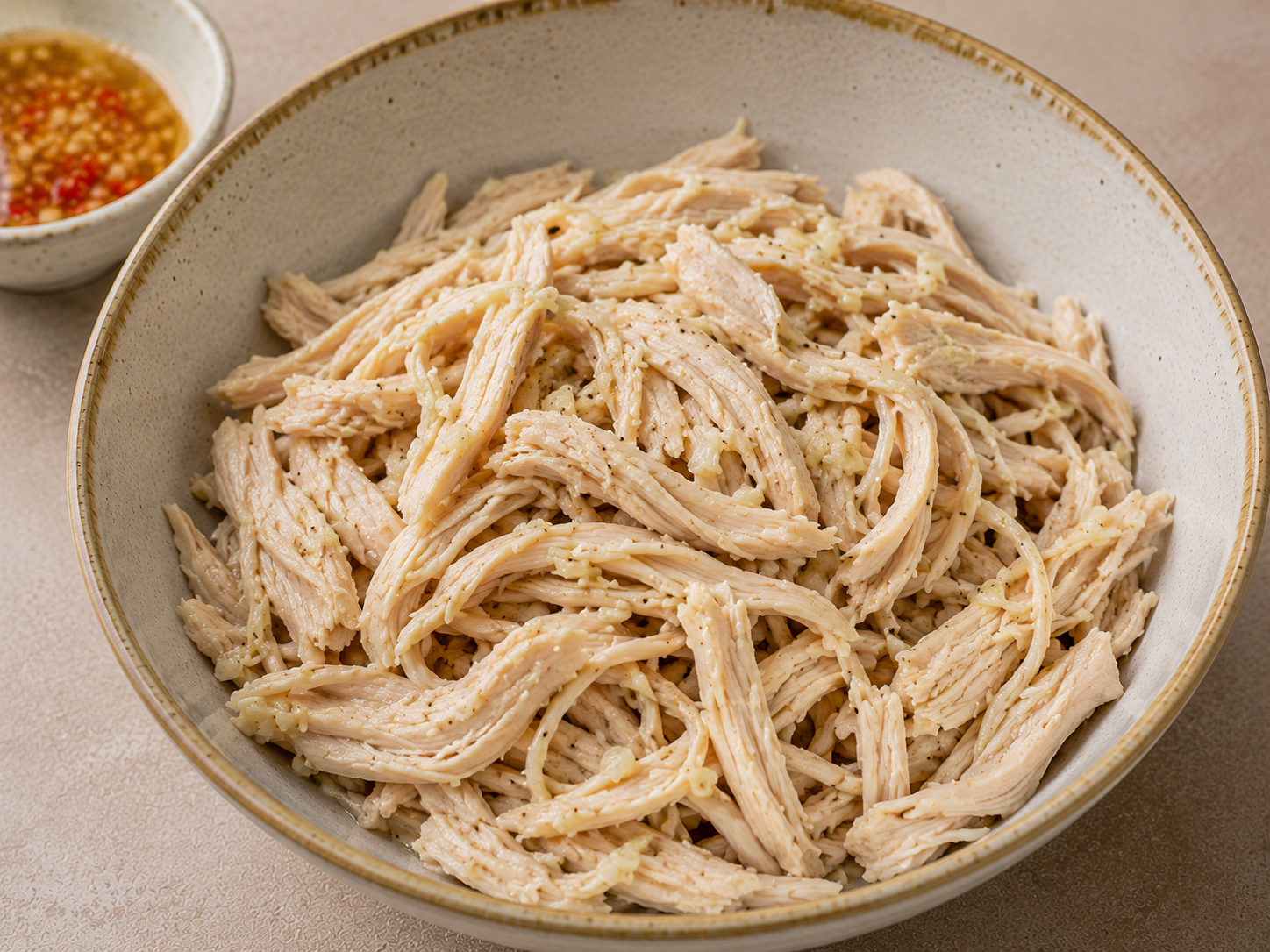
Remove the meat and skin from the bones. Pull the chicken into bite-size pieces along the natural grain of the meat. Thinly slice any chicken skin you would like to include.
Place the shredded chicken in a large mixing bowl. Add 1 tablespoon of the dressing and half of the black pepper.
Toss gently and let the chicken stand for 5 minutes. Seasoning it separately prevents the meat from tasting plain inside the finished salad.
Step 6: Dress The Cabbage
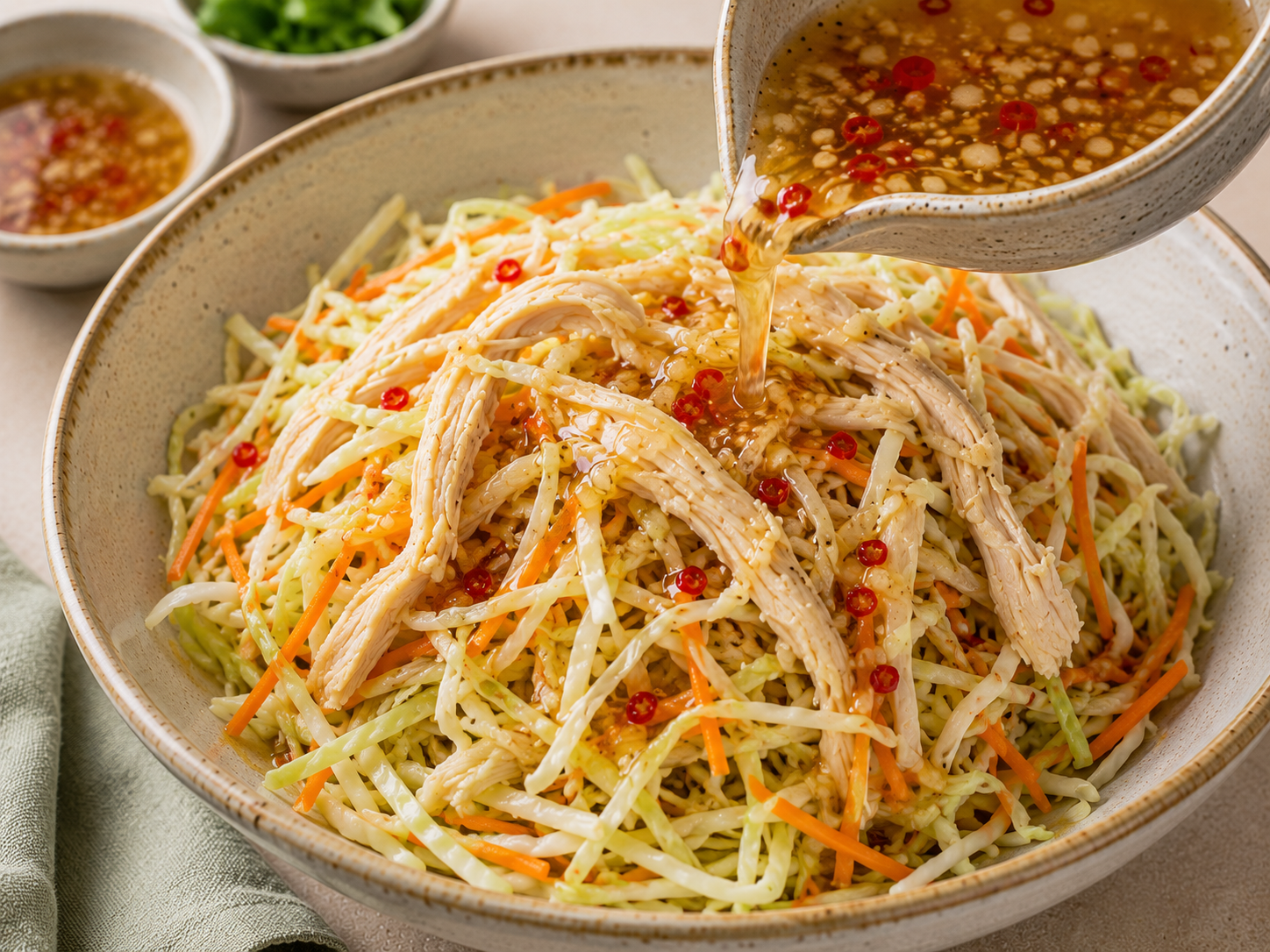
Add the cabbage, carrot, and drained onion to the chicken.
Pour in about half of the remaining dressing. Using clean hands or salad tongs, gently lift and turn the ingredients for about 1 minute.
Do not aggressively squeeze or crush the cabbage. The goal is to coat and lightly soften it while preserving its crunch.
Let the mixture stand for 3 minutes, then check the bottom of the bowl. Pour off any noticeable liquid before continuing.
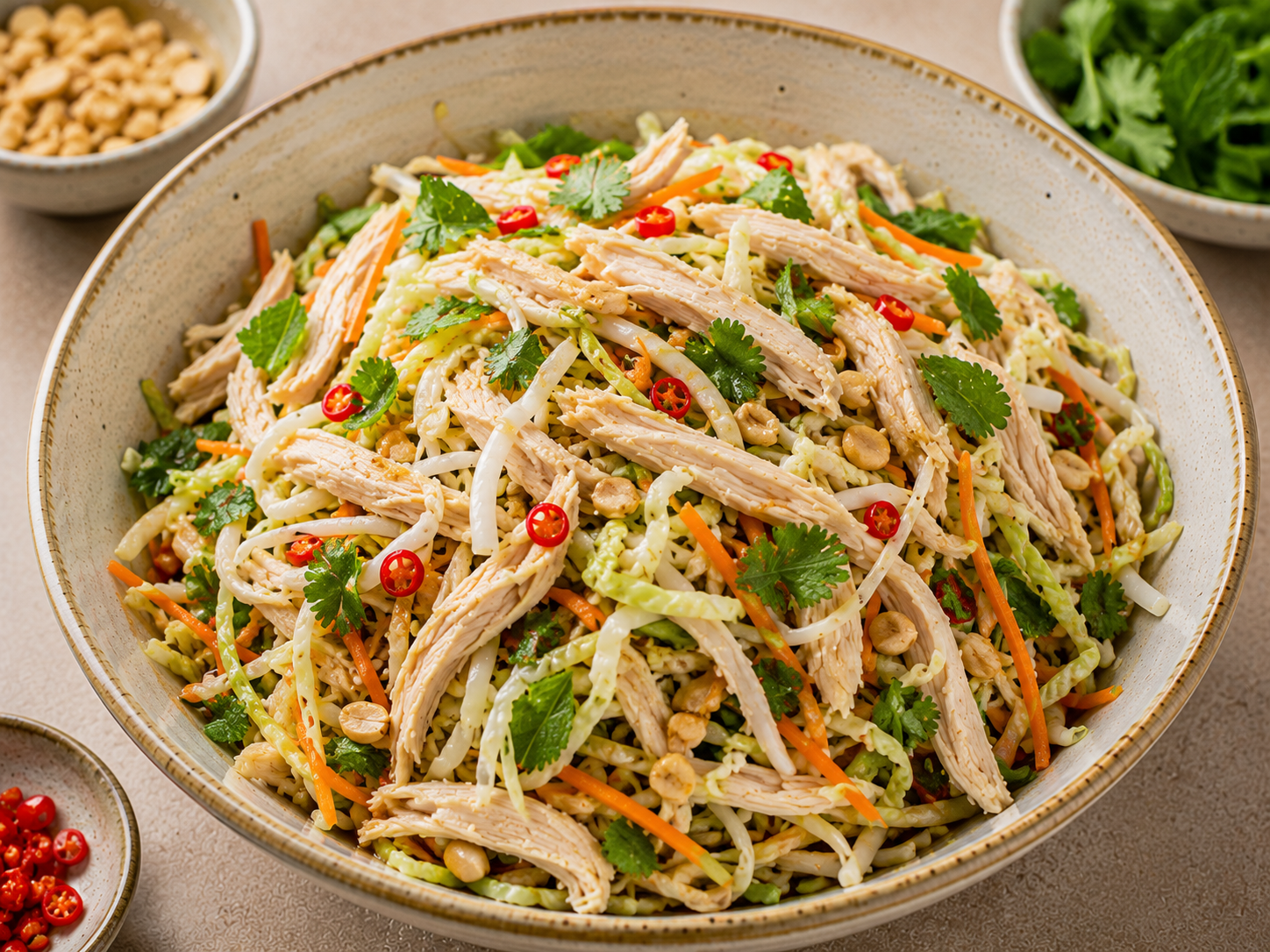
Step 7: Finish The Gỏi
Add the rau răm, sliced lime leaves, red chili, and remaining black pepper.
Add more dressing 1 tablespoon at a time, tossing after each addition. Stop when the chicken and vegetables are evenly seasoned but no liquid is pooling at the bottom of the bowl. You may not need all of the dressing.
Fold in half of the roasted peanuts and half of the fried shallots just before serving.
Transfer the gỏi gà bắp cải to a wide plate or shallow serving bowl. Finish with the remaining peanuts and fried shallots.
The cabbage should remain crisp, the onion should taste sweet and lightly sharp, and the chicken should be seasoned throughout. Serve immediately while the peanuts and fried shallots still have their crunch.
Final Thoughts
Gỏi gà bắp cải shows how Vietnamese cooking creates depth without relying on heavy sauces or long cooking times. Much of the flavor comes from how the ingredients are handled: gently cooked chicken, properly dried vegetables, fresh herbs, and dressing added with restraint.
The difference between a good bowl and a watery one is usually not another ingredient. It is controlling moisture and knowing when to stop adding dressing. Keep the cabbage crisp, let the rau răm remain fragrant, and save the peanuts and fried shallots for the end.
When those details are right, the dish feels complete. It is fresh enough to open a meal, substantial enough to stand on its own, and grounded in the sweet, sour, salty balance that defines so many Vietnamese gỏi.