Cao Lầu Recipe: Hội An Pork Noodles With Chewy Rice Noodles
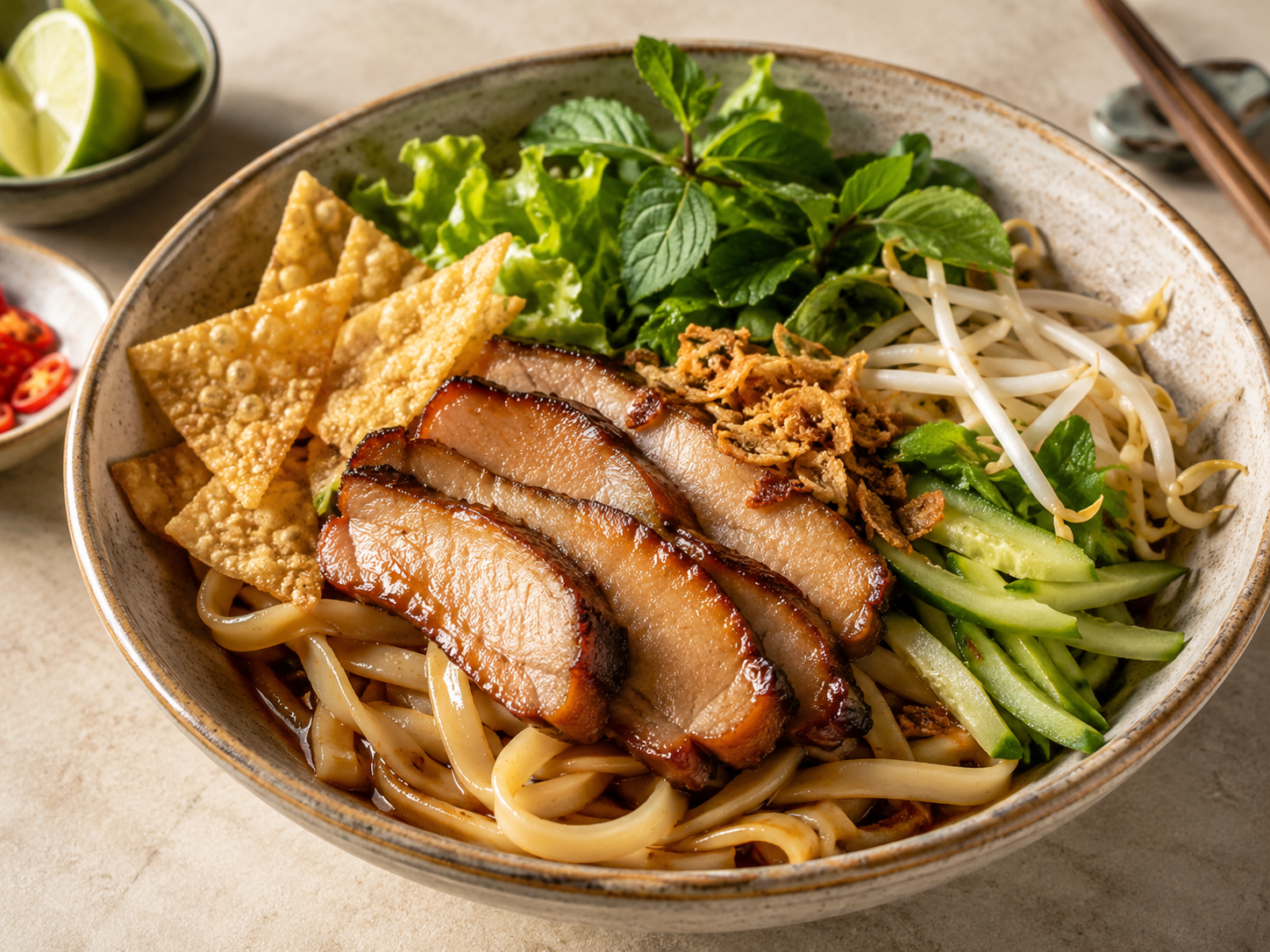
Cao lầu does not eat like phở, bún, or mì Quảng. It is drier, chewier, darker, and more stubborn in the best way. The bowl is built around thick rice noodles, slices of seasoned pork, fresh herbs, bean sprouts, crispy crackers, and just enough savory sauce to stain everything without turning it into soup.
In Hội An, cao lầu carries a kind of local mythology. The noodles are famously tied to ash water, mineral-rich well water, and the old trading port identity of the city. Whether you are eating it from a market stall, a small family shop, or a restaurant in the ancient town, the point is the same: this dish belongs to Hội An first.
A home version will never fully recreate the exact noodles made in Hội An, and pretending otherwise would be dishonest. But it can capture the spirit of the bowl: chewy noodles, deeply seasoned pork, a concentrated sauce, crunchy texture, and a pile of fresh herbs that keeps every bite alive.
This recipe is built for home cooks outside Vietnam who want something practical, respectful, and close in feeling to the real dish. Not a watered-down noodle bowl. Not a generic “Vietnamese pork noodle” shortcut. Cao lầu should feel specific, regional, and a little mysterious, even when you make it in your own kitchen.
Ingredients
For The Pork
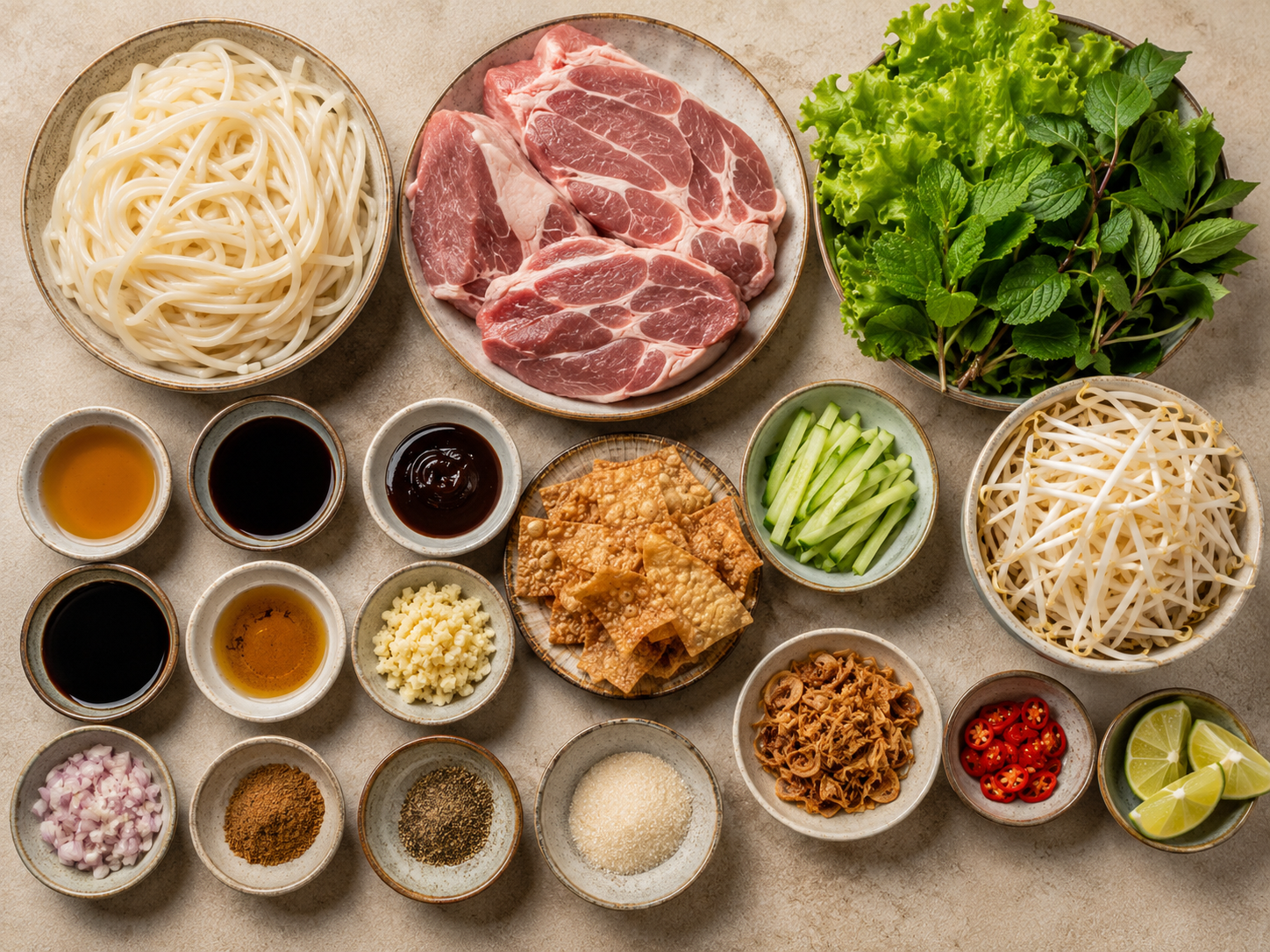
1½ pounds pork shoulder or pork belly, cut into 2-inch wide strips
1 tablespoon fish sauce
1 tablespoon soy sauce
1 tablespoon oyster sauce
1 tablespoon sugar
2 teaspoons dark soy sauce
1 tablespoon annatto oil or neutral oil
1 tablespoon minced garlic
1 tablespoon minced shallot
1 teaspoon five-spice powder
½ teaspoon black pepper
½ teaspoon kosher salt
½ cup coconut water or water
For The Sauce
¾ cup pork cooking liquid, strained
1 tablespoon fish sauce
1 tablespoon soy sauce
1 teaspoon sugar
½ teaspoon dark soy sauce
¼ teaspoon five-spice powder
2 tablespoons water, if needed
For The Noodles
1 pound thick fresh rice noodles, cao lầu noodles, or udon-style rice noodles
1 teaspoon neutral oil, for tossing
For The Bowl
3 cups bean sprouts
2 cups torn romaine lettuce or soft leaf lettuce
1 cup Vietnamese herbs, such as mint, Vietnamese coriander, Thai basil, or fish mint
½ cup thinly sliced cucumber
½ cup crispy rice crackers, sesame rice crackers, or fried wonton strips
2 tablespoons fried shallots
Lime wedges, for serving
Fresh sliced chile, optional
How To Make Cao Lầu
Step 1: Marinate The Pork
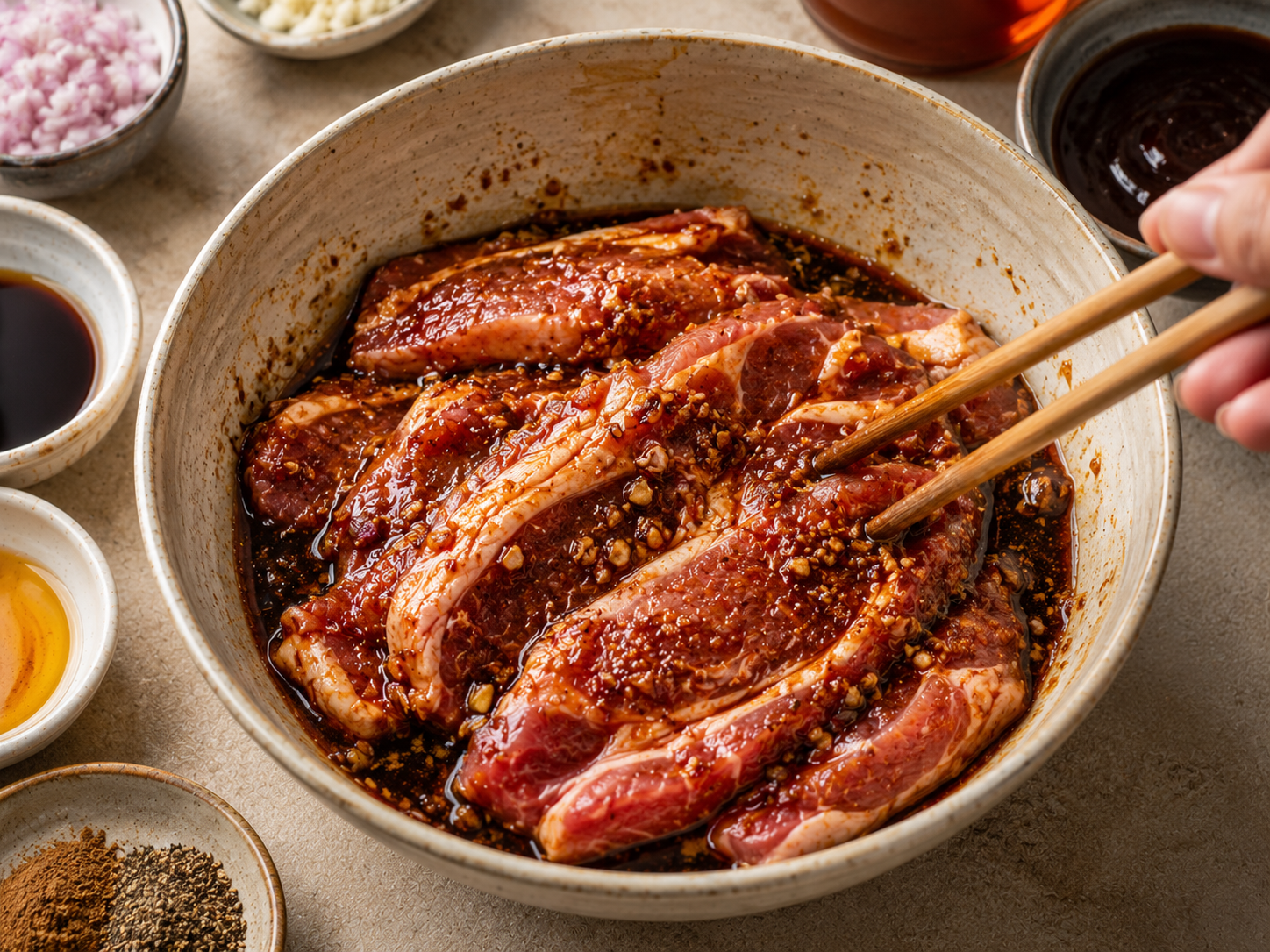
Place the pork in a bowl with fish sauce, soy sauce, oyster sauce, sugar, dark soy sauce, annatto oil, garlic, shallot, five-spice powder, black pepper, and salt. Rub the seasoning into the meat until every surface is coated.
Let the pork marinate for at least 1 hour. If you have time, cover it and refrigerate it overnight. The longer marinade gives the pork a deeper color and a more rounded flavor.
The pork should smell savory, garlicky, lightly sweet, and warm from the five-spice. Do not overdo the five-spice. Cao lầu should have an aromatic background, not taste like a spice cabinet.
Step 2: Sear The Pork
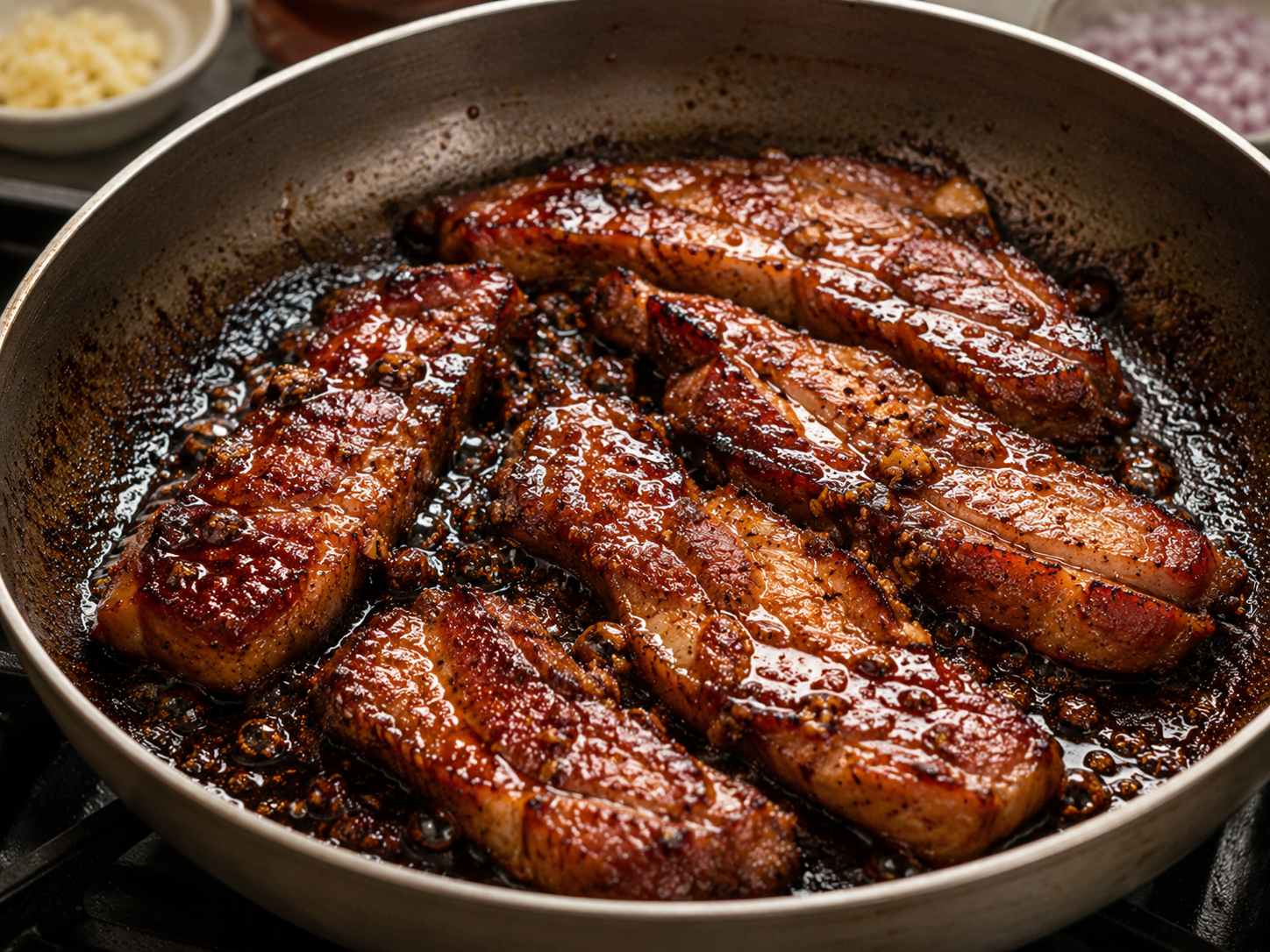
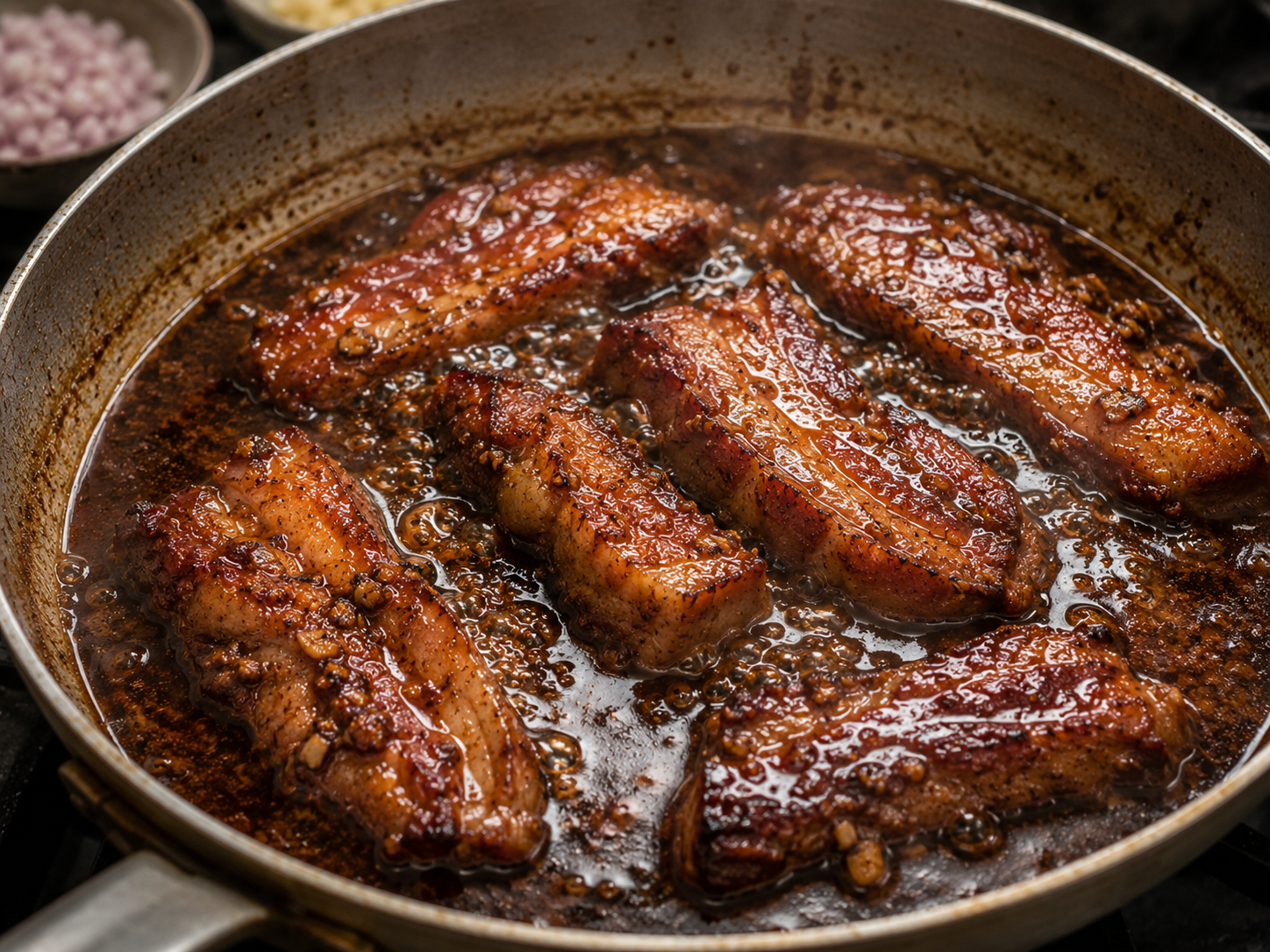
Heat a heavy pan over medium-high heat. Add the pork and sear it on all sides until the edges are browned and the marinade begins to caramelize.
This step gives the sauce its backbone. You want color on the meat and a little sticky browning in the pan, but do not let the sugar burn. If the pan gets too dark too quickly, lower the heat.
Step 3: Braise The Pork
Add ½ cup coconut water or water to the pan. Scrape up the browned bits from the bottom. Lower the heat, cover, and simmer gently for 45 to 60 minutes, turning the pork occasionally.
The pork is ready when it is tender enough to slice but not falling apart. Cao lầu pork should still have structure. It should cut cleanly, sit on top of the noodles, and carry the sauce into the bowl.
Remove the pork and let it rest for 10 minutes before slicing. Strain and save the cooking liquid.
Step 4: Make The Sauce
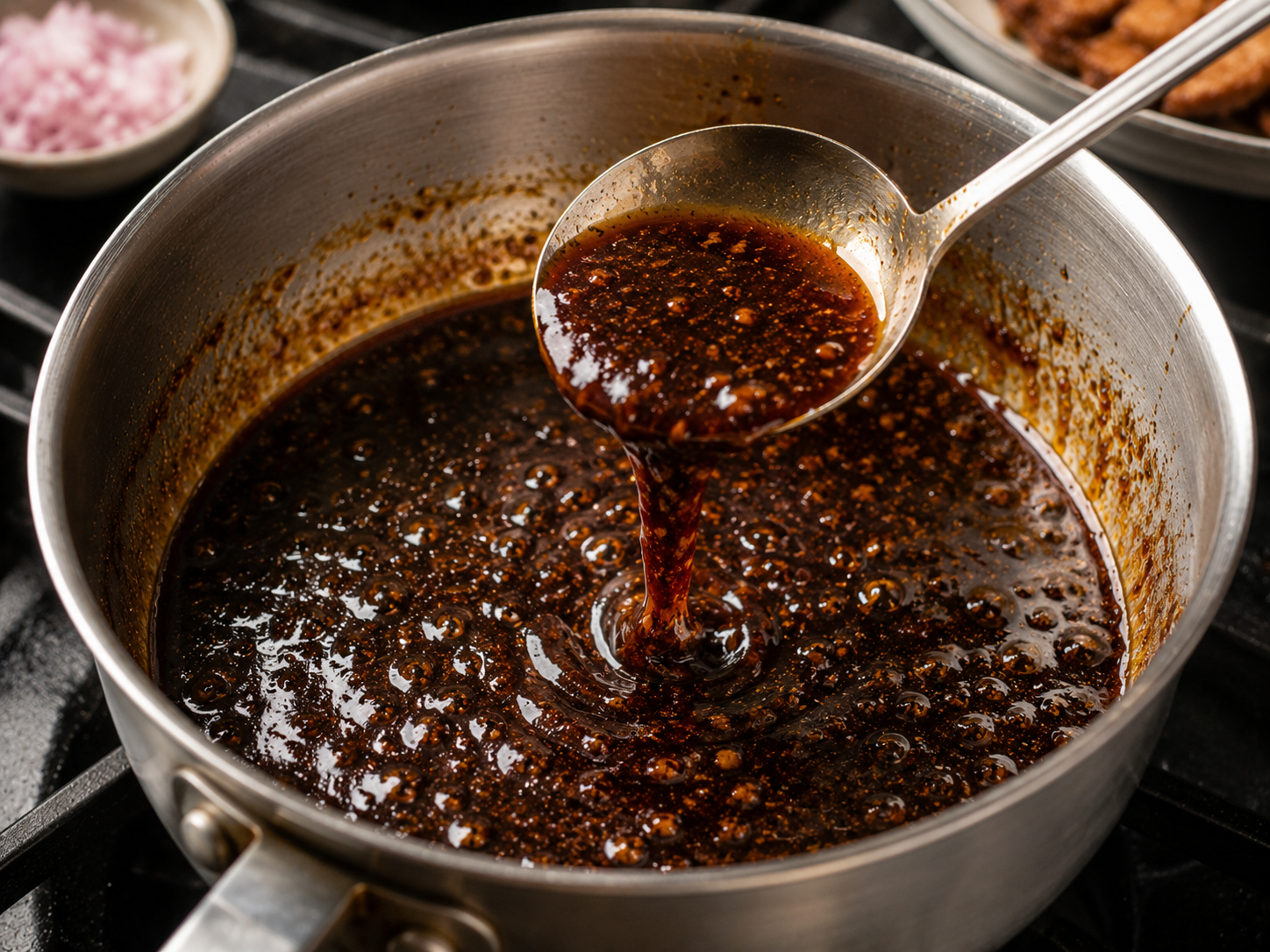
Pour ¾ cup of the strained pork cooking liquid into a small saucepan. Add fish sauce, soy sauce, sugar, dark soy sauce, and a small pinch of five-spice powder.
Simmer for 3 to 5 minutes until the sauce tastes concentrated but not salty enough to overwhelm the noodles. It should be savory, slightly sweet, porky, and dark. If it becomes too intense, loosen it with a tablespoon or two of water.
This is not a soup broth. You only need enough sauce to coat the noodles and gather at the bottom of the bowl.
Step 5: Prepare The Vegetables And Herbs
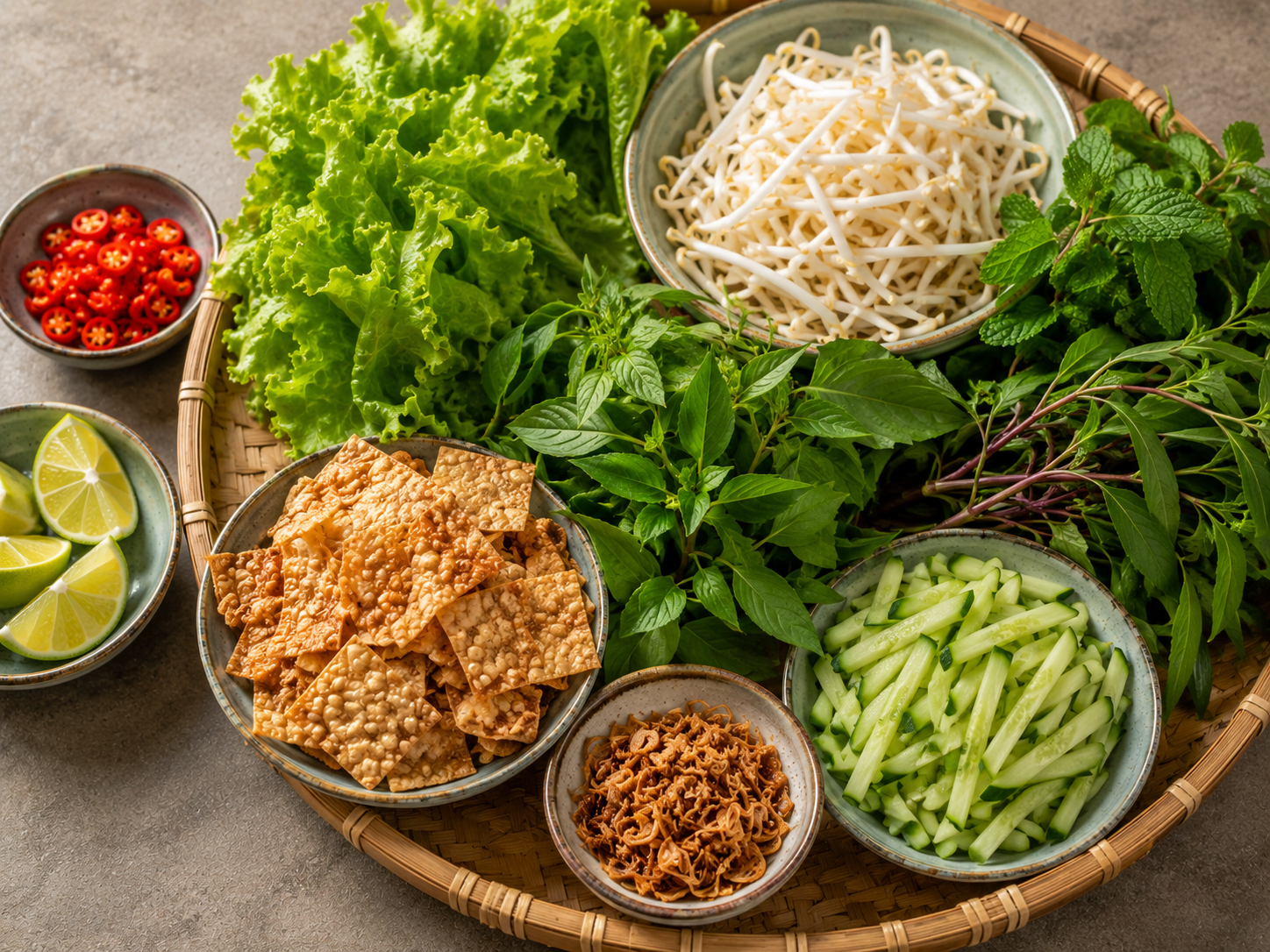
Rinse the bean sprouts and herbs well. Tear the lettuce into bite-size pieces. Slice the cucumber thinly.
Bring a small pot of water to a boil and blanch the bean sprouts for 10 to 15 seconds, then drain immediately. They should stay crisp. If you prefer the fresher street-stall texture, you can leave them raw.
The herbs matter. Cao lầu needs freshness to cut through the pork and sauce. Use what you can find, but do not skip the green pile completely.
Step 6: Prepare The Noodles
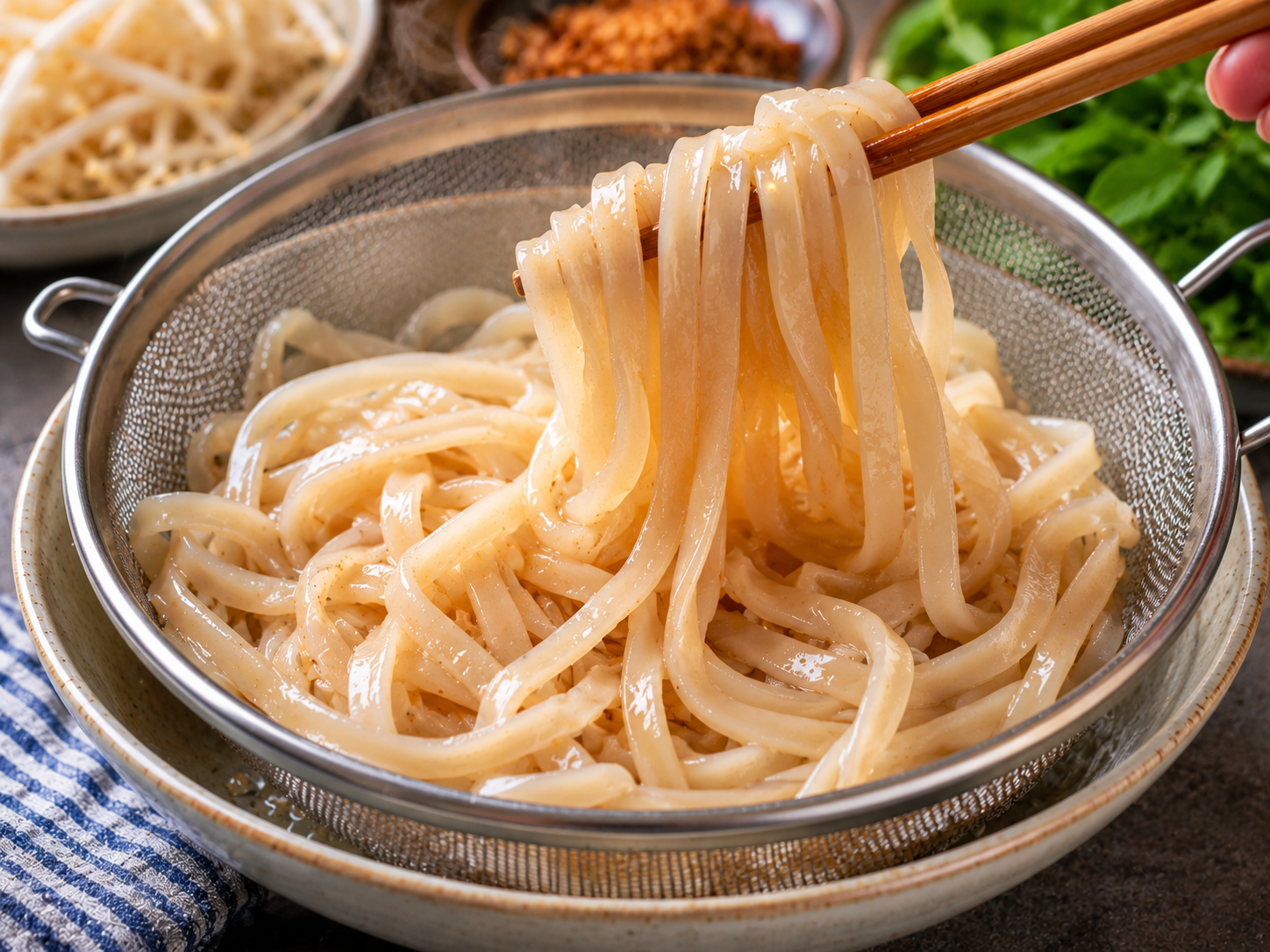
If using fresh rice noodles, loosen them gently with your hands. Warm them briefly in boiling water for 30 to 60 seconds, then drain well.
If using dried cao lầu noodles or thick dried rice noodles, cook according to the package directions, then rinse lightly and drain. Toss the noodles with a small amount of neutral oil so they do not clump.
The noodles should be warm, chewy, and separate. If they are too soft, the bowl loses its character.
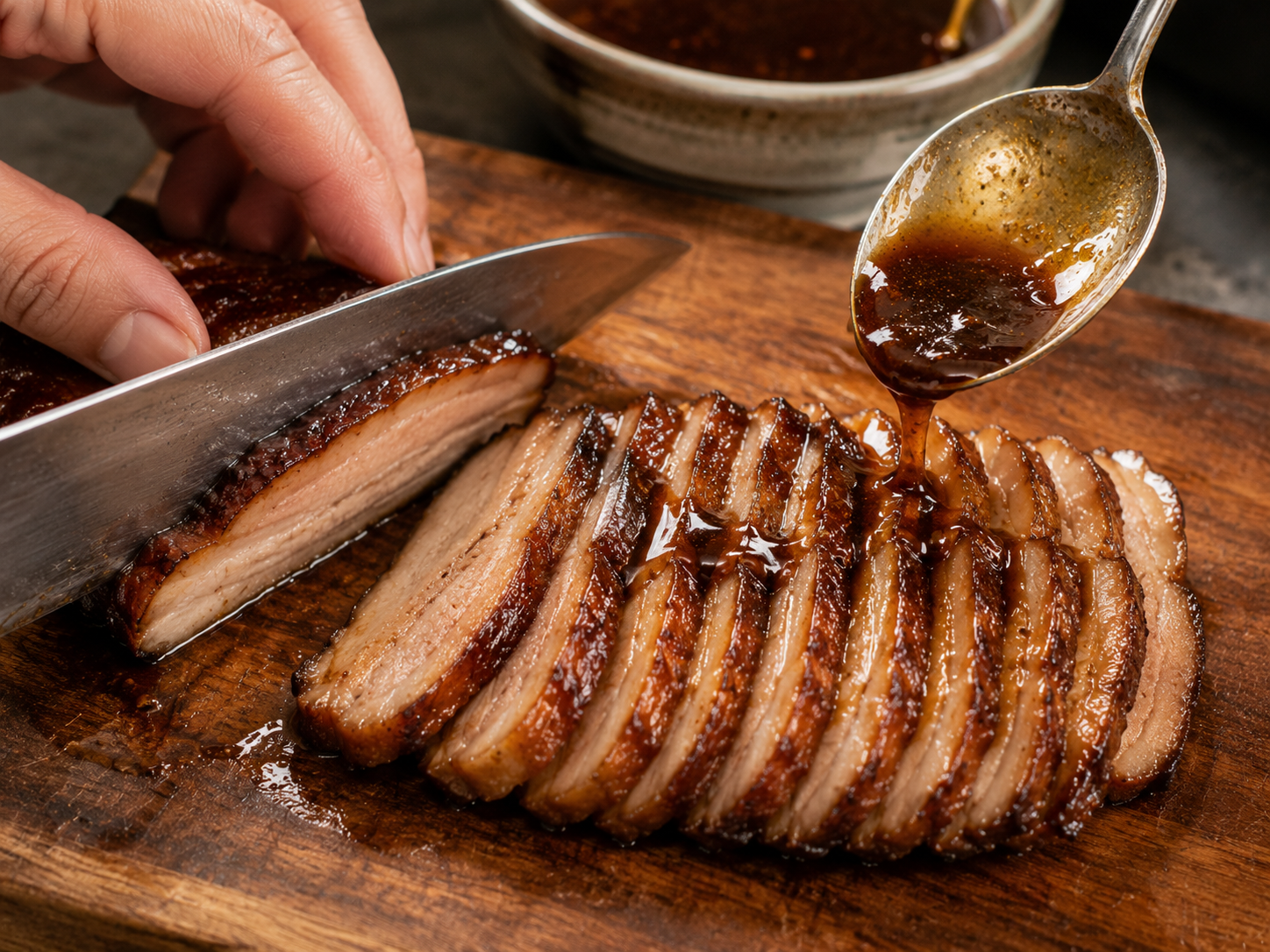
Step 7: Slice The Pork
Slice the rested pork into thin pieces. Spoon a little of the warm sauce over the slices to keep them glossy.
Good cao lầu pork should be tender, savory, and slightly sweet, with enough fat to feel rich but not heavy. If using pork belly, slice it thinner. If using pork shoulder, cut across the grain.
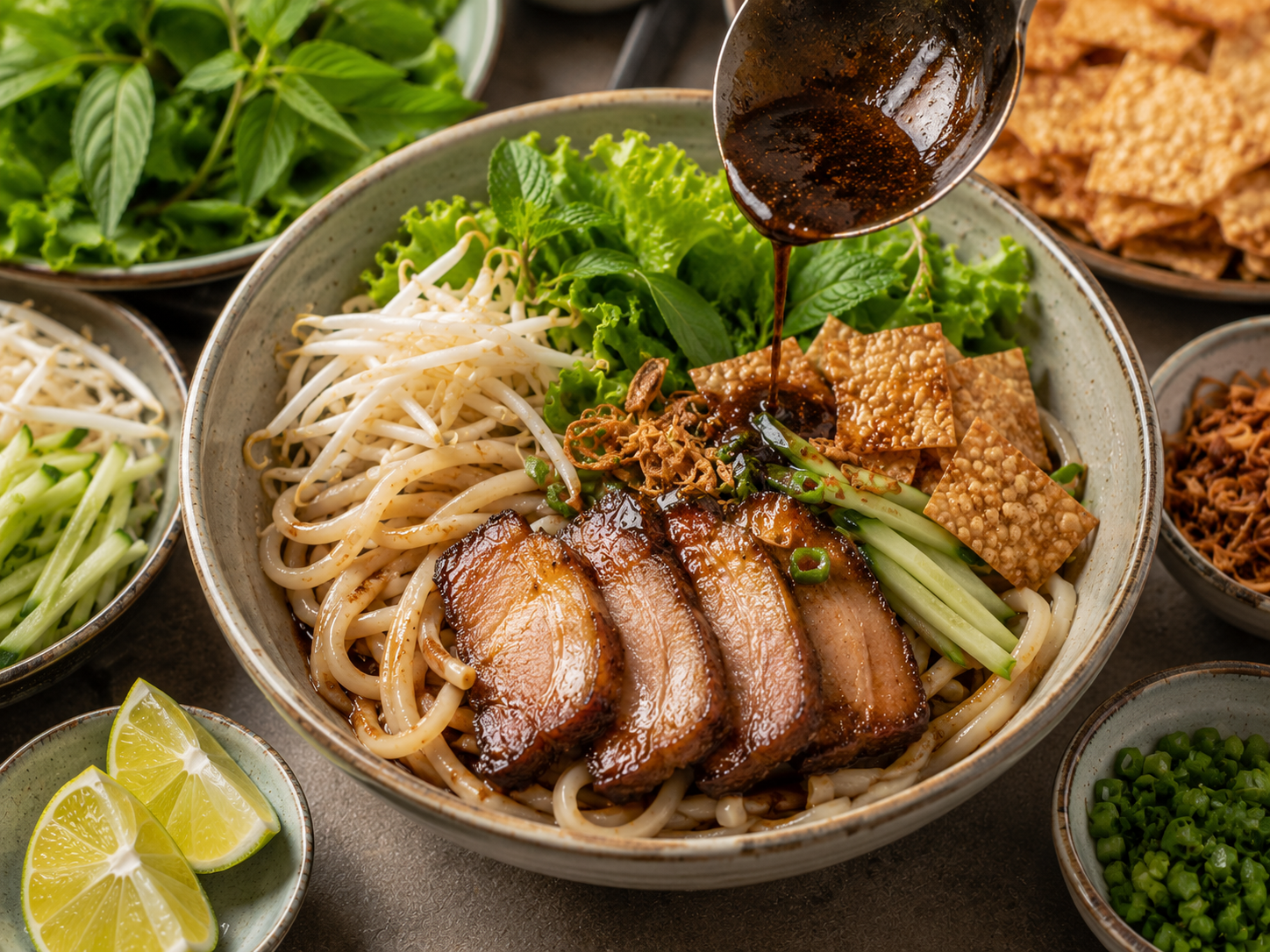
Step 8: Build The Bowls
Place lettuce and herbs at the bottom of each bowl. Add warm noodles on top. Spoon a few tablespoons of sauce over the noodles and toss lightly.
Add bean sprouts, cucumber, sliced pork, crispy rice crackers or fried wonton strips, and fried shallots. Add fresh chile if you want heat.
Each bowl should feel layered, not mixed into one flat pile. The sauce sits low. The pork sits high. The herbs and crunch stay alive.
Final Thoughts
Cao lầu teaches you that Vietnamese noodle dishes are not all built from broth. Some are built from texture, restraint, and place.
The real dish belongs to Hội An. The water, the noodles, the old streets, the market bowls, and the quiet pride around it cannot be packed into a recipe and shipped overseas. But cooking it at home still matters. It makes you pay attention to the parts that define it: chew, pork, herbs, sauce, crunch, and balance.
That is the job of a good home version. Not to pretend it came from a Hội An alley. To respect the dish enough to keep its shape.