Bánh Cuốn: Vietnam’s Steamed Rice Rolls
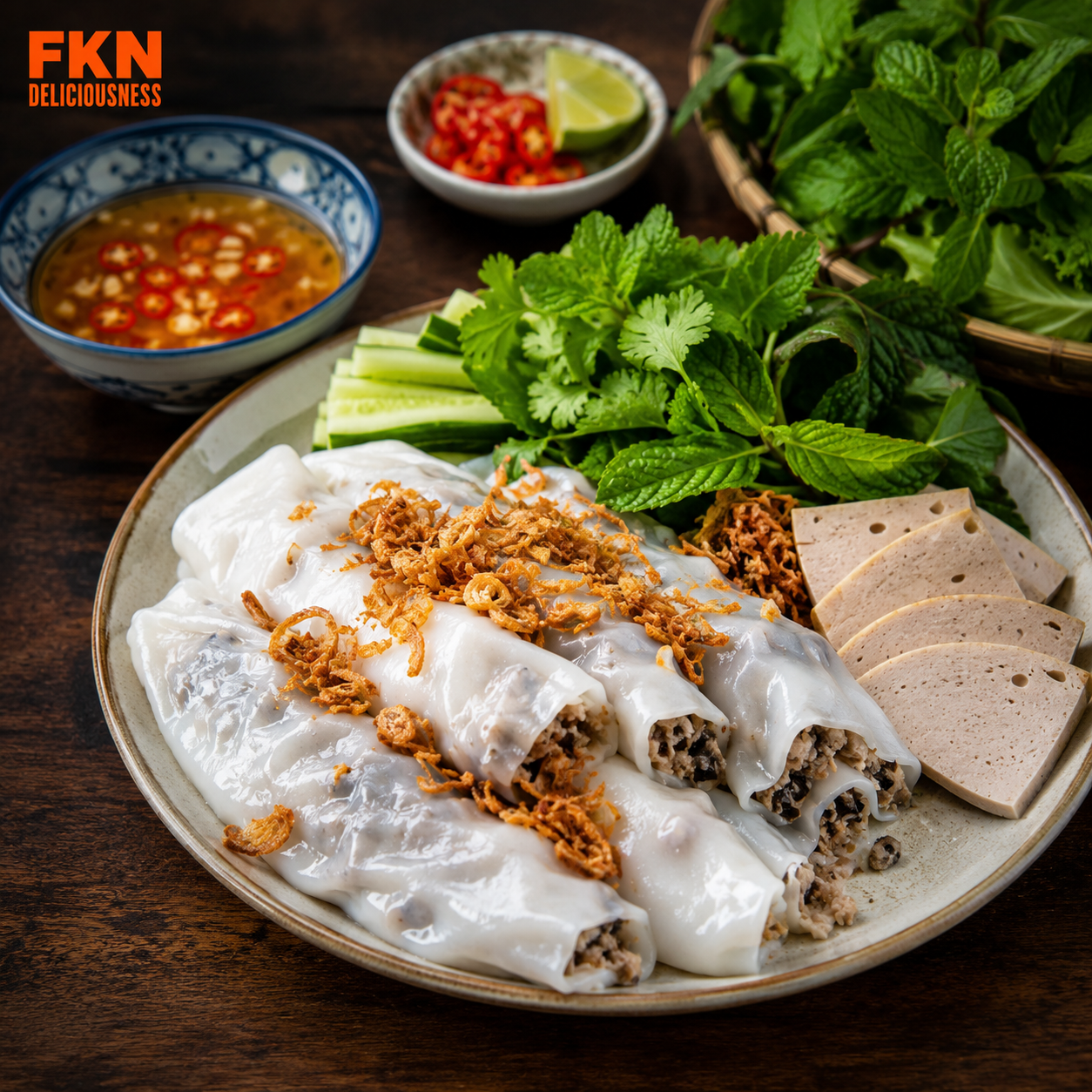
Bánh cuốn is the kind of breakfast that feels almost too delicate for the street. Thin sheets of steamed rice batter arrive soft, glossy, and barely holding together, folded around savory pork and mushrooms, then scattered with fried shallots that crackle against all that silk.
Bánh cuốn means “rolled cake,” but the better English description is Vietnamese steamed rice rolls. The dish is most closely tied to Northern Vietnam, especially Hanoi and nearby villages like Thanh Trì, where the craft of steaming rice batter into paper-thin sheets has become part of the region’s food identity. The classic version is filled with minced pork, wood ear mushrooms, and shallots, then served with chả lụa, cucumber, herbs, and nước chấm.
Vietnamese people often eat bánh cuốn in the morning, when the rolls are freshly steamed and still warm. A good version should be thin, tender, and slightly elastic, not thick or gummy, with a filling that seasons the rice sheet without weighing it down. First-time visitors should notice the contrast: soft rice rolls, crunchy fried shallots, cool herbs, salty-sweet fish sauce, and the clean bite of Vietnamese pork sausage on the side.
Bánh cuốn belongs on any serious what to eat in Vietnam list because it shows a quieter side of Vietnamese food. It is not loud, spicy, or overloaded. It is about technique, freshness, balance, and the kind of everyday breakfast that teaches you how much detail can live inside something simple.