Bánh Đa Cua: Hải Phòng’s Red Rice Noodle Soup With Crab
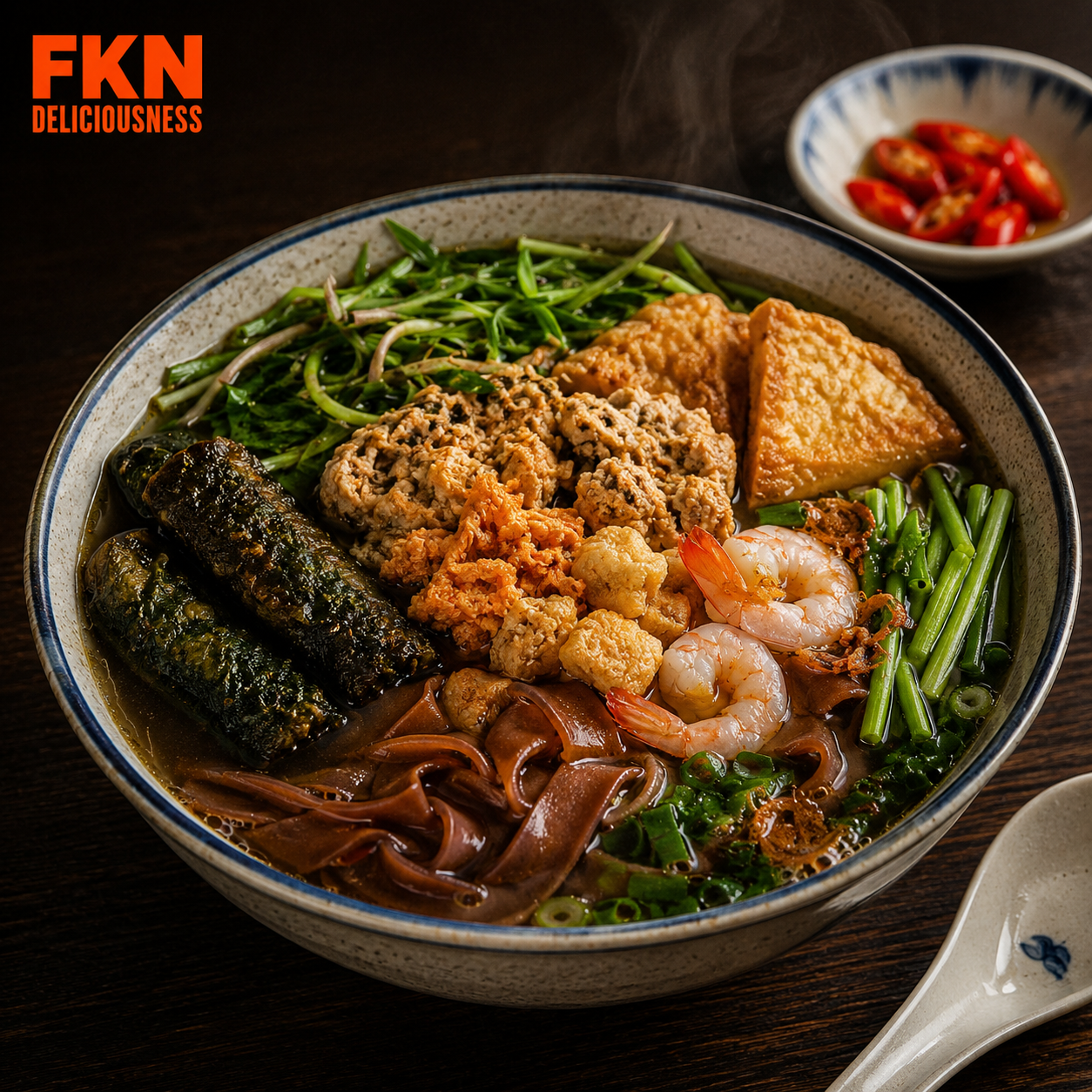
The first pull of bánh đa cua brings up ribbons of brown-red rice noodles, sweet field-crab broth, wilted greens, and the smoky edge of fried shallots. It is hearty without feeling heavy, with chewy noodles and enough crisp, herbal, and savory contrast to keep every bite moving. In Hải Phòng, this is not a decorative specialty. It is everyday food with the identity of the city packed into the bowl.
Bánh đa cua is Hải Phòng’s signature crab noodle soup, made with flat brown-red bánh đa noodles and a broth traditionally built from pounded freshwater field crabs. The rice noodles gain their distinctive darker color during production, traditionally with cane syrup or molasses, while the finished bowl may include crab meat, chả lá lốt, fish cake, shrimp, water spinach, rau rút, fried shallots, and crisp pork fat. Unlike bún riêu, the focus is less on tomato acidity and more on the chewy noodles, clean crab flavor, and generous mix of toppings.
People eat bánh đa cua at casual noodle shops throughout the day, ordering a simple bowl or a fuller version with extra chả, shrimp, or seafood. A good bowl should have noodles that stay springy, greens that still taste fresh, and broth that smells deeply of crab without becoming greasy or muddy. First-time visitors should notice that the crab is usually cua đồng, or freshwater field crab, rather than the large ocean crab they might expect.
Bánh đa cua belongs on any serious what-to-eat-in-Vietnam list because it tastes unmistakably regional. Eating it in Hải Phòng shows how Vietnamese noodle soups change from city to city, not only through the broth, but through the noodle itself, the local greens, and the toppings people expect. Order it where the bánh đa is fresh and eat it while hot, before the broad noodles lose their satisfying chew.