Bánh Cuốn Recipe: Vietnam’s Delicate Steamed Rice Rolls
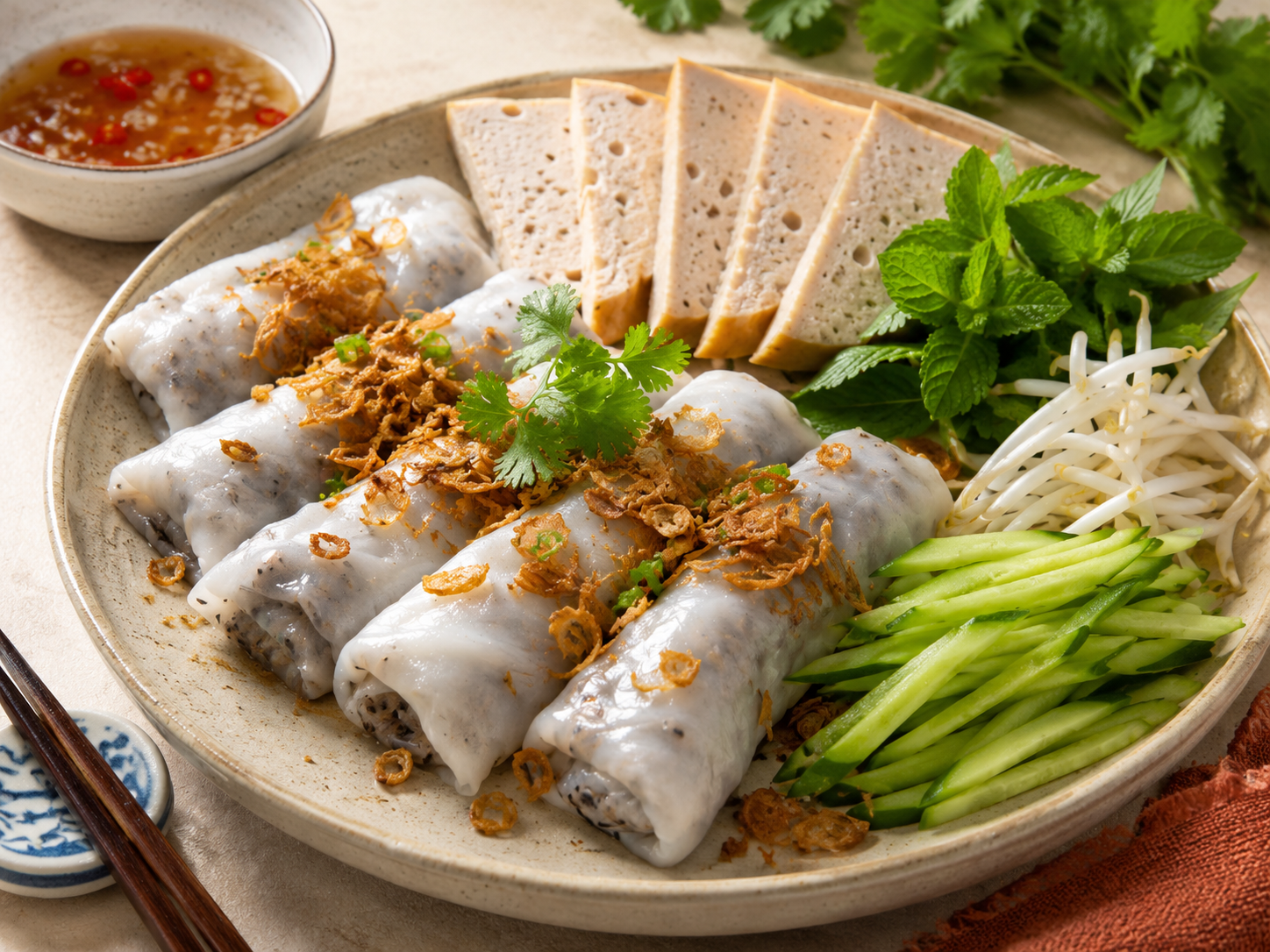
Bánh cuốn is one of those Vietnamese dishes that looks simple until you understand the skill behind it. A thin sheet of rice batter is steamed until it turns soft, glossy, and almost translucent, then folded around a savory filling of pork, wood ear mushroom, shallot, and pepper.
The first bite is quiet but precise. The rice roll should be tender, slightly elastic, and light enough to tear with chopsticks. The filling brings warmth and savoriness. Fried shallots give it crunch. The dipping sauce, usually a balanced nước chấm with fish sauce, lime, sugar, garlic, and chile, wakes everything up.
In Vietnam, bánh cuốn is breakfast food, street food, market food, and one of the great tests of rice batter technique. In the north, especially around Hanoi and Thanh Trì, the dish is known for its thin rice sheets, clean flavor, and careful balance. Some versions are filled, some are plain, but the soul of the dish is always the same: soft rice, fragrant shallots, good nước mắm, and restraint.
This home version respects that spirit while making the process realistic outside Vietnam. Instead of a traditional cloth steamer stretched over a pot, we use a nonstick pan method that gives you soft, delicate rolls without turning your kitchen into a bánh cuốn shop.
The goal is not to make bánh cuốn faster. The goal is to make it properly enough that when the plate lands on the table, you understand why something this delicate has stayed part of Vietnamese mornings for generations.
Ingredients
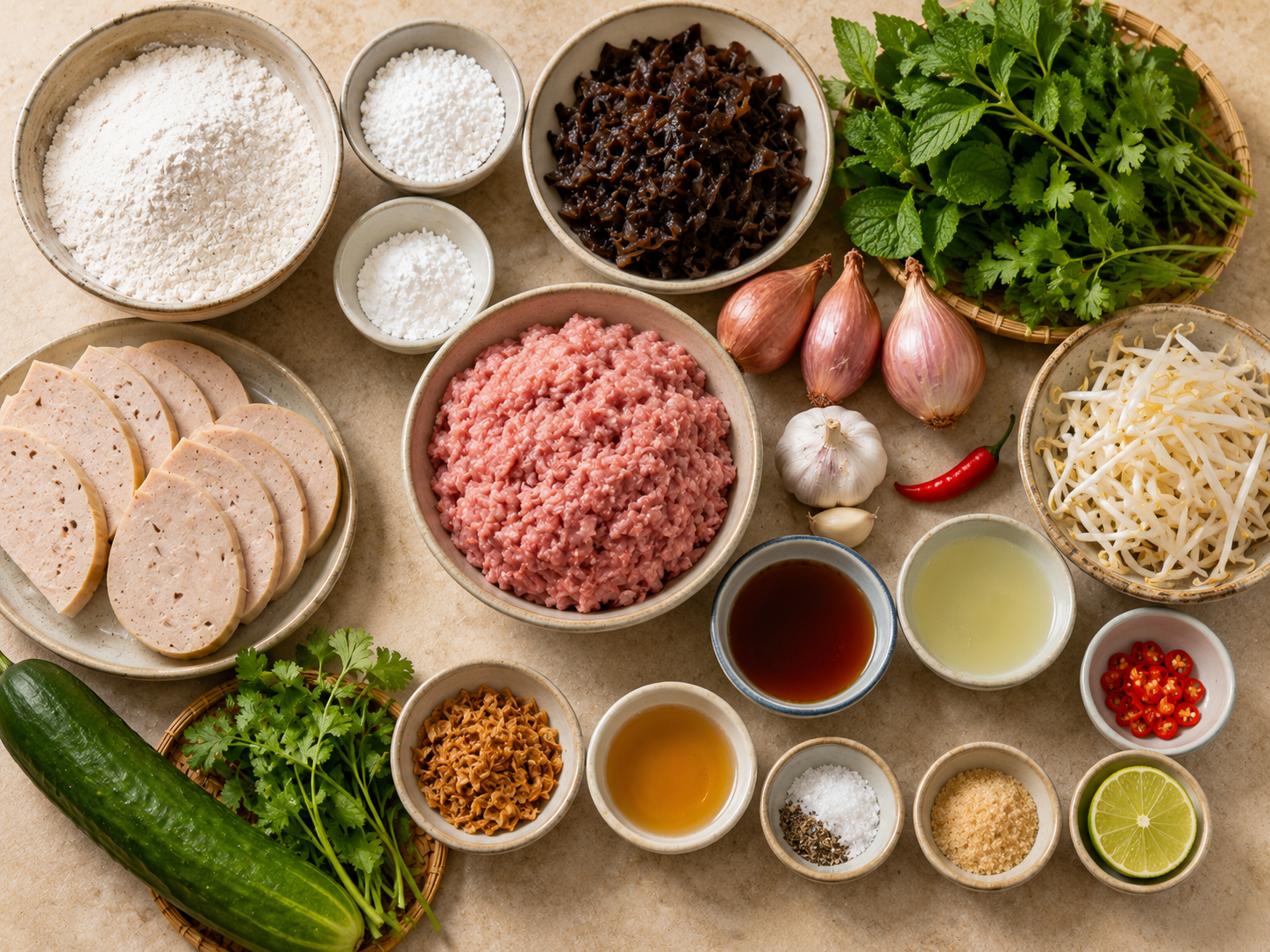
For The Rice Batter
1 cup rice flour
½ cup tapioca starch
2 tablespoons potato starch or cornstarch
½ teaspoon fine sea salt
2 cups room-temperature water
1 cup boiling water
1 tablespoon neutral oil, plus more for brushing
For The Pork And Mushroom Filling
8 ounces ground pork
¾ cup dried wood ear mushrooms, soaked, drained, trimmed, and finely chopped
2 large shallots, finely chopped
2 teaspoons fish sauce
½ teaspoon fine sea salt
½ teaspoon sugar
½ teaspoon ground black pepper
1 tablespoon neutral oil
For The Fried Shallots And Shallot Oil
4 large shallots, thinly sliced
½ cup neutral oil
Pinch of salt
For The Dipping Sauce
¼ cup fish sauce
¼ cup sugar
½ cup warm water
3 tablespoons fresh lime juice or rice vinegar
1 garlic clove, finely minced
1 small red chile, thinly sliced, optional
For Serving
8 ounces chả lụa, thinly sliced
1 small cucumber, sliced into thin half-moons
1 cup bean sprouts, rinsed and drained
½ cup fresh cilantro leaves
½ cup fresh mint or Vietnamese coriander, optional
Extra fried shallots
Ground black pepper
How To Make Bánh Cuốn
Step 1: Make The Rice Batter
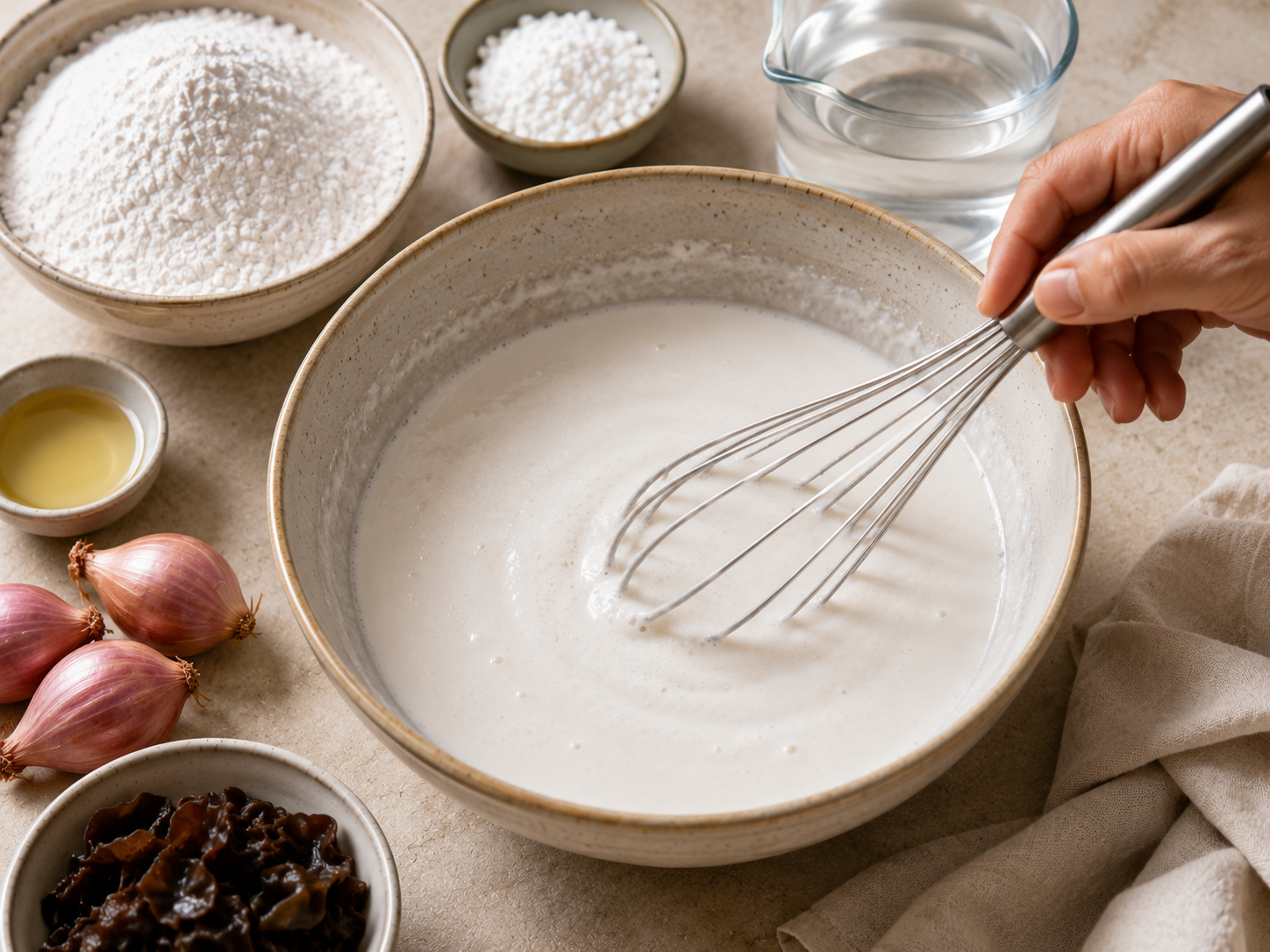
In a large bowl, whisk together the rice flour, tapioca starch, potato starch or cornstarch, and salt. Add the room-temperature water and whisk until the flour is fully hydrated and there are no dry pockets at the bottom of the bowl.
Slowly pour in the boiling water while whisking. This helps the batter hydrate and gives the finished rice sheets a softer, more elastic texture. Add 1 tablespoon neutral oil and whisk again.
Let the batter rest for at least 30 minutes. If you have time, rest it for 1 to 2 hours. The flour will settle as it sits, so stir the batter very well before cooking and continue stirring between rolls. The batter should look thin, smooth, and pourable, closer to crepe batter than pancake batter.
Step 2: Make The Fried Shallots
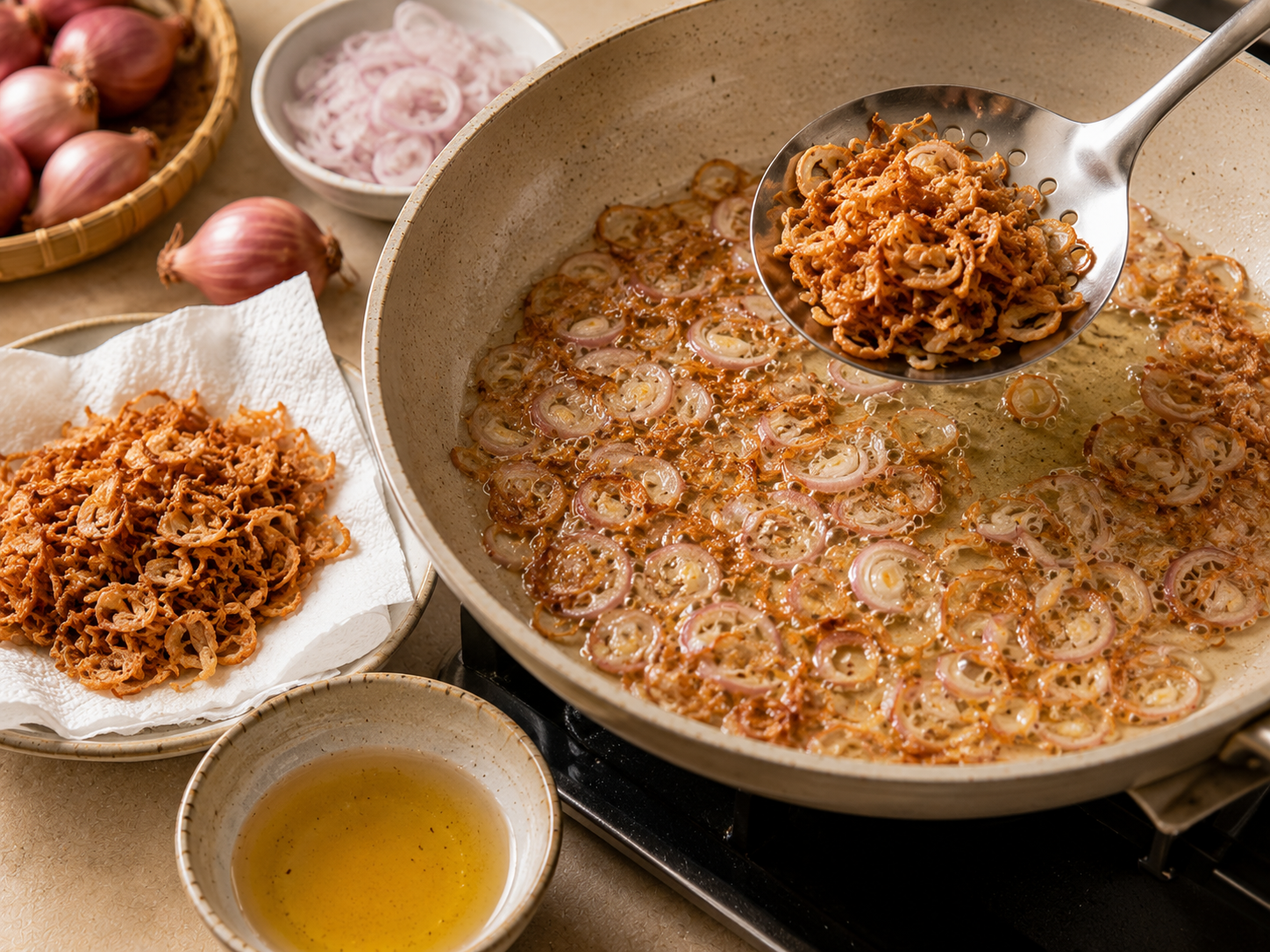
Add the sliced shallots and neutral oil to a small cold pan. Turn the heat to medium and cook slowly, stirring often, until the shallots turn light golden.
Do not wait until they are dark brown in the pan. Shallots continue to cook after they leave the oil, and they can go from fragrant to bitter quickly. When they are pale golden and crisp at the edges, lift them out with a slotted spoon and drain on paper towels.
Sprinkle lightly with salt. Save the shallot oil. You will use it to brush the cooked rice rolls and give the dish that warm, familiar bánh cuốn aroma.
Step 3: Cook The Pork And Mushroom Filling
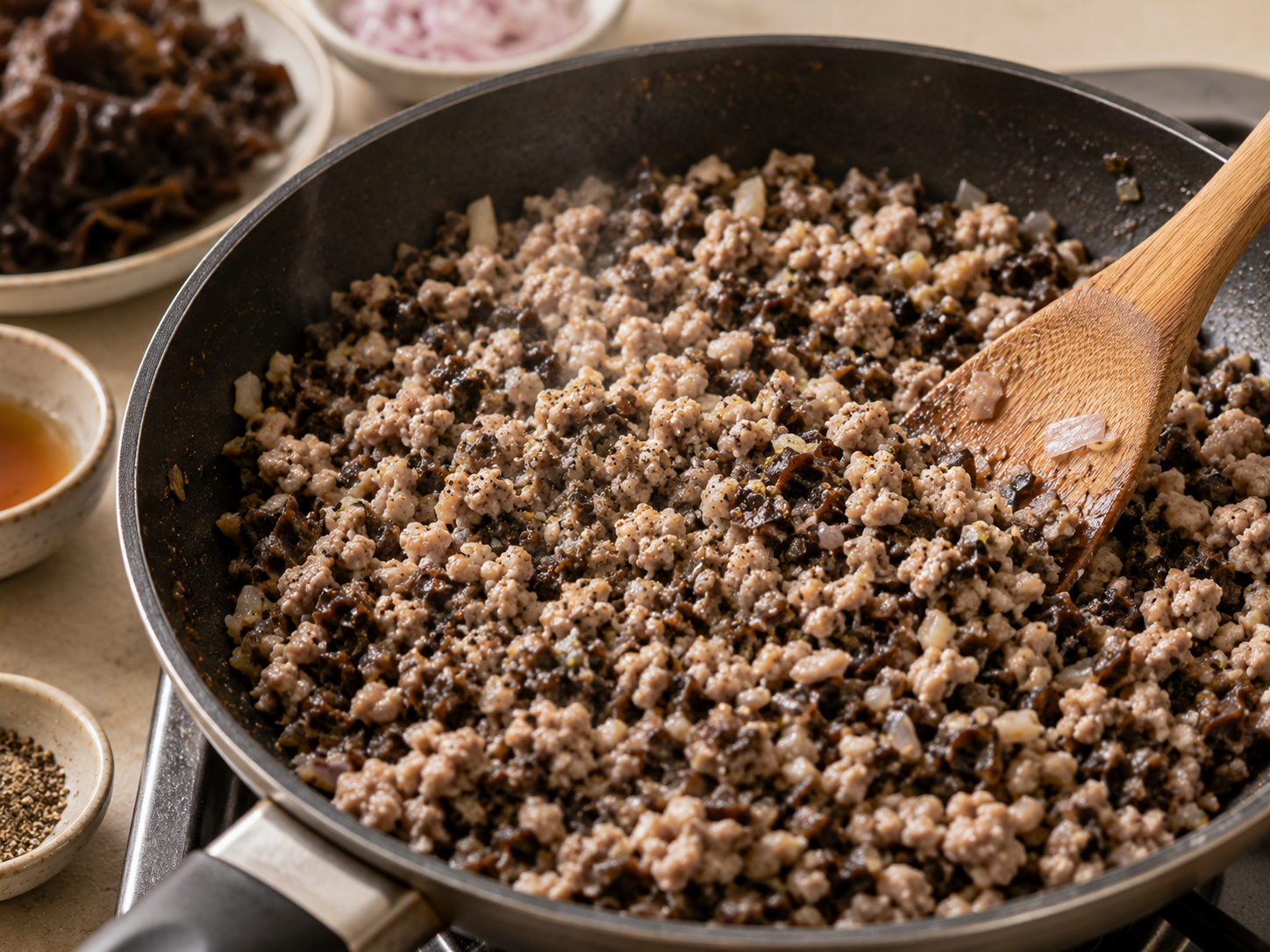
Heat 1 tablespoon neutral oil in a skillet over medium heat. Add the chopped shallots and cook for 1 to 2 minutes, until fragrant and softened.
Add the ground pork and break it up with a spoon. Cook until the pork loses its raw color, then add the chopped wood ear mushrooms, fish sauce, salt, sugar, and black pepper.
Cook for 4 to 6 minutes, stirring often, until the pork is fully cooked and the mixture looks dry but not hard. The filling should be savory, peppery, and lightly fragrant from the shallots. If there is too much liquid in the pan, keep cooking until it evaporates. Wet filling makes the rice sheets harder to roll.
Transfer the filling to a bowl and let it cool slightly before using.
Step 4: Make The Dipping Sauce
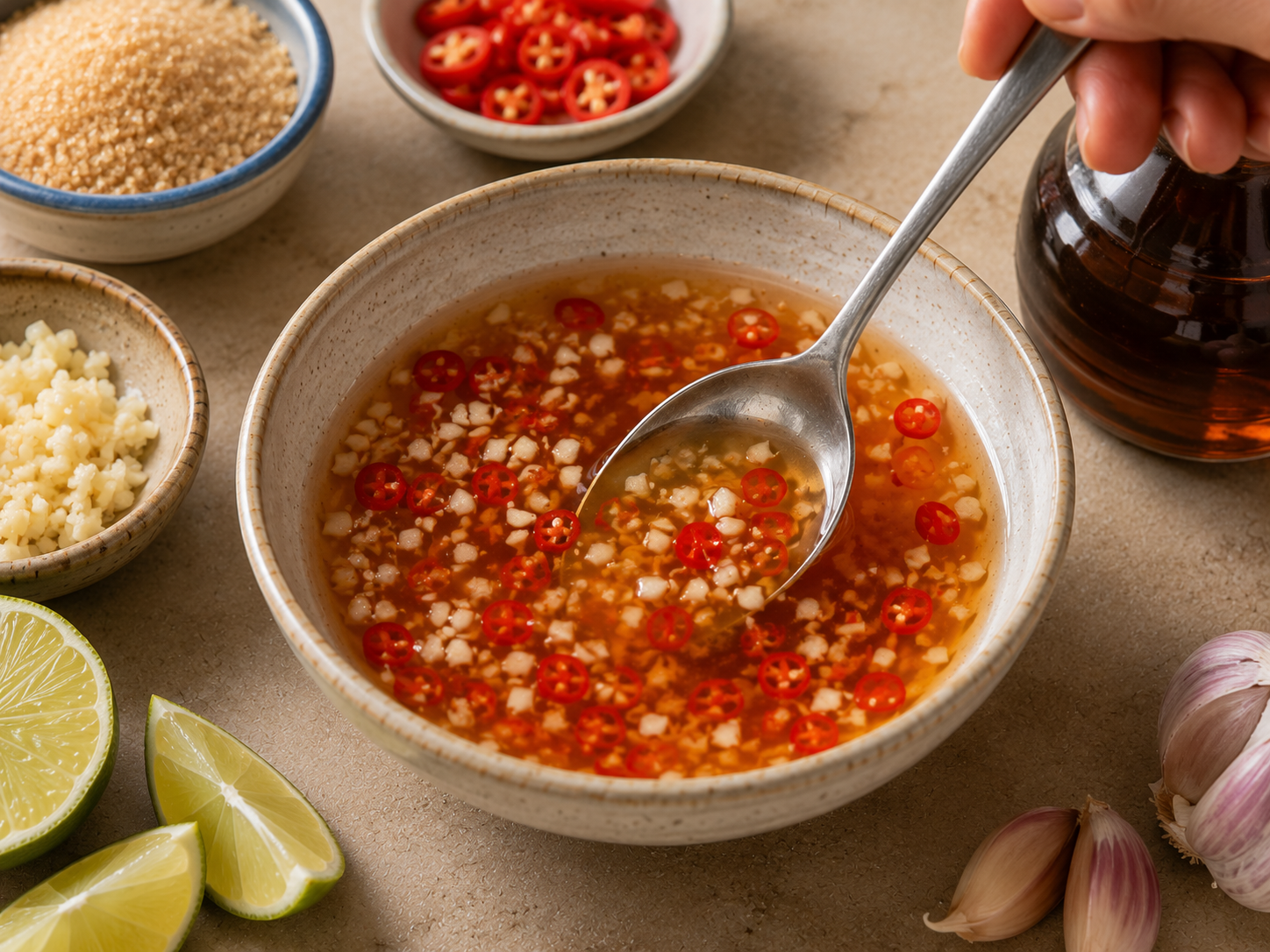
In a bowl, stir together the fish sauce, sugar, and warm water until the sugar dissolves. Add the lime juice or rice vinegar, then stir in the minced garlic and sliced chile if using.
Taste the sauce. It should be salty, sweet, lightly sour, and easy to spoon over the rolls. If it tastes too strong, add a little more warm water. If it tastes flat, add a small splash of fish sauce or lime juice.
Bánh cuốn depends on the sauce, but the sauce should not dominate the plate. It should lift the rice rolls, not drown them.
Step 5: Cook The Rice Sheets
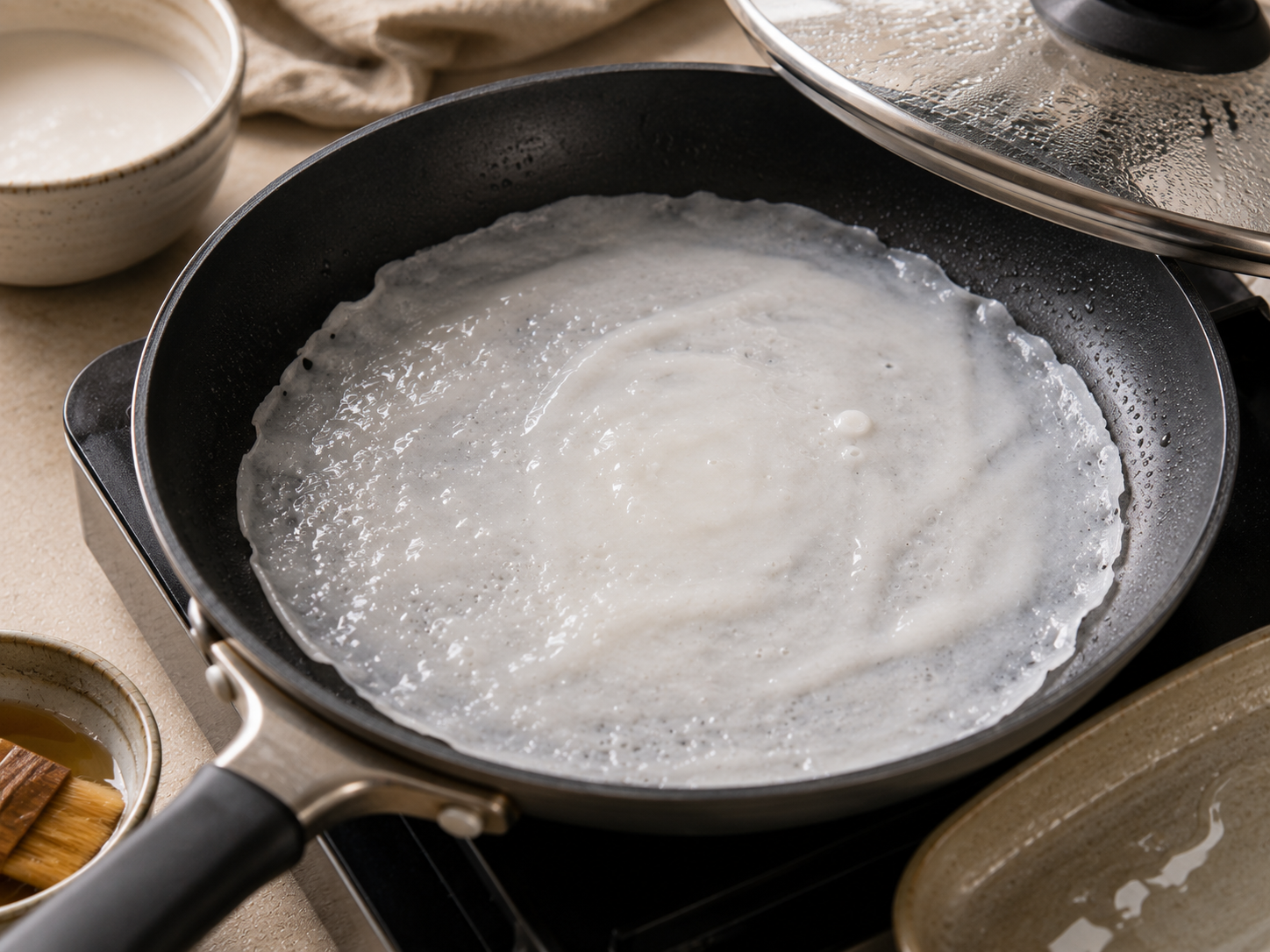
Set a small nonstick skillet over medium-low heat. Lightly brush the pan with neutral oil, then wipe away any excess with a paper towel. You want the pan barely coated, not greasy.
Stir the batter well. Pour about ¼ cup batter into the pan and immediately swirl it into a thin, even layer. Cover the pan with a lid and steam for 45 to 60 seconds, until the rice sheet turns translucent and no wet batter remains on top.
The heat matters. If the pan is too hot, the sheet will dry out, crack, or become rubbery. If the pan is too cool, the batter will sit too long and turn gummy. Medium-low heat usually gives the best texture.
When the sheet is cooked, turn the pan upside down over a lightly oiled tray or cutting board and let the rice sheet fall out. If it sticks, loosen the edge gently with a silicone spatula.
Step 6: Fill And Roll The Bánh Cuốn
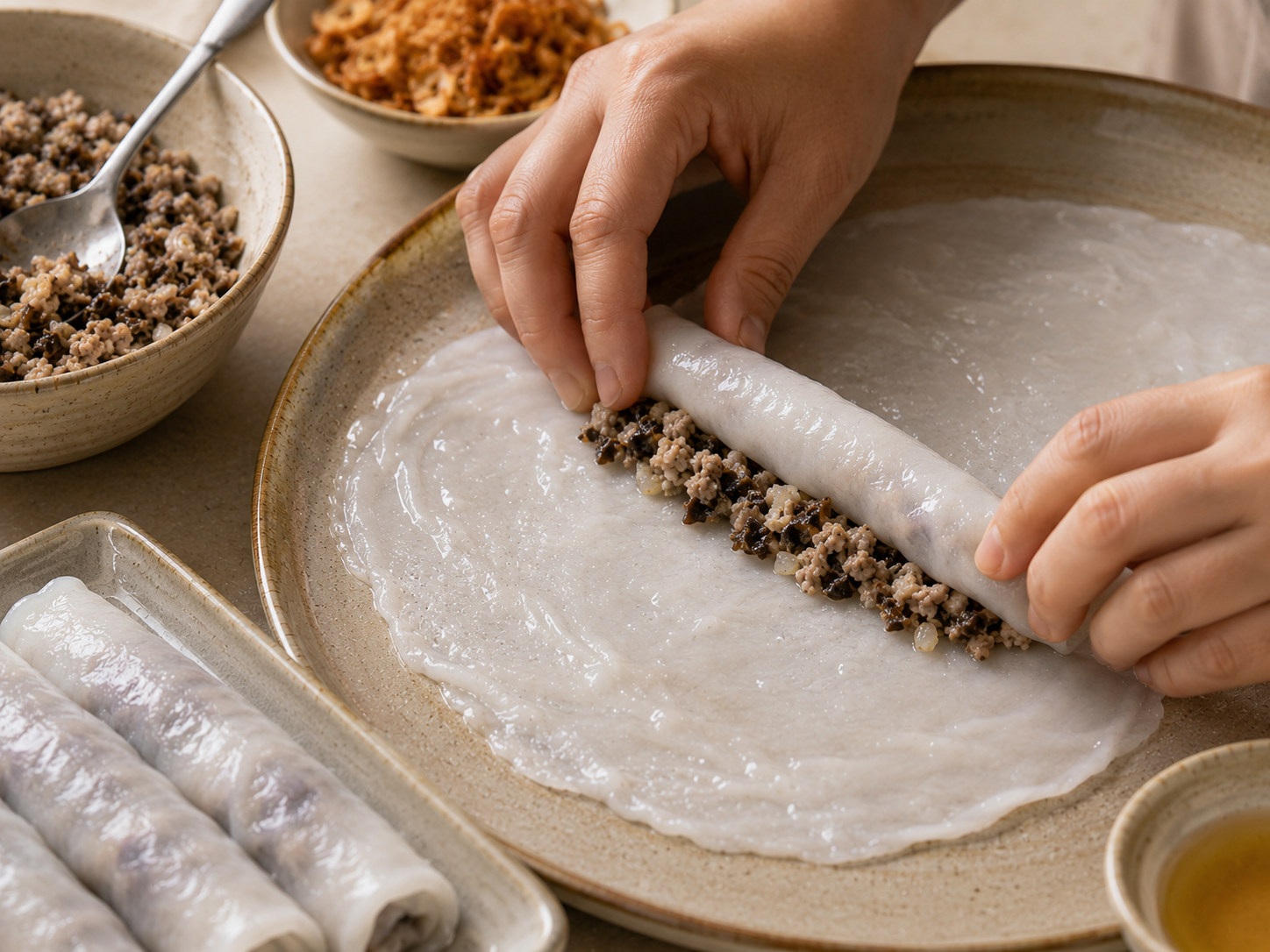
Place 1 to 2 tablespoons of pork and mushroom filling across the lower third of the rice sheet. Fold the sides in slightly, then roll gently into a loose cylinder.
Do not roll too tightly. Bánh cuốn should feel soft and delicate, not packed like a spring roll. If the sheet tears, keep going. The first few rolls are usually practice, even for good cooks.
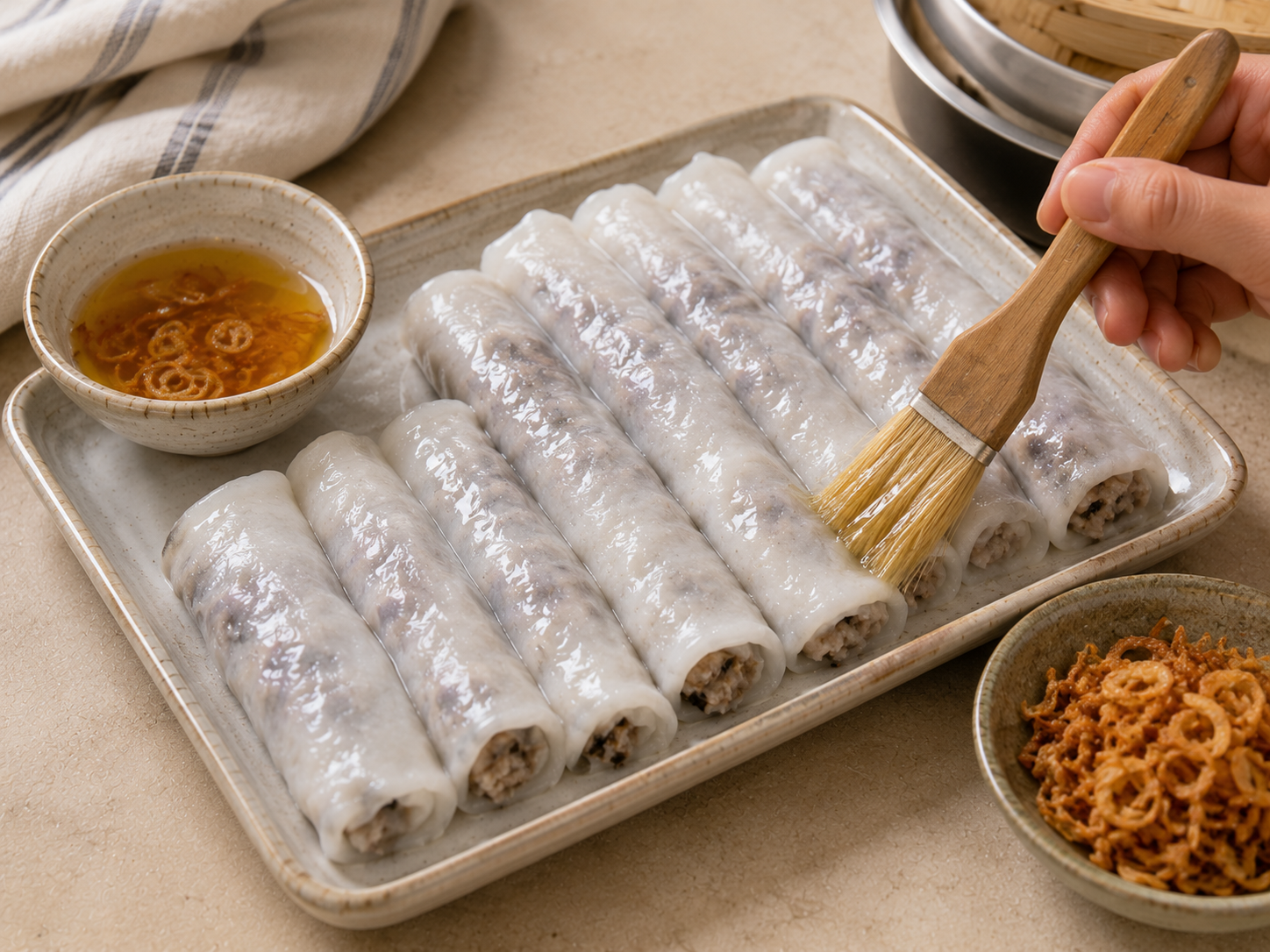
Brush the finished roll lightly with shallot oil and transfer it to a serving plate. Repeat with the remaining batter and filling, stirring the batter before each pour.
Step 7: Keep The Rolls Soft While You Work
As you cook and roll, keep the finished bánh cuốn lightly covered with a clean kitchen towel or loose sheet of foil. This keeps the rice sheets from drying out.
If the rolls begin to stick together, brush them lightly with more shallot oil. That oil is not just for flavor. It helps the rolls stay glossy, soft, and separate on the plate.
Bánh cuốn is best eaten warm, but it does not need to be steaming hot. The texture should stay tender, smooth, and slightly elastic.
Step 8: Prepare The Serving Plate
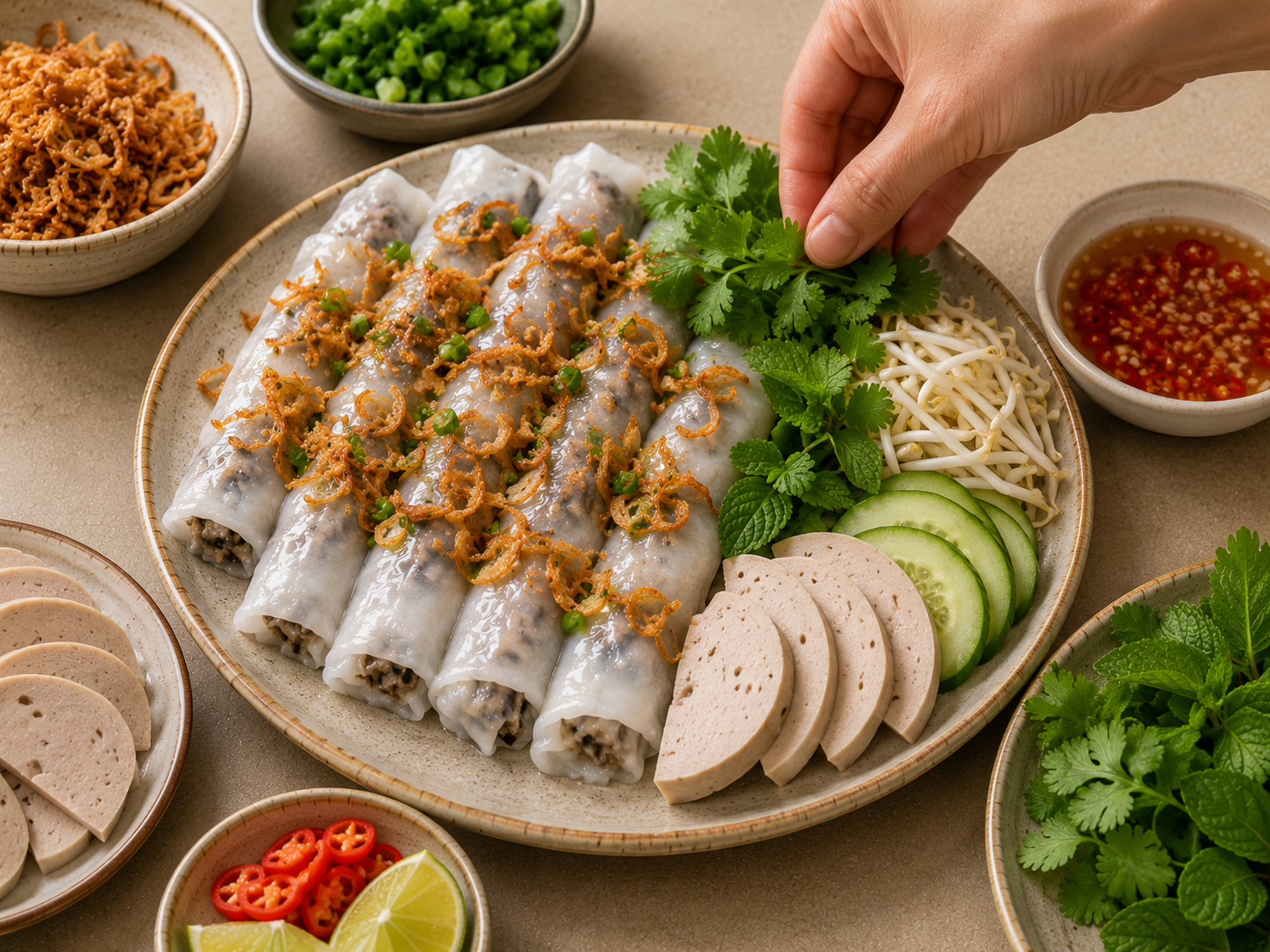
Arrange the bánh cuốn on a plate with sliced chả lụa, cucumber, bean sprouts, and fresh herbs. Scatter fried shallots over the top and add a little extra black pepper if you like.
Serve the dipping sauce on the side or spoon a small amount over the rolls right before eating. In Vietnam, you will see both approaches depending on the shop, the region, and the cook. For home cooking, serving the sauce on the side gives people more control.
The best bite has a little of everything: soft rice roll, savory pork filling, crisp shallot, cool cucumber, fresh herb, and nước chấm.
Final Thoughts
Bánh cuốn teaches patience in a very Vietnamese way. The ingredients are humble, but the technique asks you to slow down, pay attention, and respect texture.
It is rice flour, water, pork, mushrooms, shallots, herbs, and fish sauce. Nothing expensive. Nothing loud. But when the sheet is thin, the filling is warm, the shallots are crisp, and the nước chấm is balanced, the whole plate feels complete.
That is what makes bánh cuốn special. It does not try to impress you with size or richness. It wins with delicacy, repetition, and the kind of quiet skill you see every morning in Vietnam if you know where to look.