Bò Kho Recipe: Vietnamese Beef Stew With Lemongrass And Star Anise
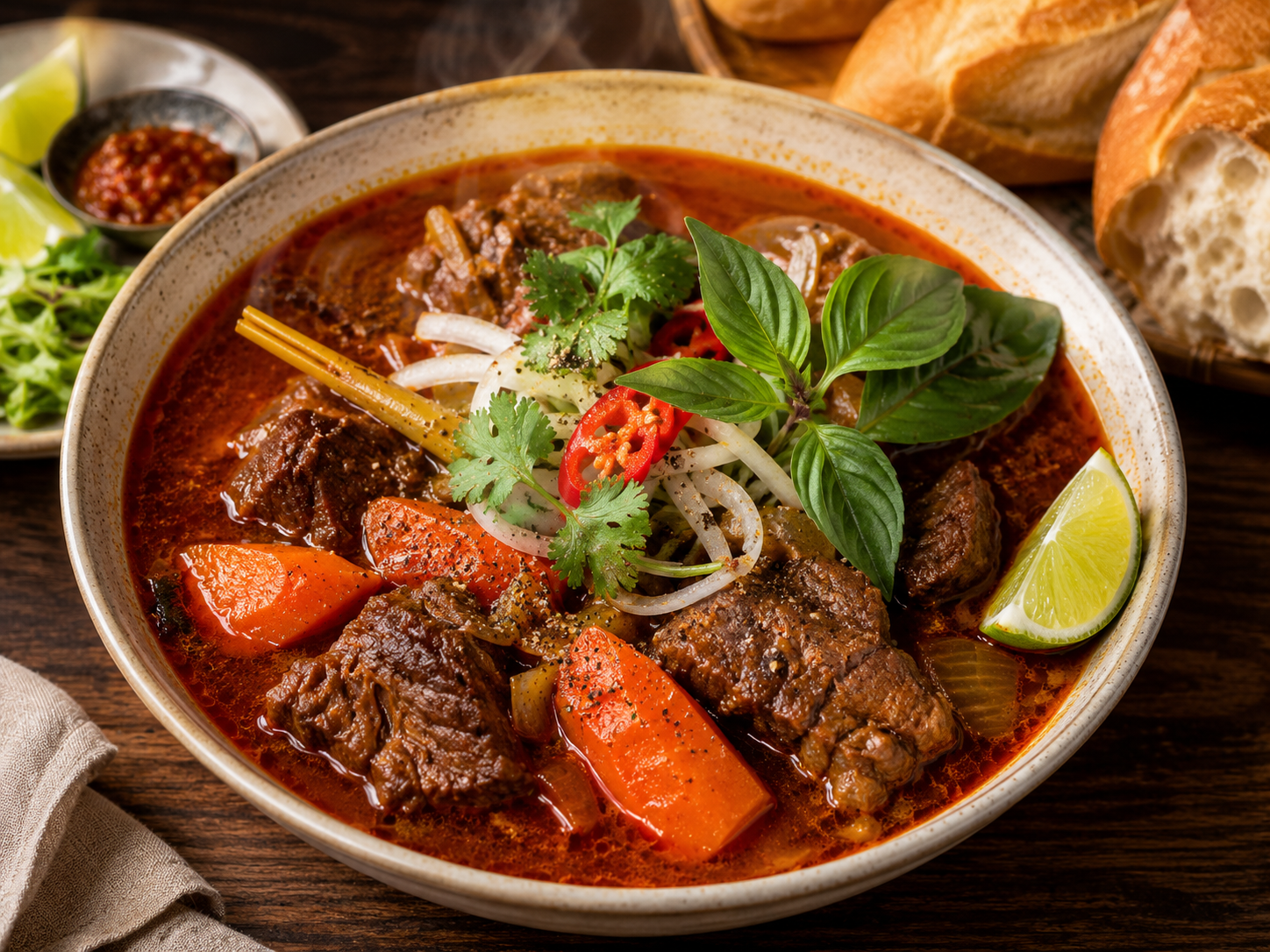
Bò kho is the kind of Vietnamese dish that makes the whole kitchen smell like something good is about to happen. Lemongrass hits first, then star anise, garlic, ginger, tomato, beef, and that deep red broth slowly coming together in the pot.
It is called a stew, but it does not eat like a Western beef stew. Bò kho is lighter, more aromatic, and built for dipping, slurping, and chasing every spoonful with bread, noodles, herbs, lime, and chili. The broth should be rich without being heavy, fragrant without tasting like perfume, and loose enough to drink.
In Vietnam, bò kho can show up for breakfast, lunch, or dinner. Some people eat it with bánh mì. Some spoon it over noodles. Some just want the beef, carrots, and broth with a handful of rau quế and a squeeze of lime.
This home version keeps the soul of the dish intact: tender beef, warm spices, bruised lemongrass, fish sauce, annatto color, carrots, and a broth that tastes like it took its time because it did.
Ingredients
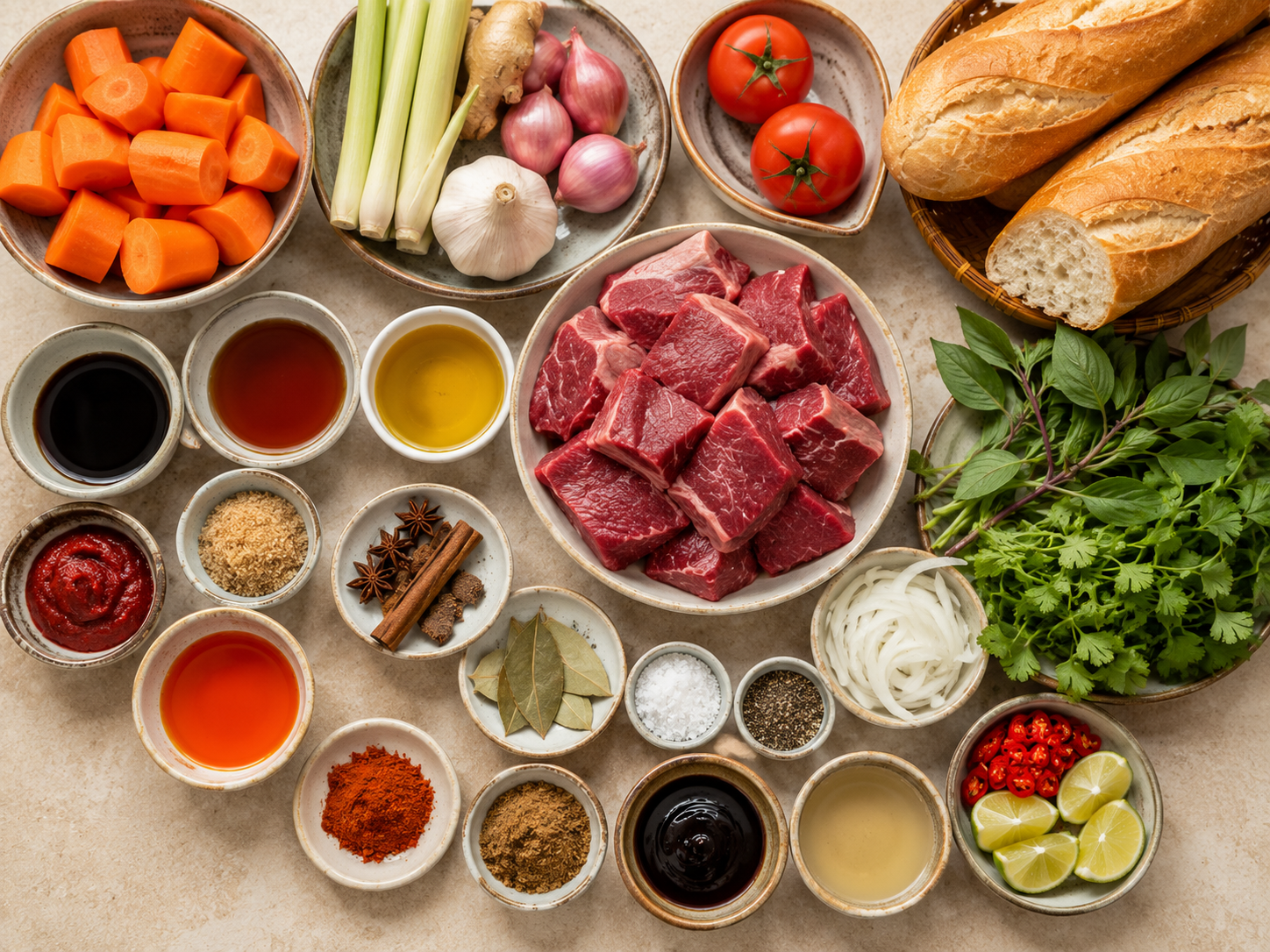
For The Beef And Marinade
2½ pounds beef chuck, beef shank, or brisket, cut into 1½-inch pieces
2 tablespoons fish sauce
1 tablespoon soy sauce
1 tablespoon sugar
1 tablespoon bò kho spice blend, or 1½ teaspoons Chinese five-spice plus ½ teaspoon curry powder
1 teaspoon kosher salt
1 teaspoon ground black pepper
4 garlic cloves, finely minced
2 shallots, finely minced
1 tablespoon finely minced ginger
2 tablespoons finely minced lemongrass, tender inner stalk only
For The Stew
2 tablespoons neutral oil
1 tablespoon annatto oil, or 1 tablespoon neutral oil mixed with 1 teaspoon annatto powder
2 tablespoons tomato paste
2 medium tomatoes, chopped
3 lemongrass stalks, bruised and cut into 4-inch lengths
3 star anise pods
1 small cinnamon stick
2 bay leaves
6 cups water, beef stock, or a mix of both
1 cup fresh coconut water, optional but recommended
1 yellow onion, peeled and halved
1½ pounds carrots, peeled and cut into large chunks
1½ tablespoons fish sauce, plus more to adjust
1 teaspoon sugar, plus more to adjust
½ teaspoon kosher salt, plus more to adjust
For Serving
Vietnamese baguette, rice noodles, or egg noodles
Thai basil or Vietnamese rau quế
Culantro, optional
Cilantro, optional
Thinly sliced onion
Lime wedges
Fresh chili, chili oil, or sate
Black pepper
How To Make Bò Kho
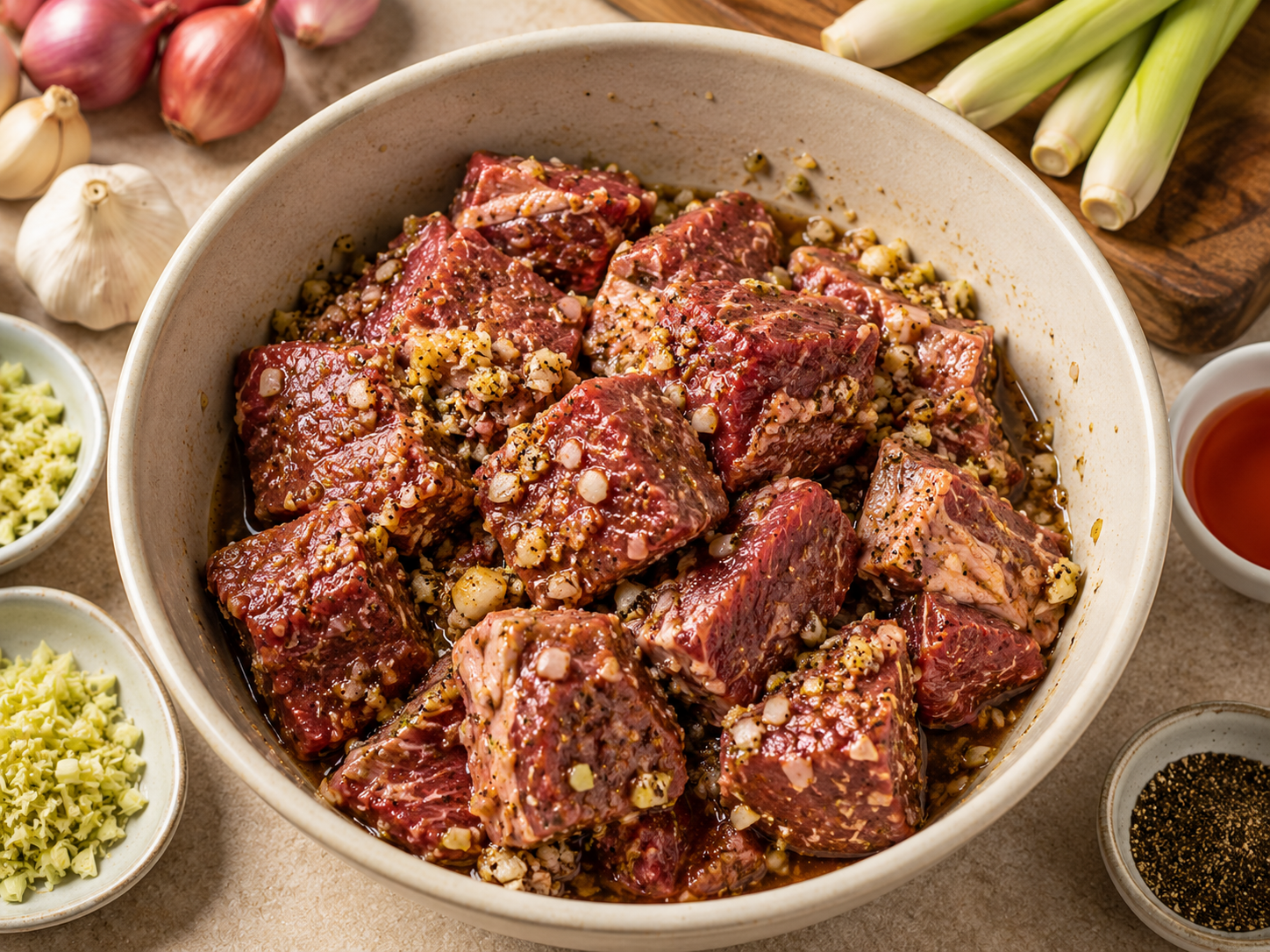
Step 1: Marinate The Beef
Place the beef in a large bowl. Add fish sauce, soy sauce, sugar, bò kho spice blend, salt, black pepper, garlic, shallots, ginger, and minced lemongrass.
Mix everything well so the beef is coated on all sides. Cover and marinate for at least 45 minutes at room temperature, or up to overnight in the refrigerator.
The marinade should smell strong before it cooks. That is normal. The sharpness of the fish sauce, lemongrass, and spices will soften once the beef starts braising.
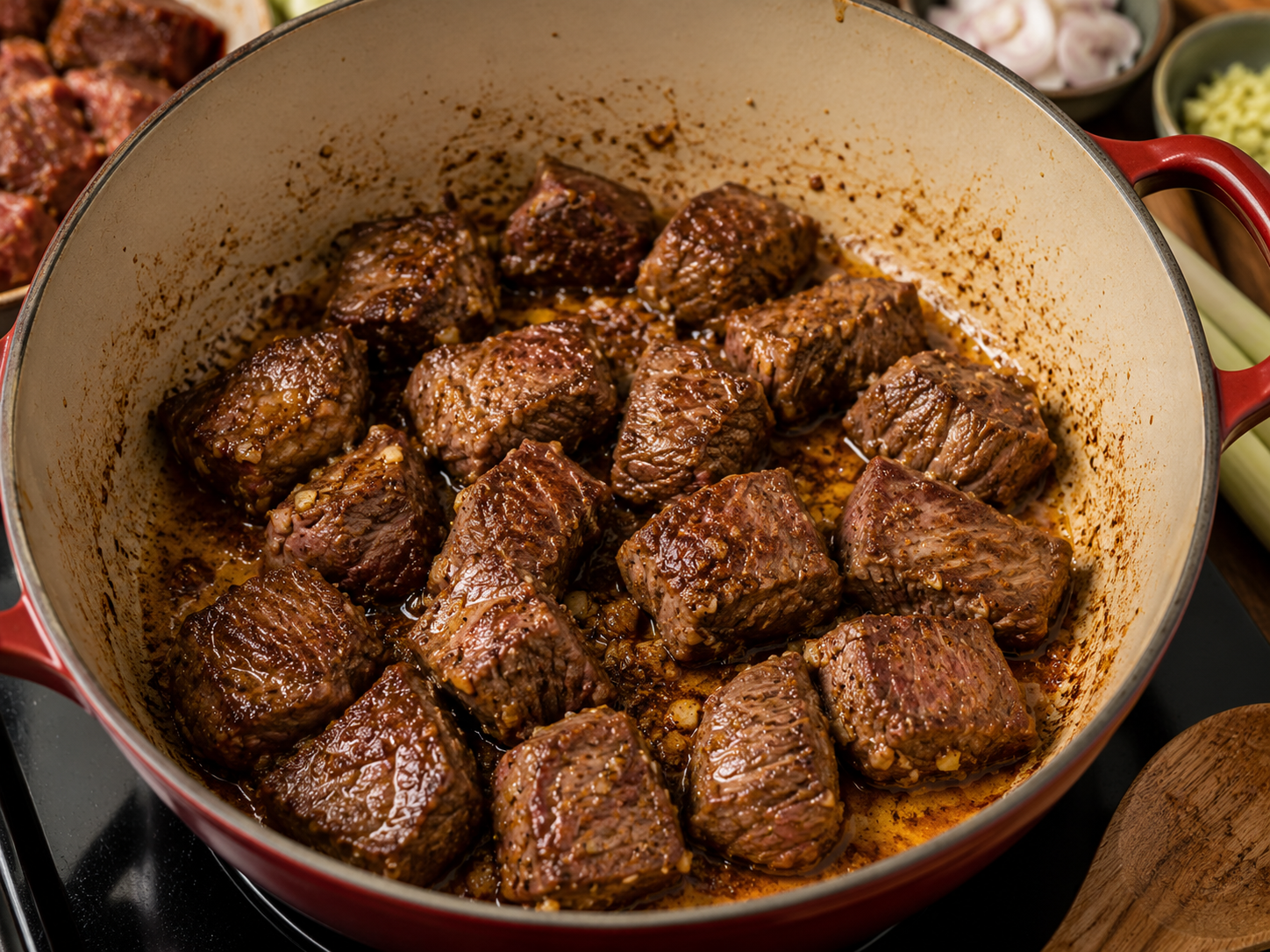
Step 2: Sear The Beef
Heat a large heavy pot over medium-high heat. Add the neutral oil and annatto oil. When the oil is hot, add the beef in batches so the pot is not crowded.
Sear the beef until browned on several sides, about 2 to 3 minutes per side. Do not rush this part and do not worry about cooking the beef through. You are building flavor on the surface.
Transfer the browned beef to a plate as you work through the batches. If the bottom of the pot gets dark but not burned, that is good. Those browned bits will help build the broth.
Step 3: Build The Aromatic Base
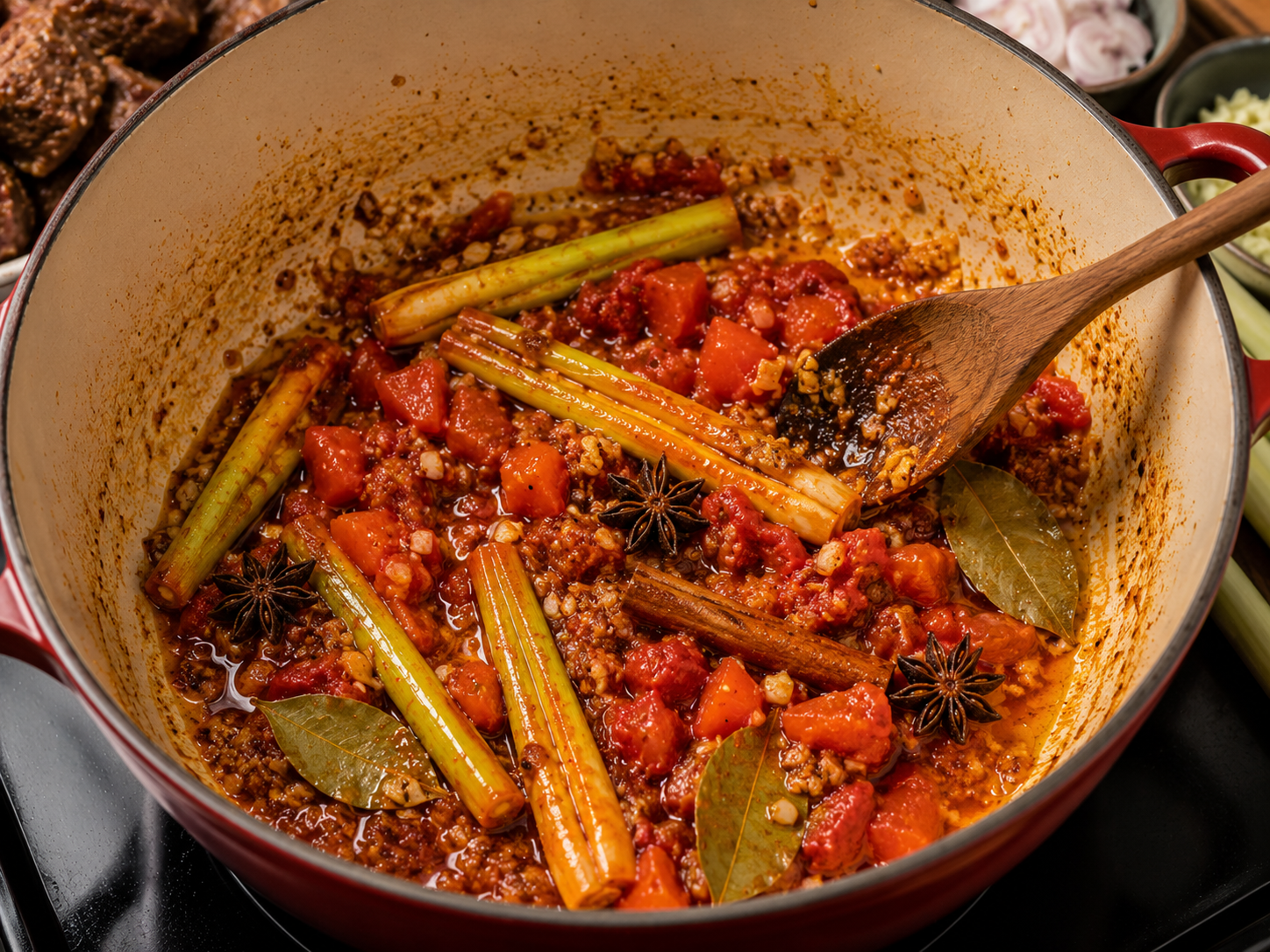
Lower the heat to medium. Add the tomato paste to the pot and stir for about 1 minute. It should darken slightly and smell sweet instead of raw.
Add the chopped tomatoes, bruised lemongrass stalks, star anise, cinnamon stick, and bay leaves. Stir for 2 to 3 minutes, scraping the bottom of the pot as the tomatoes release their liquid.
The pot should smell warm, citrusy, and beefy by this point. If anything starts sticking too aggressively, add a splash of water and keep scraping gently.
Step 4: Start The Braise
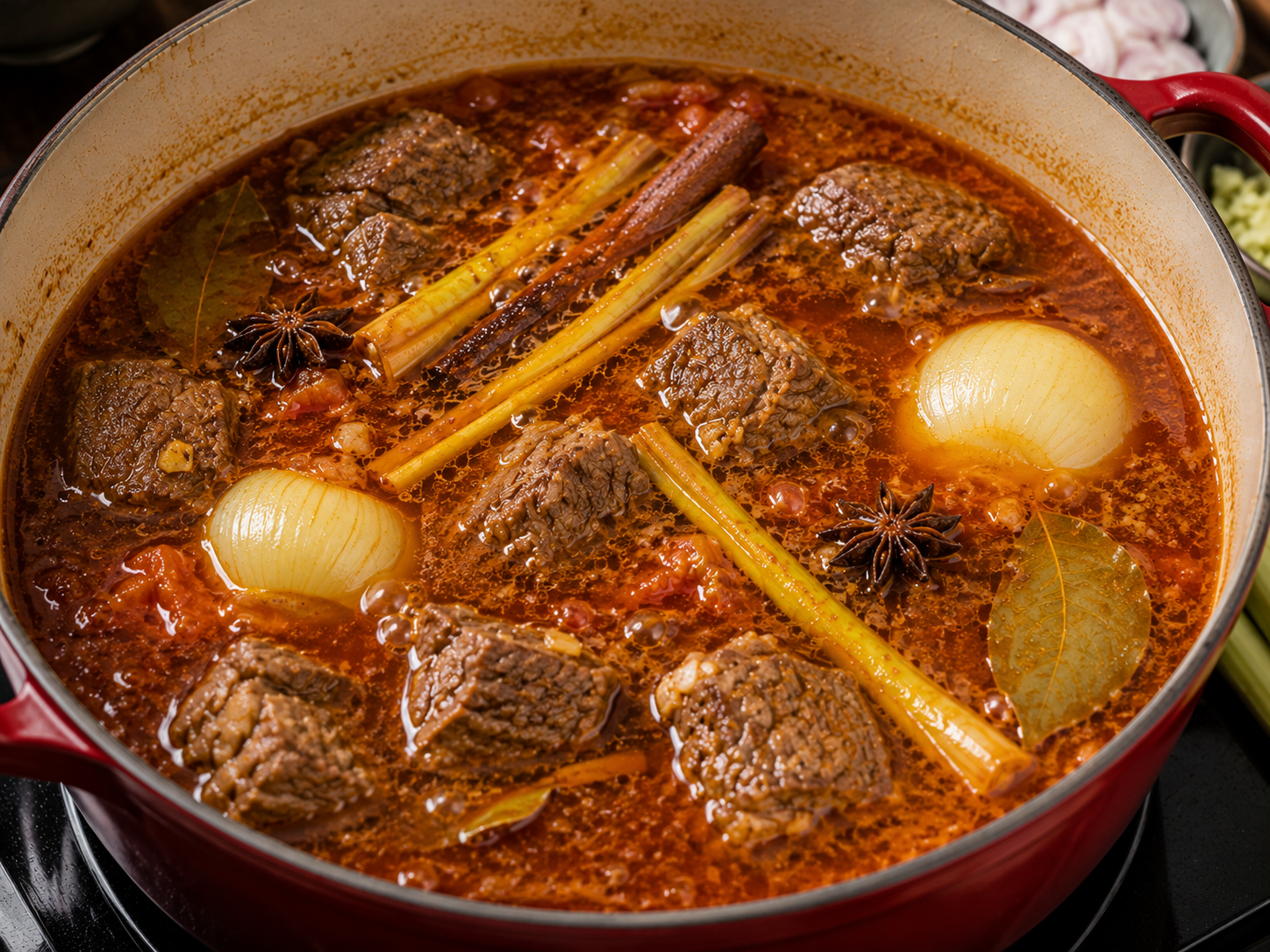
Return the seared beef and any juices to the pot. Add the water or stock, coconut water if using, and the halved onion.
Bring the pot to a boil, then immediately lower the heat to a gentle simmer. Skim off any foam that rises to the surface during the first 10 to 15 minutes.
Cover the pot slightly ajar and simmer gently for 1½ to 2 hours, or until the beef is starting to become tender. The liquid should barely bubble. A hard boil can make the beef tighten and turn the broth cloudy.
Step 5: Add The Carrots
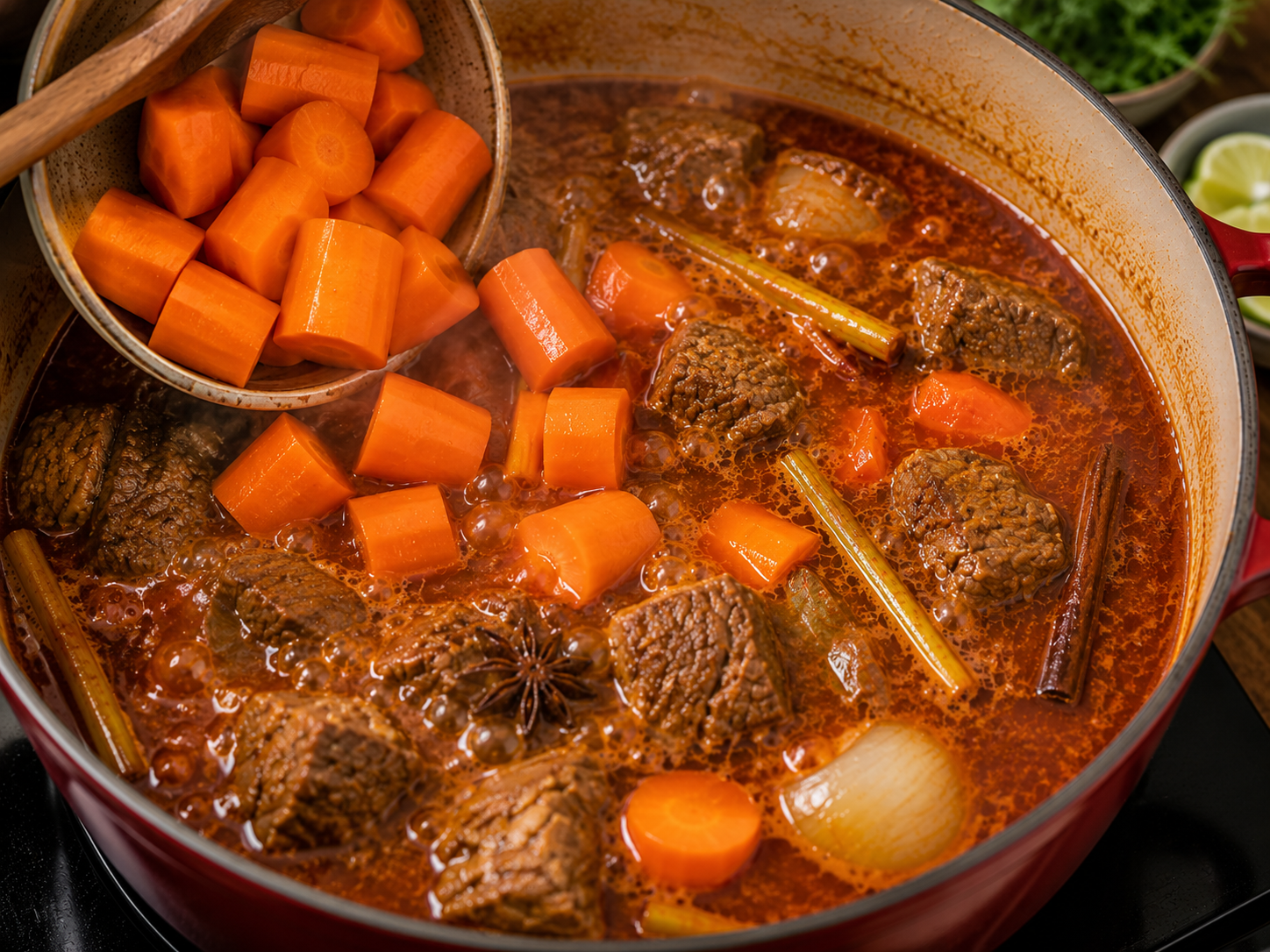
Add the carrots, fish sauce, sugar, and salt. Continue simmering uncovered or partially covered for another 30 to 45 minutes, until the carrots are tender and the beef is soft enough to press apart with a spoon.
The carrots should hold their shape but not taste raw in the center. The beef should be tender, not shredded into the broth.
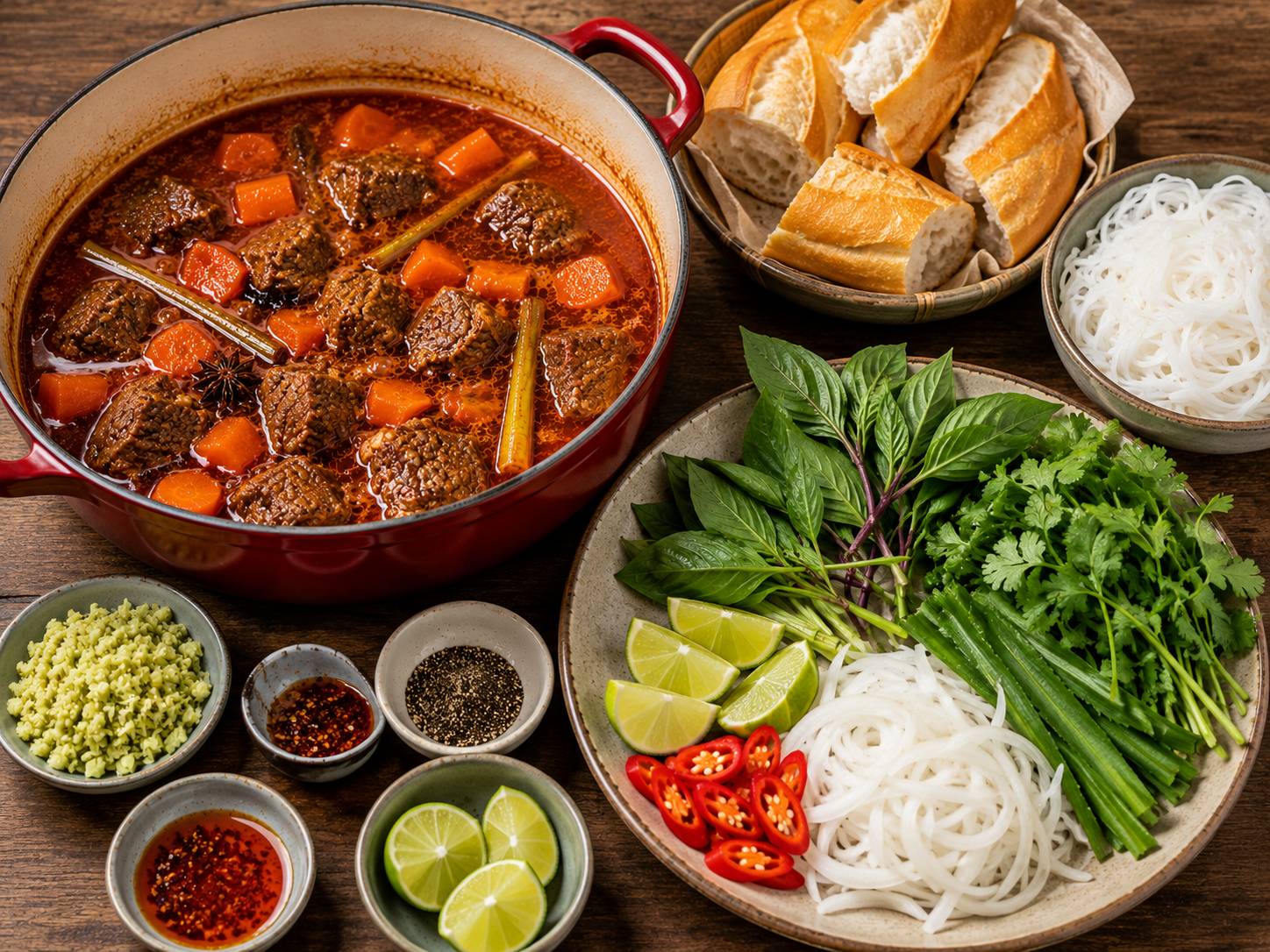
Remove the onion halves, bay leaves, cinnamon stick, star anise, and large lemongrass pieces before serving.
Step 6: Prepare The Bread Or Noodles
For bò kho bánh mì, warm the baguette until the crust is crisp. Tear it into pieces and use it for dipping.
For hủ tiếu bò kho, cook rice noodles according to the package instructions, rinse briefly, and drain well. Place the noodles in bowls before ladling the stew over the top.
For mì bò kho, use fresh or dried egg noodles. Cook until springy, drain, and serve with the hot stew.
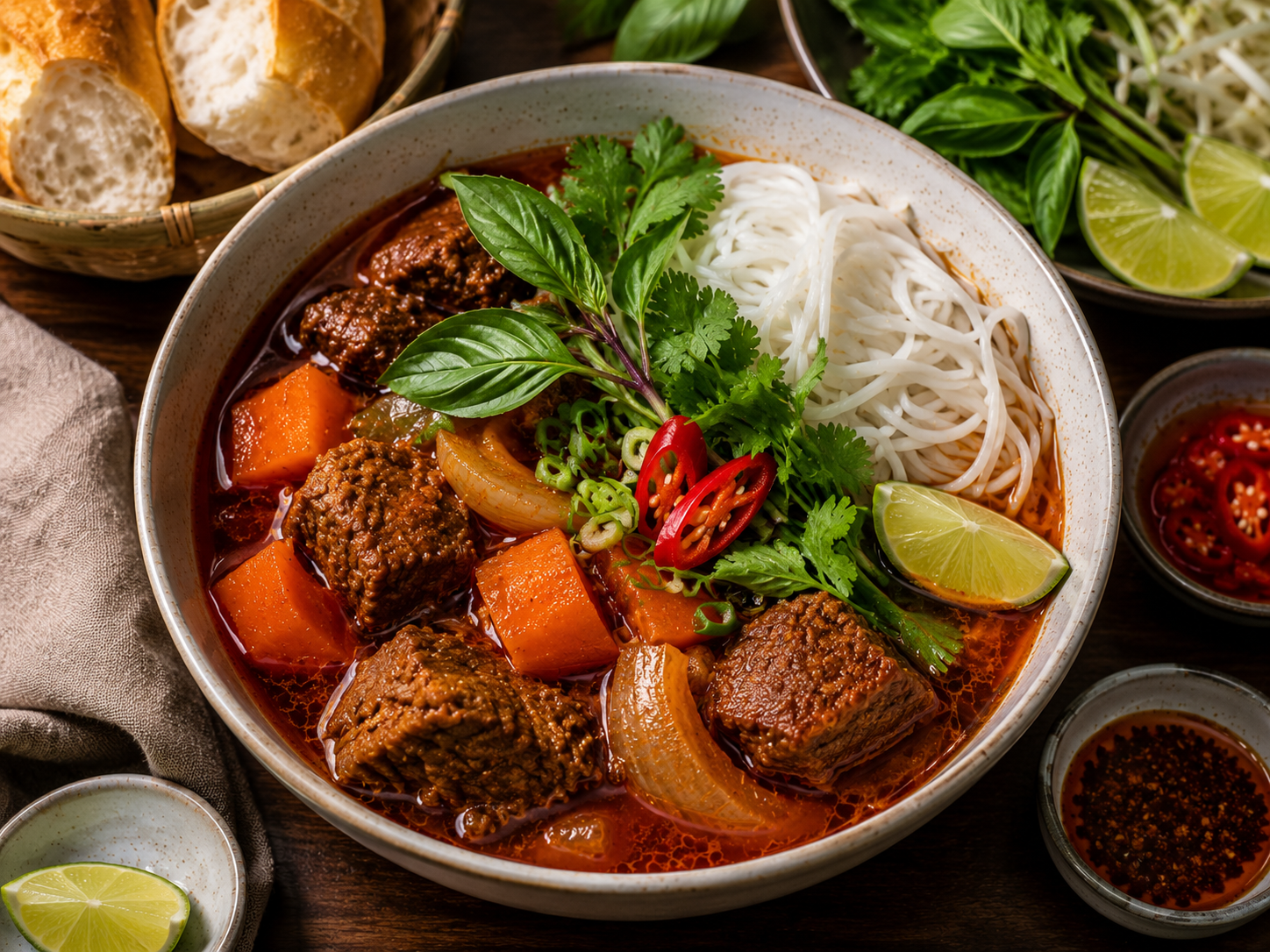
Step 7: Serve The Bò Kho
Ladle the bò kho into bowls with plenty of beef, carrots, and broth. Add sliced onion, herbs, black pepper, lime, and chili at the table.
The first spoonful should taste like beef and warm spice. The second should bring in lemongrass. The lime and herbs should wake everything up at the end.
Serve hot with baguette, rice noodles, or egg noodles.
Final Thoughts
Bò kho is one of those Vietnamese dishes that tells you how flexible the country’s food can be. It can be breakfast with bread, lunch with noodles, or dinner from a pot that has been sitting on the stove all afternoon.
What makes it work is balance. The beef needs time. The broth needs fragrance. The spices need restraint. The lemongrass needs to be present without taking over.
Cook it slowly, taste as you go, and keep the broth loose enough to dip, drink, and remember.